Our verdict
Ichiran's Shibuya basement counter occupies a specific and well-defined tier in Tokyo's ramen scene: single-serving tonkotsu, solo booth dining, and 24-hour access year-round. Ranked in Opinionated About Dining's Casual Japan list for three consecutive years, it functions less like a restaurant and more like a personal ramen ritual, precise, efficient, and repeatable.

Pearl is the En Primeur Club membership app, where members save venues, book tables and use the concierge.
The Solo Booth and What It Says About Tokyo Eating Culture
Tokyo's ramen scene has always operated across sharp distinctions of format and purpose. At the high-involvement end sit destination bowls from counters like Chukasoba Ginza Hachigou and Fuunji, where queues, limited hours, and singular recipes signal a kind of devotional eating. At the other end sits something different: the ramen-as-infrastructure model, where the bowl is a private act, the space is engineered for solitude, and the clock runs continuously. Ichiran, occupying a basement floor on Jinnan in Shibuya, is among the most deliberate expressions of that second model in the city.
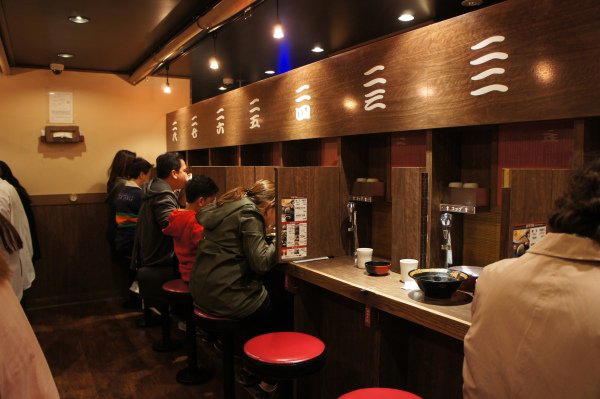
The booth format, individual partitions separating each diner, a bamboo curtain between the counter and the kitchen, inverts the communal premise that defines most Japanese dining. Izakaya culture is built on shared plates, open tables, and the social friction of eating together; Ichiran strips all of that away. What remains is a bowl of tonkotsu and complete silence. That contrast tells you something about the range of desires Tokyo feeds simultaneously: the city holds rowdy standing yakitori bars, six-seat omakase counters, and solo ramen booths with equal conviction, and all of them are full.
Opinionated About Dining, one of the more data-driven critical platforms for casual dining, has ranked Ichiran on its Casual Japan list in each of the past three years, #70 in 2023, #79 in 2024, and #86 in 2025. The movement reflects a broader pattern in OAD's casual rankings: as the list matures and more entries are submitted, individual venues tend to drift gradually through the rankings as new competition is assessed, not because quality has changed. The consistency of Ichiran's presence on that list across three cycles is more informative than its exact position in any single year.
For context, Tokyo's ramen market at the casual end is crowded with genuine specialists. Afuri anchors the yuzu-shio end of the spectrum; Chukasoba KOTETSU sits in a different register entirely. Ichiran's ranking in this context represents staying power rather than a claim to the summit of craft ramen.
The OAD recognition also extends beyond Japan. Ichiran has appeared in OAD's Cheap Eats in North America rankings in 2023, 2024, and 2025, which reflects its international locations rather than its Shibuya counter specifically. The cross-market presence positions it differently from peers like Fuunji or Chukasoba Ginza Hachigou, which remain Tokyo-specific propositions.
Format as the Product
The structural logic of Ichiran's format is worth understanding before you arrive. The order process runs through a paper form, broth intensity, spice level, richness, noodle firmness, scallions, and additional toppings are all selected before the bowl reaches you. This system removes the variable of human interaction almost entirely, which is partly why Ichiran functions for visitors with limited Japanese and why it operates with remarkable throughput despite its booth layout.
24-hour operating schedule, maintained every day of the week, places Ichiran in a specific utility tier. It becomes the ramen option after midnight in Shibuya, the post-drinking bowl, the meal for a traveller arriving late from the airport or leaving early for a flight. That availability is less common than it sounds even in Tokyo, where hours at specialist counters tend to be limited and lunch services sell out. The always-open nature is not incidental to Ichiran's identity, it is close to the core of it.
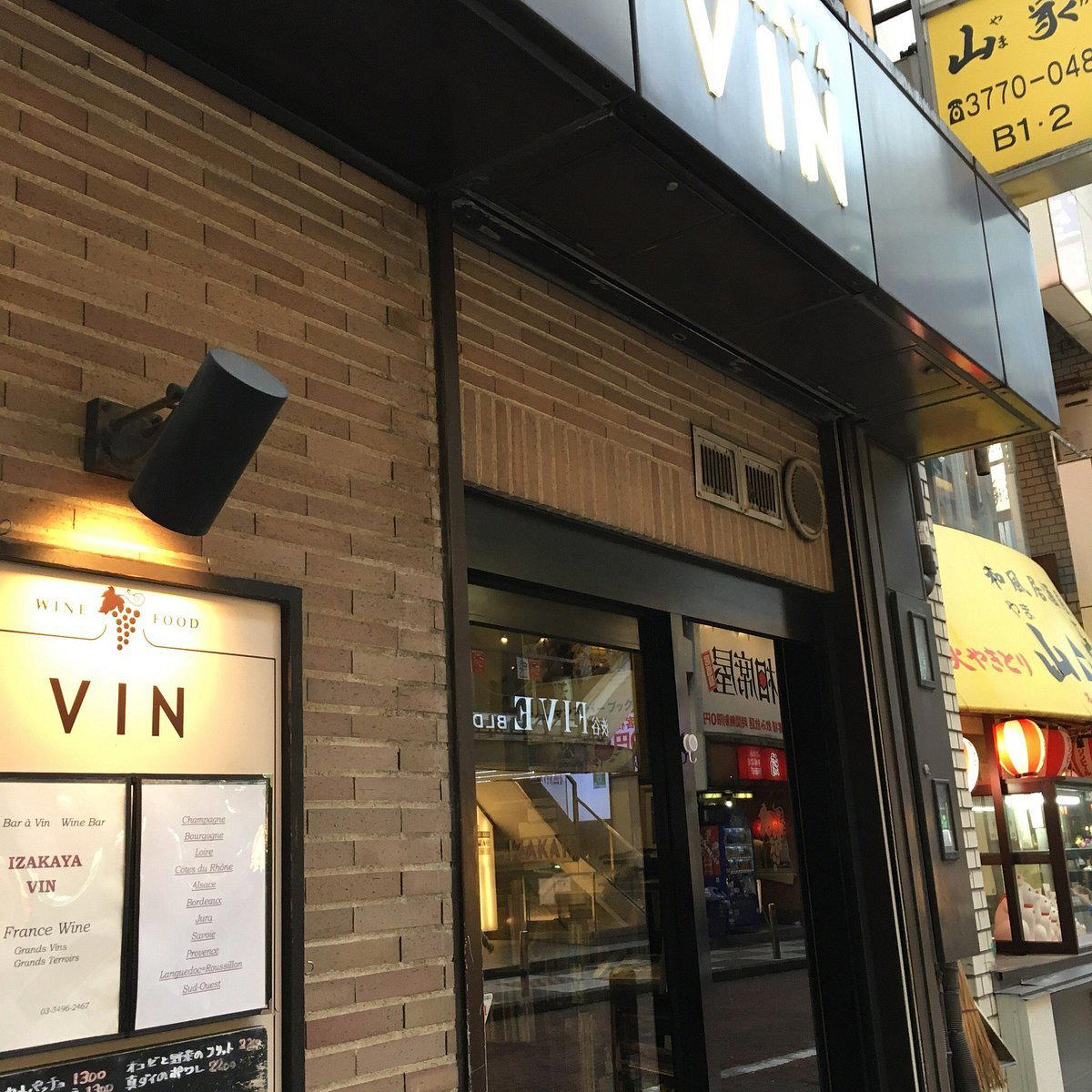
Shibuya location places it within walking distance of one of the city's densest transit intersections. The basement floor (B1F in the Iwamoto Building on Jinnan) means the entrance can be easy to miss at street level, particularly for first-time visitors unfamiliar with the block. This is routine for Tokyo's lower-ground dining, many of the city's most consistent spots operate below street grade, and the pattern extends across categories from ramen to kaiseki.
A Note on Comparison and Scale
Tokyo maintains dining options across a price range few cities can match. Within a short walk of Shibuya, it's possible to spend a few hundred yen on a standing ramen or several hundred thousand on a kaiseki dinner. Ichiran occupies the accessible end of that range: it is not a splurge meal, and it is not positioned as one. Visitors planning higher-end Tokyo meals around restaurants like Chuogo Hanten Mita or exploring the broader Japan circuit, HAJIME in Osaka, Gion Sasaki in Kyoto, or Goh in Fukuoka, will likely pass through Shibuya and find Ichiran a practical fill-in for a casual meal rather than a destination in itself.
For ramen specifically, those interested in exploring the format more deeply across Japan's cities might also note Afuri Ramen in Portland and Akahoshi Ramen in Chicago as reference points for how Japanese ramen traditions translate (and don't translate) beyond Japan. Domestically, the comparison set remains Afuri, Chukasoba KOTETSU, and the dozen or so other OAD-listed Tokyo counters operating in the casual tier.
Planning Your Visit
Hours: Open 24 hours, seven days a week. Location: Basement level, Iwamoto Building, 1 Chome-22-7 Jinnan, Shibuya, Tokyo. Reservations: Not required; queue and booth system operates on a walk-in basis. Budget: Accessible price point consistent with the casual ramen tier in Tokyo. Accessibility note: Basement entry; visitors with mobility considerations should check the building access in advance.
For broader planning across the city, see our full Tokyo restaurants guide, our full Tokyo hotels guide, our full Tokyo bars guide, our full Tokyo wineries guide, and our full Tokyo experiences guide. Those spending time across the Kanto region may also find 1000 in Yokohama and akordu in Nara worth noting. For Okinawa, 6 in Okinawa represents a different register of the Japan dining circuit entirely.
Frequently asked questions
Does Ichiran work for a family meal?
The individual booth format is designed around single occupancy, which makes conventional group or family dining difficult. Children old enough to sit independently and order from a paper form can manage it, but the booths do not seat two people side by side in the standard configuration. Families expecting a shared-table experience should look elsewhere in Shibuya.
Is Ichiran better for a quiet night or a lively one?
The booth partitions and paper-order system are purpose-built to eliminate ambient social noise, so this is not a venue for lively evenings. Opinionated About Dining has ranked Ichiran on its Casual Japan list for three consecutive years, recognising a format that rewards focus rather than atmosphere. Come here for a deliberate, solo meal, ideally late night, when the 24-hour Shibuya basement runs at its most considered pace.
Is Ichiran Michelin-listed?
Ichiran has received recognition including: Opinionated About Dining Cheap Eats in North America Ranked #261 (2025); Opinionated About Dining Casual in Japan Ranked #86 (2025); Opinionated About Dining Cheap Eats in North America Ranked #278 (2024); Opinionated About Dining Casual in….
What should I order at Ichiran?
There is one product: tonkotsu ramen. The paper order form lets you dial in broth intensity, spice level, garlic, and noodle firmness, which means the real decision is how you configure the bowl rather than what to order. First-timers are better served starting at the default settings and adjusting on a second visit once they have a baseline reference.
What should I expect cuisine-wise at Ichiran?
What are Ichiran's hours?
Hours at Ichiran: Hours: Monday Open 24 hours Tuesday Open 24 hours Wednesday Open 24 hours Thursday Open 24 hours Friday Open 24 hours Saturday Open 24 hours Sunday Open 24 hours.
Where do I go for Ichiran?
Ichiran is located at Japan, 〒150-0041 Tokyo, Shibuya, Jinnan, 1 Chome−22−7 岩本ビル B1F, Tokyo.
The Minimal Set
| Venue | Cuisine | Price | Awards | Notes |
|---|---|---|---|---|
| IchiranThis venue (the venue you are viewing) | Classic Tonkotsu Ramen | $10–20 | Not listed | Not listed |
| Harutaka | Edo-Style Omakase Sushi | $200–300 | 3 Michelin Stars · World's 50 Best #76 | Sushi |
| RyuGin | Modern Kaiseki | $500+ | 3 Michelin Stars · World's 50 Best #41 | Kaiseki, Japanese |
| L'Effervescence | Modern French with Japanese Influences | $200–300 | 3 Michelin Stars · World's 50 Best #69 | French |
| HOMMAGE | Modern French with Japanese Influences | $150–200 | 2 Michelin Stars · World's 50 Best #78 | Innovtive French, French |
| MAZ | Innovative Peruvian-Japanese Fusion | $150–200 | 2 Michelin Stars · World's 50 Best #28 | Innovative |
Recognition history
Dated appearances from independent guides and award organizations, with the underlying list record or original source where available.
Opinionated About Dining Casual in Japan Ranked #118
Opinionated About Dining
Full recognition history (7 entries)
Opinionated About Dining Casual in Japan Ranked #86
Opinionated About Dining
Opinionated About Dining Cheap Eats in North America Ranked #261
Opinionated About Dining
Opinionated About Dining Cheap Eats in North America Ranked #278
Opinionated About Dining
Opinionated About Dining Casual in Japan Ranked #79
Opinionated About Dining
Opinionated About Dining Casual in Japan Ranked #70
Opinionated About Dining
Opinionated About Dining Cheap Eats in North America in Recommended
Opinionated About Dining