Michelin Plate
Our verdict
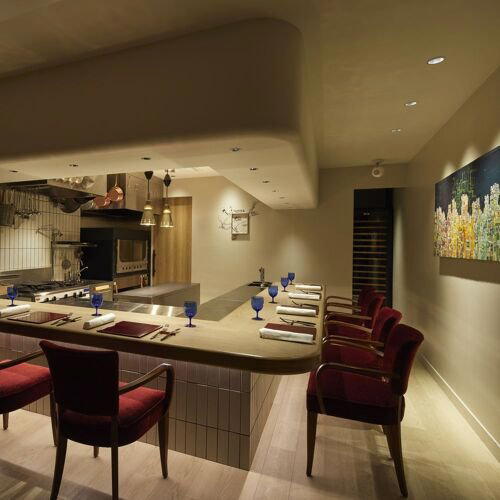
A Michelin Plate-recognised kappo in Tomigaya, Shizuru is run by a husband-and-wife team trained in Kyoto cuisine. The kitchen divides cooking duties between two distinct sensibilities, unified by Kyoto technique, Yamagata sake, and Uonuma Koshihikari rice cooked in a traditional pot. At the ¥¥ price point, it offers serious kappo discipline at a register most Shibuya-area counterparts cannot match.

Pearl is the En Primeur Club membership app, where members save venues, book tables and use the concierge.
The menu
What to order
- Beef Harami Grill
- Grilled Beef Tongue
Kyoto Training, Tokyo Table: How Kappo Discipline Travels
What changes in the move is the audience and, often, the price register. Shibuya's residential edges, Tomigaya in particular, have become an address for kappo operations that retain Kyoto-trained seriousness without the formal price architecture of Ginza or Nishi-Azabu. Shizuru, a third-floor room at 1-3-12 Sunshiti Tomigaya in Shibuya, occupies that precise position: Michelin Plate recognition in both 2024 and 2025, a ¥¥ price range, and a kitchen shaped by two cooks who trained together in Kyoto cuisine before opening here as a couple.
The kappo format itself matters to understand before arriving. Unlike kaiseki, which sequences courses according to a set ceremonial grammar, kappo is more fluid, more direct. The counter is the stage, the knife work is visible, and the meal builds through the cook's reading of the moment rather than a fixed script. Tokyo's higher-end kappo rooms, including Azabu Kadowaki and Kagurazaka Ishikawa, sit at price points that push the format toward special-occasion dining. Shizuru's ¥¥ positioning is the notable divergence: the same foundational discipline at a frequency that makes it a neighbourhood fixture rather than an annual event.
Where the Ingredients Come From
The sourcing logic at Shizuru is not incidental, it is the architecture of the meal. The rice is Koshihikari from Uonuma, a district in Niigata Prefecture that has held a consistent reputation among Japanese consumers as producing some of the country's most texturally precise short-grain rice. The detail that the proprietress sources it from her hometown gives the selection a biographical weight, but the editorial point is broader: in serious Japanese cooking, rice is not a neutral starch. It is the final measure of a kitchen's discipline. Cooking Uonuma Koshihikari in a broad-rimmed pot, a donabe-adjacent method that produces even heat distribution and a slightly firm outer layer, and transferring it to a wooden container to rest is a sequence that takes more time and attention than any automated alternative. At a ¥¥ restaurant, doing this properly is a statement about priorities.
Sake programme follows the same sourcing conviction. The husband's preference runs to Yamagata sake, a regional style that tends toward cleaner, more mineral profiles compared to the richer junmai expressions from Niigata or the more aromatic Kyoto school. Yamagata producers such as Juyondai and Kudoki Jozu have built national reputations, but the prefecture's broader output sits closer to a food-forward style: sake that makes the food taste better rather than competing with it. Pairing that with subtler seasoning, the husband's stated preference, is an internally consistent position. The sake lifts without overwhelming; the seasoning gives the sake room to function.
This sourcing orientation places Shizuru in a specific current within Tokyo dining: the small-format Japanese restaurant where ingredient provenance is the primary editorial statement, and where that provenance is traceable to specific producers or regions rather than gestured at in general terms. Compare this to the broader kappo and kaiseki tier, venues like Myojaku or Ginza Fukuju, where sourcing rigour is assumed but the price point pushes the experience into a different register entirely. Shizuru makes a similar argument about ingredients at a fraction of the cost.
Two Cooks, One Kitchen
The format of dividing cooking duties between a married couple in chef's whites is less common than the solo-chef counter model that dominates Tokyo's premium Japanese dining tier. What it produces, in the kappo setting, is a kitchen with two calibrated sensibilities in dialogue rather than a single vision expressed without friction. The husband's preference for subtler seasoning is confirmed in how the meal reads: restrained, technically precise, with the ingredients carrying the work rather than a sauce or seasoning layer. The rice sequence, the proprietress's contribution from her home region, anchors the meal in a different emotional register than the cooking itself, which is Kyoto in technique and Tokyo in context.
The ambience is completed by incense, a detail that operates on a sensory level that photographs and reviews cannot fully translate. Incense in Japanese dining rooms has a long history in the tea ceremony tradition, where it functions as a palate cleanser between courses and a marker of seasonal or ceremonial occasion. In a kappo setting in Tomigaya, it reads as an intentional tonal choice: the meal is meant to slow time slightly, to insist on its own pace.
Tomigaya as a Dining Address
Tomigaya sits at the northern edge of Shibuya, between Yoyogi Park and the residential streets that run toward Daikanyama. It is not a conventional Tokyo dining address in the way that Ginza, Nishi-Azabu, or Kagurazaka are, but it has accumulated a quiet density of serious small restaurants over the past decade. The neighbourhood rewards the kind of dining that requires looking for it: third-floor rooms, unmarked doors, menus that do not appear on aggregator sites in full. Shizuru's location on the third floor of a residential building on Tomigaya 1-chome fits the neighbourhood grammar exactly.
For visitors building a broader Tokyo itinerary, the city's Japanese dining options span from the kappo counter format here to the full kaiseki architecture of venues like Jingumae Higuchi, and the range of price tiers, formats, and regional training traditions is documented in our full Tokyo restaurants guide. Beyond restaurants, the city's bar, hotel, and experience offerings are covered in our full Tokyo bars guide, our full Tokyo hotels guide, and our full Tokyo experiences guide.
The Kyoto-trained Japanese dining tradition that informs Shizuru extends across Japan's major cities. In Kyoto itself, Isshisoden Nakamura and Gion Sasaki represent the source tradition at its most formal. In Osaka, Kashiwaya Osaka Senriyama and HAJIME show how that tradition has been reinterpreted through different regional and personal lenses. Elsewhere, akordu in Nara, Goh in Fukuoka, 1000 in Yokohama, and 6 in Okinawa extend the map further. For visitors whose Japan itinerary includes wine, our full Tokyo wineries guide covers the local and imported options.
Planning Your Visit
Shizuru holds a Michelin Plate in both the 2024 and 2025 guides, placing it in the recognised-but-not-starred tier of Tokyo Japanese dining, a category that often produces the most consistently executed meals relative to cost.Address: 1-3-12 Tomigaya, Shibuya, Tokyo (third floor, Sunshiti Tomigaya building). Price range: ¥¥, placing it well below the ¥¥¥¥ tier of peer kappo rooms such as Azabu Kadowaki. Reservations: No booking method is confirmed in available data; given the format and capacity, booking ahead through a hotel concierge or reservation service is the practical approach. Leading timing: The rice and sake programme suggests a meal leading appreciated without rushing, allow an unhurried evening rather than fitting this between other commitments.
What Should I Eat at Shizuru?
The rice course is the reference point for understanding what the kitchen is doing. Uonuma Koshihikari, cooked in a broad-rimmed pot and transferred to a wooden container before serving, is the clearest expression of the sourcing philosophy at work here. The Michelin recognition for 2024 and 2025 confirms that the kitchen's output is consistent with serious Japanese cooking standards. For sake, the Yamagata selection reflects the husband's preference for a mineral, food-forward style that supports rather than competes with the subtler seasoning. Ordering the sake pairing, if available, is the direct route to understanding how the two elements are meant to function together. The kappo format means the meal will build according to the kitchen's reading rather than a fixed menu, arrive with appetite and limited time pressure, and let the sequence develop on its own terms.
Frequently asked questions
Is Shizuru award-winning?
Shizuru has received recognition including: A kappo with service by a couple in chef’s whites. Having both studied Kyoto cuisine, this husband-and-wife divide cooking duties between them. The husband prefers subtler seasoning, always to be accompanied by local sake from Yamagata. The….
Where exactly is Shizuru?
Shizuru is located at Japan, 〒151-0063 Tokyo, Shibuya, Tomigaya, 1 Chome−3−12 サンシティ富ヶ谷 3階, Tokyo.
What should I eat at Shizuru?
The rice course is the clearest expression of the kitchen's philosophy: Koshihikari from Uonuma in Niigata Prefecture, cooked in a broad-rimmed pot and transferred to a wooden container before serving. Beyond rice, the meal follows kappo logic, seasonal, counter-led, paced by the couple who divide cooking duties between them. The husband's preference for subtler seasoning makes Yamagata sake a natural pairing, and the two are worth ordering together.
What style of cooking does Shizuru do?
Is Shizuru more mid-range or high-end?
Pricing at Shizuru is listed as ¥¥.
At a Glance
A small set of peers for context, based on recorded venue fields.
| Venue | Cuisine | Price | Awards | Notes |
|---|---|---|---|---|
| ShizuruThis venue (the venue you are viewing) | Japanese Meat Izakaya | $10–20 | Michelin Plate | Not listed |
| Harutaka | Edo-Style Omakase Sushi | $200–300 | 3 Michelin Stars · World's 50 Best #76 | Sushi |
| RyuGin | Modern Kaiseki | $500+ | 3 Michelin Stars · World's 50 Best #41 | Kaiseki, Japanese |
| L'Effervescence | Modern French with Japanese Influences | $200–300 | 3 Michelin Stars · World's 50 Best #69 | French |
| HOMMAGE | Modern French with Japanese Influences | $150–200 | 2 Michelin Stars · World's 50 Best #78 | Innovtive French, French |
| MAZ | Innovative Peruvian-Japanese Fusion | $150–200 | 2 Michelin Stars · World's 50 Best #28 | Innovative |
Recognition history
Dated appearances from independent guides and award organizations, with the underlying list record or original source where available.
Michelin Plate
Michelin
Full recognition history (3 entries)
Michelin Plate
Michelin
Michelin Plate
Michelin