

The Best Chef Two Knives
Our verdict
Sushi Dai Tokyo transforms the legendary Tsukiji market tradition into intimate counter theater, where Chef Urushibara Satoshi's 27 years of mastery creates transcendent Edomae omakase experiences. Just twelve coveted seats witness daily 3 AM market selections become extraordinary nigiri artistry.

Pearl is the En Primeur Club membership app, where members save venues, book tables and use the concierge.
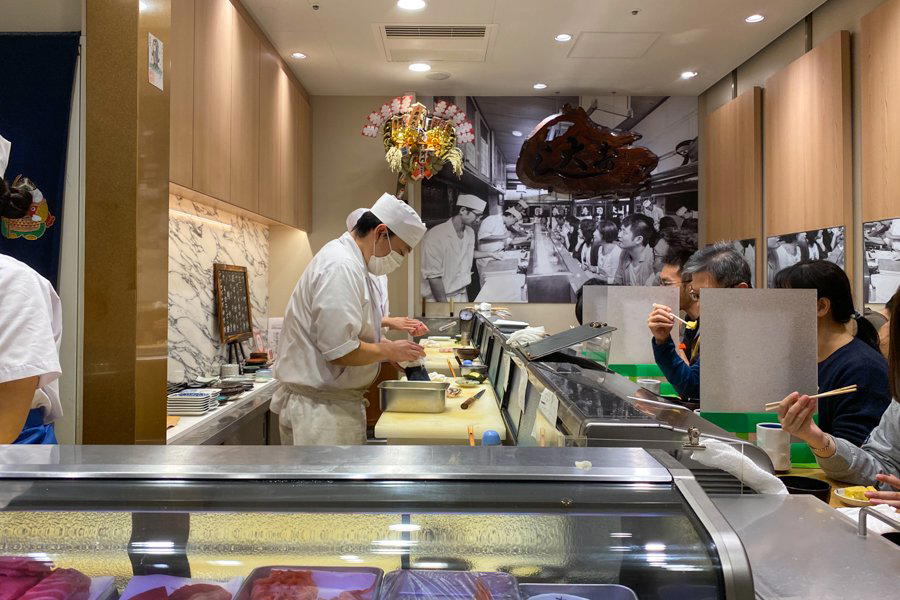
Early Hours in Chuo: The Sushi Counter That Opens Before the City Wakes
Tokyo's sushi culture has long maintained a distinction between the evening omakase counter and the working-lunch tradition that predates it. In Chuo City's Shinkawa district, Sushi Dai belongs to the latter lineage: the restaurant opens at six in the morning and closes by two in the afternoon, a schedule that places it firmly in the tradition of counters built around the rhythms of the wholesale market rather than the expense-account dinner. That operational logic shapes everything about how the restaurant functions, from its clientele mix to its sourcing priorities.
The address, 2 Chome-6-18 Shinkawa, sits in a commercial pocket of Chuo that lacks the Ginza polish of Tokyo's most photographed sushi streets. That geography is relevant. The counter here serves a different city than the one operating at 8 pm in a tower-block dining room. What Sushi Dai offers is sushi as a morning practice, rooted in the idea that the freshest fish belongs to the earliest hours, before the day's commerce has fully turned over.
Recognition in a Crowded Field
Tokyo's sushi scene is one of the most densely scrutinised in any food city. These are not marquee placements at the top of the OAD table, but consistent mid-tier inclusion across multiple evaluation cycles is a meaningful signal in a country where the competition for any ranked position is exceptionally dense.
The restaurant is not operating in the same tier as three-starred Ginza counters such as Sushi Kanesaka or Harutaka, both of which operate in the high-end omakase bracket with allocation-based booking and four-figure pricing. Sushi Dai functions within a different competitive set: accessible Edomae-tradition counters where technical discipline meets a realistic price point for the neighbourhood it serves.
Edomae Principles and the Ethics of Sourcing
The editorial angle that most directly illuminates Sushi Dai is not awards positioning but sourcing ethics. Edomae sushi, the style rooted in Tokyo Bay traditions, has always carried an implicit argument about fish: that proximity, seasonality, and minimal intervention produce better results than variety for variety's sake. That argument is also, by modern standards, an environmental one. Counters that work closely with specific fish markets and limit their menus to what is genuinely available on a given morning produce less waste and exert less pressure on overfished global supply chains than establishments that source internationally to maintain a fixed menu year-round.
The morning-hours model at Sushi Dai reinforces this logic practically. A counter that shuts at 2 pm has no incentive to over-order and hold fish through an evening service. What arrives in the morning is the basis for what is served that morning. That operational structure is a form of waste reduction that larger, multi-service restaurants find structurally difficult to replicate. In this sense, the format is the sustainability story, not a separate policy layered on top of operations.
Across Japan, a growing number of sushi chefs are engaging more explicitly with responsible sourcing, partly in response to declining tuna and eel populations, and partly because discerning buyers in Tokyo's wholesale markets have begun to reward vendors who can trace provenance and confirm catch method. Counters operating at the OAD-recognised level, like Sushi Dai, are positioned closer to that sourcing conversation than a high-volume chain would be. For comparison, the regional spread of this conversation is visible in restaurants as different as Edomae Sushi Hanabusa in Tokyo and Shoukouwa in Singapore, where the Edomae tradition has been exported with its sourcing philosophy largely intact.
Where Sushi Dai Sits in Tokyo's Broader Sushi Spectrum
Tokyo offers a more stratified sushi market than almost any other city. At one extreme, multi-starred counters such as Sukiyabashi Jiro Roppongiten operate as destination restaurants with international recognition, long advance booking windows, and pricing calibrated to that positioning. At the other extreme, department store basement sushi counters and kaiten conveyor operations serve millions of meals annually with no pretension to craft. Sushi Dai occupies a band in between: recognised by specialist critics, operating at a morning-service cadence that suits locals and informed visitors, and priced at a level that does not require institutional expense accounts.
The Shinkawa location also tells part of this story. Chuo City has historically been a commercial and trading district, not a dining destination in the way Ginza or Roppongi function. A sushi counter in Shinkawa is, almost by definition, serving a local clientele with genuine proximity to the food supply chain. That rootedness, geographic and operational, is part of what distinguishes mid-tier Edomae counters from their showier counterparts. Restaurants such as Hiroo Ishizaka operate in similarly understated neighbourhood registers within Tokyo, reflecting a broader pattern of serious cooking that does not depend on high-traffic addresses to sustain itself.
For travellers approaching Japan more broadly, the sushi conversation extends well beyond Tokyo. Sushi Shikon in Hong Kong represents the export of Edomae craft to a different market. Within Japan itself, the range of serious cooking outside the capital is substantial: HAJIME in Osaka, Gion Sasaki in Kyoto, Goh in Fukuoka, akordu in Nara, 1000 in Yokohama, and 6 in Okinawa each represent distinct local culinary perspectives that reward the traveller who moves beyond the capital's gravity.
Planning a Visit
The morning-only format demands logistical preparation that evening restaurants do not. Hours: Monday, Tuesday, Thursday, Friday, and Saturday from 6 am to 2 pm; closed Wednesday and Sunday. Address: 2 Chome-6-18 Shinkawa, Chuo City, Tokyo 104-0033. Reservations: Price range: Dress: No confirmed dress code; standard smart-casual is appropriate for a Chuo City counter of this standing.
Visitors building a full Tokyo dining itinerary can consult our full Tokyo restaurants guide, alongside our Tokyo hotels guide, our Tokyo bars guide, our Tokyo wineries guide, and our Tokyo experiences guide for full context.
Frequently asked questions
What should I order at Sushi Dai?
Sushi Dai operates as a sushi counter under chef Yuichi Arai, with OAD recognition and a morning-hours format that aligns with Edomae sourcing traditions. The practical guidance is to treat the counter as a chef-led format: arrive with no fixed agenda, indicate any dietary requirements clearly, and allow the day's available fish to determine what is served. The morning schedule means the selection reflects what entered the market that day, which is the point of the exercise. For context on how serious Edomae counters approach this question more broadly, the experiences at Edomae Sushi Hanabusa and Harutaka offer useful reference points within the same tradition.
Booking and Cost Snapshot
A compact comparison to help you place this venue among nearby peers.
| Venue | Cuisine | Price | Awards | Notes |
|---|---|---|---|---|
| Sushi DaiThis venue (the venue you are viewing) | Toyosu Market Omakase Sushi | $30–50 | The Best Chef Two Knives | Not listed |
| Harutaka | Edo-Style Omakase Sushi | $200–300 | 3 Michelin Stars · World's 50 Best #76 | Sushi |
| RyuGin | Modern Kaiseki | $500+ | 3 Michelin Stars · World's 50 Best #41 | Kaiseki, Japanese |
| L'Effervescence | Modern French with Japanese Influences | $200–300 | 3 Michelin Stars · World's 50 Best #69 | French |
| HOMMAGE | Modern French with Japanese Influences | $150–200 | 2 Michelin Stars · World's 50 Best #78 | Innovtive French, French |
| MAZ | Innovative Peruvian-Japanese Fusion | $150–200 | 2 Michelin Stars · World's 50 Best #28 | Innovative |
Recognition history
Dated appearances from independent guides and award organizations, with the underlying list record or original source where available.
Opinionated About Dining Top Restaurants in Japan Recommended
Opinionated About Dining
The Best Chef Two Knives
The Best Chef
Full recognition history (5 entries)
Opinionated About Dining Top Restaurants in Japan Ranked #497
Opinionated About Dining
Opinionated About Dining Top Restaurants in Japan Ranked #444
Opinionated About Dining
Opinionated About Dining Top Restaurants in Japan Recommended
Opinionated About Dining
Continue exploring
More in Tokyo
Restaurants in Tokyo
All restaurants in Tokyo →




Details
- Well Known
- Intimate
- Cozy
- Solo
- Casual Hangout
- Chefs Counter
- Open Kitchen
- Sake Program
- Sustainable Seafood
- Omakase
- Counter Dining
- A La Carte
Current opening hours
- Monday
- 6–10 PM
- Tuesday
- 11:30 AM–2 PM, 6–10 PM
- Wednesday
- 6–10 PM
- Thursday
- 11:30 AM–2 PM, 6–10 PM
- Friday
- 11:30 AM–2 PM, 6–10 PM
- Saturday
- Closed
- Sunday
- Closed
Hours can change for holidays and private events. Last verified .
Cozy indoor sushi counter with focused, personable chef interaction and warm rice enhancing the intimate early-morning dining experience.