
A Kanazawa Bunko ramen counter with Tabelog 100 Ramen Kanagawa selections in 2024 and 2025, hoshinochuukasoba belongs to Yokohama’s serious everyday-noodle tier rather than its formal dining circuit. The appeal is cultural as much as practical: ramen and tsukemen treated as repeatable craft, priced for regular use, and positioned within a city where Chinese, port-town, and commuter food traditions keep casual dining unusually deep.
Pearl is the En Primeur Club membership app — saves, bookings, and concierge access live there. Same editors, same standards.
- Address
- 神奈川県横浜市金沢区谷津町347 千輝ビル 101
- Website
- tabelog.com
 Saves & bookings on Pearl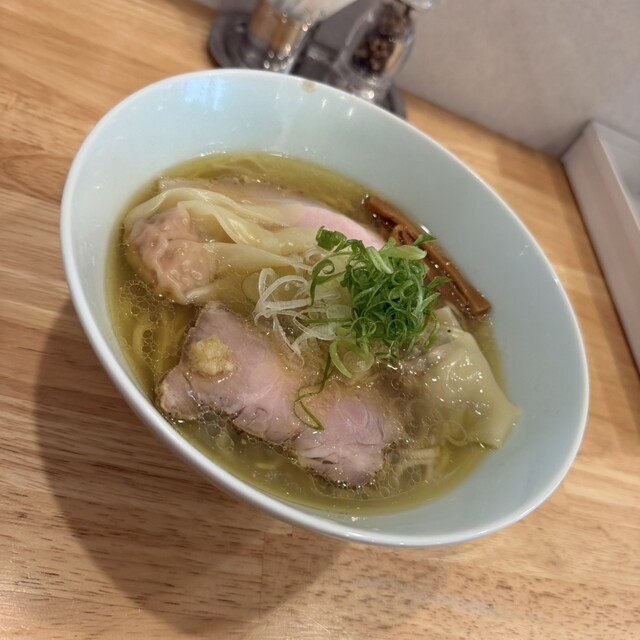
Kanazawa Bunko is not the Yokohama of harbor postcards. The station area has the cadence of a lived-in ward: commuters moving quickly, small restaurants built for regulars, and a dining culture where a bowl can carry as much local weight as a tasting menu does elsewhere. In that setting, ramen is not a novelty format. It is a daily decision, judged on consistency, rhythm, value, and whether the kitchen can keep a narrow idea sharp service after service.
hoshinochuukasoba sits inside that Yokohama grammar. The category is ramen and tsukemen, the price band is JPY 1,000 to JPY 1,999, and the room runs on a compact 18-seat plan with counter seating, tables, and a small tatami area. Those details matter because Kanagawa’s stronger ramen shops rarely trade on ceremony. They compete through speed, broth discipline, noodle handling, and repeat traffic, with solo diners and families both part of the audience.
Kanazawa ramen, read through Yokohama's Chinese-rooted food culture
Yokohama’s noodle culture has always had a wider frame than Tokyo’s trend cycles. The city’s port history made Chinese cooking a civic reference point, while suburban rail corridors turned everyday restaurants into neighborhood institutions. Chuka soba, ramen, and dipping noodles sit naturally inside that mix: informal, technically demanding, and judged by customers who know the difference between a bowl built for impact and one built for return visits.
The Tabelog 100 Ramen Kanagawa selections in 2024 and 2025 place hoshinochuukasoba in a recognized prefectural tier, not merely in a local-station category. Its Tabelog score of 3.74 gives another useful signal in a market where ramen ratings tend to be fought over in small increments. The comparison is not with hotel dining rooms or reservation-only counters; it is with shops that can make a low-ticket meal feel worth crossing a ward for.
That distinction is visible across Yokohama’s broader casual-dining map. A yakitori address such as 1000 (Yakitori (Grilled chicken skewers)), old-school Chinese references like Aichun, curry rooms such as Ajowan, and soup-curry specialists including Alpenjiro Honten all point to the same pattern: Yokohama rewards focused, mid-priced restaurants that do one lane with confidence. For a wider read on the city’s dining range, use Our full Yokohama restaurants guide.
Why the format matters more than a chef narrative
Ramen shops are often weakened in writing by overexplaining personality. The more useful lens is operational. A compact seat count creates pressure: turnover has to be clean, queues have to move, and the menu cannot sprawl without damaging the point of the place. Reservations are unavailable, so the decision is closer to a local dining calculation than a destination-booking exercise. Timing, patience, and appetite matter more than advance planning.
The listed format also says something about audience. Counter seating suits solo dining, while the presence of tables and tatami seating broadens the room beyond the office-lunch stereotype. Children are welcomed, and a kids menu is listed, which is less common in the mythology of serious ramen than in the daily reality of Japanese neighborhood eating. That mix is part of the cultural significance: ramen can be obsessive without becoming exclusionary.
Price is another marker. At JPY 1,000 to JPY 1,999 for lunch and dinner, the shop operates in a range where repeatability still matters. Nearby comparison points show how narrow but meaningful these bands can be: Ramen Sugita Ya Honten is listed below JPY 999, Au petit matin and Mon Peche Mignon sit in the same JPY 1,000 to JPY 1,999 bracket, while Ganesh moves higher at dinner. In Yokohama, those increments shape expectations as much as cuisine type does.
The absence of private rooms and private use also keeps the experience aligned with ramen’s public character. This is not a room for negotiating status through space. It is a shared, close-proximity format where the seriousness is in the bowl and in the house rhythm. Non-smoking rules, wheelchair accessibility, and the prohibition on smoking in front of the restaurant add practical clarity without turning the place into a polished lifestyle proposition.
How to place it within a Yokohama itinerary
For travelers, the point is not to bend a whole Yokohama day around one bowl. The smarter move is to use Kanazawa Bunko as evidence of the city beyond Minato Mirai and Chinatown. Yokohama’s food identity gets thinner when reduced to waterfront hotels and banquet-scale Chinese restaurants; ward-level ramen restores the scale at which many residents actually eat.
That makes hoshinochuukasoba a useful counterweight to the city’s more formal or occasion-led addresses. A day might pair a casual noodle stop with the texture of local shopping streets, then shift later toward another genre entirely. Readers mapping that spread can cross-reference Our full Yokohama hotels guide, Our full Yokohama bars guide, Our full Yokohama wineries guide, and Our full Yokohama experiences guide rather than treating the restaurant as an isolated stop.
Japan’s casual-food strength is clearer when viewed across regions. Compare Yokohama’s ramen and Chinese-adjacent food culture with Fukuoka’s workaday noodle rooms such as Anzen Shokudo, Kamakura’s beef-focused dining at -Grilled beef Sukiyaki- KAMAKURA TANUKIAN 鎌倉 たぬき庵 in Kamakura, or Kawasaki’s Southeast Asian register at (Shoku) Vietnam in Kawasaki. Tokyo, Osaka, Kumamoto, and Sapporo add still more variation, from. 鮪と炭火焼き うお炭 秋葉原店 in Tokyo and.cafe in Osaka to.know in Kumamoto and [Curry Senmon Ten] Maruyama Kyoju. in Sapporo.
Seen from abroad, the same lesson holds. Japanese casual formats travel well when they keep their limits: a focused drink program at Jōdo Saké Bar in Los Angeles, rice-ball specialization at Onigiri Time in Pasadena, or ramen in a Yokohama ward all depend on constraint. hoshinochuukasoba belongs in that conversation because its recognition, price band, and format align with a serious but everyday model of Japanese eating.
Booking and Cost Snapshot
Comparable venues in the metro at similar price points.
| Venue | Cuisine | Price | Notes |
|---|---|---|---|
| hoshinochuukasobaThis venue — the venue you are viewing | Kanazawa, Ramen and Tsukemen | $$ | Not listed |
| RAMAI Yokohama isezaki mo-ru ten | Not listed | $$ | Naka, Hokkaido-style soup curry & Indonesian-inspired curry |
| Shinki | Not listed | $$ | Naka, Traditional Yakitori & Izakaya Counter |
| Rock'n Three | Kōhoku, Jidori Shoyu Ramen | $$ | Not listed |
| Sweets Garden Yuji Ajiki | Tsuzuki, Japanese Sweets Patisserie | $$ | Not listed |
| Ramen Sugita Ya Honten | Isogo, Traditional Yokohama Iekei ramen | $ | Not listed |
Recognition history
Dated appearances from independent guides and award organizations, with the underlying list record or original source where available.
Tabelog 100 #51 · No. 51
Tabelog · Tabelog 100 - Ramen - KANAGAWA - 2025











At a Glance
- Cozy
- Lively
- Solo
- Family
- Casual Hangout
- After Work
- Group Dining
- Standalone
A compact, non‑smoking neighborhood ramen shop with counter and small tables, relaxed and casual in feel, often busy with a lively but comfortable atmosphere suited to both solo diners and families.