
Tabelog 100 #14
Our verdict
Sweets Garden Yuji Ajiki pairs Japanese sweets patisserie with Ajiki Roll and Saotoubo Rouge, plus quiet, casual service for a lunch stop.

Pearl is the En Primeur Club membership app, where members save venues, book tables and use the concierge.
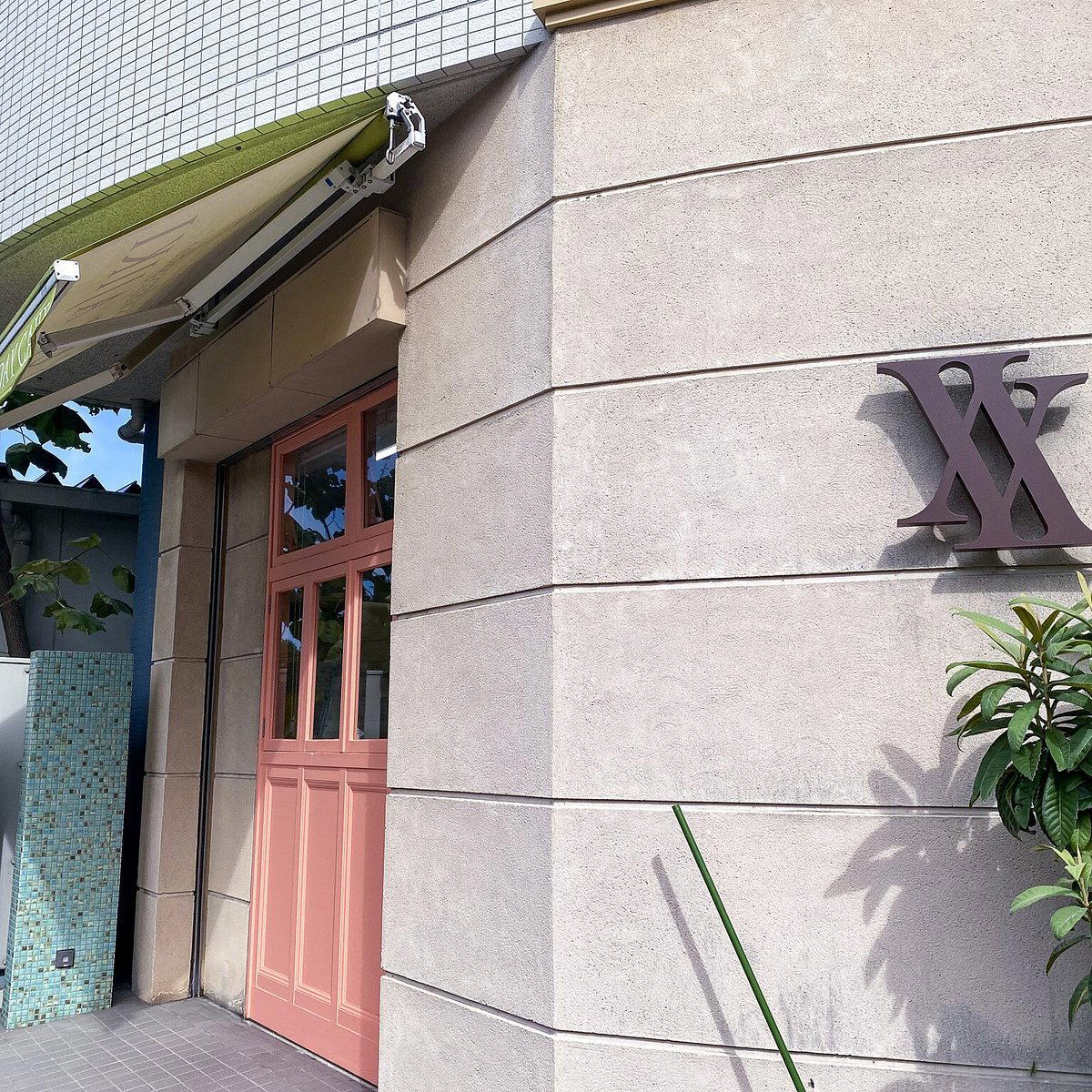
Tsuzuki's Quiet Case for Japanese Confectionery
Kitayamata, in Yokohama's Tsuzuki Ward, does not draw the kind of foot traffic that Minato Mirai or Chinatown generate. The streets here run quieter, the storefronts more modest, and the commuters passing through Kitayamata Station tend to be heading home rather than out for the evening. It is precisely this low-key residential character that makes a destination patisserie and sweets specialist like Sweets Garden Yuji Ajiki register differently than it would in a more conspicuous district. You are not arriving because the neighbourhood drew you here; you are arriving because the shop itself did.
The Place of Japanese Sweets in a Changing City
Yokohama has long occupied an interesting position in Japan's confectionery geography. As the country's historic gateway to Western imports, the city helped normalize European-style pastry and chocolate decades before the rest of Japan caught up. Yet running alongside that Western-facing tradition has always been a quieter current: wagashi and Japanese sweets makers who frame their work within seasonal rhythms, local ingredients, and a different visual grammar entirely. Sweets Garden Yuji Ajiki sits within this second current, operating out of a ward that is decidedly residential and local in character rather than tourist-facing.
That positioning matters. Shops that survive and build reputations in areas without natural tourist or shopping-district foot traffic do so almost entirely through repeat custom and word-of-mouth reach across the city. For visitors seeking that kind of embedded, neighbourhood-level quality signal rather than a curated tourist-precinct experience, Tsuzuki Ward delivers something the central districts cannot easily replicate.
Atmosphere and Approach
Japanese confectionery shops at this tier tend to operate with a deliberate restraint in their physical presentation. The display cases do the editorial work: seasonal sweets arranged with the same compositional care that a chef in a fine dining setting might apply to a plated dish. Color, form, and the suggestion of a particular time of year carry the sensory argument. In autumn, that might mean sweets evoking fallen leaves or late-harvest chestnuts; in spring, sakura-adjacent forms and pale pink glazes. The sensory experience at a shop of this type is cumulative and quiet rather than dramatic.
The address, in the 2-chome area of Kitayamata, places the shop within walking distance of Kitayamata Station on the Municipal Subway Blue Line, which connects readily to central Yokohama and to the wider Kanagawa network. For visitors coming from central Yokohama or from Tokyo via Yokohama, the Blue Line route is the most direct public transit path. The residential surroundings mean parking is available in the area for those arriving by car, though the station connection makes the journey direct by train.
How This Fits Yokohama's Broader Dining Picture
Yokohama's high-end dining scene concentrates heavily in sushi, kappo, and Japanese cuisine formats. Sushi counters like Nakajo and izakaya-adjacent experiences anchor the premium end of the city's restaurant register, while yakitori at the level of 1000 (Yakitori) demonstrates how a focused format can sustain serious culinary ambition. Chinatown institutions like Manchinro Tenshinpo extend the city's repertoire into dim sum and Cantonese pastry, while eel specialists such as Nodaiwa and Enishi occupy a particularly strong niche in the city. A sweets specialist in Tsuzuki Ward does not compete directly with any of these; it occupies a different part of the eating day and a different register of intention entirely. For anyone building a Yokohama itinerary across multiple meals and experiences, our full Yokohama restaurants guide maps the broader picture.
Across Japan, the independent sweets and wagashi category has held steadier than many observers expected through the shift toward Western-style patisserie dominance. Regional specialists, particularly those working outside the major tourist circuits, have maintained loyal customer bases by keeping their seasonal calendars tight and their offering local in character. You see a version of this pattern in Kyoto, where Gion Sasaki demonstrates how a deeply local positioning can coexist with serious critical recognition, and in Osaka, where HAJIME shows the range of what a single-minded specialist commitment can produce at the highest register. The principle applies even at the sweets level: specificity of focus, tied to season and place, tends to outlast generalism.
Seasonal Timing and What It Means Here
For a Japanese sweets specialist, the time of year at which you visit is not incidental; it is determinative. The seasonal calendar for wagashi and related confections is one of the more exacting in Japanese food culture, with distinct forms, flavors, and presentations assigned to each month and sometimes each week of the year. Arriving in late autumn, for example, brings a different shop window entirely than a visit in early summer. Visitors who can align their trip with a particular seasonal moment, whether the sakura window in late March and April or the richness of late autumn, will find the visit more legible than an off-season drop-in when the seasonal narrative is mid-transition.
For context on how Japanese seasonal food culture operates at its most refined across the country, the kaiseki and tasting menu format at venues like Harutaka in Tokyo or the hyper-local ingredient approach at akordu in Nara illustrate how deeply seasonal logic runs through Japanese food at every level. Regional specialists in less-visited cities follow the same principles: Goh in Fukuoka, and less-known venues like 一本木 志川製 in Nanao, 古代山乃 in Sapporo, 湖際庵 in Takashima, and 庭羽屋 in Nishikawa Machi all reflect this same commitment to seasonal specificity embedded in local context. Even internationally, the seasonal discipline at venues like Le Bernardin in New York City or the ingredient-forward approach at Atomix in New York City shows that this calendar-driven attention is not purely a Japanese phenomenon, though Japan has formalized it most explicitly. For yakitori reference in a completely different register, Birdland in Sakai shows how specialist focus anchors reputation outside the obvious circuits.
Planning a Visit
The shop is located at 2-1-11 Kitayamata, Tsuzuki Ward, Yokohama, Kanagawa. Arriving mid-morning or early afternoon tends to give the broadest selection before popular seasonal lines sell down. Given the residential location, combining the visit with wider Tsuzuki Ward exploration or routing it as a standalone detour rather than a same-day pairing with a dinner reservation in central Yokohama makes practical sense.
Frequently asked questions
What's Sweets Garden Yuji Ajiki's location?
Sweets Garden Yuji Ajiki is located at Japan, 〒224-0021 Kanagawa, Yokohama, Tsuzuki Ward, Kitayamata, 2 Chome−1−11 ベニシア 1階, Yokohama.
What's the must-try at Sweets Garden Yuji Ajiki?
No confirmed menu documentation is, which means specific items cannot be responsibly singled out. What is established is that the shop operates as a Japanese confectionery specialist in Kitayamata, Yokohama, a format where seasonal wagashi, pieces tied directly to a calendar of flowers, harvests, and temperature shifts, typically anchor the offering. Visiting at a seasonal transition point will give you the fullest picture of what the kitchen is focused on.
How hard is it to get a table at Sweets Garden Yuji Ajiki?
Japanese confectionery shops at this neighbourhood level typically operate on a walk-in basis, with availability shaped more by production volume and seasonal stock than by seating capacity. Arriving earlier in the day is generally the safer approach for specialist wagashi shops, as limited-run seasonal pieces sell out before close.
What do critics highlight about Sweets Garden Yuji Ajiki?
The shop occupies a position in Yokohama's confectionery scene that sits outside the city's more prominent dining corridors, Kitayamata in Tsuzuki Ward draws a local rather than tourist audience, which likely keeps it below the radar of the major guides. That absence of awards documentation is worth noting as a data point rather than a verdict.
Same-City Peers
Comparable venues nearby, for context on price, style, and recognition.
| Venue | Cuisine | Price | Awards | Notes |
|---|---|---|---|---|
| Sweets Garden Yuji AjikiThis venue (the venue you are viewing) | Japanese Sweets Patisserie | $10–20 | Tabelog 100 #14 | Not listed |
| Kuri Yama | Japanese Tsukemen / Ramen | $10–20 | Tabelog 100 #52 | Kanagawa |
| Tachinomi Shokudo Ultra Suzuki | Tachinomi stand-up bar with yoshoku and bistro-style plates | $20–30 | Tabelog 100 #15 | Naka |
| Sumire Yokohama ten | Hokkaido-Style Miso Ramen | $10–20 | Tabelog 100 #63 | Naka |
| Yukiguni | Miso Ramen | $10–20 | Tabelog 100 #14 | Izumi |
| Tonkatsu Aoki Yokohama bashamichi ten | Japanese Tonkatsu | Not listed | Tabelog 100 #26 | Naka |
Recognition history
Dated appearances from independent guides and award organizations, with the underlying list record or original source where available.
Tabelog 100 #14 · No. 14
Tabelog · Tabelog 100 - Sweets - EAST - 2023
Continue exploring
More in Yokohama
Restaurants in Yokohama
All restaurants in Yokohama →

Bars in Yokohama
Browse all →




Details
- Cozy
- Modern
- Whimsical
- Casual Hangout
- Family
- Design Destination
- A La Carte
Current opening hours
- Monday
- Closed
- Tuesday
- Closed
- Wednesday
- 10 AM–5 PM
- Thursday
- 10 AM–5 PM
- Friday
- 10 AM–5 PM
- Saturday
- 10 AM–5 PM
- Sunday
- 10 AM–5 PM
Hours can change for holidays and private events. Last verified .