
Tokyo yakiniku has split into trophy beef temples and sharper neighbourhood rooms where offal, grill control, and service rhythm matter as much as pedigree. Horumon Ko belongs to the latter camp in Ogikubo, with Tabelog 100 Yakiniku Tokyo 2025 recognition, tripe and izakaya categories, and a format that rewards diners who understand timing rather than spectacle.
Pearl is the En Primeur Club membership app — saves, bookings, and concierge access live there. Same editors, same standards.
- Address
- Japan, 〒167-0043 Tokyo, Suginami City, Kamiogi, 1 Chome−8−8 興和ビル 2F
- Phone
- +81 3-6915-1147
- Website
- tablecheck.com
 Saves & bookings on Pearl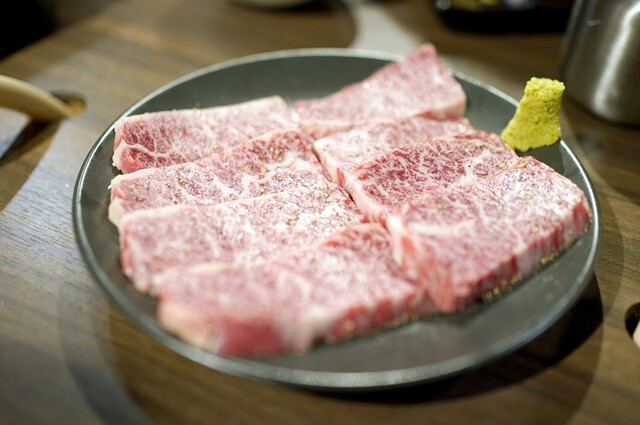
Ogikubo changes the temperature of a Tokyo dinner before the grill is lit. The station-side blocks are practical, not theatrical: commuter movement, small elevators, bright signs, and rooms for regulars who know what they came to eat. Here, yakiniku reads less like luxury performance than disciplined team sport. The kitchen portions, seasons, and paces; the floor keeps grills moving without rushing; diners cook attentively enough to justify the ingredients.
That is where Horumon Ko fits. Tokyo’s yakiniku conversation often drifts toward famous beef labels, private rooms, and chef-led counters, but the city’s more interesting middle tier is built on confidence with cuts harder to standardize. Horumon and tripe require procurement discipline and service coordination, not just a supplier list. Tabelog’s selection of the restaurant for Tabelog 100 Yakiniku Tokyo 2025 places it in a competitive local category where consistency matters more than decoration.
Ogikubo yakiniku puts grill timing ahead of ceremony
Yakiniku in Tokyo is not one genre. Aoyama and Ginza can turn beef into a tasting-menu conversation; suburban station districts preserve the social, smoke-adjacent grammar of the format. Ogikubo sits closer to that second tradition. Its dining culture is dense, practical, and less dependent on destination theatrics than central luxury districts. A grill room succeeds through tempo: orders arriving in sensible waves, staff reading when a table needs help, and guests understanding that the meal is partly in their hands.
The category mix, yakiniku, tripe, and izakaya, signals a broader Tokyo habit: serious meat restaurants need not behave like fine dining to earn attention. Offal-focused cooking rewards precision and conviviality. It needs a room that can absorb noise, repeat orders, and short service bursts without losing control. A 70-seat footprint gives the operation a different energy from the tiny counter restaurants that dominate many overseas ideas of Tokyo dining. The pleasure is collective, not hushed.
The team dynamic is the engine. In this style, the kitchen’s work is only half the performance; front-of-house pacing decides whether the grill becomes measured or chaotic. Better Tokyo yakiniku rooms make that coordination feel casual, though it is demanding. Heat management, cut sequence, and drink timing must align across tables cooking at different speeds. Horumon Ko’s city-specific Tabelog 100 recognition suggests this machine has been judged against peers in the same demanding local frame, not against a generic international idea of Japanese barbecue.
The serious diner's signal is offal, not luxury theatre
For travellers who equate Japanese dining status with omakase counters, yakiniku can be misread. The format is participatory and less deferential, revealing another expertise. Tongue, harami, sagari, and horumon cuts mark intent because they expose handling and timing quickly. The restaurant notes that reservations are not accepted specifically for black-haired wagyu tongue, harami, or sagari, and that these cuts may run out on Sundays and Mondays. That says more than a polished mission statement: supply is treated as perishable, not smoothed over for convenience.
The izakaya side matters. A grill-only room can become rigid; an izakaya-adjacent one has a looser drinking rhythm and broader social register. Tokyo diners understand this. The point is not to sit silently before luxury beef, but to move through richer and leaner cuts, order in rounds, and adjust pace as the evening develops. Visitors should treat the meal as a sequence, not a trophy order. The reward is a local reading of yakiniku: less famous-label collecting, more how a team handles stock, grills, and crowd pressure over full service.
Compared with central Tokyo Japanese dining rooms such as Kappo Yuichi or sushi-focused counters like 寿司周辰 SUSHI SHUTATSU, this style asks for another mood. It is not for diners who want the chef to make every decision and control every bite. It suits people who enjoy movement and can pay attention to heat, ordering, and timing. Ogikubo is part of the appeal, grounding the meal in everyday Tokyo rather than turning it into a ceremonial detour.
How to place it within a Tokyo itinerary
Horumon Ko opened in 2022, making its Tabelog 100 Yakiniku Tokyo 2025 selection a relatively fast ascent in a crowded city category. That does not make it a universal recommendation; it makes it targeted. It belongs on an itinerary for diners who want yakiniku with offal intelligence, a station-neighbourhood setting, and a room where service rhythm matters more than staged intimacy. It is less suited to a quiet celebration built around long-form tasting-menu ritual.
For a broader dining run, keep it in the western Tokyo orbit rather than forcing it between far-flung reservations. Akihabara, Shinjuku, Kagurazaka, and Ginza pull meals into different rhythms, from charcoal-led casual rooms such as . 鮪と炭火焼き うお炭 秋葉原店 to compact urban stops like 12/10 Shinjuku ten, skewered-bird precision at 124. KAGURAZAKA (Yakitori), graphic café culture at 2D Cafe, and curry specialists such as 3 Chome no Curry Ya San. For the wider city map, use Our full Tokyo restaurants guide, with parallel planning through Our full Tokyo hotels guide, Our full Tokyo bars guide, Our full Tokyo wineries guide, and Our full Tokyo experiences guide.
Japan’s grill and casual-dining spectrum is wider than Tokyo. Travellers building a longer route can set Ogikubo’s yakiniku against beef sukiyaki in Kamakura at -Grilled beef Sukiyaki- KAMAKURA TANUKIAN 鎌倉 たぬき庵 in Kamakura, café culture at.cafe in Osaka, contemporary regional dining at.know in Kumamoto, Vietnamese cooking in Kanagawa at (Shoku) Vietnam in Kawasaki, curry in Hokkaido at [Curry Senmon Ten] Maruyama Kyoju. in Sapporo, and Kyoto minimalism at [ki:] in Kyoto. Across the Pacific, sake-bar and rice-ball formats at Jōdo Saké Bar in Los Angeles and Onigiri Time in Pasadena show how Japanese casual forms travel, though Tokyo’s station-district yakiniku remains harder to export because so much depends on team timing around the grill.
City Peers
Comparable venues for orientation by cuisine and category.
| Venue | Cuisine | Price | Notes |
|---|---|---|---|
| Horumon KoThis venue — the venue you are viewing | Yakiniku & Horumon (Offal) BBQ | $$$ | Not listed |
| Takano Fruit Parlour | Japanese Fruit Parlor | $$$ | Shinjuku |
| SATO BRIAN Sangou | Yakiniku (Japanese BBQ) | $$$ | Suginami |
| Tori Cho | High-end Yakitori Omakase | $$$ | Nerima |
| Hinomaru | Kaiseki Omakase | $$$ | Shinjuku |
| Tori Tomi | Yakitori & mizutaki chicken course | $$$ | Setagaya |
Recognition history
Dated appearances from independent guides and award organizations, with the underlying list record or original source where available.
Tabelog 100 #21 · No. 21
Tabelog · Tabelog 100 - Yakiniku - TOKYO - 2025













At a Glance
- Lively
- Cozy
- Energetic
- Group Dining
- Casual Hangout
- After Work
- Late Night
- Solo
- Standalone
- Beer Program
- Sake Program
Current opening hours
- Monday
- 5–11 PM
- Tuesday
- 5–11 PM
- Wednesday
- 5–11 PM
- Thursday
- 5–11 PM
- Friday
- 5–11 PM
- Saturday
- 4–11 PM
- Sunday
- 4–11 PM
Hours can change for holidays and private events. Last verified .
Bustling, compact yakiniku-izakaya atmosphere with counter and table seating, close-set grills, upbeat energy, and a casual, smoke-filled vibe that feels like a local low-profile address rather than a formal restaurant.