
Hendrix curry sits in Jingumae’s curry-and-bar lane rather than Tokyo’s tasting-menu economy, with Tabelog Curry TOKYO 100 selection in 2024 and a 3.77 score giving it clear local credibility. The appeal is logistical as much as culinary: compact seating, reservations available, cash-only payment, and a Sunday closure make planning matter even at a casual price tier.
Pearl is the En Primeur Club membership app — saves, bookings, and concierge access live there. Same editors, same standards.
- Address
- Japan, 〒150-0001 Tokyo, Shibuya, Jingumae, 2 Chome−13−2 1F
- Phone
- +81 3-3479-3857
- Website
- facebook.com
 Saves & bookings on Pearl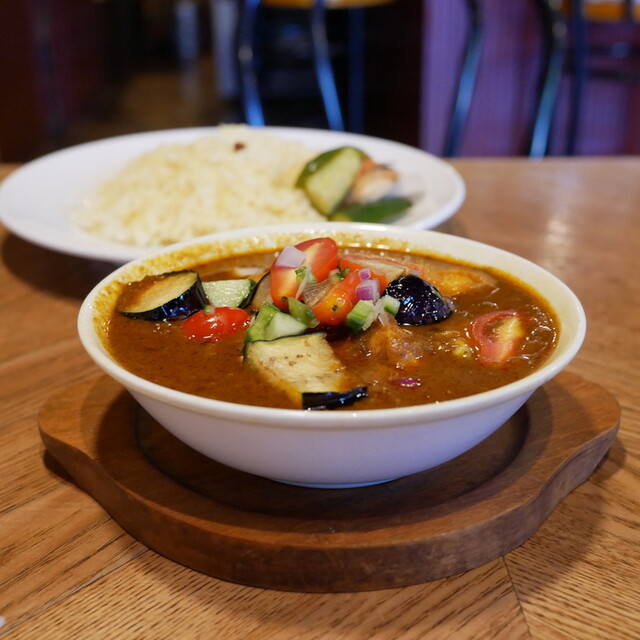
Jingumae changes tempo fast: boutique-lined Harajuku gives way to quieter side streets, Sendagaya’s stadium traffic thins, and the curry shops in this pocket feel less like tourist fuel than neighbourhood infrastructure. Tokyo’s curry culture has always been broader than the katsu-and-rice shorthand suggests, pulling in Indian curry, Japanese curry, bar cooking, and small-room counter formats. Hendrix curry belongs to that more specific category: a compact curry bar where the meal is casual, but the signals around it are not accidental.
The useful way to read the place is through Tokyo’s booking culture. Not every serious table in the city is a months-ahead omakase counter or a formal kappo room. Some of the sharper decisions happen at modest spend levels, where the friction comes from small capacity, short service windows, neighbourhood location, and payment habits rather than luxury pricing. In that context, a Tabelog Curry TOKYO 100 selection in 2024 and a 3.77 score put Hendrix curry inside a vetted local field, not a novelty circuit.
Tokyo curry as a specialist category, not a consolation meal
Tokyo treats curry with unusual range. There are old-school European-style rooms, spice-forward Indian curry counters, Japanese curry shops built around speed, and hybrid dining bars that stretch the category into evening drinking. Hendrix curry is listed across curry, dining bar, and Indian curry, which places it in the part of the scene where format matters as much as sauce style. The room’s counter-and-table mix supports that reading: this is not a sprawling lunch hall, and it is not trying to behave like a formal dining room.
That distinction matters for travellers who usually allocate Tokyo meals by prestige. A city that can put Den and 傳 in the same conversation as tiny curry specialists is not operating on a single hierarchy. High-spend Japanese dining and low-spend curry culture answer different questions. The former often asks how far a kitchen can refine seasonality and service; the latter asks how much character can fit into a narrow format. The restaurant’s repeated Tabelog Curry 100 selections, including 2017, 2018, 2019, 2020, 2022, 2023, and 2024, are the credibility marker here.
Within the comparison set, YOGORO occupies a similar casual curry spend bracket, while EMILIA sits in a different European-leaning price tier. That spread is useful: Tokyo’s restaurant map does not divide neatly between luxury and cheap eats. It is better understood as a set of micro-categories, each with its own audience, rhythm, and tolerance for planning. Curry at this level can be inexpensive without being incidental.
The room rewards planning more than ceremony
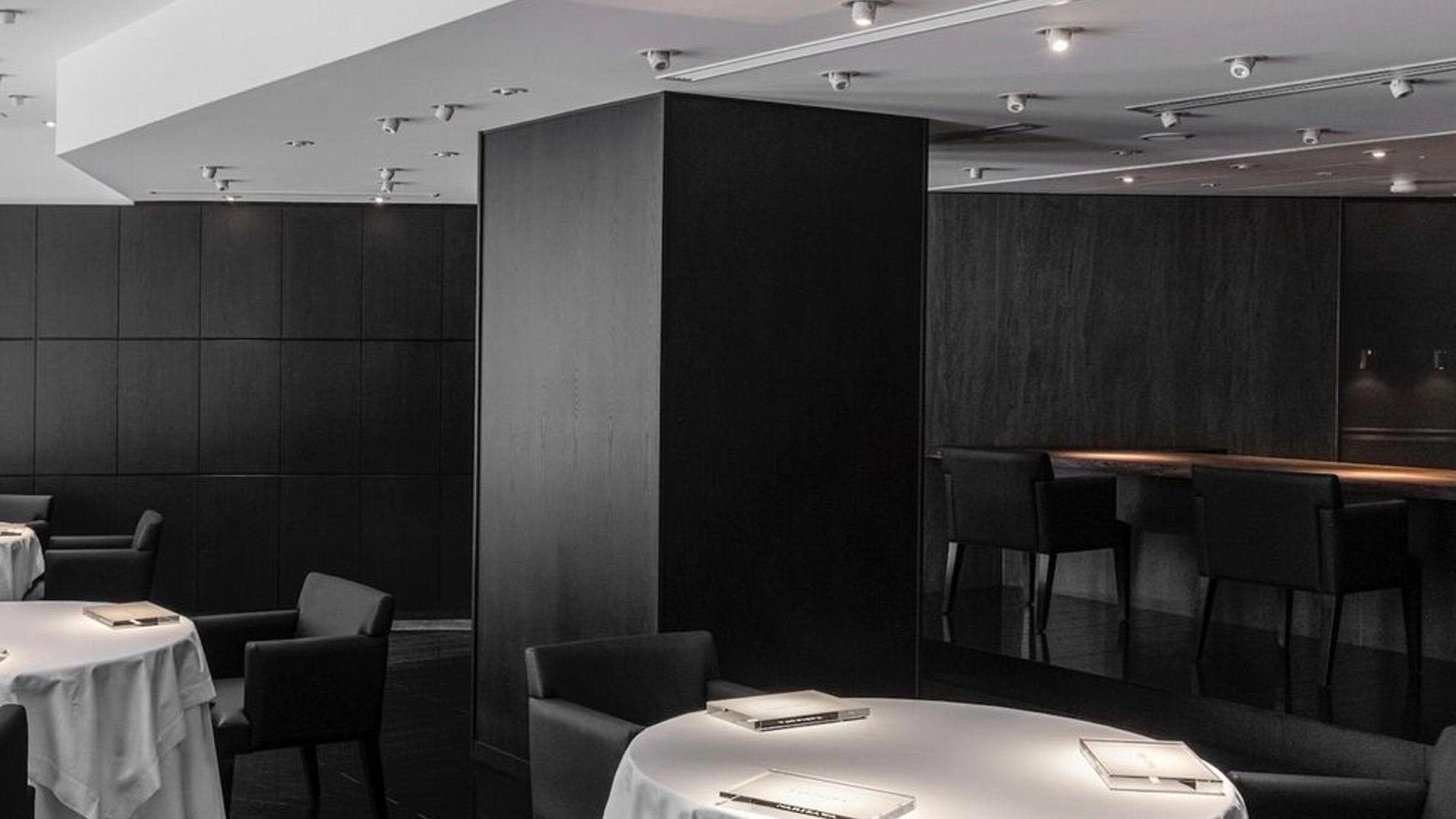
The booking angle is plain: small rooms create pressure even when the bill is low. The restaurant has 20 seats, split between 6 counter seats and 14 table seats. That scale changes the experience before a plate appears. Counter seating places diners closer to the action; tables make the room easier for pairs or small groups. Either way, capacity is finite enough that timing has consequences, especially around lunch and early evening.
Reservations are available, which separates the experience from Tokyo’s pure queue culture. That does not turn it into a formal occasion; it simply gives organised diners an advantage. The cash-only setup is another signal that this remains a neighbourhood-scale operation rather than a frictionless international dining product. Credit cards, electronic money, and QR code payments are not accepted, so planning here means having yen ready, not just choosing a time slot.
Location also shapes the decision. The nearest station is Kokuritsu Kyogijo, with the restaurant in Jingumae, Shibuya. This area works well when tied to Harajuku, Gaienmae, Sendagaya, or the National Stadium side of town, less well as a one-stop cross-city detour during a packed itinerary. Tokyo rewards geographic discipline. Pairing a curry meal here with neighbourhood walking makes more sense than treating it as an isolated destination between distant reservations.
For broader city planning, compare this stop with 3 Chome no Curry Ya San for another curry reference, or widen the itinerary through Our full Tokyo restaurants guide. Nearby category-hopping can also include 124. KAGURAZAKA (Yakitori), 12/10 Shinjuku ten, . 鮪と炭火焼き うお炭 秋葉原店, and 2D Cafe, depending on which side of the city the day is built around.
Where it fits in a Tokyo itinerary
The strongest case for the restaurant is not that it replaces a major Tokyo dinner. It gives the itinerary a different register: local, compact, award-recognised, and inexpensive by Tokyo’s serious dining standards. That makes it especially useful on days when a traveller wants precision without the time, cost, or dress-code expectations of a formal restaurant.
The drinks listing also changes the frame. Sake, shochu, wine, and cocktails are available, which moves the format beyond a quick curry stop and toward a casual dining-bar rhythm. That matters in Jingumae, where evenings can drift between galleries, boutiques, stadium-adjacent walks, and small restaurants rather than a single grand dining event. The venue’s no-smoking status at lunch adds another practical comfort point for midday planning.
Tokyo specialists often require a different kind of attention than trophy restaurants. The reward is not theatrical service or an extended tasting structure; it is the feeling that a narrow category has been taken seriously. The restaurant’s Tabelog Curry 100 history gives that claim external weight, while the compact room, cash-only terms, and reservation availability define how to approach it.
Travellers building a Japan food map beyond Tokyo can cross-reference -Grilled beef Sukiyaki- KAMAKURA TANUKIAN 鎌倉 たぬき庵 in Kamakura.cafe in Osaka.know in Kumamoto, (Shoku) Vietnam in Kawasaki, [Curry Senmon Ten] Maruyama Kyoju. in Sapporo, and [ki:] in Kyoto. For a wider Tokyo stay, the adjacent planning rails are Our full Tokyo hotels guide, Our full Tokyo bars guide, Our full Tokyo wineries guide, and Our full Tokyo experiences guide. North American Japanese-format references such as Jōdo Saké Bar in Los Angeles and Onigiri Time in Pasadena underline the contrast: Tokyo’s casual specialist rooms do not need imported polish to feel serious.
Peers Worth Knowing
Comparable venues for cuisine and category context.
| Venue | Cuisine | Price | Notes |
|---|---|---|---|
| Hendrix curryThis venue — the venue you are viewing | Japanese Spice Curry Bar | $ | Not listed |
| Mizuho | Traditional Japanese wagashi (mame daifuku specialty) | $ | Shibuya |
| Chuka Soba Chigonoki | Niboshi-focused Ramen Shop | $ | Shinjuku |
| Ginza Kanra Ginza honten | Japanese wagashi & daifuku shop | $ | Chūō |
| Oniyanma Gotanda honten | Standing Sanuki Udon Shop | $ | Shinagawa |
| Suzumeya | Japanese sweets / Dorayaki | $ | Toshima |
Recognition history
Dated appearances from independent guides and award organizations, with the underlying list record or original source where available.
Tabelog 100 #89 · No. 89
Tabelog · Tabelog 100 - Curry - TOKYO - 2024














At a Glance
- Cozy
- Solo
- After Work
- Casual Hangout
- Late Night
- Standalone
Current opening hours
- Monday
- 11:30 AM–2:30 PM, 6–10 PM
- Tuesday
- 11:30 AM–2:30 PM, 6–10 PM
- Wednesday
- 11:30 AM–2:30 PM, 6–10 PM
- Thursday
- 11:30 AM–2:30 PM, 6–10 PM
- Friday
- 11:30 AM–2:30 PM, 6–10 PM
- Saturday
- 11:30 AM–2:30 PM, 6–10 PM
- Sunday
- Closed
Hours can change for holidays and private events. Last verified .
Casual and bar-like with a cozy, hole‑in‑the‑wall feel; guests sit close to the counter in a lively but relaxed atmosphere typical of Tokyo curry bars.