
Spring hanami, autumn gifting season, and year-end visits put Tokyo’s wagashi counters under particular pressure, and Mizuho belongs to the old-school end of that habit. This Jingumae takeout specialist is known for Japanese traditional sweets and daifuku, with Tabelog 100 selections in 2020, 2022, and 2023 placing it inside Tokyo’s serious wagashi conversation.
Pearl is the En Primeur Club membership app — saves, bookings, and concierge access live there. Same editors, same standards.
- Address
- 6 Chome-8-7 Jingumae, Shibuya, Tokyo 150-0001, Japan
- Phone
- +81 3-3400-5483
- Website
- tabelog.com
 Saves & bookings on Pearl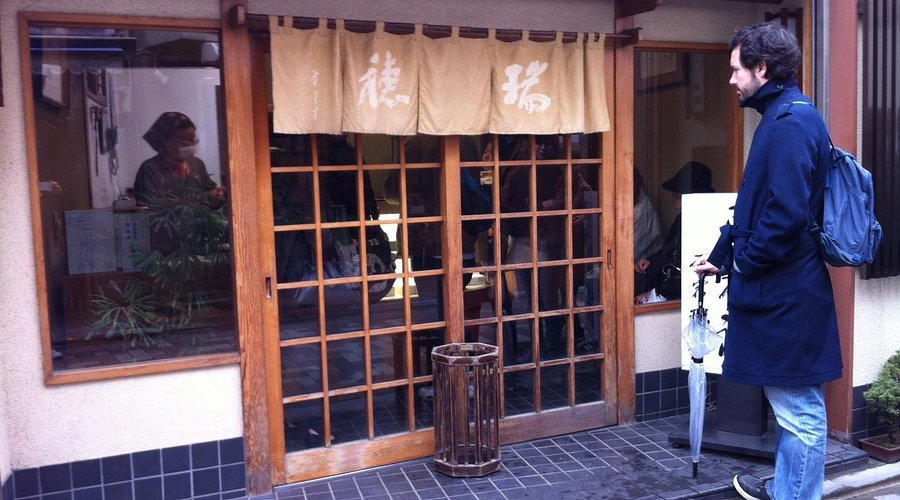
Jingumae is not short on visual noise: fashion queues, side-street cafés, Omotesando traffic, and the steady churn of Harajuku footfall. Against that, Tokyo’s serious wagashi culture often works by subtraction. A small counter, a narrow window of availability, and sweets bought for later rather than consumed as spectacle can say more about the city’s gift economy than another dining room designed for photographs. Mizuho sits in that older rhythm: a takeout-only wagashi address in Shibuya, associated with Japanese traditional sweets and daifuku, and selected for Tabelog 100 in the Tokyo Japanese traditional sweets and sweets categories across 2020, 2022, and 2023.
Daifuku as an occasion food, not café theatre
Tokyo’s celebration dining is often discussed through sushi counters, kaiseki rooms, and hotel restaurants, but wagashi occupies a different ceremonial lane. It is the sweet carried to a host, taken to family, or bought after a shrine visit when the occasion calls for restraint rather than display. Daifuku, built around soft mochi and sweet bean paste, is direct by design. The pleasure is not in a long menu or a plated sequence; it is in freshness, texture, and timing.
That makes the takeout-only format part of the point. A counter like this does not ask the guest to settle in for service. It fits Tokyo’s habit of buying something exacting and moving on, a pattern as central to the city’s food culture as standing soba, department-store food halls, and high-end omakase. For a birthday visit, seasonal gathering, or small thank-you gift, the format is useful precisely because it is compact. The transaction carries social weight without turning the sweet into an event production.
The Tabelog score of 3.79 places the shop in a competitive tier for a category where reputation is built through repetition rather than novelty. Tabelog 100 recognition matters here because wagashi does not always travel well in international food media. The lists tend to surface specialists that local diners treat as part of the city’s edible infrastructure, rather than venues built around tasting menus or chef biographies.
Jingumae makes the old form feel current
Location changes the reading. In a quieter residential district, a wagashi shop can feel inherited; in Jingumae, it becomes a counterpoint to the district’s appetite for newness. The area draws shoppers, design pilgrims, café hunters, and travelers using Meiji Jingumae as a hinge between Harajuku and Omotesando. Within that circuit, traditional sweets operate as a corrective. They slow the pace without requiring a formal reservation or a long sitting.
That contrast also helps explain why a sweets purchase can work for milestone travel. Not every celebratory meal in Tokyo needs to be expensive or lengthy. A serious daifuku stop before a family gathering, after Meiji Jingu, or between Omotesando appointments gives the day a local grammar. It is a small act, but Tokyo often rewards those. The city’s food culture is built as much from specialist errands as from destination dinners.
The comparison set in this part of town is unusually broad. A guest could move from gyoza at Gyoza Lou to teppanyaki at Ukai-tei Omotesando, or from casual Western comfort at THE GREAT BURGER to French cooking at bonélan. Noda belongs to a different contemporary dining bracket altogether. Mizuho is not competing with those rooms on duration, service, or luxury cues. It belongs to the specialist tier, where a narrow category and repeat demand carry authority.
How to place it in a Tokyo food day
For travelers building a Tokyo itinerary, the smarter use is not to treat wagashi as dessert after a heavy meal. It works earlier in the day, as a planned purchase for later, or as a gift that signals attention to local etiquette. The price band sits below JPY 999, which puts the value equation in a different category from Tokyo’s formal restaurants. Cash-only payment is the practical detail that shapes the visit, and the sold-out model rewards early movement rather than leisurely afternoon browsing.
There are no seats, no private rooms, and no reservation format, which keeps the experience closer to retail craft than restaurant dining. That distinction matters for expectations. This is not the place for a long celebration lunch; it is the place to fold a precise sweet into a larger occasion. Children are welcome, non-smoking status is listed, and parking is not provided, so the visit suits pedestrians and rail-based itineraries better than car-led planning.
Readers mapping a broader Tokyo dining day can pair this kind of stop with other category-specific addresses rather than forcing everything into one meal. EP Club’s Tokyo restaurant coverage ranges from . 鮪と炭火焼き うお炭 秋葉原店, 12/10 Shinjuku ten, 124. KAGURAZAKA (Yakitori), 2D Cafe, and 3 Chome no Curry Ya San to Our full Tokyo restaurants guide. For trip structure beyond meals, use Our full Tokyo hotels guide, Our full Tokyo bars guide, Our full Tokyo wineries guide, and Our full Tokyo experiences guide.
For wider Japan and Japanese food references, compare how occasion dining shifts outside central Tokyo through -Grilled beef Sukiyaki- KAMAKURA TANUKIAN 鎌倉 たぬき庵 in Kamakura.cafe in Osaka.know in Kumamoto, (Shoku) Vietnam in Kawasaki, [Curry Senmon Ten] Maruyama Kyoju. in Sapporo, [ki:] in Kyoto, Jōdo Saké Bar in Los Angeles, and Onigiri Time in Pasadena.
The editorial case is simple: Tokyo’s serious food culture is not only measured by counters with long waits and formal courses. It is also measured by specialists that do one thing within a tight window and let the customer carry the occasion elsewhere. For travelers who understand gifting, seasonality, and the quiet status of wagashi, Mizuho adds a precise note to a Jingumae day.
Local
Comparable venues by category and price.
| Venue | Cuisine | Price | Notes |
|---|---|---|---|
| MizuhoThis venue — the venue you are viewing | Traditional Japanese wagashi (mame daifuku specialty) | $ | Not listed |
| Teuchi Udon Iwashiya Aoyama ten | Handmade Sanuki Udon | $ | Minato |
| JAPANESE ICE OUCA | Japanese Ice Cream and Shaved Ice | $ | Shibuya |
| DOMINICA Ginza ten | Soup curry specialty (Sapporo-style Japanese curry) | $ | Chūō |
| CHANTOYA COCONUT CURRY | Coconut-focused Japanese curry | $ | Chiyoda |
| Ten mame | Japanese Traditional Sweets | $ | Chūō |
Recognition history
Dated appearances from independent guides and award organizations, with the underlying list record or original source where available.
Tabelog 100 #84 · No. 84
Tabelog · Tabelog 100 - Japanese traditional sweets / Japanese sweets cafe - TOKYO - 2023














At a Glance
- Classic
- Well Known
- Solo
- Family
- Casual Hangout
- After Work
- Standalone
- Street Scene
Current opening hours
- Monday
- Closed
- Tuesday
- 9 AM–12 PM
- Wednesday
- 9 AM–12 PM
- Thursday
- 9 AM–12 PM
- Friday
- 9 AM–12 PM
- Saturday
- 9 AM–12 PM
- Sunday
- Closed
Hours can change for holidays and private events. Last verified .
A simple, traditional take-out wagashi shop with a classic neighborhood feel and calm atmosphere, focused on efficient service rather than lingering in-store dining.