On Behrenstraße in Berlin's Mitte district, Hauptstadtrestaurant Gendarmerie operates within one of the city's most historically weighted addresses, steps from the Gendarmenmarkt. The restaurant positions itself within Berlin's formal dining tier, where menu architecture and room presence carry as much weight as the cooking itself. For a city that has built a serious fine-dining canon, Gendarmerie holds a distinctive address in that conversation.
Pearl is the En Primeur Club membership app — saves, bookings, and concierge access live there. Same editors, same standards.
- Address
- Behrenstraße 42, 10117 Berlin, Germany
- Phone
- +493076775270
- Website
- gendarmerie-berlin.de
- Directions
- Get directions
 Saves & bookings on Pearl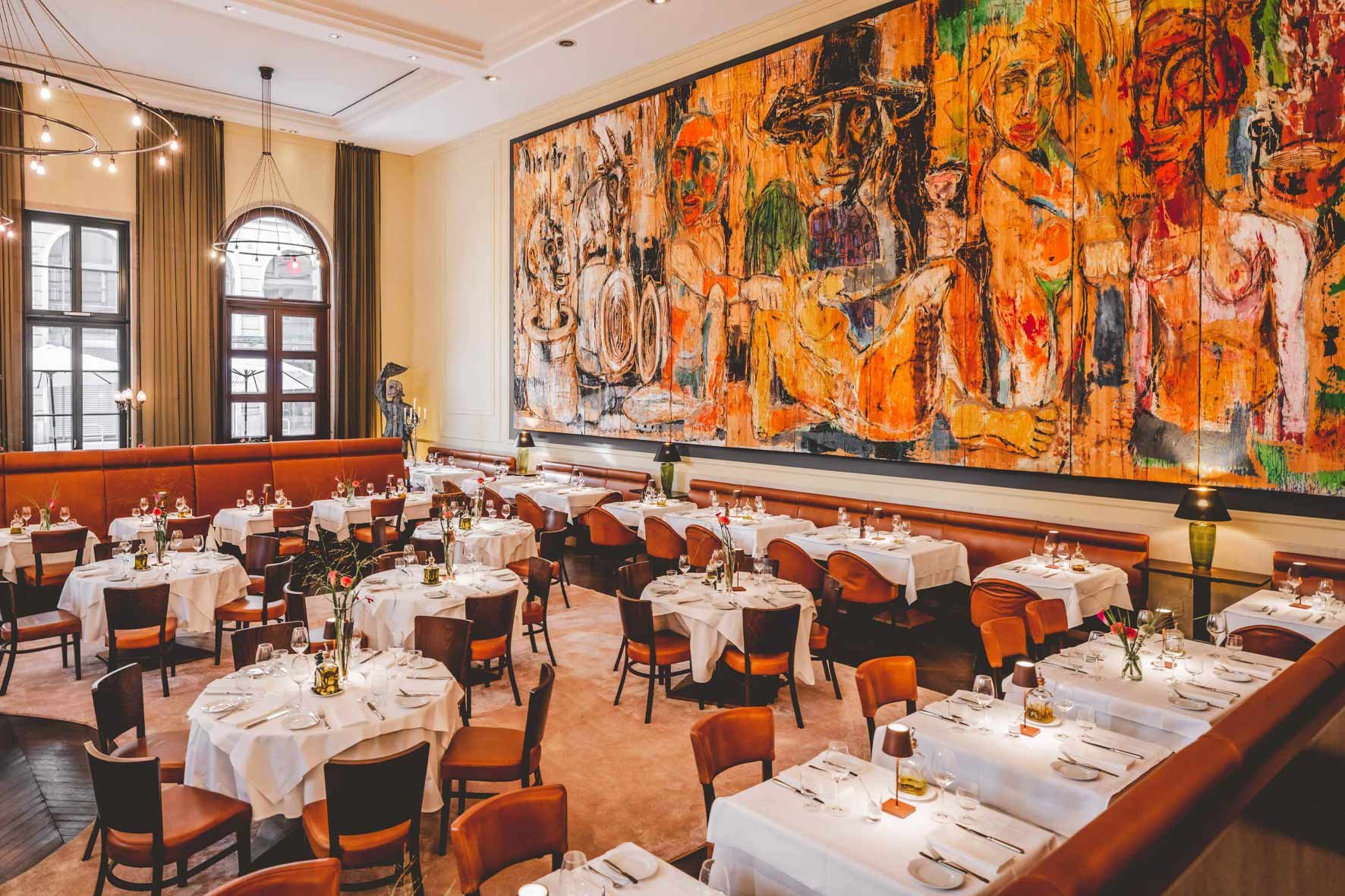
Mitte's Formal Dining Tier and Where Gendarmerie Sits
Berlin's fine-dining scene has never followed a single grammar. The city that produced the radical localism of Nobelhart & Schmutzig and the technically exacting dessert-forward format of CODA Dessert Dining has also sustained a parallel current of classically grounded, address-conscious restaurants that read more like European capitals than post-reunification Berlin. Hauptstadtrestaurant Gendarmerie, a French brasserie with German accents in Berlin, belongs to this second current. Its location on Behrenstraße 42, within a short walk of the Gendarmenmarkt, places it in a pocket of central Berlin where architecture, history, and institutional memory press hard on what a restaurant is expected to be.
The Gendarmenmarkt is among the more formally composed public squares in Germany, flanked by the Konzerthaus and two symmetrical cathedrals. Dining in this immediate vicinity carries expectation: the room, the service register, and the menu structure are all read against that backdrop. Restaurants here are not evaluated in isolation from their surroundings. They are evaluated as participants in a civic and cultural conversation that the square has sustained for centuries.
Menu Architecture as Editorial Statement
In Berlin's highest-performing restaurants, menu structure has become a form of argument. Rutz uses its menu to make a case for German wine as a serious pairing partner for modern European technique. FACIL organises its offer around a Mediterranean-inflected restraint that sits in deliberate contrast to its corporate-hotel address in the Potsdamer Platz Marriott. At Hauptstadtrestaurant Gendarmerie, the menu's architecture signals a commitment to the tradition of the Hauptstadt, or capital city restaurant, a format that in German dining history implies breadth, occasion-readiness, and respect for the full table as a social unit rather than a series of individual tasting sequences.
This distinction matters in practical terms. Where Berlin's most-discussed tasting-menu rooms ask guests to surrender to a fixed sequence, a restaurant operating in the Hauptstadt register tends to maintain meaningful à la carte depth alongside any set formats. The menu becomes a document of hospitality as much as of cooking. It implies that the kitchen can serve a table where one guest wants three courses and another wants five, where one is celebrating and another is conducting business, and where the wine list must hold its own across that range of demands.
Across Germany's serious dining circuit, from Aqua in Wolfsburg to Vendôme in Bergisch Gladbach and Waldhotel Sonnora in Dreis, the rooms that sustain long reputations tend to be those that solve this tension well: technically serious enough to hold critical attention, but broad enough in format to remain usable across the full range of occasions that serious dining rooms must serve. Gendarmerie's address positions it within that conversation.
The Behrenstraße Address in Context
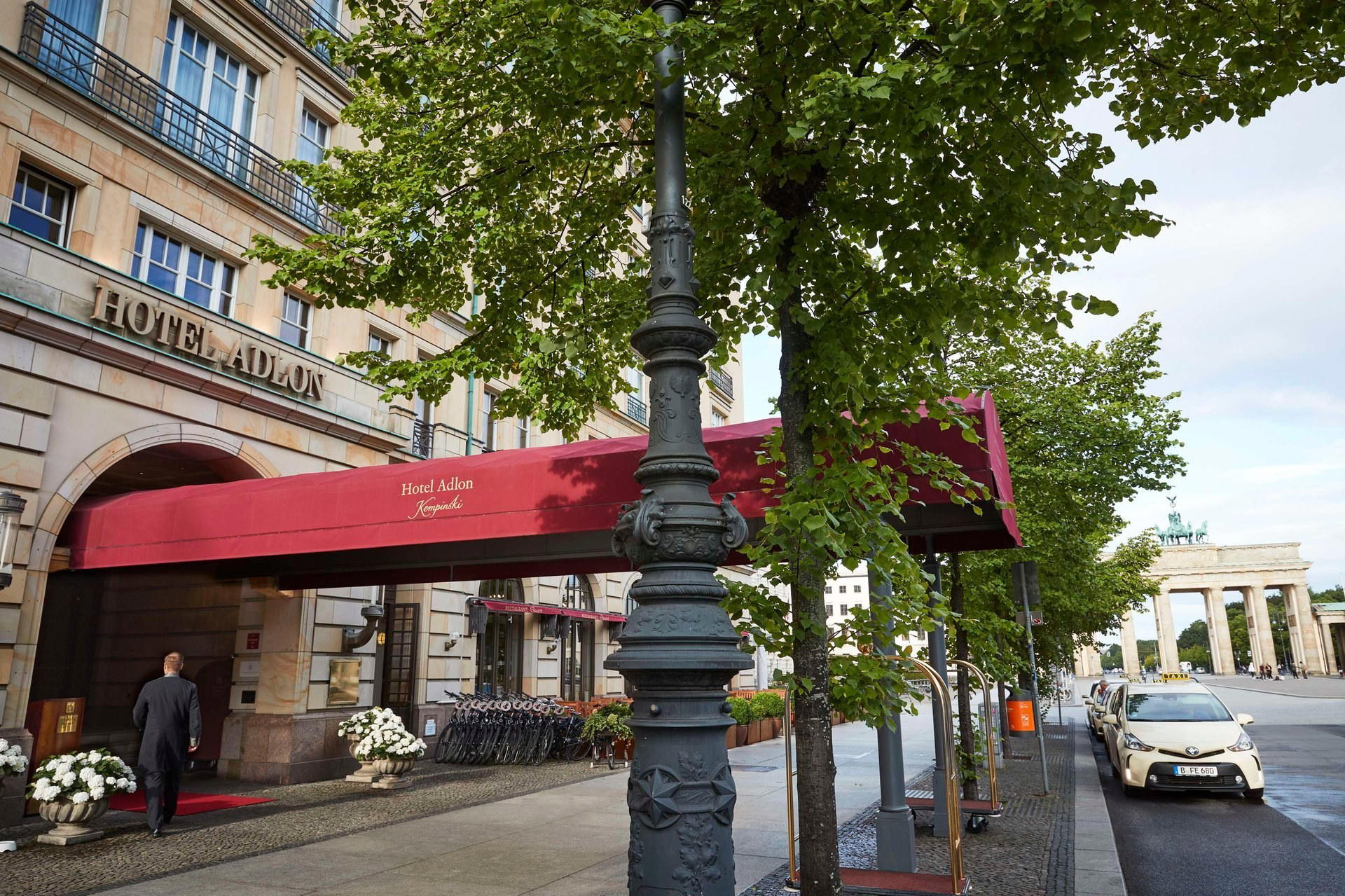
Behrenstraße runs east from the Brandenburger Tor into the heart of Mitte, and the stretch around number 42 sits at the intersection of Berlin's diplomatic, cultural, and commercial life. Hotels of consequence, embassies, and cultural institutions occupy the surrounding blocks. This is not a neighbourhood that rewards casual discovery in the way that, say, Kreuzberg or Prenzlauer Berg do. It rewards intention. Guests who arrive here have usually decided, in advance, that they want to eat in a room that takes the occasion seriously.
That pre-selection effect shapes the dining experience. The clientele at this address skews toward those on extended stays, corporate hospitality, diplomatic entertaining, and anniversary occasions. The kitchen and service team know this, and format accordingly. Compare this to Restaurant Tim Raue, which draws a more globally diverse and food-press-facing crowd to its Kreuzberg address, or to the neighbourhood-restaurant intimacy that defines parts of the broader Berlin dining scene. Gendarmerie is playing a different match, on a different pitch.
For international visitors staying in the Mitte hotel corridor or attending events nearby, the restaurant's location removes transit friction. In a city where serious dining is spread across a large geographic footprint, that convenience is not trivial. Comparable ease of access attaches to few rooms of this register in the German capital.
Where Gendarmerie Sits in the German Fine Dining Conversation
Germany's serious dining circuit extends well beyond Berlin, and understanding where a Mitte restaurant fits requires placing it against that wider field. The Michelin-decorated rooms that define German fine dining at its most technically ambitious are often found outside the major cities: Schwarzwaldstube in Baiersbronn, ES:SENZ in Grassau, Victor's Fine Dining by Christian Bau in Perl. Berlin's position in that national hierarchy has historically been complicated: the city's size and cultural weight do not automatically translate into a density of three-star dining that matches Paris or Tokyo.
What Berlin does well, and what the leading rooms in Mitte have learned, is a kind of institutional confidence that capital cities produce in their serious restaurants. The equivalent instinct appears at Restaurant Haerlin in Hamburg and at JAN in Munich: a sense that the room is equipped for any version of the occasion the guest brings to it. Internationally, this same register appears at rooms like Le Bernardin in New York City, where technical seriousness and occasion-readiness are held in sustained balance, or at Atomix, where format discipline and a specific cultural argument are maintained simultaneously. The reference points differ, but the challenge is the same: building a room that a serious traveller trusts on arrival, without prior research, because the address and the context do the work that reputation alone cannot.
Closer to home, Schanz in Piesport and Bagatelle in Trier represent the western German dining scene's capacity to sustain serious rooms in smaller cities. Gendarmerie's Mitte address gives it a different kind of exposure: the volume of international visitors passing through the Gendarmenmarkt area means that the restaurant's audience is, by default, more global than most German fine-dining rooms outside Frankfurt or Munich.
Planning Your Visit
Behrenstraße 42 is reachable on foot from the Brandenburger Tor S-Bahn station in under ten minutes, and the Französische Straße U-Bahn stop on the U6 line is a short walk in the other direction. For visitors staying along the Unter den Linden corridor or near the Gendarmenmarkt, the restaurant is a practical first-night choice that requires no transport planning. Given the address and the occasion-ready register of the room, booking ahead is advisable, particularly for weekend evenings when the square draws significant foot traffic and competing demand on the surrounding hospitality stock. Contacting the restaurant directly through its Behrenstraße address to confirm current hours and reservation availability is one reliable approach, as specific operational details were not available at time of publication.
At a Glance
Comparable venues nearby, for context on price, style, and recognition.
| Venue | Cuisine | Price |
|---|---|---|
| Hauptstadtrestaurant GendarmerieThis venue — the venue you are viewing | Not listed | $$$ |
| Jolie Bistrot | Prenzlauer Berg, Modern French Bistro | $$$ |
| Austernbank | Mitte, Modern French Seafood | $$$ |
| Joynes Kitchen | Charlottenburg, Modern French Bistro | $$$ |
| MANON | Charlottenburg, Modern French Brasserie | $$$ |
| Bostich | Wilmersdorf, French-Swiss Bistro | $$$ |
Continue exploring
More in Berlin
Restaurants in Berlin
Browse all →
Bars in Berlin
Browse all →
Hotels in Berlin
Browse all →

At a Glance
- Elegant
- Sophisticated
- Classic
- Business Dinner
- Date Night
- Special Occasion
- Historic Building
- Extensive Wine List
- Local Sourcing
Current opening hours
- Monday
- 11 AM–1 AM
- Tuesday
- 11 AM–1 AM
- Wednesday
- 11 AM–1 AM
- Thursday
- 11 AM–1 AM
- Friday
- 11 AM–1 AM
- Saturday
- 11 AM–1 AM
- Sunday
- 11 AM–1 AM
Hours can change for holidays and private events. Last verified .
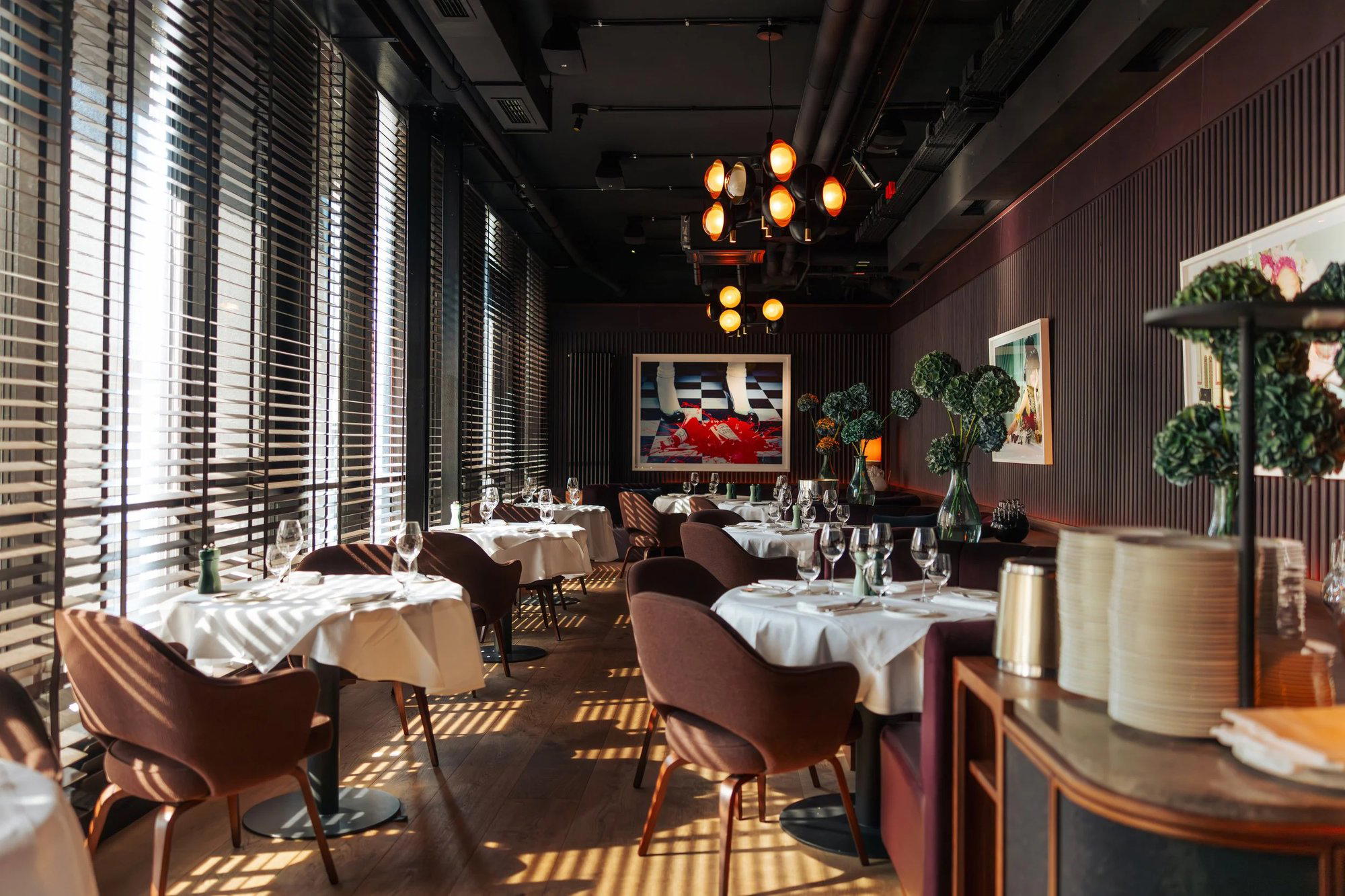
Sophisticated and warm atmosphere with high ceilings, elegant decor, large-format art, and a dramatic 3D wooden relief capturing Berlin's cultural essence.