Located on Ludwigkirchstraße in Wilmersdorf, Bostich occupies one of Berlin's quieter residential corridors, away from the city's more trafficked dining circuits. The address places it in a neighbourhood that rewards deliberate discovery, where the surrounding streets carry more local residential character than tourist footfall. For visitors oriented toward Berlin's broader dining scene, it represents an alternative entry point to the city's range.
Pearl is the En Primeur Club membership app — saves, bookings, and concierge access live there. Same editors, same standards.
- Address
- Ludwigkirchstraße 10A, 10719 Berlin, Germany
- Phone
- +493088625614
- Website
- bostich.berlin
- Directions
- Get directions
 Saves & bookings on Pearl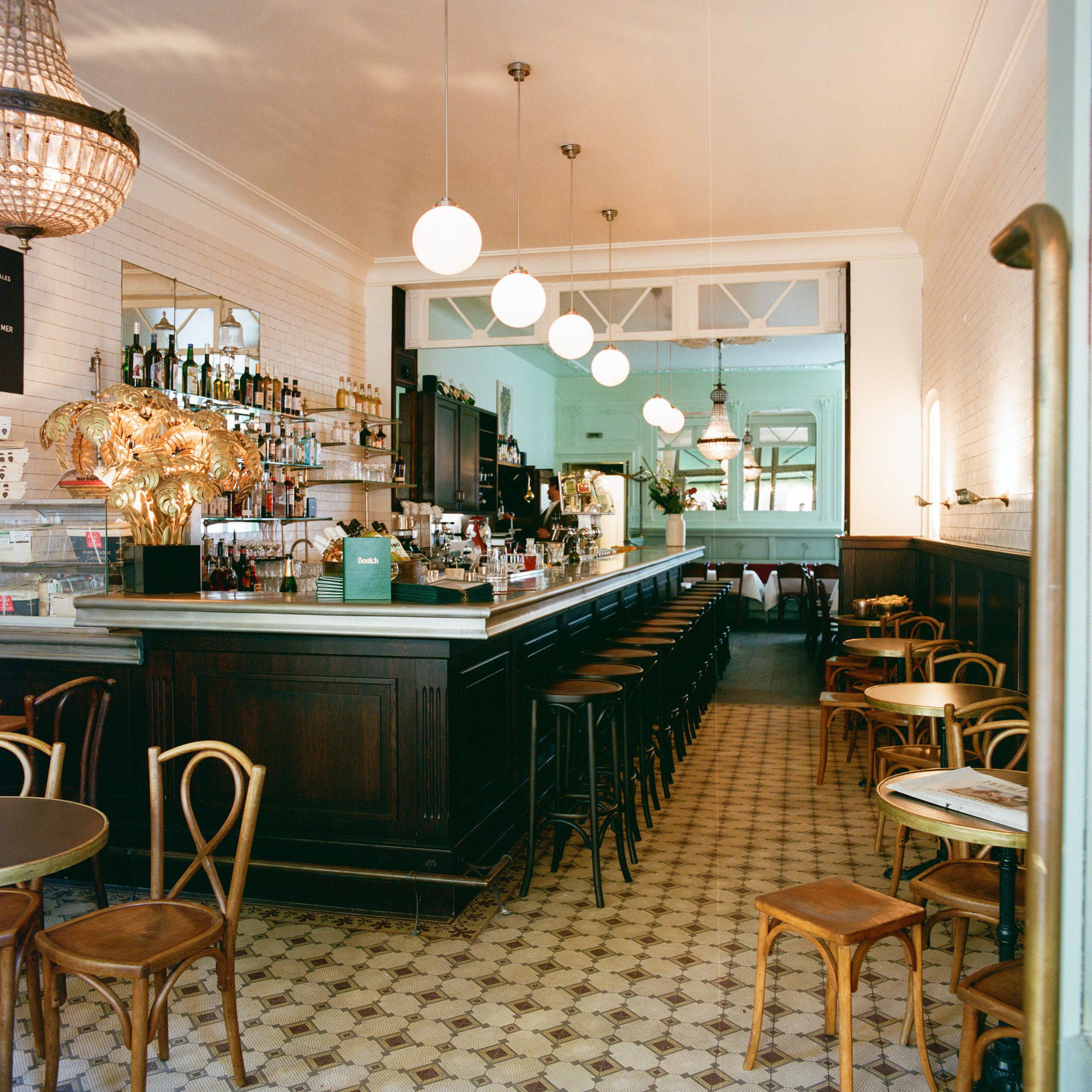
Wilmersdorf's Quieter Register
Berlin's dining conversation tends to concentrate on a handful of districts: Mitte for the Michelin tier, Kreuzberg and Neukölln for the natural-wine and counter-culture end, Prenzlauer Berg for neighbourhood bistros with longer histories. Wilmersdorf, by contrast, operates at a lower frequency in that conversation. The streets around Ludwigkirchstraße are residential in character, lined with prewar apartment facades and the kind of neighbourhood commerce that serves locals rather than draws itineraries. Bostich sits at number 10A, inside that quieter register.
In a city where dining geography signals intent almost as clearly as cuisine type, choosing a Wilmersdorf address is a positioning decision. The venues that work in this part of the city tend to do so by building a loyal local following rather than cycling through visitors. That pattern shapes the atmosphere inside: less performance, more repetition. Regulars who know the room, know the staff, know broadly what they are returning for.
Berlin's Neighbourhood Dining Circuit
To place Bostich within Berlin's wider dining structure, it helps to understand the market the city currently supports. At the Michelin-decorated end, restaurants like Rutz, Nobelhart & Schmutzig, FACIL, and CODA Dessert Dining operate with tasting-menu formats and price points that sit firmly in the €€€€ tier. At the other end, Berlin has long sustained a dense network of neighbourhood restaurants operating on shorter menus, lower margins, and higher turnover, feeding residents rather than occasion-diners. The middle ground between these two poles is where most of the city's interesting discoveries tend to sit, and Wilmersdorf has historically supported that middle register well.
The comparison with Berlin's decorated tier is instructive not because Bostich competes directly with those rooms, but because the city's upper-end scene absorbs a specific kind of dining attention, leaving room for venues in residential corridors to develop their own audience without that competitive pressure. Restaurant Tim Raue and its peers draw the long-haul destination visitor; what remains in districts like Wilmersdorf is a more settled, local-facing dynamic.
The Ludwigkirchstraße Address
The street itself is worth noting for anyone unfamiliar with this part of Berlin. Ludwigkirchstraße runs between Hohenzollerndamm and the Kurfürstendamm axis, in the stretch of western Wilmersdorf that retained more of its prewar urban fabric than much of central Berlin. The area has a different tempo from the eastern districts that have dominated Berlin's cultural narrative since reunification. It is quieter, more established, and populated by a mix of long-term residents and professionals who treat the neighbourhood's restaurants as extensions of daily life rather than destinations on a list.
For a visitor arriving from elsewhere in the city, the approach to Bostich through these streets sets a particular frame. The Kurfürstendamm is close enough to reach on foot, but the immediate surroundings on Ludwigkirchstraße have none of that boulevard's commercial weight. The effect is a kind of decompression: the city recedes slightly, and the room ahead becomes the point rather than the journey.
Situating Bostich in Germany's Wider Dining Map
Germany's most recognised restaurants are distributed with some geographic spread. The three-star tier includes rooms far outside the capital: Schwarzwaldstube in Baiersbronn, Aqua in Wolfsburg, Vendôme in Bergisch Gladbach, and Victor's Fine Dining by Christian Bau in Perl. The two-star bracket extends to JAN in Munich, ES:SENZ in Grassau, Schanz in Piesport, and Waldhotel Sonnora in Dreis. Even at the city level, Restaurant Haerlin in Hamburg and Bagatelle in Trier represent how Germany's serious dining is not concentrated in Berlin alone.
Berlin's decorated restaurants have historically underperformed relative to the city's size and cultural weight when measured against comparable European capitals. That gap has narrowed over the past decade, but it has also meant that a significant part of Berlin's dining interest lies outside the starred tier entirely, in rooms that operate on consistency and neighbourhood loyalty rather than guide recognition. Bostich's position on Ludwigkirchstraße places it within that broader pattern of Berlin dining that operates outside the decorated circuit.
For readers interested in how Berlin's scene compares internationally, it is worth noting that the city's neighbourhood-restaurant culture has parallels in certain New York and San Francisco enclaves. Rooms like Le Bernardin in New York City and Lazy Bear in San Francisco represent the decorated, high-concept end of those markets, but both cities also sustain a dense tier of neighbourhood-anchored venues that do their most important work quietly, away from awards cycles.
What the Address Suggests About the Experience
What the address does confirm is the frame: a Wilmersdorf location on a residential side street selects for a particular kind of operator, one who has chosen neighbourhood depth over destination visibility. That choice tends to correlate with consistency over spectacle, a room built for return visits rather than first impressions, and pricing that reflects local market tolerance rather than occasion-dining premiums.
The name itself, Bostich, carries no obvious cuisine signal, which in Berlin's current scene is not unusual. The city has moved away from names that announce cuisine or nationality, following a broader European trend toward neutrally named rooms that let the food and room define themselves. Whether Bostich follows that pattern or is simply operating under a name that doesn't translate immediately into a category, the address anchors it in a neighbourhood context that will shape the visit regardless of what's on the plate.
Know Before You Go
- Address: Ludwigkirchstraße 10A, 10719 Berlin, Germany
- Neighbourhood: Wilmersdorf, western Berlin
- Nearest major artery: Within walking distance of Kurfürstendamm
- Booking: Recommended
- Price range: About $60 per person
- Hours: Mon to Fri 5 PM to 12 AM; Sat 4 PM to 12 AM; Sun 4 to 10:30 PM
Side-by-Side Snapshot
Comparable venues nearby, for context on price, style, and recognition.
| Venue | Cuisine | Price | Notes |
|---|---|---|---|
| BostichThis venue — the venue you are viewing | French-Swiss Bistro | $$$ | Not listed |
| Joynes Kitchen | Modern French Bistro | $$$ | Charlottenburg |
| CARTE BLANCHE | French Brasserie | $$$ | Tiergarten |
| Austernbank | Modern French Seafood | $$$ | Mitte |
| Brasserie Le Paris | Classic French Brasserie | $$$ | Charlottenburg |
| Le Faubourg | Modern French with Regional Influences | $$$ | Charlottenburg |
Continue exploring
More in Berlin
Restaurants in Berlin
Browse all →
Bars in Berlin
Browse all →
Hotels in Berlin
Browse all →

At a Glance
- Modern
- Elegant
- Sophisticated
- Intimate
- Date Night
- Business Dinner
- Group Dining
- Celebration
- Special Occasion
- Standalone
- Design Destination
- Extensive Wine List
- Natural Wine
- Local Sourcing
- Street Scene
Current opening hours
- Monday
- 5 PM–12 AM
- Tuesday
- 5 PM–12 AM
- Wednesday
- 5 PM–12 AM
- Thursday
- 5 PM–12 AM
- Friday
- 5 PM–12 AM
- Saturday
- 4 PM–12 AM
- Sunday
- 4–10:30 PM
Hours can change for holidays and private events. Last verified .
Elegant yet relaxed French-Swiss bistro atmosphere with vintage Art Deco details, palm-tree lamps, red wicker chairs, and a lively dining room that can feel louder than expected.