
Few addresses in Italy carry the cultural freight of Harry's Bar on Calle Vallaresso. Declared a national cultural landmark by the Italian Ministry of Cultural Heritage, it occupies a category of its own in Venice's dining hierarchy, not as a restaurant competing on tasting menus, but as a living document of mid-century European hospitality that shaped how the world thinks about Bellinis, carpaccio, and the well-run bar counter.
Pearl is the En Primeur Club membership app — saves, bookings, and concierge access live there. Same editors, same standards.
- Address
- Calle Vallaresso, 1323, 30124 Venezia VE, Italy
- Phone
- +39 041 528 5777
- Website
- cipriani.com
- Directions
- Get directions
 Saves & bookings on Pearl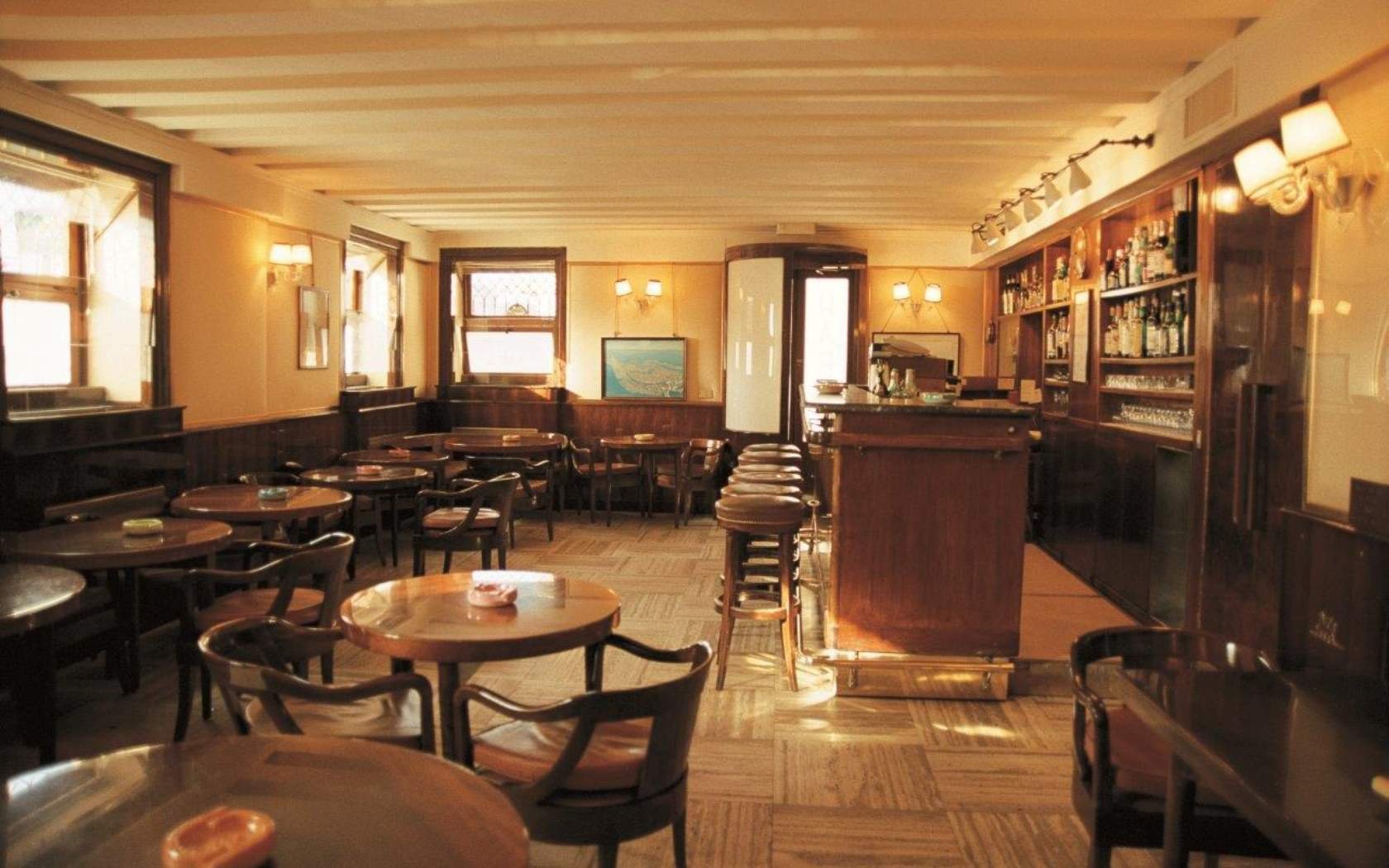
A Room That Has Already Made Up Its Mind
Walk through the low door on Calle Vallaresso and the room offers no dramatic reveal. The ceiling is not high, the lighting is not theatrical, and the decor has not been refreshed to signal contemporary relevance. That studied plainness is precisely the point. In a city where tourism has layered spectacle over almost every surface, Harry's Bar operates as though the conversation stopped in 1950 and nobody saw any reason to resume it. Wooden paneling, white tablecloths, and a compact bar counter occupy a space that could seat fifty people upstairs and a similar number on the ground floor, the kind of room where proximity to other diners is a given and the acoustics carry accordingly.
The Italian Ministry of Cultural Heritage formally designated Harry's Bar a national landmark in 2001, placing it in the same protected category as historic monuments. That designation shapes what you are actually booking when you reserve a table: not a restaurant in the conventional sense, but a room that has been declared part of the country's cultural record. Within Venice's dining hierarchy, which now includes technically accomplished rooms like Glam Restaurant by Enrico Bartolini and the modern Italian precision of Local, Harry's Bar occupies a different axis entirely. It is not competing with them on culinary innovation; it is representing something those rooms cannot: a specific, documented moment in European hospitality history.
What Gets Ordered Here
Two items have accumulated enough documented cultural weight to function as the de facto reason most first-time visitors walk through the door. The Bellini, white peach puree and Prosecco, was created at Harry's Bar and has since become one imitated cocktail format in Italian aperitivo culture. Ordering one here is less about finding the definitive version (though the preparation is consistent and the peach component seasonal when fruit is available) and more about the act of completing a reference. The same logic applies to carpaccio, the paper-thin raw beef dish that takes its name from the Venetian Renaissance painter and was developed in this room. Both items appear on virtually every listing of dishes invented at a single address anywhere in the world.
The broader menu reads as classic Venetian-Italian rather than contemporary: risotto, fish from the Adriatic, pasta in formats that have not chased trend. Compared to the creative Italian programming at Oro Restaurant or the refined modern cuisine at Ristorante Quadri on the opposite side of the Grand Canal, the restaurant's kitchen is making no argument for innovation. Its argument is continuity, and on those terms it has been consistent across decades.
Planning the Visit: What the Booking Reality Looks Like
Harry's Bar does not use a major third-party reservation platform in the conventional sense, and the booking experience reflects its overall disposition toward the pre-digital era. The standard approach is a direct telephone or email inquiry to the venue, planned well in advance of your travel dates. During peak Venetian tourist season, roughly April through October, with August and September particularly compressed, tables for lunch or dinner on short notice are not reliably available. The window of relative accessibility is November through early March, when Venice's visitor numbers drop sharply and the room operates at a more human pace.
The address itself (Calle Vallaresso, 1323, in the San Marco sestiere) is a short walk from the San Marco vaporetto stop, which matters in Venice because the alternative is either a water taxi or a longer pedestrian route through the labyrinth of the Dorsoduro and San Marco borders. Arriving by water taxi directly to the nearby landing is one direct approach if you are coming from a hotel on the Grand Canal or from the train station at Santa Lucia. Budget accordingly: water taxis in Venice price at a premium relative to the vaporetto, and the difference in journey time is measured in minutes rather than in any meaningful comfort gap for short distances.
Dress code expectations at the restaurant align with the room's formality register: smart casual is the floor, but the room skews toward jacket-wearing guests in the evening, and anything visibly tourist-casual (shorts, athletic footwear) sits poorly against the decor and the general expectation of the clientele. This is not a venue that enforces a written dress policy prominently, but the social pressure of the room does the same work.
Wistèria offers a contemporary counterpoint, and maps the full range from traditional Venetian trattorie to the technically ambitious rooms now operating in the city.
Where Harry's Bar Sits in Italian Fine Dining Context
Across Italy's serious dining circuit, the benchmark conversations tend to center on creative ambition: rooms like Osteria Francescana in Modena, Le Calandre in Rubano, Piazza Duomo in Alba, or Reale in Castel di Sangro attract the kind of critical attention that tracks Italy's evolving position in global gastronomy. Coastal and seafood-focused institutions like Uliassi in Senigallia and Quattro Passi in Marina del Cantone demonstrate what Adriatic and Tyrrhenian ingredients can do in technically accomplished hands. And in the north, Atelier Moessmer Norbert Niederkofler in Brunico pushes at what Italian alpine cuisine means in a contemporary register.
The restaurant engages with a different conversation, and the point is that it doesn't need to. Its comparable set internationally is closer to a room like Le Bernardin in New York City in the sense of an address whose reputation is now largely self-sustaining and whose cultural weight operates independently of any particular season's menu. The comparison to innovation-led venues at places like Lazy Bear in San Francisco would be a category error. The restaurant is doing something categorically different: it is maintaining a version of European hospitality that the rest of the industry moved away from, and doing so in a room that the Italian government has formally decided belongs to the national heritage.
Whether that is worth the price premium over comparable Venetian dining, and the prices here reflect the address, the cultural status, and the tourist demand rather than kitchen ambition, is a question that depends entirely on what you are there to do. If the answer is to sit in a room that invented two fixtures of global restaurant culture and has been formally designated part of Italy's cultural heritage, the calculus is clear. If the answer is to eat technically considered food Venice currently offers, the room is not the right starting point. Both are legitimate positions. The venue is explicit, in its way, about which one it is making an argument for.
In Context: Similar Options
Comparable venues nearby, for context on price, style, and recognition.
| Venue | Cuisine | Price | Notes |
|---|---|---|---|
| Harry's BarThis venue — the venue you are viewing | Classic Venetian Italian | $$$$ | Not listed |
| Restaurant Terrazza Danieli | Venetian Mediterranean Fine Dining | $$$$ | Castello |
| Acquerello Restaurant | Modern Venetian & Contemporary Italian | $$$$ | Isola di San Clemente |
| Carpaccio | Traditional Venetian Seafood | $$$ | Castello |
| Osteria Da Carla | Modern Venetian Osteria | $$$ | San Marco |
| Trattoria Do Forni | Traditional Venetian Seafood | $$$$ | San Marco |
Recognition history
Dated appearances from independent guides and award organizations, with the underlying list record or original source where available.
Opinionated About Dining Casual in Europe Recommended
Opinionated About Dining
Continue exploring
More in Venice
Restaurants in Venice
Browse all →

Bars in Venice
Browse all →
Hotels in Venice
Browse all →
At a Glance
- Classic
- Elegant
- Well Known
- Intimate
- Sophisticated
- Date Night
- Special Occasion
- Historic Building
- Craft Cocktails
- Waterfront
- Street Scene
Current opening hours
- Monday
- 11 AM–11 PM
- Tuesday
- 11 AM–11 PM
- Wednesday
- 11 AM–11 PM
- Thursday
- 11 AM–11 PM
- Friday
- 11 AM–11 PM
- Saturday
- 11 AM–11 PM
- Sunday
- 11 AM–11 PM
Hours can change for holidays and private events. Last verified .
Understated art-deco cocoon of dark wood and snowy linen with a club-like atmosphere of Europe's historic cafes.