

Michelin Bib Gourmand
Our verdict
Jia Jia Tang Bao on Huanghe Road has held a place on Opinionated About Dining's Casual Asia list for three consecutive years, ranking as high as #15 in 2025. The kitchen focuses exclusively on soup dumplings, delivering the Shanghainese xiao long bao format at a pace and price that the city's formal dining rooms cannot match.000 reviews confirms its standing beyond critical circles.

Pearl is the En Primeur Club membership app — saves, bookings, and concierge access live there. Same editors, same standards.
- Address
- 90 Huanghe Rd, People's Square, Huangpu, Shanghai, China, 200003
- Phone
- +86 21 6327 6878
- Hours
- Daily 9 AM–9:30 PM
- Directions
- Get directions
The menu
What to order
- Pork and crab xiaolongbao
- Pure crab xiaolongbao
What a Soup Dumpling Queue Tells You About Shanghai
Before you reach the counter at Jia Jia Tang Bao, you pass the queue. On Huanghe Road, a short walk from People's Square, that queue is a fixture rather than a surprise. It forms regardless of hour, weather, or season, and it tells you something about how Shanghai organises its appetite: the city's most technically demanding street-format food attracts serious eaters who are prepared to wait, and the currency is consistency rather than novelty.
Xiao long bao, the soup dumpling that defines this corner of Shanghainese cuisine, is a test of patience and precision in roughly equal measure. The wrapper must be thin enough to be translucent but strong enough to hold the jellied stock that liquefies during steaming. Pleat count matters. Filling ratio matters. The window between steamer basket and table is measured in seconds. Restaurants that do this at volume, without cutting corners on any of those variables, occupy a rare position in a city where the format is everywhere but the execution is inconsistent.
Three Years on the OAD Casual Asia List
Opinionated About Dining's Casual Asia ranking reflects surveyed opinions from a network of serious eaters across the region. Jia Jia Tang Bao has appeared on that list three consecutive years: ranked #17 in 2023, #19 in 2024, and climbing to #15 in 2025. That trajectory matters. Casual dining lists in Asia are competitive precisely because the category is broad, and holding a position across three survey cycles indicates sustained performance rather than a single good season.
For context, Shanghai's upper dining tier includes two-Michelin-starred vegetarian destination Fu He Hui, Taizhou specialist Xin Rong Ji (West Nanjing Road), and modern European tasting counter Taian Table. Jia Jia Tang Bao operates in a different register entirely, one where the measure of quality is not the number of courses or the imported ingredient list, but the structural integrity of a wrapper and the temperature of the broth inside it.
Menu Architecture: One Format, Multiple Signals
The editorial angle that leading illuminates Jia Jia Tang Bao is menu architecture, because the kitchen's discipline is visible in what it does not offer as much as in what it does. A focused soup dumpling operation resists the temptation to expand into a broader dim sum or noodle menu, which would distribute attention and create consistency risks across a wider range of preparations. The xiao long bao format demands that kitchen staff maintain the same muscle memory across hundreds of identical folds per service, and that concentration shows in the product.
Shanghainese xiao long bao fillings typically anchor around pork, with crab roe versions representing the premium tier of the format. The pork-and-crab combination, huang jin tang bao in some houses, commands higher prices and signals the kitchen's ambition beyond the baseline. The base version is the proof of concept; everything above it is argument.
The steamer basket itself is the plating. There is no garnish, no sauce smear, no architectural flourish. The visual presentation is entirely functional: bamboo tray, parchment, dumplings arranged in a circle. This is a format in which the container communicates seriousness in its own right. Bamboo steamers regulate moisture. The arrangement of dumplings within them affects steam circulation. Restaurants that swap to stacked metal or ceramic setups for aesthetic reasons often compromise the product. The traditional format is not nostalgia; it is engineering.
People's Square and the Huanghe Road Corridor
The address on Huanghe Road places Jia Jia Tang Bao in a dense, commercial stretch of Huangpu district, adjacent to People's Square. This is not the curated restaurant corridor of the French Concession or the designer-facing blocks around Xintiandi. Huanghe Road runs through a section of the city that mixes office buildings, budget hotels, and food stalls, and it has long functioned as a practical eating district for workers, shoppers, and tourists moving through the central transit hub. That context matters: the queue at Jia Jia Tang Bao draws from all of those categories simultaneously, and the lack of a reservation system flattens the hierarchy between visitors and regulars in a way that more formal dining rooms do not.
Shanghai's casual dining geography is spread across multiple districts, and finding a soup dumpling operation that has sustained critical recognition for three years in this particular location reflects the density of foot traffic and the competitive pressure it creates. Mediocre execution does not survive long on a street where alternatives are visible and the turnover rate is high.
Shanghai Soup Dumplings in Global Context
The xiao long bao format has migrated well beyond Shanghai. In New York, Bao, The represents the format's presence in the American market. In Los Angeles, dan Modern Chinese works within a similar category. Neither of those operations competes on the same terms as a Huanghe Road queue-and-steamer format: the logistics, the labour cost, the ingredient sourcing, and the price point are all different. What they share is the technical standard that the wrapper-to-filling ratio and broth retention demand, and that standard is easier to evaluate at origin than at export.
For readers moving across China's dining cities, the Taizhou and Cantonese registers are well represented in the broader EP Club network: Xin Rong Ji in Beijing, Xin Rong Ji in Chengdu, Ru Yuan in Hangzhou, Imperial Treasure Fine Chinese Cuisine in Guangzhou, Dai Yuet Heen in Nanjing, and Chef Tam's Seasons in Macau. Across Shanghai itself, 102 House (Cantonese) and 8 1/2 Otto e Mezzo Bombana represent the higher-end registers across different cuisine categories. The full picture of where to eat, drink, and stay in the city is covered in our full Shanghai restaurants guide, our full Shanghai hotels guide, our full Shanghai bars guide, our full Shanghai wineries guide, and our full Shanghai experiences guide.
Know Before You Go
- Address: 90 Huanghe Road, People's Square, Huangpu, Shanghai 200003
- Hours: Monday to Sunday, 9:00 am to 9:30 pm
- Bookings: No confirmed reservation system; expect a queue during peak hours
- Awards: Opinionated About Dining Casual Asia #15 (2025), #19 (2024), #17 (2023)
- Getting There: People's Square metro station (Lines 1, 2, 8) is the nearest major hub; Huanghe Road is a short walk north
Frequently asked questions
What days is Jia Jia Tang Bao closed?
Hours at Jia Jia Tang Bao: Hours: Monday 9 am–9:30 pm Tuesday 9 am–9:30 pm Wednesday 9 am–9:30 pm Thursday 9 am–9:30 pm Friday 9 am–9:30 pm Saturday 9 am–9:30 pm Sunday 9 am–9:30 pm.
Has Jia Jia Tang Bao won any awards?
Jia Jia Tang Bao has received recognition including: Opinionated About Dining Casual in Asia Ranked #15 (2025); Opinionated About Dining Casual in Asia Ranked #19 (2024); Opinionated About Dining Casual in Asia Ranked #17 (2023).
What do people recommend at Jia Jia Tang Bao?
The kitchen's focus is xiao long bao, Shanghai's soup dumpling format, and that is effectively the entire menu. Opinionated About Dining's Casual Asia survey network — a circuit of serious regional eaters — has ranked the restaurant in its top 20 for three consecutive years (2023, 2024, and 2025), which gives weight to the crowd consensus visible in the Huanghe Road queue. Order the xiao long bao and plan your visit around the 9am–9:30pm daily hours.
Where is Jia Jia Tang Bao located?
Jia Jia Tang Bao is located at 90 Huanghe Rd, People's Square, Huangpu, Shanghai, China, 200003, Shanghai.
Who is the chef connected to Jia Jia Tang Bao?
The chef associated with Jia Jia Tang Bao is Various.
Cuisine and Awards Snapshot
| Venue | Cuisine | Price | Awards | Notes |
|---|---|---|---|---|
| Jia Jia Tang BaoThis venue — the venue you are viewing | Shanghai Xiaolongbao | $10–20 | Michelin Bib Gourmand | Not listed |
| Fu He Hui | Modern Seasonal Vegetarian Fine Dining | $200–300 | 2 Michelin Stars · World's 50 Best #11 | Vegetarian |
| Ming Court | Cantonese with Shanghainese Influences | $30–50 | 1 Michelin Star · Black Pearl 1 Diamond | Cantonese |
| Polux | French Bistro | $30–50 | Michelin Bib Gourmand | Not listed |
| Royal China Club | Modern Cantonese fine dining | $50–100 | Michelin Plate | Not listed |
| Scarpetta | Refined Italian Pasta & Pizza | $50–100 | Michelin Plate · Wine Spectator Best of Award of Excellence | Not listed |
Recognition history
Dated appearances from independent guides and award organizations, with the underlying list record or original source where available.
Michelin Bib Gourmand
Michelin
Opinionated About Dining Casual in Asia Ranked #24
Opinionated About Dining
Full recognition history (8 entries)
Michelin Bib Gourmand
Michelin
Michelin Bib Gourmand
Michelin
Opinionated About Dining Casual in Asia Ranked #15
Opinionated About Dining
Michelin Bib Gourmand
Michelin
Opinionated About Dining Casual in Asia Ranked #19
Opinionated About Dining
Opinionated About Dining Casual in Asia Ranked #17
Opinionated About Dining
Continue exploring
More in Shanghai
More from Chef Various
Browse all →
Restaurants in Shanghai
Browse all →
Bars in Shanghai
Browse all →
Details
- Lively
- Casual Hangout
- Open Kitchen
- A La Carte
Current opening hours
- Monday
- 9 AM–9:30 PM
- Tuesday
- 9 AM–9:30 PM
- Wednesday
- 9 AM–9:30 PM
- Thursday
- 9 AM–9:30 PM
- Friday
- 9 AM–9:30 PM
- Saturday
- 9 AM–9:30 PM
- Sunday
- 9 AM–9:30 PM
Hours can change for holidays and private events. Last verified .
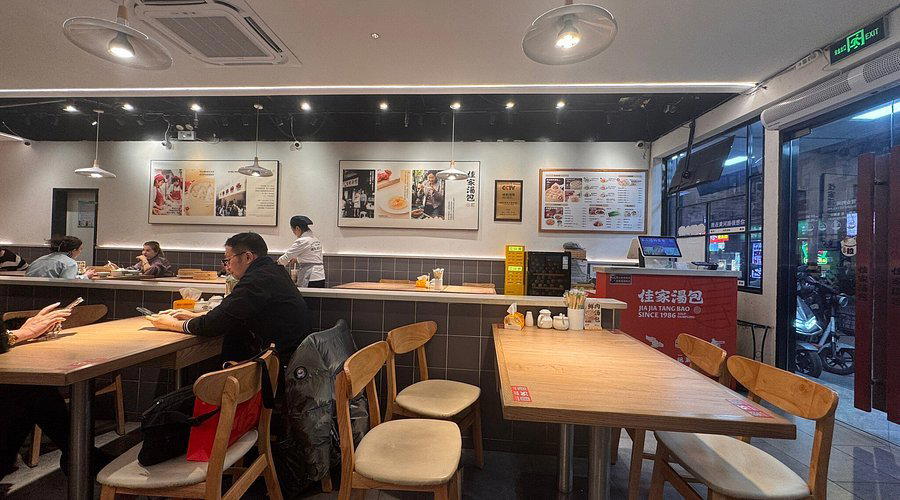
Cramped, basic cafeteria-style with communal tables, bustling local atmosphere lacking refinement but focused on food.