Groenland

We're Smart World 3 Radishes
Our verdict
An organic restaurant in the heart of Driebergen-Rijsenburg, Groenland occupies a courtyard setting divided into distinct interior zones where sustainability informs every decision, from building materials to what arrives on the plate. Dishes like grilled seaweed with cauliflower cream and wheat beer mousseline, and pumpkin risotto with smoked duck breast, reflect a kitchen that sources ingredients with the same care it applies to its broader environmental commitments.

Pearl is the En Primeur Club membership app, where members save venues, book tables and use the concierge.
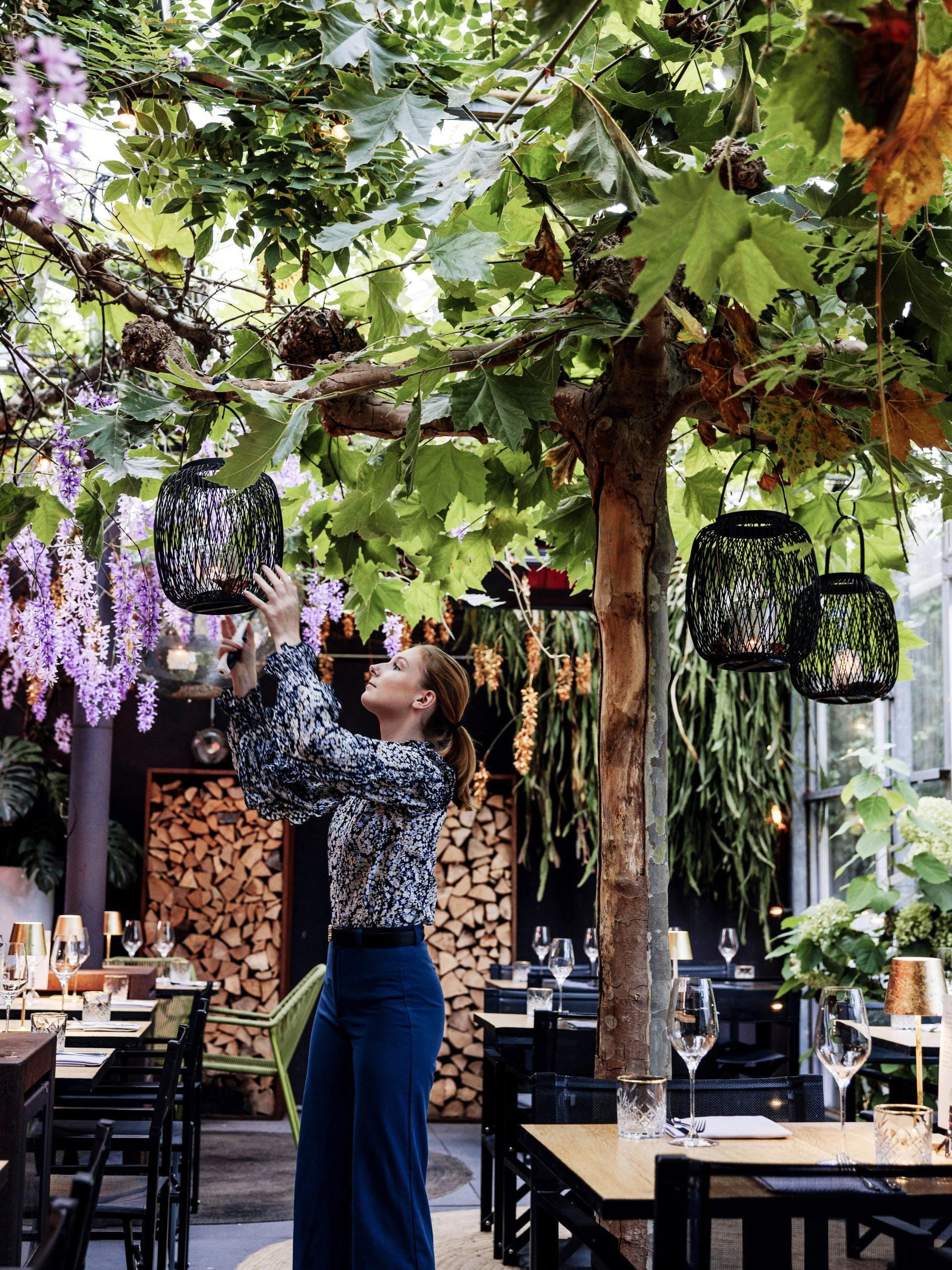
Where the sourcing philosophy shapes the room as much as the plate
Driebergen-Rijsenburg sits in the Utrechtse Heuvelrug, the wooded ridge that separates the Utrecht basin from the Veluwe, and it carries a character that larger Dutch cities rarely manage: residential scale, mature trees, and a pace that invites the kind of unhurried eating that organic restaurants require to make their case properly. Hoofdstraat, the town's main artery, is lined with independent businesses rather than chain operators, which makes it a fitting address for a restaurant whose identity is built on accountability at every supply-chain step.
Groenland's courtyard is the first signal that this is not a venue organised around conventional hospitality logic. Outdoor dining in the Netherlands is a seasonal calculation, and a sheltered courtyard changes that calculation meaningfully, extending the usable season and giving the space a botanical calm that glass-fronted, street-facing restaurants rarely achieve. Inside, the restaurant is divided into distinct spheres rather than a single undifferentiated room, a layout that allows different group sizes and visit purposes to coexist without each diminishing the other.
Organic credentials as a structural commitment, not a marketing position
At the fine-dining tier, De Nieuwe Winkel in Nijmegen has made plant-forward organic cooking one of the most discussed restaurant formats in the country. At the accessible end, organic certification can function as a vague signal rather than a verifiable system of procurement decisions. Groenland sits in between: an establishment with documented sustainability commitments that extend beyond the kitchen to the physical fabric of the building and its materials.
This matters because organic labelling in restaurant contexts is inconsistently applied across the Netherlands. A kitchen that limits its commitment to a few headline ingredients is materially different from one that interrogates the provenance of materials used to build the room. Groenland's stated approach covers both, which positions it closer to the conviction-led operators than to those deploying organic as a surface-level differentiator. For context, the broader European movement toward holistic sustainability in hospitality, from supply chain to interior specification, has accelerated since roughly 2018, and Dutch operators have been among the more systematic practitioners of that approach.
Reading the menu as a sourcing document
The dishes on record at Groenland read as a coherent argument for ingredient-led cooking rather than technique-led showmanship. Pumpkin risotto with leek, sage, and smoked duck breast keeps its flavour logic grounded in seasonal produce combinations that have earned their place in Dutch autumn and winter cooking over generations. The smoky weight of duck against the mild sweetness of pumpkin and the herbal anchor of sage is a combination that requires good ingredients to work at all; it has nowhere to hide behind reduction sauces or complex plating.
The salad of sugar snaps, puffed shallot, soy-ginger dressing, goat cheese, and sesame tuile is a more technically considered plate, one that balances textural contrast with the clean, bright flavour profile that good seasonal vegetables can carry. Sugar snaps at peak ripeness need almost nothing done to them; the surrounding elements here function as counterweight rather than distraction. The goat cheese places this in a Dutch dairy tradition with genuine regional depth, given the country's long history of artisan cheesemaking in the central provinces.
Grilled seaweed with cream of cauliflower, green asparagus, mousseline of wheat beer, sweet-sour beet, and parsley oil is the dish that signals the kitchen's ambition most clearly. Seaweed has moved from occasional garnish to serious ingredient in contemporary European cooking, partly because of its sustainability profile and partly because chefs trained in Japanese or Nordic traditions have reintroduced it to Western menus with more conviction. Pairing it with wheat beer mousseline is a specifically Dutch gesture, connecting a fermentation tradition to a coastal ingredient in a way that makes geographic sense. This is the kind of dish that frames Groenland as a restaurant with a point of view rather than simply a restaurant with good ingredients.
How Groenland sits in the broader Dutch restaurant picture
Netherlands has produced a dense tier of serious restaurants in smaller cities and towns over the past two decades, a pattern that reflects both the country's compact geography and the relative strength of regional food culture outside Amsterdam. De Librije in Zwolle, 't Nonnetje in Harderwijk, Aan de Poel in Amstelveen, and Ciel Bleu in Amsterdam represent the recognised fine-dining tier, with Brut172 in Reijmerstok, De Bokkedoorns in Overveen, De Groene Lantaarn in Staphorst, De Lindehof in Nuenen, De Lindenhof in Giethoorn, and De Treeswijkhoeve in Waalre extending serious cooking into provincial settings that visitors rarely prioritise. Groenland operates at a different register from these awarded kitchens, but it belongs to the same broader pattern: Dutch restaurants outside the major cities that have built identities around ingredient provenance and regional specificity rather than metropolitan prestige signals.
For international visitors comparing the Dutch scene to other European organic-focused traditions, the nearest points of reference might be the farm-to-table movement in France's Rhône valley or the Scandinavian sourcing-first restaurants that became a reference point after the early-2000s Noma wave. The Dutch version of that conversation is quieter in international food media but substantive at the local level, and Groenland is part of it.
Planning a visit
Driebergen-Rijsenburg is accessible by train from Utrecht Centraal in roughly fifteen minutes, with a station in the town itself. For visitors extending a stay in the region, our full Driebergen hotels guide covers accommodation options appropriate to the area's character. Those building a longer itinerary around the town's independent operators will find additional context in our full Driebergen restaurants guide, our full Driebergen bars guide, our full Driebergen wineries guide, and our full Driebergen experiences guide. Given the restaurant's positioning, visits during spring asparagus season or late autumn, when Dutch root vegetables and game reach their leading, would align most directly with the sourcing philosophy the kitchen has built around. Booking ahead is the prudent approach for any restaurant of this type in a town of this size, where capacity is finite and local demand is consistent.
Frequently asked questions
Is Groenland okay with children?
Driebergen-Rijsenburg runs at a slower pace than a city centre, and Groenland's divided interior with a courtyard offers enough spatial variety to keep a meal with children manageable. The ingredient-led, organic menu avoids the heavily spiced or technically intimidating cooking that can limit options for younger diners.
What is the atmosphere like at Groenland?
The room is split into distinct spaces, and the courtyard adds an outdoor dimension that most urban restaurants cannot offer. The sourcing philosophy extends to the materials used in the fit-out, which gives the space a coherence that goes beyond decoration.
Has Groenland won any awards?
Groenland has received recognition including: This organic quality restaurant is divided into different spheres and has a nice courtyard. Sustainability has continued in all facets, both with regard to the use of materials in the restaurant and with regard to organic ingredients. From ….
What's the must-try dish at Groenland?
The grilled seaweed with cream of cauliflower, wheat beer mousseline, sweet-sour beet, and parsley oil is the dish that most directly expresses the kitchen's argument: layered complexity built from organic sourcing rather than technique for its own sake. It reads as the plate that makes the restaurant's philosophy legible on the table.
Where exactly is Groenland?
Groenland is located at Hoofdstraat 155, 3971 KJ Driebergen-Rijsenburg, Netherlands, Driebergen.
Do they take walk-ins at Groenland?
Organic restaurants of this type in Dutch provincial towns often have smaller covers than city venues, which makes advance contact advisable before visiting, particularly on weekend evenings.
Fast Comparison
Comparable venues nearby, for context on price, style, and recognition.
| Venue | Cuisine | Price | Awards | Notes |
|---|---|---|---|---|
| GroenlandThis venue (the venue you are viewing) | Modern European with Biological Focus | Not listed | We're Smart World 3 Radishes | Not listed |
| Jiwa Jawa Indonesische Keuken | Authentic Javanese Indonesian | $20–30 | Not listed | Hof |
| Omelegg | Omelette Specialists | $10–20 | Not listed | Lizzy Ansinghbuurt |
| Canteen Walhalla | Casual canteen fare | Not listed | Not listed | Katendrecht |
| De Blauwe Hollander | Traditional Dutch | $20–30 | Not listed | Leidsebuurt Noordoost |
| Van Speyk | Classic French-Dutch Brasserie | $30–50 | Not listed | Hemelrijk |
Recognition history
Dated appearances from independent guides and award organizations, with the underlying list record or original source where available.
We're Smart World 3 Radishes
We're Smart World
Continue exploring
More in Driebergen
Restaurants in Driebergen
All restaurants in Driebergen →
Bars in Driebergen
Browse all →
Hotels in Driebergen
Browse all →
Wineries in Driebergen
Browse all →
Details
- Cozy
- Modern
- Elegant
- Intimate
- Date Night
- Group Dining
- Special Occasion
- Garden
- Terrace
- Extensive Wine List
- Organic
- Local Sourcing
- Garden
- Small Plates
- Vegetarian Friendly
Current opening hours
- Monday
- Closed
- Tuesday
- 5:30 PM–12 AM
- Wednesday
- 5:30 PM–12 AM
- Thursday
- 5:30 PM–12 AM
- Friday
- 5:30 PM–12 AM
- Saturday
- 5:30 PM–12 AM
- Sunday
- 2–8 PM
Hours can change for holidays and private events. Hours as of .
Atmospheric greenhouse and Mediterranean indoor garden with plants creating a serene, stylish, and relaxed environment.