Bar Bukowski
Bar Bukowski occupies a corner position on Oosterpark in Amsterdam's east, drawing a neighbourhood crowd that values a slow afternoon beer as much as a late-night drink. Named after the American poet and novelist, it carries a literary-dive personality that sits apart from the craft-cocktail precision of the city's centre. It is the kind of place that rewards knowing about it rather than stumbling upon it.
Pearl is the En Primeur Club membership app — saves, bookings, and concierge access live there. Same editors, same standards.
- Address
- Oosterpark 10, 1092 AE Amsterdam, Netherlands
- Phone
- +31 20 370 1685
- Website
- barbukowski.nl
- Directions
- Get directions
 Saves & bookings on Pearl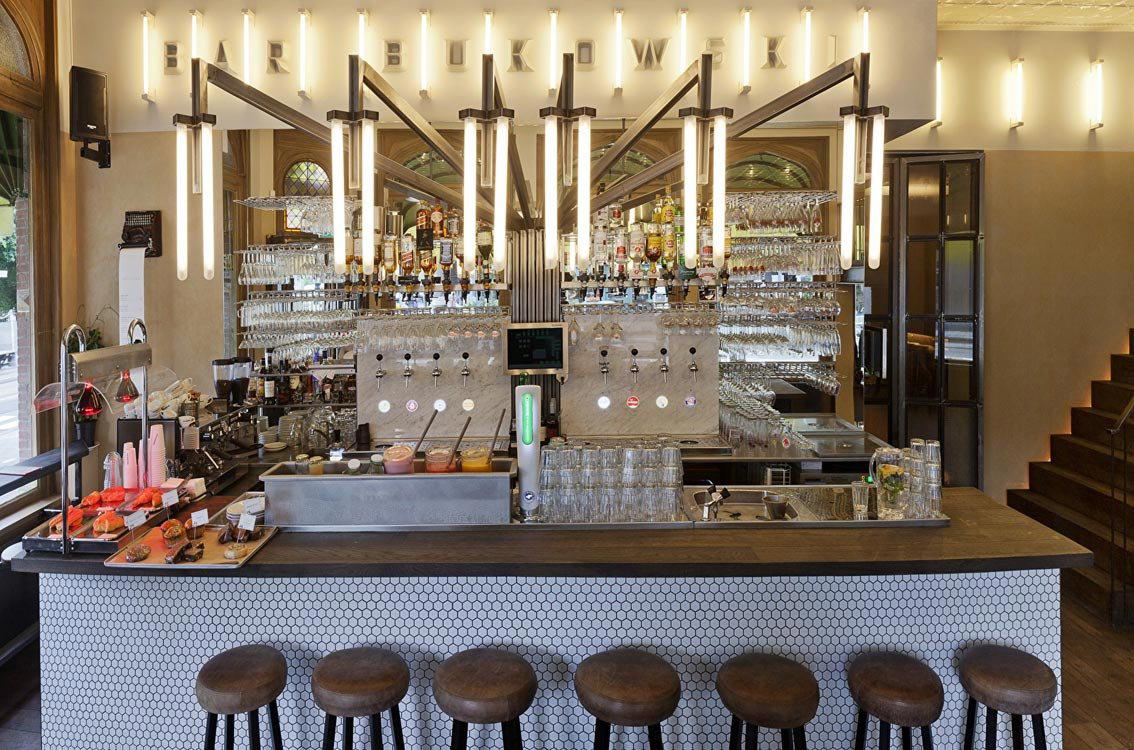
Oosterpark and the Character of Amsterdam's Eastern Bar Scene
Amsterdam's bar geography has a clear fault line. West of the Amstel, the cocktail programs at Door 74 and Tales & Spirits compete on technique, allocation spirits, and tasting menus translated into glass form. East of that line, in the streets fanning out from Oosterpark, the priorities shift. The neighbourhood has gentrified in patches, with good coffee, natural wine lists, and weekend markets, but it has not surrendered to the kind of bar culture that treats a Wednesday evening like a production. Bar Bukowski, on the park's edge at Oosterpark 10, is a product of that eastern sensibility.
The bar takes its name from Charles Bukowski, the American poet and novelist whose output orbited bars, boredom, and working-class disillusion. That reference is not decorative. It signals an intentional posture: this is a place where the point is the conversation and the drink, not the Instagram composition or the cocktail card's origin story. In a city where the bar scene increasingly divides between high-concept cocktail rooms and tourist-facing beer halls, that positioning occupies a distinct middle register.
Arriving at the Park
Oosterpark itself shapes the approach. The park is one of Amsterdam's oldest, laid out in the 1890s, and it functions as a genuine neighbourhood commons rather than a tourist waypoint. In warmer months, the walk to the bar passes dog-walkers, families on benches, and cyclists threading through on their way to the Dappermarkt. Arriving at the corner feels less like reaching a destination and more like ending up somewhere logical, which is precisely the tone the bar sustains inside.
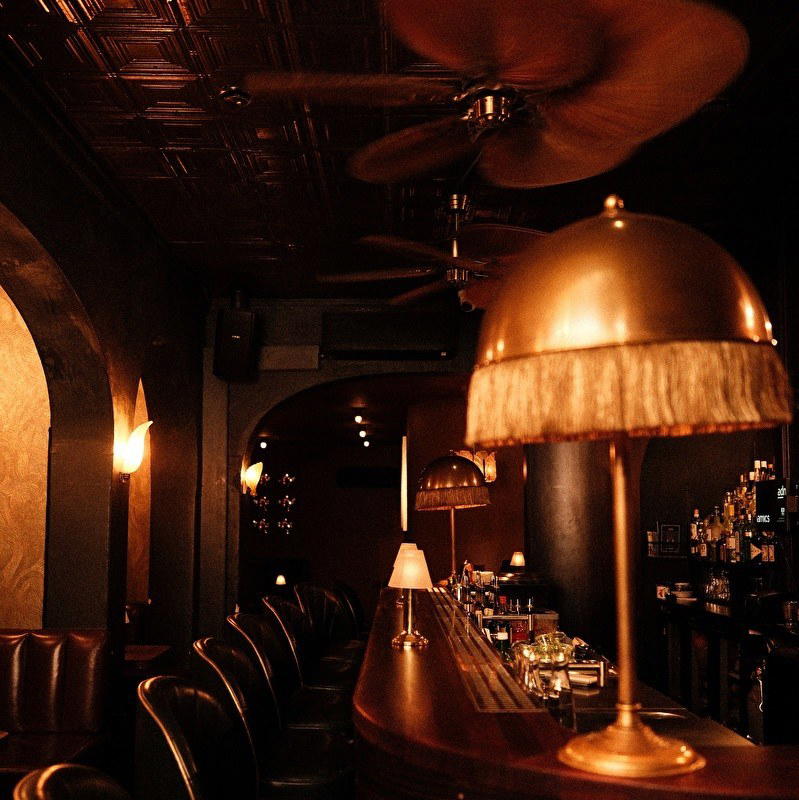
The physical environment here tends toward worn surfaces, low lighting, a bar counter that functions as the room's social spine, and a sound level calibrated for talking rather than competing with music. The Bukowski name is not accidental; it carries a clear visual and social manifesto.
The Lunch-to-Evening Shift
The lunch-versus-dinner divide at neighbourhood bars like this one is more pronounced than at formal restaurants, and at Bukowski it is arguably the more interesting editorial lens. Daytime here belongs to a specific Amsterdam type: the person who works locally, who has a laptop but isn't performing productivity, who orders a coffee or an early beer and stays longer than planned. The light through the windows facing the park is a practical asset at midday in a way it is not at midnight, and the crowd composition reflects that. Tables that hold a single person with a book at 1pm become shared territory for groups by 9pm.
That shift in density and noise is the bar's version of a two-act structure. The afternoon service carries a slower rhythm, service intervals are longer, the room is less pressured, and the value proposition for a solo visitor or a pair looking to talk is genuinely different from what a Friday night offers. Evening service compresses that space, raises the ambient energy, and moves the bar closer to the social function it shares with places like Amsterdam Roest, which also operates across a broad daily arc from cafe to nightlife venue.
The practical implication for a visitor is timing. If the draw is the park-adjacent calm and the literary personality of the room, a weekday afternoon or early weekend evening is the version of Bukowski worth seeking. If the draw is the room at full social energy, Friday and Saturday after 9pm delivers that, though it also delivers the noise and wait times those conditions imply.
Where It Sits in the Amsterdam Bar Conversation
Amsterdam's bar scene in 2024 has a well-documented upper tier of cocktail-led rooms and a well-trafficked lower tier of brown cafes. Bar Bukowski does not sit neatly in either category. It has more personality than the average bruine kroeg and less technical ambition than the precision bars of the Jordaan and Canal Ring. That in-between position is not a weakness, it is the condition that makes it useful to a particular kind of visitor.
For comparison, Bakers & Roasters in the south serves a similar neighbourhood-anchor function but leans daytime and brunch-forward. Bukowski's personality is more evening-oriented in its fullest expression, even if the afternoon version is arguably its most comfortable. Visitors who want the precision end of the Amsterdam cocktail spectrum should look at Door 74 or Tales & Spirits first. Those who want the Oosterpark neighbourhood at drink-in-hand pace will find Bukowski the more honest address.
The bar also fits into a broader Dutch pattern visible at spots like Bowie in The Hague and Florin Utrecht in Utrecht, where neighbourhood bars are doing more character-work than the category traditionally demanded, without crossing into the kind of self-conscious conceptualism that can drain the spontaneity from a room. Café Barolo in Eindhoven and Brasserie Lalou in Delft operate in comparable registers in their respective cities. Espressobar Kopi Soesoe in Rotterdam and Boode Foodbar in Bathmen take the same neighbourhood-first instinct into coffee and food rather than drink. Across the Netherlands, the throughline is a preference for rooms that belong to their streets rather than to a trend cycle.
For reference on how a very different register of literary-named bar operates internationally, Bar Leather Apron in Honolulu applies a similar naming approach to a precision cocktail program, a useful contrast that underlines how much the name is secondary to what a bar actually does with its floor space and its hours.
Planning a Visit
Bar Bukowski is located at Oosterpark 10, a short tram or cycle ride from Amsterdam Centraal and within walking distance of the Dappermarkt and the Tropenmuseum. The Oosterpark stop on tram line 3 places the bar within a few minutes on foot. Check opening times before visiting, particularly for weekday lunches when neighbourhood bars sometimes adjust schedules seasonally. Walk-ins are welcome, though popular weekend evenings may see a wait for tables. For a broader orientation to Amsterdam's eating and drinking, the full Amsterdam restaurants guide covers the city's neighbourhoods and formats in depth.
Continue exploring
More in Amsterdam
Bars in Amsterdam
Browse all →
Restaurants in Amsterdam
Browse all →
Hotels in Amsterdam
Browse all →
Wineries in Amsterdam
Browse all →
At a Glance
- Cozy
- Trendy
- Lively
- Casual Hangout
- After Work
- Late Night
- Standalone
- Lounge Seating
- Outdoor Terrace
- Classic Cocktails
- Street Scene
Current opening hours
- Monday
- 8 AM–12 AM
- Tuesday
- 8 AM–1 AM
- Wednesday
- 8 AM–1 AM
- Thursday
- 8 AM–1 AM
- Friday
- 8 AM–3 AM
- Saturday
- 9 AM–3 AM
- Sunday
- 9 AM–12 AM
Hours can change for holidays and private events. Last verified .
Cozy and relaxed with a minimalistic, literary vibe featuring typewriter light installations and Bukowski quotes, offering a welcoming living room atmosphere.
Know Before You Go
- Getting there
- Oosterpark 10, 1092 AE Amsterdam, Netherlands