Brouwerij 't IJ
Set inside a working windmill on Amsterdam's Funenkade, Brouwerij 't IJ is the city's most recognisable craft brewery, a physical landmark that doubles as a tasting room where locally brewed beer is served steps from the kettles that made it. It occupies a particular place in Amsterdam's drinking culture: part neighbourhood institution, part brewing operation, drawing both locals and visitors to the eastern fringe of the canal belt.

Pearl is the En Primeur Club membership app, where members save venues, book tables and use the concierge.
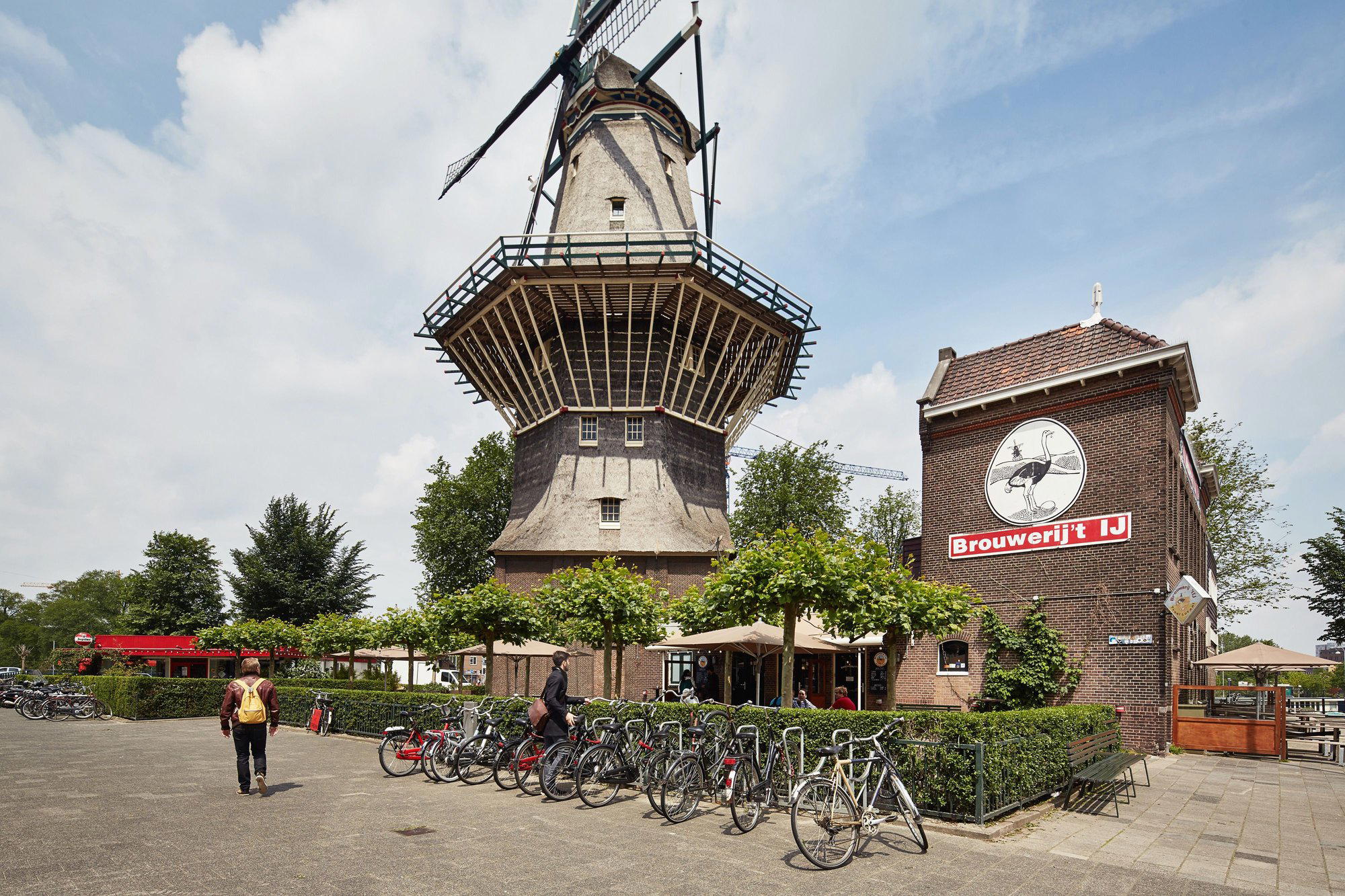
A Windmill, a Brewery, and the Eastern Canal Belt
Amsterdam's craft beer scene divides fairly cleanly between polished tap rooms in the Jordaan and the Nine Streets corridor, and rougher-edged, production-first venues on the city's eastern and southern fringes. Brouwerij 't IJ sits firmly in the second category, a working brewery installed inside De Gooyer windmill on Funenkade 7, where the visual logic of the place does much of the editorial work before a single glass is poured. The windmill is one of the few surviving wooden smock mills in the Netherlands, and the brewery's decision to occupy its base rather than a generic industrial unit gives the entire visit a different register from tap rooms designed for Instagram first and fermentation second.
The Funenkade address places it in a pocket of the city that most visitors reach by tram or bicycle rather than by accident. It sits east of the Plantage neighbourhood, close to the Artis zoo and the Tropenmuseum, in a part of Amsterdam that rewards deliberate navigation. The walk from Oosterpark or along the canal from the centre takes roughly fifteen to twenty minutes on foot, which filters the clientele in a useful way: the people who arrive here tend to have made a choice, not a convenience stop.
The Physical Space and What It Does to the Experience
The design logic at Brouwerij 't IJ is almost entirely industrial and functional, which is precisely why the atmosphere works. There is no interior decoration performing authenticity, the brewing equipment is the decoration. Fermentation tanks, copper pipework, and the base structure of the mill itself constitute the spatial language of the place. Outside, picnic benches extend along the Funenkade waterfront, and in warmer months this terrace becomes one of the more genuinely local outdoor drinking spots in the city, less tourist-oriented than the Leidseplein or Rembrandtplein terraces and considerably more relaxed in atmosphere.
Lighting inside the tasting space follows the building's logic: low, functional, and warm enough to signal that this is a place to settle rather than pass through. The sound level stays conversational without effort. These are environmental conditions that premium cocktail bars in the city centre, places like Door 74 or Tales & Spirits, invest considerable design capital in achieving deliberately. At Brouwerij 't IJ they emerge as a byproduct of the space's original purpose, which gives the venue a different kind of credibility.
The scale is modest. This is not a venue built for high throughput. The combination of the interior tasting room capacity and the outdoor terrace means that weekend afternoons can reach full occupancy, particularly in summer. Arriving outside peak hours on a weekday, or planning for an early afternoon slot rather than early evening, gives a materially different experience from arriving at the height of weekend tourist traffic.
Beer as the Whole Point
Dutch craft brewing has grown considerably since Brouwerij 't IJ began production in 1985, making it one of the country's earliest independent craft operations and a reference point against which much of Amsterdam's subsequent brewing culture is measured. The brewery's longevity in a category that has seen significant turnover, many Dutch craft operations launched in the 2000s and 2010s have since contracted or closed, is itself a form of credential.
The on-tap selection at the tasting room draws directly from the brewery's own production, which spans a range of styles from wheat beers to stronger seasonal and specialty formats. For visitors coming from cocktail-focused venues like Amsterdam Roest, the register is different: this is a single-producer format where the depth comes from exploring variations within one brewing program rather than across a broad spirits selection. That focus rewards a slower visit, ordering methodically across the tap list rather than defaulting to a single glass.
The brewery also operates a bottle shop on site, which functions as a practical extension of the tasting room for visitors who want to take production home. This is a standard feature of well-run craft breweries across Europe, and Brouwerij 't IJ executes it without the retail pressure that can make similar formats feel transactional.
Where It Sits in Amsterdam's Broader Drinking Scene
Amsterdam's premium drinking culture has developed along several distinct lines over the past decade. The cocktail bar tier, represented by venues like Door 74 and Tales & Spirits, has moved toward technical programs, precise service formats, and international recognition. The café and brown bar tradition (the classic bruine kroeg) remains embedded in neighbourhood life across the Jordaan, De Pijp, and Oud-West. Brouwerij 't IJ occupies a third position: production-anchored, physically distinctive, and local in a way that the canal-belt tourist circuit rarely delivers.
For visitors building a broader picture of the Netherlands' drinking culture beyond Amsterdam, the comparison with other cities is useful. Florin Utrecht in Utrecht and Brasserie Lalou in Delft each represent their city's particular relationship with the beer and café tradition, while Espressobar Kopi Soesoe in Rotterdam takes a different angle entirely. Brouwerij 't IJ's specific contribution to that wider map is the production-site experience: you are drinking in the place where the beer was made, which is not a condition most Dutch drinking venues can offer.
For a fuller picture of Amsterdam's food and drink options across neighbourhoods and price points, our full Amsterdam restaurants and bars guide covers the city in considerably more depth. Those planning a longer stay might also look at Bakers & Roasters for daytime eating, and at venues further afield, Bowie in The Hague or Café Barolo in Eindhoven, for context on how the Netherlands' drinking culture extends beyond the capital.
Planning Your Visit
Brouwerij 't IJ is reachable by tram (line 7 toward Flevopark, alighting at Funenkade) or by bicycle via the eastern canal routes, which is the most practical approach for most visitors staying within the canal ring. The brewery operates a tasting room rather than a full restaurant, so this works well as a dedicated stop rather than a dinner venue. Weekend afternoon arrivals should expect a crowd; weekday visits, particularly mid-afternoon, offer a noticeably different pace. The bottle shop on site is worth time after the tasting room, particularly for those interested in taking seasonal or limited formats back from a trip.
Cuisine-First Comparison
Comparable venues nearby, for context on price, style, and recognition.
| Venue | Cuisine | Price | Notes |
|---|---|---|---|
| Brouwerij 't IJThis venue (the venue you are viewing) | beer_bar | $10–20 | Not listed |
| Claire | lounge | Not listed | Rembrandtpleinbuurt |
| Soundgarden | dive_bar | $10–20 | Marnixbuurt Midden |
| De Sluyswacht | pub | $10–20 | Uilenburg |
| Bar Gallizia | pub | Not listed | Noordwestkwadrant Indische buurt Noord |
| Oudezijds Achterburgwal | pub | $20–30 | Burgwallen Oost |
Continue exploring
More in Amsterdam
Bars in Amsterdam
All bars in Amsterdam →
Restaurants in Amsterdam
All restaurants in Amsterdam →
Hotels in Amsterdam
All hotels in Amsterdam →
Wineries in Amsterdam
All wineries in Amsterdam →
Brouwerij 't IJ
The drinks
- Craft beer
Signature drinks: IJwit, Zatte Tripel, Natte Dubbel, Johnny IPA.
Details
- Lively
- Rustic
- Well Known
- Cozy
- Bohemian
- Group Outing
- Casual Hangout
- After Work
- Beer Garden
- Historic Building
- Standalone
- Terrace
- Standing Room
- Outdoor Terrace
- Communal Tables
- Craft Beer
Current opening hours
- Monday
- 2–10 PM
- Tuesday
- 2–10 PM
- Wednesday
- 2–10 PM
- Thursday
- 2–10 PM
- Friday
- 2–10 PM
- Saturday
- 12–10 PM
- Sunday
- 12–10 PM
Hours can change for holidays and private events. Hours as of .
Youthful, energetic atmosphere with rustic charm; crowded and lively, especially on Friday afternoons; self-service model creates a casual, communal vibe beneath the well-known windmill.