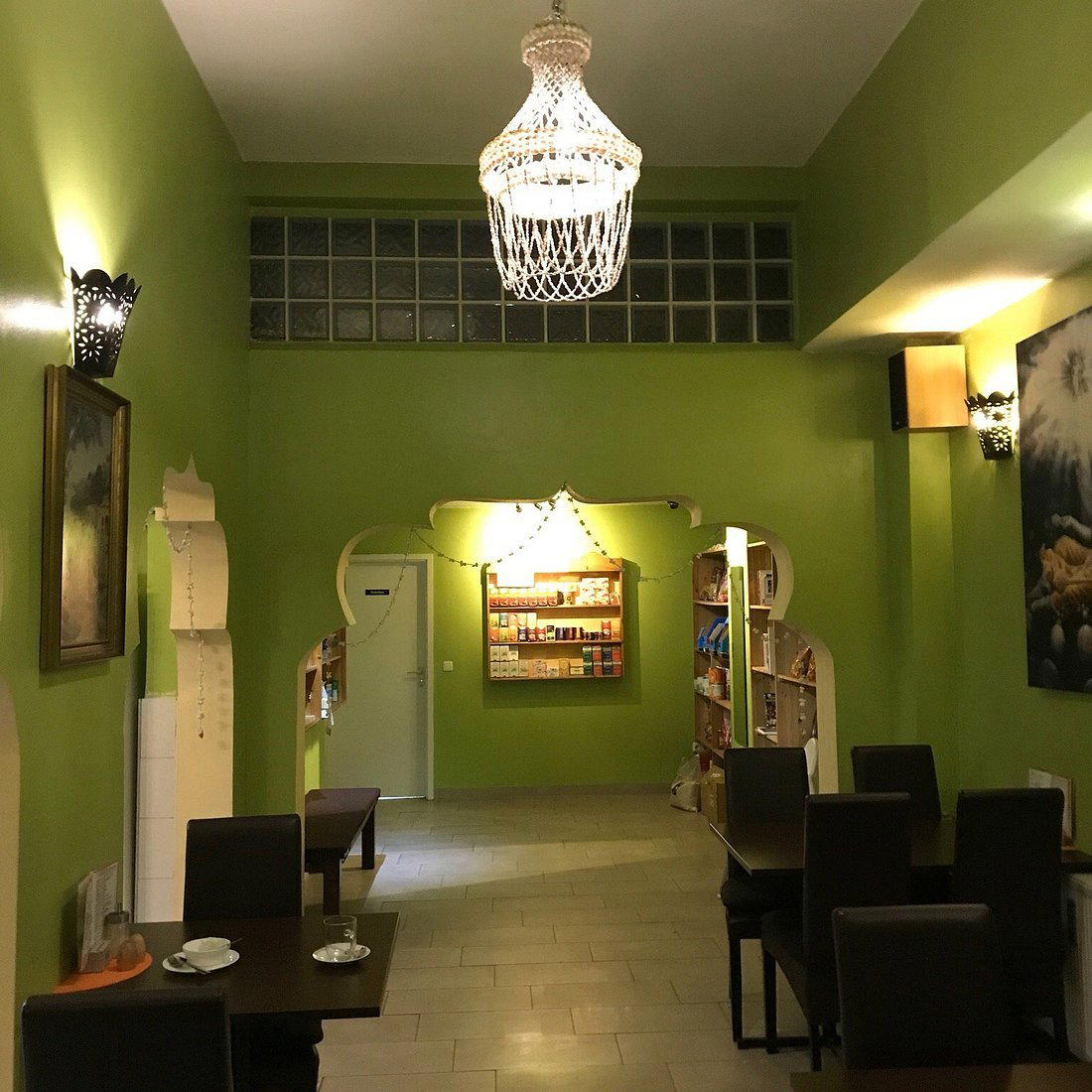
Govardhan at Roonstraße 3 in Cologne's Belgisches Viertel sits within a neighbourhood that has become the city's most consistent address for independent, ethically-minded dining. The restaurant draws visitors looking for plant-forward cooking in a setting that prioritises conscious sourcing over spectacle.
- Address
- Roonstraße 3, 50674 Köln, Germany
- Phone
- +492214928916
- Website
- govardhanrestaurant.com
- Directions
- Get directions
A Neighbourhood Built on Conscience
Govardhan is a restaurant in Cologne at Roonstraße 3 serving Authentic Vegan Indian Ayurvedic cuisine. Cologne's Belgisches Viertel has spent the better part of a decade consolidating a reputation that sets it apart from the Rhine-facing dining corridor. Where the river-adjacent postcode trends toward formal European technique, the territory of Ox & Klee and La Société, the Viertel runs on a different logic: independent ownership, rotational suppliers, and a general suspicion of anything that feels over-produced. Roonstraße sits inside that ecosystem, and Govardhan at number 3 is a natural product of it.
Across Germany, plant-forward and vegetarian dining has shifted from a fringe concern to a serious category tracked by award bodies and critics alike. The pattern mirrors what has happened in other mid-sized European cities: a first wave of purely ideological venues gives way to a second, technically more considered cohort that competes on cooking quality rather than ethical positioning alone. Govardhan occupies that second-wave position in Cologne, where the conversation around food ethics has moved well past the introductory stage.
The Sustainability Frame in German Dining
Germany's fine-dining circuit has engaged with sustainability at varying levels of seriousness. At the upper end, venues like Vendôme in Bergisch Gladbach and Schwarzwaldstube in Baiersbronn have built sourcing frameworks into their kitchen identity, while CODA Dessert Dining in Berlin has made waste reduction a structural element of its format. The through-line is that ecological consciousness, when it is treated as a kitchen discipline rather than a marketing position, tends to produce more coherent menus: fewer ingredients, handled with greater precision, replaced seasonally rather than substituted for convenience.
In Cologne specifically, this ethic has not yet coalesced around a single acclaimed address the way it has in Hamburg, where Restaurant Haerlin has built a long record of sourcing transparency, or in the Mosel region, where producers like those supplying Schanz in Piesport have made provenance a selling point for the table as much as the cellar.
What the Belgisches Viertel Asks of Its Restaurants
The quarter's dining character is defined less by price tier than by operating philosophy. Restaurants here tend to run smaller rooms, maintain tighter supplier relationships, and resist the kind of menu sprawl that comes with high-volume covers. The comparison set for Govardhan at the neighbourhood level is not the €€€€ tasting-menu rooms, the terrain of La Cuisine Rademacher or maiBeck, but rather the community of independently run addresses that treat repeat local custom as the primary metric of success.
That operating logic tends to produce certain consistent qualities: menus that shift with the agricultural calendar rather than the marketing one, service that reflects genuine familiarity with ingredients, and a pricing structure oriented toward accessibility over occasion-dining premiums. Govardhan is a casual, walk-in-friendly restaurant at a price tier of about $10 per person.
Ethical Sourcing as Kitchen Discipline
The broader argument for plant-forward restaurants in mid-sized German cities is partly ethical and partly logistical. Urban proximity to quality-driven vegetable growers in the Rhine and Eifel regions gives Cologne kitchens a sourcing advantage that coastal cities don't share to the same degree. Vegetables travel short distances, arrive in better condition, and carry enough variety across seasons to sustain a menu without protein dependence. Kitchens that learn to work within that constraint, treating it as a structural feature rather than a limitation, tend to develop stronger technical vocabularies around fermentation, preservation, and texture contrast.
This is the culinary logic that connects Govardhan to a broader European movement, even when direct comparisons to three-star programmes like Aqua in Wolfsburg or internationally recognised plant-forward concepts like Atomix in New York City operate at a different scale and institutional recognition. The discipline is the same; the context and resources differ.
Placing Govardhan in the Cologne Conversation
Cologne's dining identity has historically been pulled between Rhineland traditionalism and a younger generation of independently minded operators. The city's most discussed addresses tend to cluster around modern European technique, see JAN in Munich as a parallel case of a chef-driven room finding regional identity through restraint. Govardhan's position at Roonstraße 3 places it physically and philosophically in the independent camp, away from the Rhine-corridor formality and closer to the neighbourhood logic that defines the Viertel.
For readers building a Cologne itinerary that spans different dining registers, the EP Club Cologne restaurants guide maps the city across price tiers, neighbourhoods, and culinary approaches. Govardhan represents one end of that spectrum: the consciously sourced, plant-oriented room that the Belgisches Viertel has quietly been cultivating as a counterweight to the city's more formal fine-dining circuit. Venues like Le Moissonnier Bistro occupy the French bistro register nearby; Govardhan occupies different ground, defined more by sourcing logic than by culinary nationality.
Govardhan is permanently closed. For comparison, venues at similar ethical positioning but with fuller documented records, such as ES:SENZ in Grassau or Victor's Fine Dining by Christian Bau in Perl, give a sense of how far the German dining circuit has taken the sourcing-first conversation at its most credentialed level. Govardhan operates in a different register, but within the same broader shift in how German kitchens think about the origin and integrity of their ingredients.
Price and Recognition
Comparable venues nearby, for context on price, style, and recognition.
| Venue | Cuisine | Price | Notes |
|---|---|---|---|
| GovardhanThis venue — the venue you are viewing | Not listed | $ | Not listed |
| Mayer, M. u. M. | Not listed | $ | Neustadt/Nord, German Cafe Fast Food |
| EAT KUMPIR | Not listed | $ | Ehrenfeld, Turkish Kumpir (Stuffed Baked Potatoes) |
| Weltmeister | Not listed | $ | Neustadt/Nord, German Currywurst & Fries |
| einBURGERung | Not listed | $ | Neustadt/Süd, American Burgers |
| Kudret Kebap House | Ehrenfeld, Authentic Turkish Kebab | $ | Not listed |
Continue exploring
More in Cologne
Restaurants in Cologne
Browse all →
Bars in Cologne
Browse all →
Hotels in Cologne
Browse all →

At a Glance
- Casual
- Cozy
- Casual Hangout
Casual homestyle atmosphere described as quiet and pleasant by guests.