On Laugavegur, Reykjavik's main commercial spine, Gló operates within Iceland's growing plant-forward dining movement, putting seasonal and locally sourced ingredients at the centre of its menu. The format sits between casual and considered, drawing a cross-section of locals and visitors who want food built around where it comes from rather than where it sits in the fine-dining hierarchy.
- Address
- Laugavegur 20b, 101 Reykjavík, Iceland
- Phone
- +354 553 1111
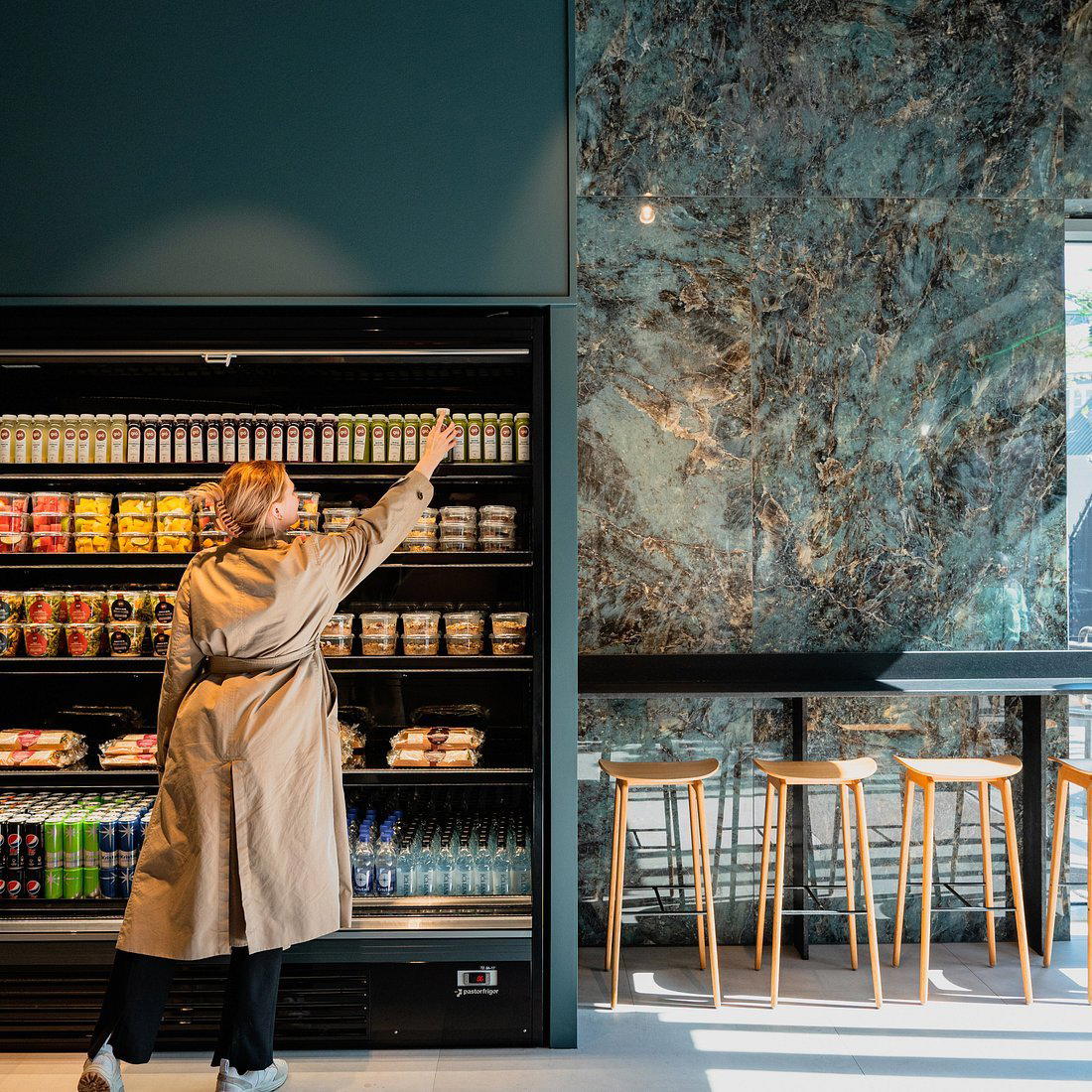
Where Laugavegur Meets the Land
Reykjavik's main shopping street, Laugavegur, runs through a city that has spent the last decade quietly becoming one of Northern Europe's more interesting places to eat. The transformation hasn't come exclusively from the tasting-menu end of the market, where DILL in Reykjavík and Moss in Grindavík have drawn international attention. It has also come from a tier below that, where restaurants built around ingredient sourcing and plant-led menus have steadily widened the city's dining vocabulary. Gló, at Laugavegur 20b, occupies that middle space, operating in a format that is neither casual fast food nor high-ceremony dining, but something closer to a Nordic interpretation of the health-conscious café.
Arriving on Laugavegur, you are in the most commercially active corridor in the country. The street functions as Reykjavik's social spine, a place where locals run errands and tourists map the city's character. Gló sits within that flow rather than apart from it, which is itself an editorial statement about what the restaurant is trying to do. The energy is daytime and accessible. The food, however, operates with more seriousness than the setting might initially suggest.
Sourcing as the Central Argument
Iceland's geography creates sourcing conditions that are unusual anywhere in the world and genuinely peculiar in a northern latitude. Geothermal heat allows year-round greenhouse cultivation in a country where outdoor growing seasons are compressed to a narrow summer window. Friðheimar in Reykholt has made its geothermally heated tomato operation a destination in its own right. The broader principle, that Iceland can grow produce domestically even through its dark months, sits behind a number of Reykjavik's plant-forward kitchens and gives their sourcing claims more substance than the same claims would carry in, say, a mid-latitude European city dependent on imported winter vegetables.
Gló's positioning within Reykjavik's plant-forward category means its menu logic is structured around this sourcing reality. The food changes with what is available, which in Iceland's case is shaped less by conventional seasonal agriculture and more by a combination of geothermal greenhouse production, North Atlantic fishing, and the Icelandic dairy and lamb industries that have operated on these terms for centuries. A menu that takes sourcing seriously in this context looks different from one that takes sourcing seriously in, say, California or Tuscany. The constraints are tighter, the options more limited, and the results consequently more specific to place.
This specificity is what separates plant-forward restaurants that are genuinely rooted from those that simply adopt the format as a market positioning exercise. Across Reykjavik's current dining scene, that distinction is worth making. The city now has enough restaurants operating in the health-conscious or plant-led register that a visitor can observe real differences in how seriously the sourcing argument is being made. Bergsson Mathús and Amma Don represent adjacent formats, each with a different emphasis on ingredient origin and menu construction.
The Reykjavik Plant-Forward Tier: Context and Competition
To understand where Gló sits, it helps to sketch the broader category it inhabits. Reykjavik's restaurant scene has historically been weighted toward lamb, fish, and skyr, the country's thick cultured dairy product. The emergence of plant-led eating as a credible restaurant format is relatively recent, and it has arrived alongside a generation of Icelandic diners who travel frequently and return with expectations formed in Copenhagen, London, and Amsterdam. The demand side has shifted faster than many observers expected.
The supply side, meanwhile, has been shaped by Iceland's unusual agricultural infrastructure. Greenhouse vegetable production around the greater Reykjavik area and in the south of the country, combined with an active small-farm sector producing root vegetables, dairy, and eggs, means there is a viable local supply chain for restaurants that want to use it. The question for any individual venue is how deliberately it is engaging with that chain versus defaulting to imported goods for cost or consistency reasons. Gló's address on Laugavegur places it in a high-footfall location where the economics favour accessibility over exclusivity, which in turn shapes the kind of sourcing investment the menu can sustain.
For visitors comparing options in the area, the format here is day-oriented and walk-in friendly in character, though checking current booking conditions directly is advisable given how Reykjavik's popular dining addresses have tightened in recent years. Bon Restaurant and Brút operate at different points on the price and formality spectrum and serve as useful reference points for building a Reykjavik itinerary that covers more than one register of eating.
Iceland's Dining Scene in Wider Frame
The international conversation about Icelandic food has been dominated, understandably, by the country's fine-dining achievements. The tasting menu format, built around foraged, aged, and preserved Icelandic ingredients, has earned Iceland a place in discussions about northern European cuisine that would have seemed improbable two decades ago. Nesjavallavirkjun in Selfoss, Strikið in Akureyri, and Fjöruborðið in Stokkseyri illustrate how that culinary ambition has spread beyond the capital. The Chef's Table at Moss Restaurant in Iceland represents the format at its most curated and controlled.
But the more telling development for the city's day-to-day dining culture is the expansion of the mid-tier, where kitchens are asking sourcing questions seriously without requiring a tasting-menu price point or a reservation made weeks in advance. That is the category Gló operates within, and it is the category that will ultimately define how Reykjavik eats across all income levels and visitor types, not just those who can access the best of the market. Even the city's most visited quick-serve address, Bæjarins Beztu Pylsur, points to how deeply food culture runs across price tiers here.
Gló fits logically into a morning or midday slot, when the format performs at its strongest and the street outside is at its most animated. Evening visitors may find the energy has shifted compared to what the kitchen is built to deliver at its finest.
Planning Your Visit
Gló is located at Laugavegur 20b in the 101 postal district, which places it within walking distance of most central Reykjavik accommodation. The address is on the eastern stretch of Laugavegur, a ten-to-fifteen minute walk from the Harpa Concert Hall and the old harbour, making it a natural stop in the middle of a day spent on foot. Visitors are advised to arrive early in service or contact the venue directly to confirm current walk-in capacity and hours before planning around it. Lazy Bear in San Francisco and the approach to sourcing transparency at Le Bernardin in New York City represent two ends of the formality spectrum where ingredient provenance is central to the menu's argument, as it is here.
Comparable Venues
Comparable venues nearby, for context on price, style, and recognition.
| Venue | Cuisine | Price | Notes |
|---|---|---|---|
| GlóThis venue — the venue you are viewing | Healthy Vegan & Raw Food | $$ | |
| Hlemmur Mathöll | Global Street Food & Icelandic Cuisine | $$ | Reykjavíkurborg |
| The Laundromat Cafe | American Diner & Café | $$ | Reykjavíkurborg |
| The Coocoo's Nest | Californian-Italian Brunch & Sourdough Pizza | $$ | Reykjavíkurborg |
| Matarkjallarinn | Icelandic Brasserie | $$$ | Reykjavíkurborg |
| Vínyl Bistro | Vegan Bistro | $$ | Reykjavíkurborg |
Continue exploring
More in Reykjavík
Restaurants in Reykjavík
Browse all →
Bars in Reykjavík
Browse all →
Hotels in Reykjavík
Browse all →

Wineries in Reykjavík
Browse all →
At a Glance
- Modern
- Cozy
- Casual Hangout
- Open Kitchen
- Organic
- Local Sourcing
Bright and welcoming with a focus on fresh, wholesome ingredients in a casual, health-conscious atmosphere.