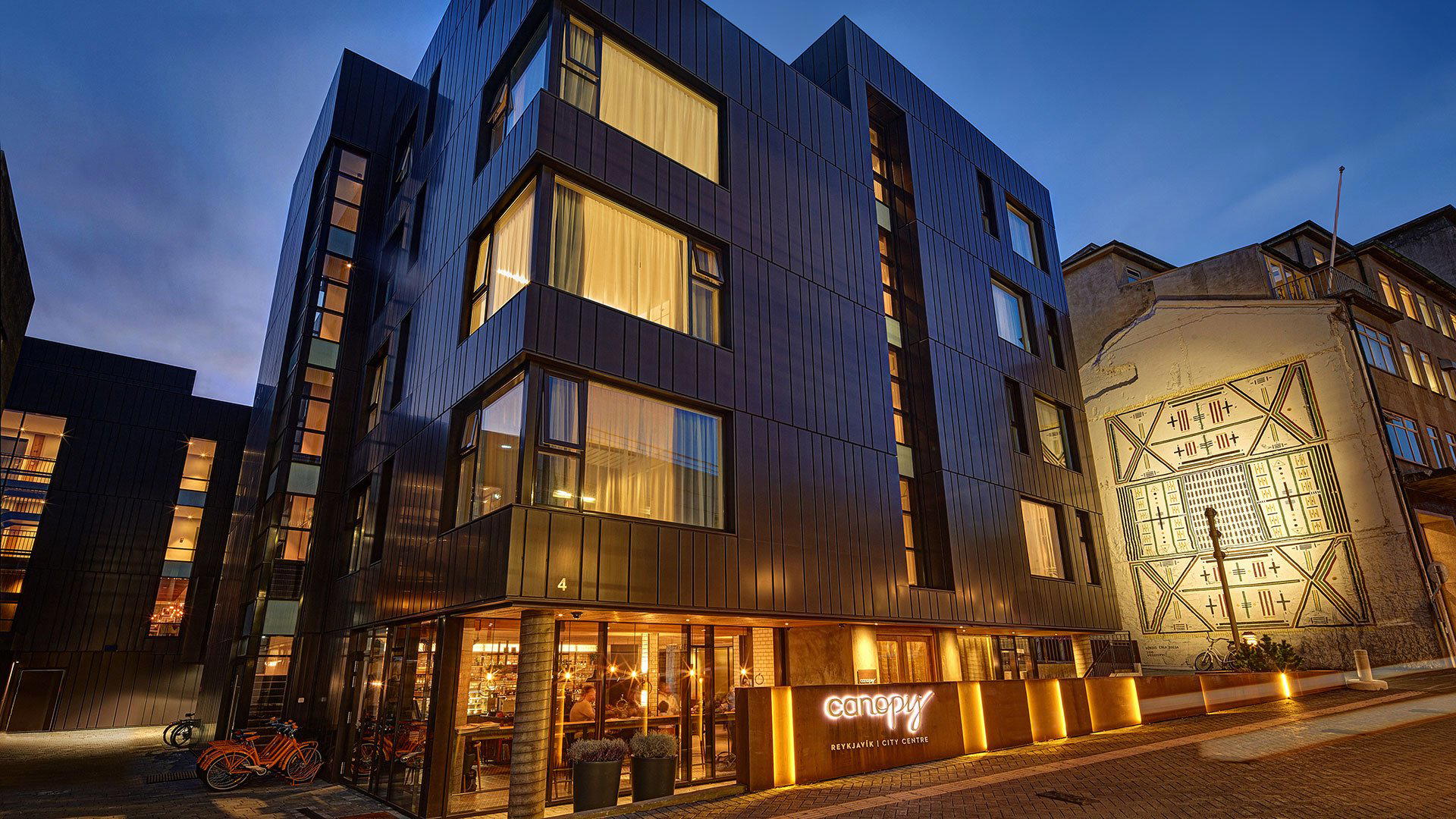
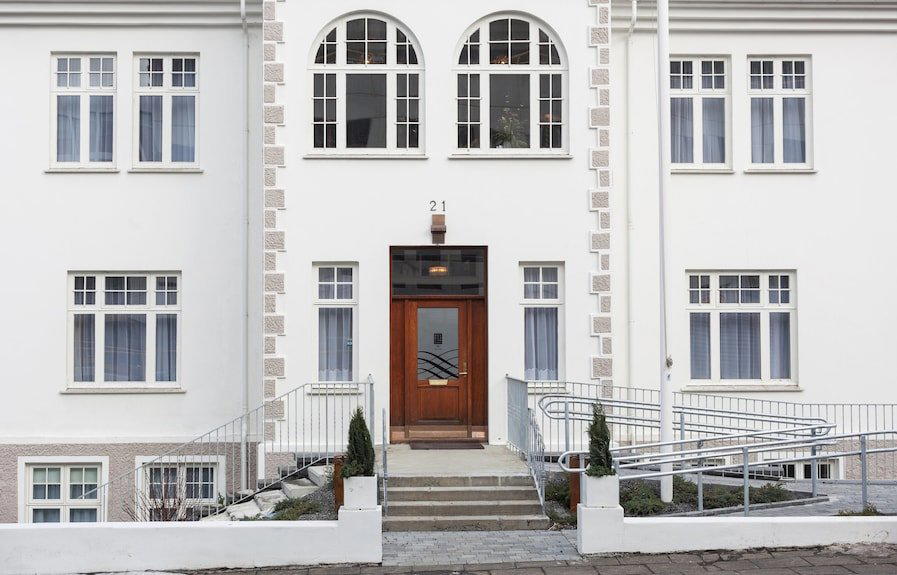
Canopy by Hilton Reykjavik City Centre occupies a central address on Smiðjustígur in the 101 postal district, placing guests within walking distance of Laugavegur's shops, the old harbour, and the main cultural institutions. The property sits in the mid-to-upper tier of central Reykjavik hotels, positioned between budget design hostels and the capital's flagship luxury addresses. It suits travellers who want location convenience without committing to the city's most formal full-service hotels.

Pearl is the En Primeur Club membership app, where members save venues, book tables and use the concierge.
Address as Argument: What Smiðjustígur Delivers in Central Reykjavik
Reykjavik's 101 postal district has become the shorthand for central, walkable, and culturally dense. Within that already-compact zone, the block around Smiðjustígur sits close enough to Laugavegur that you can reach the main shopping and restaurant strip in a few minutes on foot, while remaining a short walk from the old harbour and Tjörnin lake. For a city where the weather frequently makes the distance between your hotel door and your first destination a meaningful variable, this kind of address removes a layer of planning friction that properties farther from the centre cannot. Canopy by Hilton Reykjavik City Centre, at Smiðjustígur 4, occupies that position in the 101 district.
The Canopy brand sits in Hilton's lifestyle tier, designed to read less formally than a full-service Hilton and more locally inflected than a generic business hotel. In Reykjavik, that positioning places it in a competitive bracket alongside properties like Hlemmur Square and Alda Hotel, all of which target guests who want central access and a degree of design sensibility without the formality of the city's historic flagships. By comparison, Hotel Borg by Keahotels and Hotel Holt, The Art Hotel represent the older, more ceremonious end of central Reykjavik accommodation, while The Reykjavik EDITION and 101 hotel Reykjavik occupy the design-led luxury tier above it.
Walking Distance as a Practical Asset
In a capital city where most visitors spend their time on foot between cultural landmarks, restaurants, and the waterfront, the radius your hotel covers without a car or taxi matters more than in cities with extensive metro systems. Reykjavik has no metro. Bus connections exist but are not the primary mode of short-distance movement for most visitors. The practical result is that a central address in the 101 district functions as a multiplier for how much of the city you can see in a single day, particularly during the shoulder seasons when daylight windows are shorter or the weather shifts unpredictably.
From Smiðjustígur, the city's key anchors are accessible by foot: the Harpa Concert Hall and the old harbour area sit to the north; the Hallgrímskirkja church and the residential streets of the western 101 district lie to the south and west; and Laugavegur, with its concentration of restaurants, cafes, and independent retail, runs effectively parallel to the hotel's position. For travellers combining a Reykjavik base with day trips along the Golden Circle, the South Coast, or to the Blue Lagoon area near Grindavík, a central city hotel reduces the distance to car rental offices and tour pickup points.
The Mid-Range Lifestyle Tier in Reykjavik Context
Iceland's hotel market has broadened significantly over the past decade. The growth in international arrivals, particularly between 2014 and the pre-pandemic peak, drove both new luxury openings and an expansion of the mid-tier lifestyle category. Properties in this tier, including Canopy by Hilton, compete less on spa facilities or fine dining restaurants and more on location, design coherence, and the ease of the stay. That means the decision to book here is often made on a direct trade: you are paying for the address and for a stay that is comfortable and functional rather than one that offers a dedicated restaurant destination or a full-service luxury programme.
Travellers whose priority is Iceland's natural environment rather than Reykjavik's hotel scene frequently pair a central city hotel like this one with more remote properties for the rest of their trip. The contrast is significant: from a 101-district base, you can reach ION Adventure Hotel near Nesjavellir, Hotel Ranga in Hella, or Eleven Deplar Farm in the northern fjords as parts of a wider Iceland itinerary. The city hotel functions as a logistical hub for the first and last nights, while properties like Hótel Búðir or Vogafjós Farm Resort carry the experiential weight in the countryside.
Where It Sits in the Canopy Brand
The Canopy by Hilton brand launched with a stated intention to deliver locally connected, mid-upscale hotel experiences in urban centres. Across the portfolio globally, properties are typically positioned in characterful city-centre addresses rather than airport corridors or convention districts. The Reykjavik outpost follows that logic. At the Reykjavik scale, the relevant comparison is not against a Hilton Reykjavik Nordica, which is a larger, more corporate-oriented property in the Sudurlandsbraut corridor, but against the smaller design-forward hotels in the 101 district.
The Apotek Hotel by Keahotels and the Black Pearl both operate in the central district with similar positioning logic, though each takes a different design approach. The broader point is that Reykjavik's central hotel market has enough variety within a small geographic area that address, design tone, and service format matter as much as brand name in deciding where to stay.
Planning Your Stay
Bookings for the Canopy by Hilton Reykjavik City Centre can be made through Hilton's standard global reservation system, which includes the Hilton Honors loyalty programme. For travellers arriving in Iceland during the peak summer window, between June and August, central Reykjavik hotels across the price spectrum book up months in advance, and the mid-tier lifestyle properties are no exception. The shoulder seasons of April to May and September to October offer a useful balance: prices are lower, the city's main restaurants and cultural institutions remain open, and daylight hours are more moderate than the continuous summer light, which can require blackout curtains for meaningful sleep. Winter arrivals, from November to February, face the opposite light condition and are typically motivated by aurora viewing, which requires clear skies and access to dark areas outside the city rather than anything the hotel itself provides. For further reading on where to eat and drink during your stay, see our full Reykjavik restaurants guide.
At a Glance
| Venue | Awards |
|---|---|
| Canopy by Hilton Reykjavik City CentreThis venue (the venue you are viewing) | Not listed |
| 101 hotel Reykjavik | Michelin Selected · Design Hotels Member |
| Ion City Hotel | Michelin Selected · Design Hotels Member |
Continue exploring
More in Reykjavík
Hotels in Reykjavík
All hotels in Reykjavík →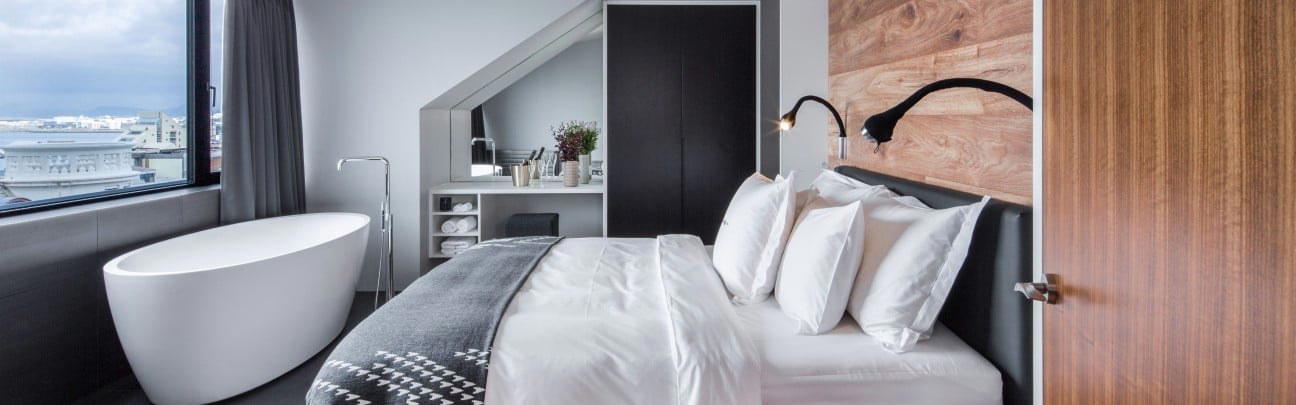


Details
- Modern
- Cozy
- Trendy
- Minimalist
- Weekend Escape
- Business Trip
- Terrace
- Historic Building
- Design Destination
- Wi Fi
- Fitness Center
- Restaurant
- Room Service
- Concierge
- Meeting Rooms
- Waterfront
- Street Scene
- Wheelchair Accessible
- Step Free Entrance
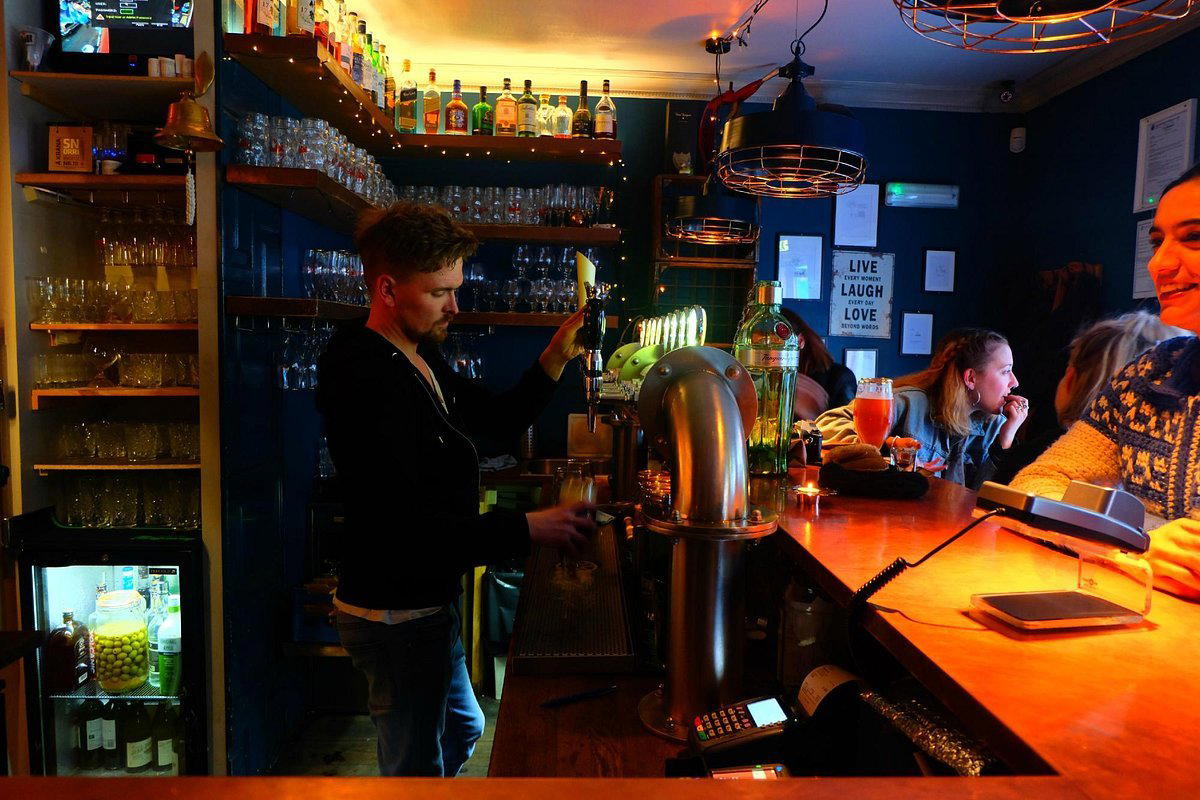
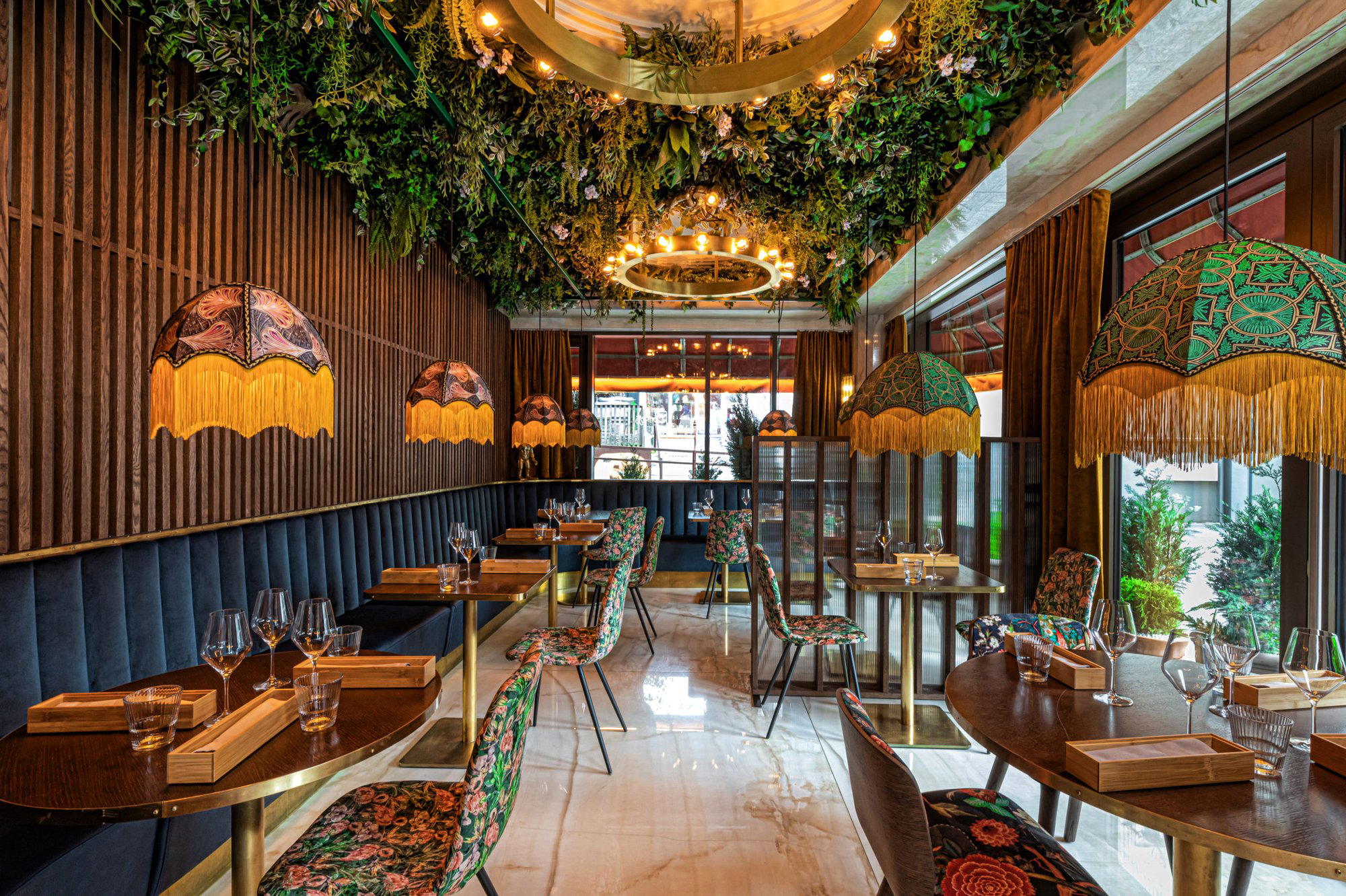
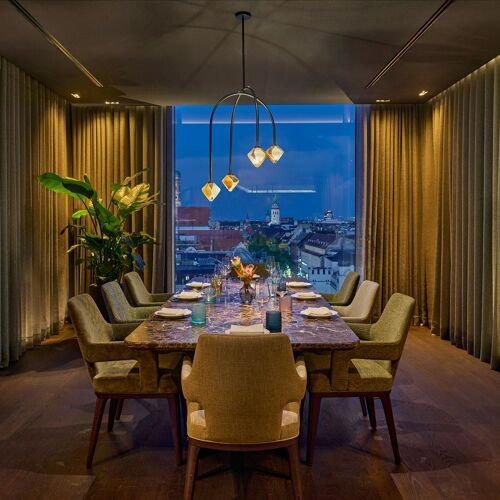
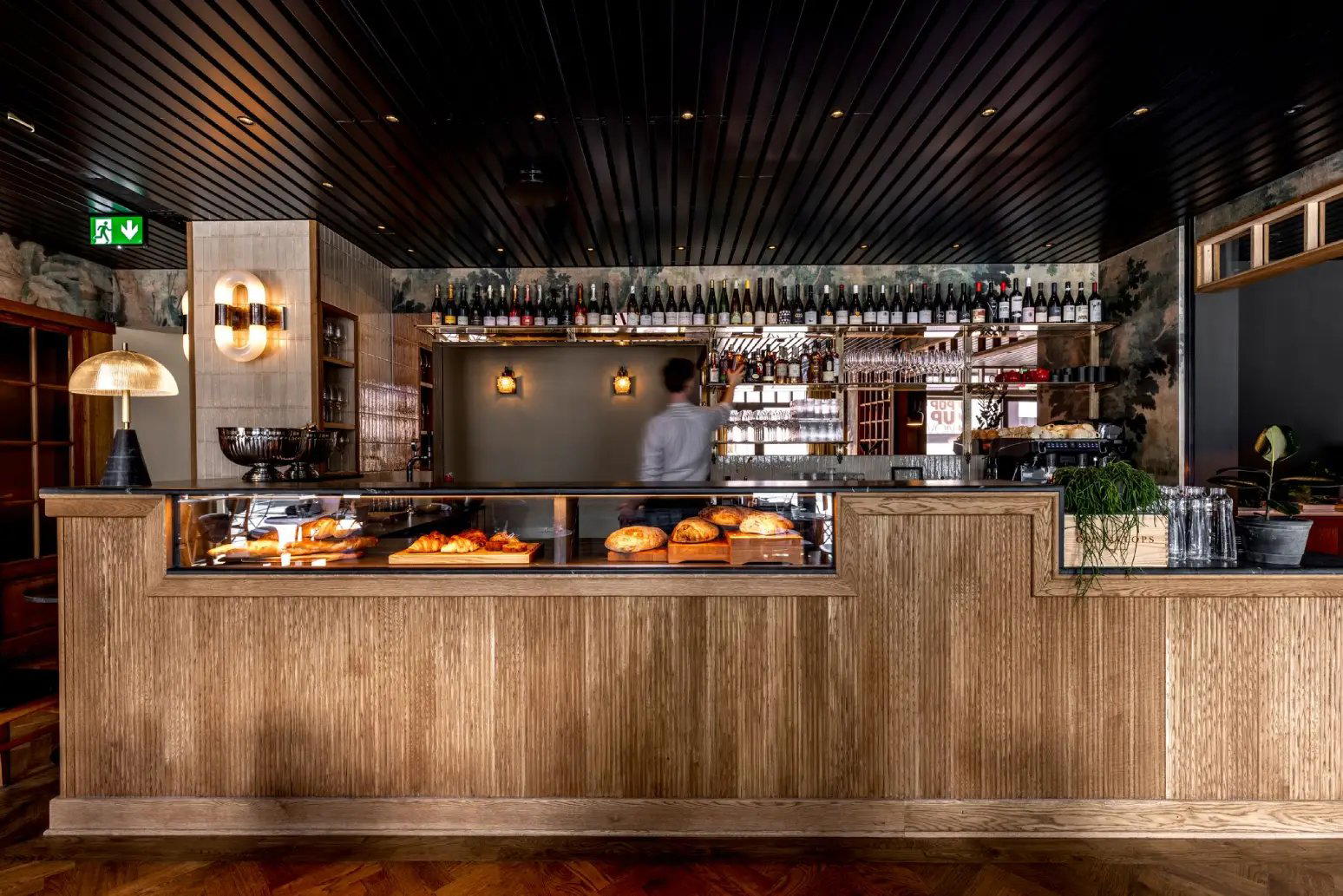
Stylish and cozy with soothing blue and gray hues, local artworks, and a contemporary Scandinavian atmosphere.