
Gion 245 sits in Kyoto’s small but serious Japanese-Italian lane, where imported technique meets local produce and fish-led cooking. Its Tabelog Italian WEST “Tabelog 100” selections in 2021, 2023, and 2025 place it among the region’s more closely watched Italian addresses, with a compact counter-and-table format suited to diners who want precision rather than spectacle.
Pearl is the En Primeur Club membership app — saves, bookings, and concierge access live there. Same editors, same standards.
- Address
- Japan, 〒605-0082 Kyoto, Higashiyama Ward, Nakanocho, 二丁目245-1
- Phone
- +81 75-533-8245
- Website
- gion-245.com
 Saves & bookings on Pearl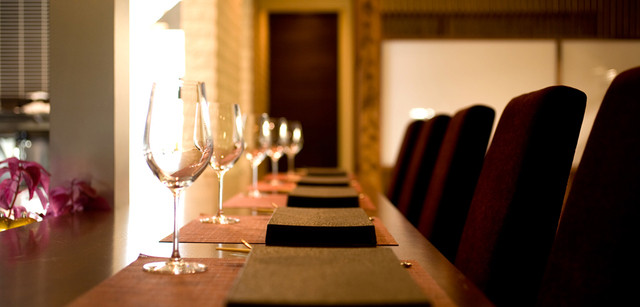
Shinmonzen is not Kyoto’s loud restaurant corridor. The approach is narrow, low-lit, and domestic in scale, the kind of Gion street where a meal begins before the first course, with the city’s older rhythms pressing against contemporary dining habits. In that setting, Japanese-Italian cooking makes particular sense. Kyoto has long absorbed foreign technique without surrendering its own pantry; the sharper question is whether a restaurant can use pasta, French structure, steakhouse cues, and wine without flattening the local season into a cosmopolitan template.
Gion 245 belongs to that Kyoto category: not Italian as nostalgia, and not kaiseki with imported props, but a hybrid grammar built around local ingredients and European method. Its Tabelog Italian WEST “Tabelog 100” selections in 2021, 2023, and 2025 are useful signals because this is a crowded regional field. Kyoto has restaurants that lean deeply into temple-adjacent vegetarian discipline, others that frame dinner through sushi, kaiseki, or counter tempura. Within that spread, a Japanese-Italian room in Gion has to justify itself through control: ingredient sourcing, pacing, and the ability to make the fusion feel deliberate rather than decorative.
Kyoto produce through an Italian and French lens
The defining idea here is the meeting point between Kyoto’s ingredient culture and imported technique. The listed categories, Italian, French, and steak, point to a kitchen that works across Western formats rather than a trattoria script. Tabelog’s notes emphasize fish and a drinks program that includes sake, shochu, and wine, which says something about the current Kyoto dining mood: pairings no longer need to obey national borders. Sake can sit beside Italian structure; wine can support Japanese seafood; shochu can make sense in a room otherwise coded as European.
That matters because Kyoto’s dining identity is often described too narrowly from the outside. Kaiseki remains the reference point, but the city’s more interesting contemporary restaurants often work in translation. A place such as Yukifuran Sato keeps the kaiseki conversation close to the center, while Sushi Rakumi occupies the high-discipline sushi lane. Mizuno reflects a different Japanese register. Against those categories, Gion 245 reads as a smaller, cross-cultural answer to the same local question: how much technique can be imported before the meal stops feeling rooted in Kyoto?
The answer depends less on novelty than restraint. Kyoto rewards quiet decisions: vegetables handled with seasonality, fish treated as a primary argument rather than garnish, and sauces that do not drown the product. The “Japanese Italian” label can be weak when it becomes a slogan. Here, the stronger editorial frame is ingredient hierarchy. European technique is the tool; Kyoto provides the pressure test.
A compact Gion room in the city's specialist tier
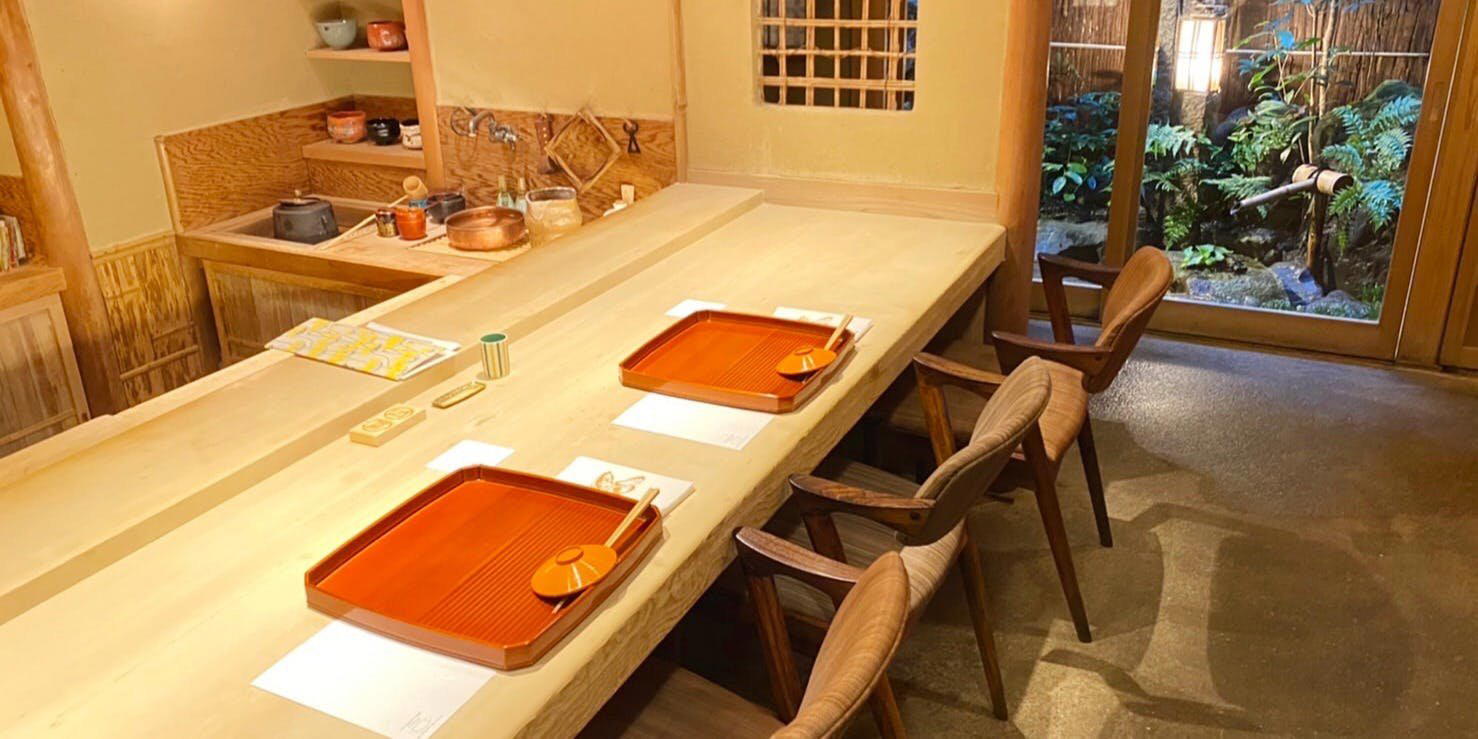
Small-format dining changes the meal’s stakes. A 14-seat room, split between counter and table seating, places service, timing, and kitchen confidence under scrutiny. Kyoto has plenty of ceremonial dining rooms, but the counter format is more exposed: plating, conversation, bottle choices, and pacing happen within a tighter field of view. That scale suits a restaurant working across Italian, French, and steak categories because the format can keep the meal from drifting into generalist territory.
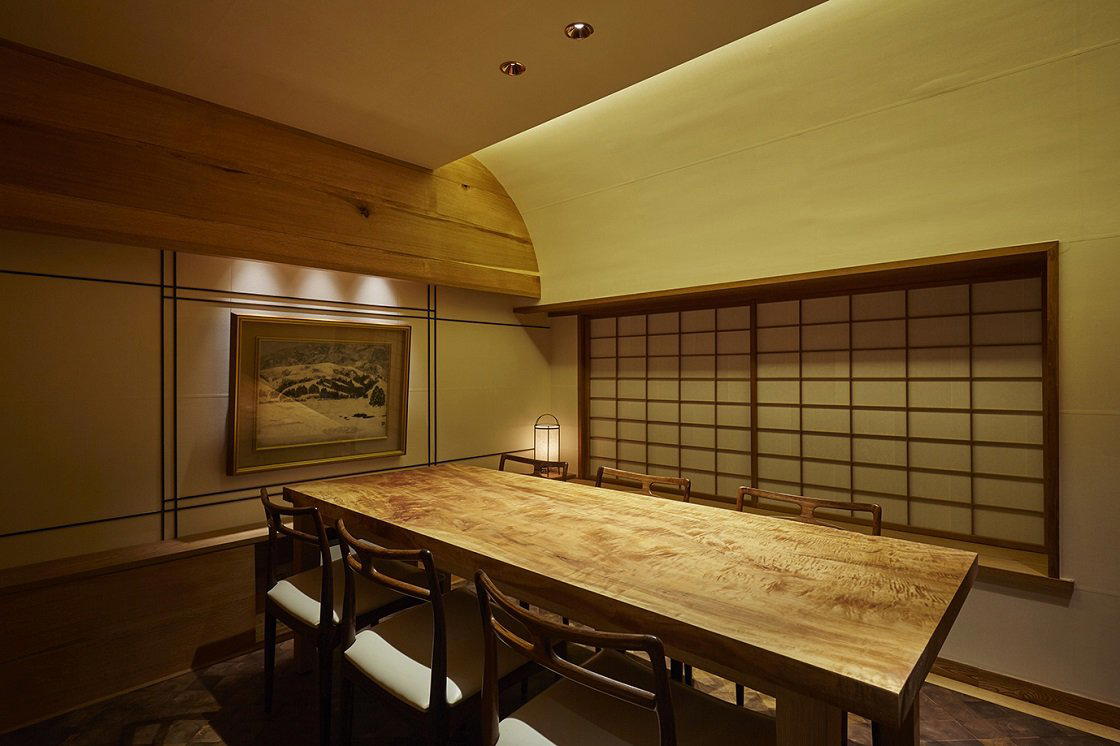
The private-room structure also signals how Kyoto’s premium restaurants serve mixed audiences. Business dinners, small family occasions, and visiting diners often need privacy without losing the intimacy of a house restaurant. The line between local regularity and destination dining is especially thin in Gion, where restaurants can feel either intensely civic or over-adapted for visitors. English menu and staff support make the room easier for international diners, but the setting and category still ask for a diner who understands Kyoto’s preference for measured formality.
For a broader read on where this fits, Our full Kyoto restaurants guide maps the city’s range beyond the expected kaiseki shorthand. Nearby and related contrasts help sharpen the picture: Abbesses sits in Kyoto’s French conversation, [ki:] points toward another contemporary reading of the city, and 3TOKU6MI Shijo karasuma ten shows how casual and specialist formats can coexist in the same dining ecosystem.
How to read the meal within a Kyoto itinerary
This is not the slot for diners chasing a single famous dish name. It is better understood as a dinner for people interested in Kyoto’s modern translation work: Western technique, Japanese products, and a drinks list broad enough to cross sake, shochu, and wine. The Tabelog score of 3.63 is not the headline on its own, but paired with repeated Tabelog 100 recognition, it gives a credible signal of sustained regional attention.
Kyoto rewards itinerary contrast. A day might move from old confectionery traditions at Aburi Mochi Honke Nemoto Kazariya to a casual staple such as 551蓬莱, then into a composed Gion dinner where Italian and French technique frame local ingredients. The city’s hospitality culture also extends beyond restaurants: Our full Kyoto hotels guide, Our full Kyoto bars guide, Our full Kyoto wineries guide, and Our full Kyoto experiences guide are useful for building the rest of the trip around the same level of specificity.
For readers comparing Japanese dining across cities, the point is range rather than hierarchy. -Grilled beef Sukiyaki- KAMAKURA TANUKIAN 鎌倉 たぬき庵 in Kamakura frames beef through a different regional lens;. 鮪と炭火焼き うお炭 秋葉原店 in Tokyo works closer to tuna and charcoal;.cafe in Osaka.know in Kumamoto, (Shoku) Vietnam in Kawasaki, and [Curry Senmon Ten] Maruyama Kyoju. in Sapporo show how Japanese cities absorb outside forms differently. Even abroad, Japanese formats travel in distinct directions, as seen at Jōdo Saké Bar in Los Angeles and Onigiri Time in Pasadena.
The sharper recommendation is simple: choose this for a Kyoto dinner when the interest is not a purist category, but the friction between them. Gion 245 is compelling because it sits at that seam, where fish, vegetables, sake, wine, and European technique have to argue their way into the same room.
Price Lens
Comparable venues for context, by category and price tier.
| Venue | Cuisine | Price | Notes |
|---|---|---|---|
| Gion 245This venue — the venue you are viewing | Not listed | $$$ | Not listed |
| Kara Semi Tei (空蝉亭) | Not listed | $$$ | Kamigyo-ku, Specialty Tonkatsu with Aged Pork |
| 食堂みやざき | Not listed | $$$ | Kawaramachi, Kiyamachi, Ponto-cho, Traditional Japanese Omakase |
| Dessert Cafe Chourakukan | Not listed | $$$ | Higashiyama, Dessert Cafe / French-Style Patisserie |
| Junshin An | Not listed | $$$ | Higashiyama, Creative Kyoto steakhouse with Japanese-style Western cuisine |
| Kuchibashi Modern | Shimogyō, Modern Yakitori Omakase | $$$ | Not listed |
Recognition history
Dated appearances from independent guides and award organizations, with the underlying list record or original source where available.
Tabelog 100 #30 · No. 30
Tabelog · Tabelog 100 - Italian - WEST - 2025
Continue exploring
More in Kyoto
Restaurants in Kyoto
Browse all →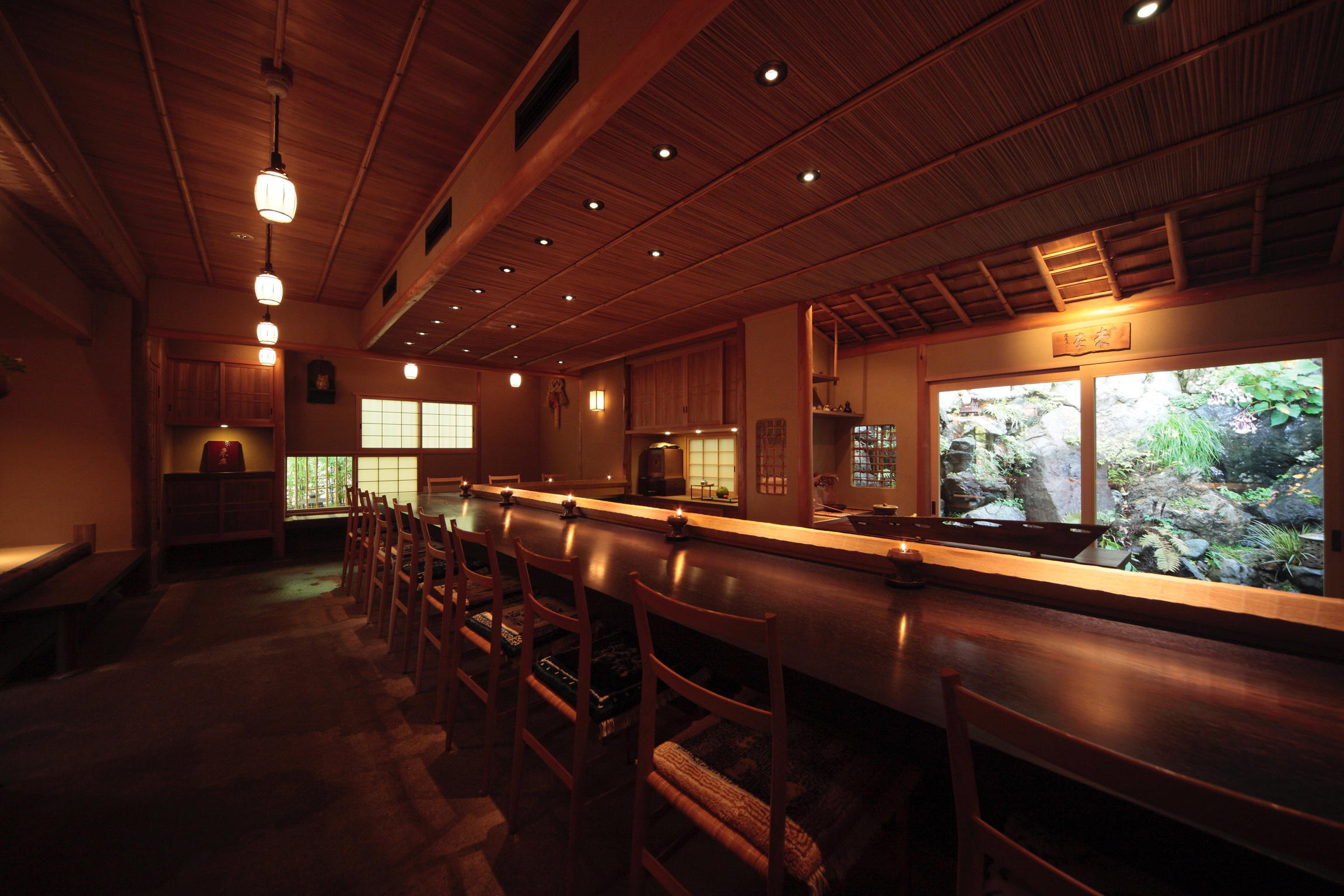

Bars in Kyoto
Browse all →


Hotels in Kyoto
Browse all →
Wineries in Kyoto
Browse all →
At a Glance
- Elegant
- Cozy
- Intimate
- Romantic
- Date Night
- Special Occasion
- Business Dinner
- Group Dining
- Private Event
- Solo
- Chefs Counter
- Design Destination
- Historic Building
- Standalone
- Private Dining
- Extensive Wine List
- Local Sourcing
- Sustainable Seafood
Current opening hours
- Monday
- 5–11 PM
- Tuesday
- 5–11 PM
- Wednesday
- 5–11 PM
- Thursday
- 5–11 PM
- Friday
- 5–11 PM
- Saturday
- 5–11 PM
- Sunday
- 5–11 PM
Hours can change for holidays and private events. Last verified .
An intimate Kyoto townhouse setting in Gion with a calm, refined atmosphere, softly lit counter and table seating, and a relaxed but upscale feel suited to leisurely multi-course dinners.