
Kyoto’s yakitori scene has a compact, serious tier where the grill is only part of the performance: pacing, drink service, and room control matter just as much. Kuchibashi Modern belongs in that conversation, with repeated Tabelog 100 Yakitori recognition and a format that suits diners looking for chicken, kushiyaki, and a coordinated counter-led evening rather than temple-district ceremony.
Pearl is the En Primeur Club membership app — saves, bookings, and concierge access live there. Same editors, same standards.
- Address
- Japan, 〒600-8073 Kyoto, Shimogyo Ward, Nagaharacho, 153-8 MaisonMaxim 1F
- Phone
- +81 75-352-0633
- Website
- tabelog.com
 Saves & bookings on Pearl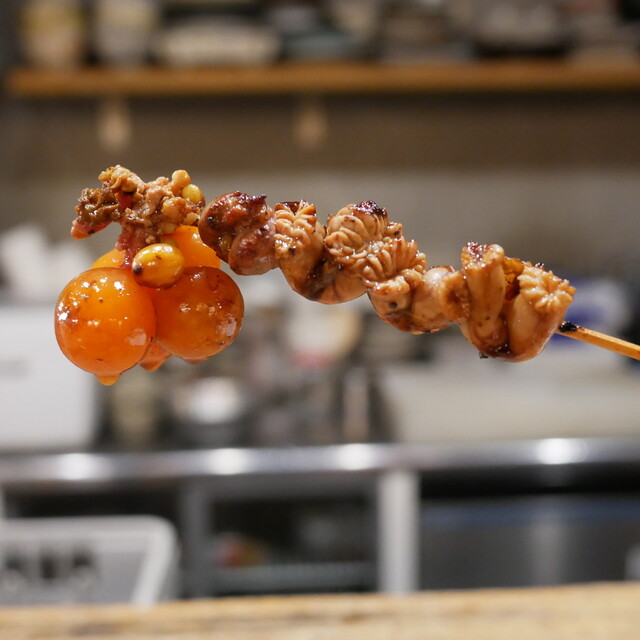
Approach the Karasuma side of Shimogyo and Kyoto changes register. Beyond kaiseki rooms, ryotei etiquette, and long seasonal menus, this central grid supports a sharper night-time culture: compact counters, charcoal heat, sake service, and meals built around timing rather than spectacle. Serious yakitori is not a casual fallback; it asks for sushi-like attention to sequence and temperature, with smoke, fat, and poultry as its grammar.
Kuchibashi Modern sits inside that Kyoto category. Its recognition on Tabelog 100 Yakitori WEST in 2025, after selections in 2022, 2023, and 2024, places it among regional specialists judged on craft rather than general popularity. In Kyoto, where international attention often flows first to kaiseki and sushi, repeated list presence signals a different confidence: narrower craft, a less touristic rhythm, and a room where grill, drinks, and service move as one.
Kyoto yakitori, judged by pacing as much as smoke
The modern yakitori counter is a team format. The grill controls doneness and sequence, but the handoff defines the night: front-of-house reads pace, drinks meet the skewers rather than trail them, and the room absorbs counter diners and table groups without losing tempo. Kuchibashi Modern’s category listing covers yakitori, chicken dishes, and kushiyaki, placing it in the broader grilled-skewer tradition rather than a single-ingredient novelty lane. Its drinks span sake, shochu, wine, and cocktails, a useful signal in Kyoto’s current dining culture, where grill restaurants serve local regulars and visitors expecting more than beer and highballs.
The neighbourhood comparison is instructive. 3TOKU6MI Shijo karasuma ten sits in a lower dinner spend band, while Kuchibashi Modern occupies a more deliberate evening tier. One suits a looser Karasuma meal; the other suits a planned yakitori dinner where kitchen sequencing and floor control are part of the value. Nearby Kyoto alternatives such as DEUX FILLES, Izugen, Kiu, and Washoku Haru pull diners toward French, sushi, and broader Japanese cooking, making the grill-focused choice more specific than convenient.
Kyoto yakitori also differs from Tokyo’s high-density counter culture. Tokyo’s specialists compete across saturated nightlife districts; Kyoto’s strongest examples sit in a city whose dining traditions carry formal weight, so charcoal cooking must justify itself beside polished washoku. That pressure can be productive. Better rooms avoid theatre and focus on cadence: skewers in a logical arc, drinks refreshed before the next turn, and service flexible enough for dates, friends, and families without diluting the cooking.
A compact room where the floor matters
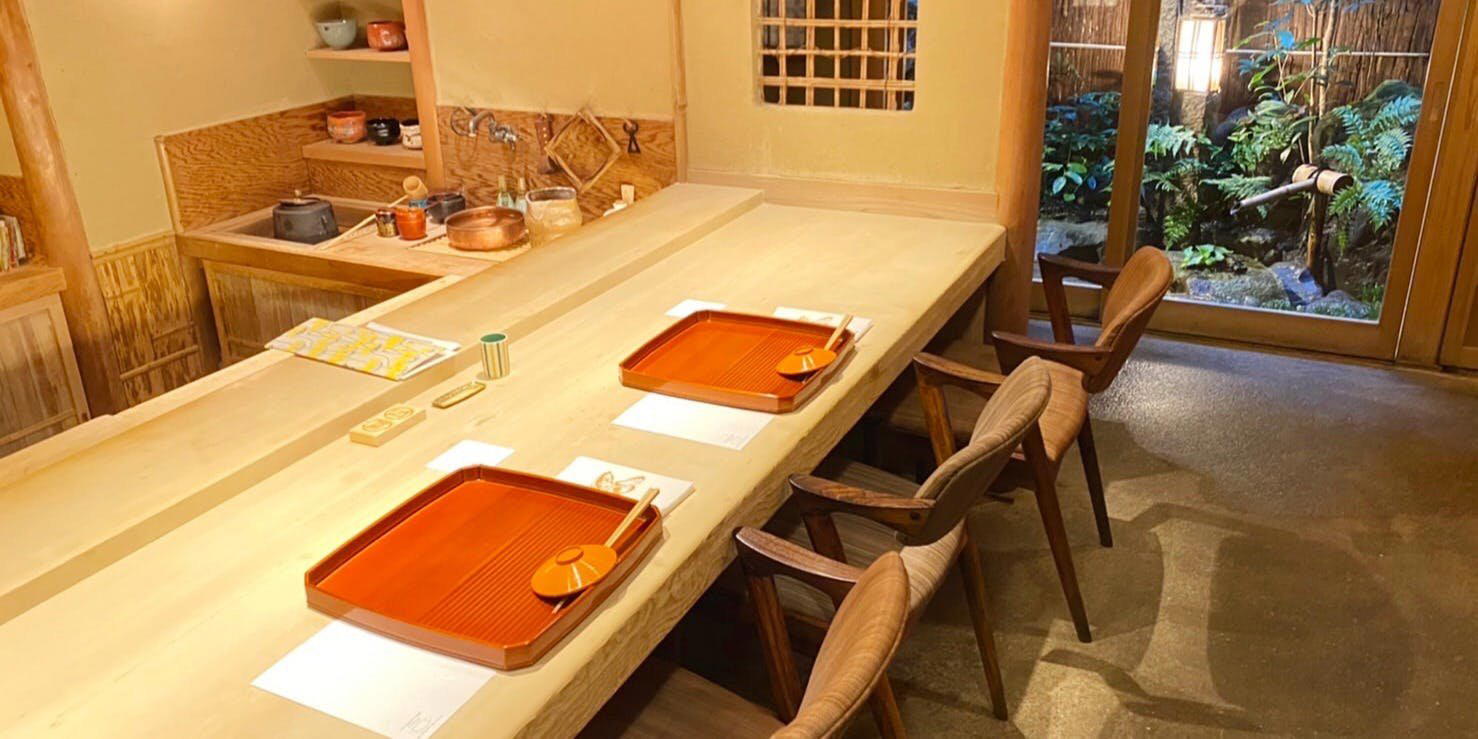
The scale reinforces that team dynamic. With 26 seats, including a seven-seat counter and several small table formats, the room is neither a tiny chef-only counter nor a high-volume izakaya. That middle size is demanding: counter guests expect proximity to the grill; table guests need the same timing without seeing every movement. Listed occasions include family, dates, and friends, suggesting broader social range than many hushed Kyoto counters, but the practical expectation remains: reserve ahead and treat the meal as a full dinner, not a quick drop-in.
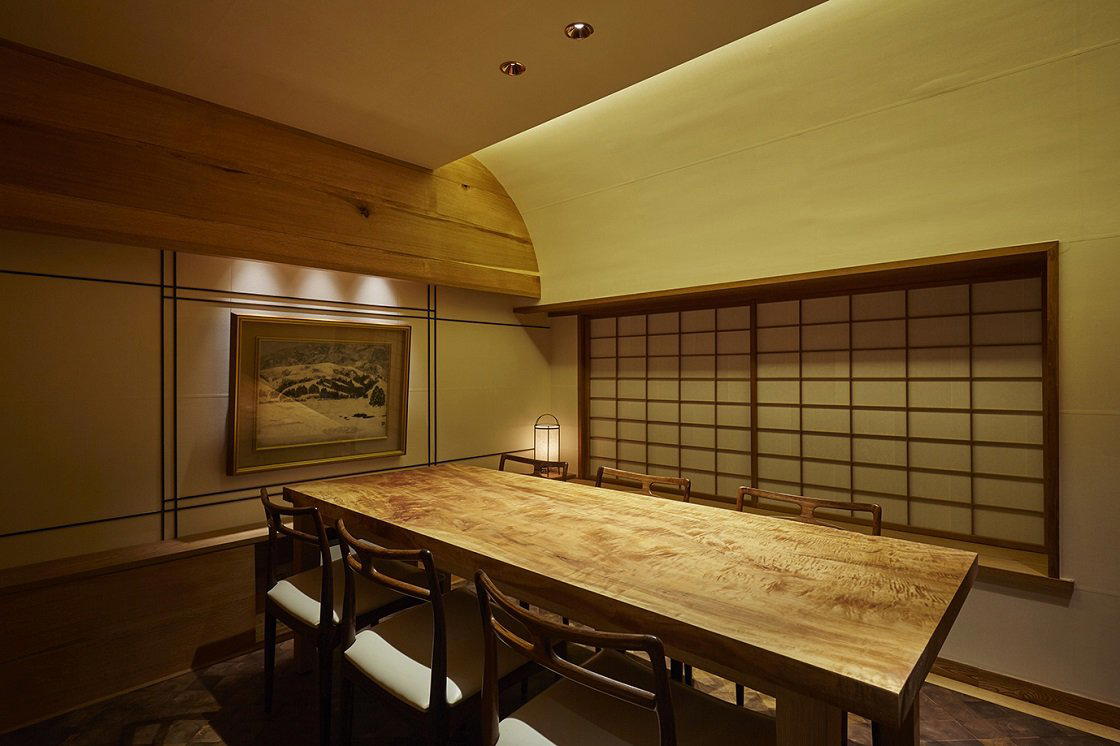
The absence of private rooms also shapes the experience. Kyoto has many venues built around separation, ceremony, and controlled privacy; yakitori works differently in a shared room. Smoke, conversation, and service clatter belong to the format. Here, front-of-house is not decorative. It must manage counter seating, two-person tables, and larger tables at once while the grill team keeps the meal coherent. The drink list matters: sake and shochu connect naturally to skewers, wine widens the pairing language, and cocktails keep the evening legible for mixed groups.
Course structure gives the kitchen another form of control. Rather than leaving the meal to scattered ordering, the listed course price fixes a baseline, with drinks separate. For diners, that reduces decision fatigue and clarifies the kitchen’s intended progression. For the room, it creates order: pacing can be managed, allergies and dislikes flagged in advance, and the evening kept from fracturing into unrelated plates. Kyoto dining rewards that discipline, especially where simplicity can be mistaken for casualness.
Where it fits in a Kyoto itinerary
The restaurant is strongest for travellers who know Kyoto dining is not only temples, kaiseki, and hotel concierges. It belongs to the central-city evening circuit, useful after a day in heritage districts that should not end with another formal tasting menu. Karasuma and Shijo offer transport convenience without forcing the meal into a tourist corridor, making it a practical anchor for grilled chicken, Japanese spirits, and a room flexible enough for couples or small groups.
For planning, use Our full Kyoto restaurants guide to place it against the city’s range, then pair the evening with Our full Kyoto bars guide, Our full Kyoto hotels guide, Our full Kyoto wineries guide, and Our full Kyoto experiences guide. Kyoto’s food map rewards contrast: the snack-and-sweets tradition at Aburi Mochi Honke Nemoto Kazariya, the urban ease of 551蓬莱, the sharper contemporary register at [ki:], and the French lens at Abbesses all frame different sides of the city.
The wider Japan file helps calibrate expectations beyond Kyoto. A beef sukiyaki specialist such as -Grilled beef Sukiyaki- KAMAKURA TANUKIAN 鎌倉 たぬき庵 in Kamakura, a charcoal-and-tuna address like. 鮪と炭火焼き うお炭 秋葉原店 in Tokyo.cafe in Osaka.know in Kumamoto, (Shoku) Vietnam in Kawasaki, and [Curry Senmon Ten] Maruyama Kyoju. in Sapporo show how single-format restaurants can carry a trip as effectively as grander dining rooms. For readers mapping Japanese flavours abroad, Jōdo Saké Bar in Los Angeles and Onigiri Time in Pasadena offer useful overseas reference points.
The editorial case is clear: this is a Kyoto yakitori address for diners who care about coordination. The award history supplies trust, the room size explains the operating challenge, and the drink range shows a meal built for more than a skewer-by-skewer checklist. In a city where tradition can narrow a visitor’s field of vision, a serious grill counter is not a detour. It is one of the cleanest ways to read Kyoto after dark.
The Essentials
Comparable venues by cuisine and category.
| Venue | Cuisine | Price | Notes |
|---|---|---|---|
| Kuchibashi ModernThis venue — the venue you are viewing | Shimogyō, Modern Yakitori Omakase | $$$ | Not listed |
| Takamatsu | Nakagyō, Traditional Kyoto Kaiseki | $$$ | Not listed |
| Sukiyaki Iroha Kita ten | Nakagyō, Traditional Kyoto sukiyaki | $$$ | Not listed |
| 蛸薬師ふるかわ | Nakagyo-ku, Traditional Japanese Kaiseki | $$$ | Not listed |
| Yoshokudo Suzuki | Not listed | $$$ | Nakagyō, Yoshoku (Japanese-style Western) counter restaurant |
| Hachikian Marutamachi honten | Not listed | $$$ | Sakyō, Traditional Kyoto poultry and sukiyaki cuisine |
Recognition history
Dated appearances from independent guides and award organizations, with the underlying list record or original source where available.
Tabelog 100 #62 · No. 62
Tabelog · Tabelog 100 - Yakitori - WEST - 2025
Continue exploring
More in Kyoto
Restaurants in Kyoto
Browse all →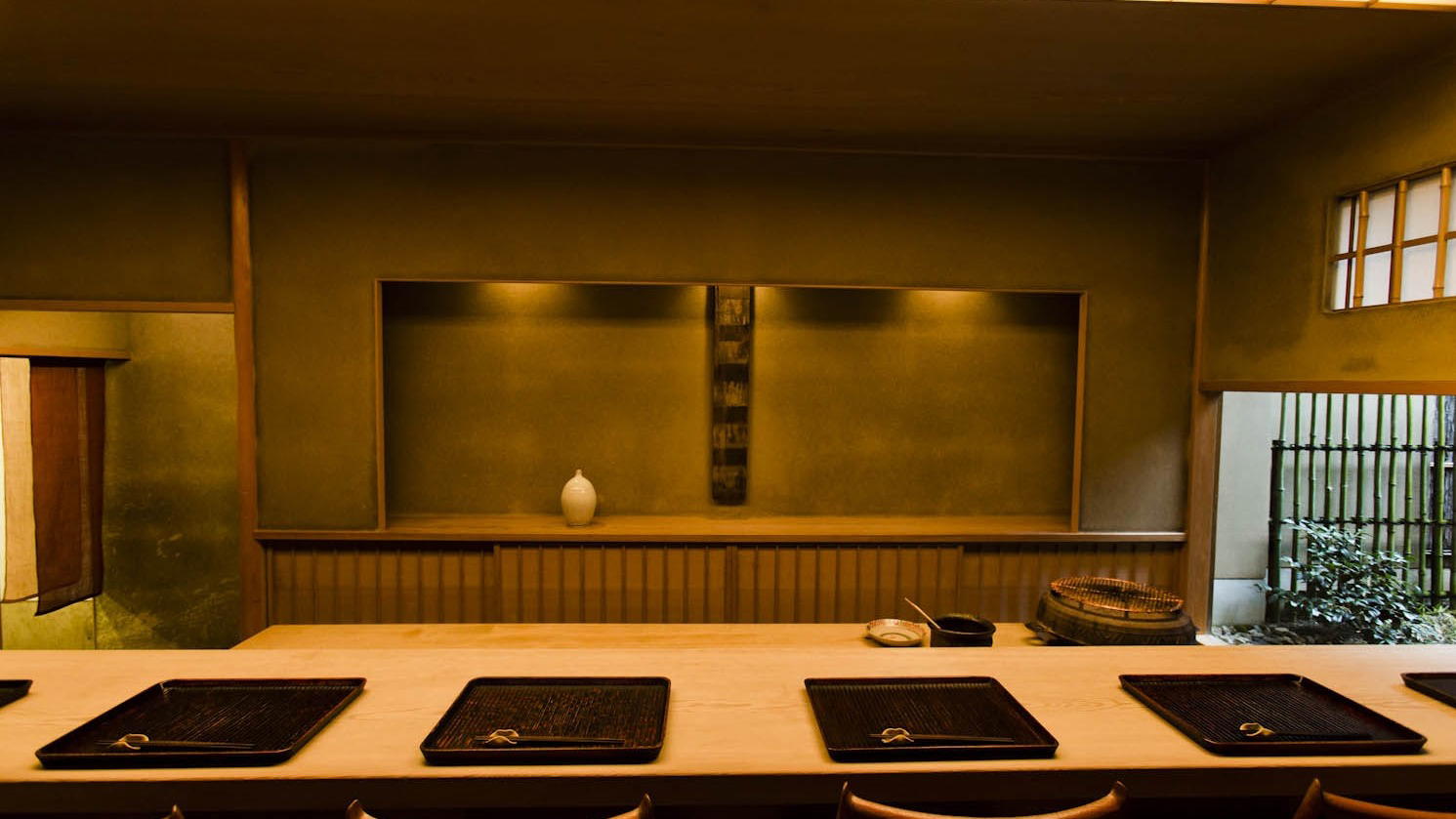
Bars in Kyoto
Browse all →
Hotels in Kyoto
Browse all →

Wineries in Kyoto
Browse all →
At a Glance
- Modern
- Cozy
- Trendy
- Date Night
- Family
- Group Dining
- Casual Hangout
- Late Night
- After Work
- Chefs Counter
- Open Kitchen
- Standalone
- Design Destination
- Sake Program
- Beer Program
- Craft Cocktails
Current opening hours
- Monday
- 6–10:30 PM
- Tuesday
- 6–10:30 PM
- Wednesday
- Closed
- Thursday
- Closed
- Friday
- 6–10:30 PM
- Saturday
- 6–10:30 PM
- Sunday
- 6–10:30 PM
Hours can change for holidays and private events. Last verified .
A small, stylish hideout with counter-focused seating where guests watch skewers grilled over charcoal; the mood is relaxed yet lively, with a modern design that still feels cozy and intimate, suited to both dates and casual gatherings.