

Tabelog 100 #51
Our verdict
Genkiippai has climbed from #52 to #12 on Opinionated About Dining's Casual Japan list between 2025 and 2023, a trajectory that reflects Fukuoka's broader status as the country's most serious city for tonkotsu ramen. Operating daily from 11am to 8pm in Hakata Ward, it draws both locals and informed visitors who treat ramen not as fast food but as a disciplined craft category in its own right.

Pearl is the En Primeur Club membership app, where members save venues, book tables and use the concierge.
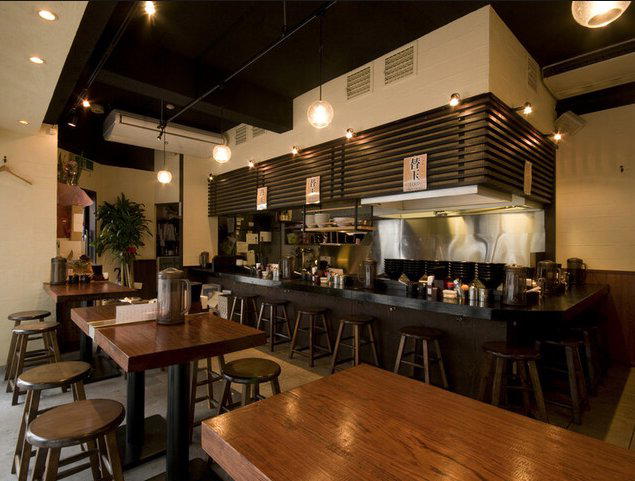
Where Hakata Ramen Earns Its Reputation
Fukuoka has a stronger claim than anywhere else in Japan to ramen as a civic identity. The tonkotsu style that originated in Hakata and Kurume is not simply a regional preference, it is a competitive obsession, with dozens of shops within walking distance of each other in Hakata Ward, each arguing through the bowl for a particular pork-bone density, noodle gauge, and tare balance. In that context, rising through the rankings of Fukuoka's restaurant scene requires more than a decent broth. It requires consistency and a repeatable standard that holds up under scrutiny from the city's most demanding daily eaters.
Genkiippai, at 4-31-1 Shimogofukumachi in Hakata Ward, sits inside that tradition without being softened for outside audiences. The address places it in the working commercial fabric of Hakata rather than in a tourist-facing district, which says something about its primary audience and its priorities. The shop runs seven days a week, 11am to 8pm, a tighter daily window than many competitors, which concentrates foot traffic and keeps service rhythm consistent.
A Ranking Trajectory That Demands Attention
By 2024 the shop had settled at #27, and in 2025 it sits at #52. The directional shift matters less than the sustained presence: three consecutive appearances in OAD's top tier of casual Japanese dining, across a period when the list has grown more competitive and the methodology has tightened, represents a meaningful signal.
For readers building a Fukuoka itinerary that already includes high-end kaiseki at Chiso Nakamura, contemporary French at Goh, or precision sushi at Chikamatsu, a serious ramen stop is not a step down in ambition, it is a step sideways into a different register of Japanese culinary craft. Ramen at this level belongs in the same conversation as those rooms, even if the price point and format sit at opposite ends of the spectrum.
Tonkotsu, Shochu, and the Case for Beverage Pairing
The editorial angle here is one that most ramen coverage ignores entirely: the drink. Fukuoka ramen shops have historically operated as pure food environments, with beverages treated as an afterthought or a functional thirst-quencher. But the city's broader izakaya culture, visible at spots like Asago and in Fukuoka's bar scene documented in our full Fukuoka bars guide, has long understood that shochu and tonkotsu occupy complementary flavour territory.
Mugi shochu, the barley-distilled style produced heavily in Fukuoka and the surrounding Kyushu region, carries a mild, slightly sweet grain character that does not compete with the fat and umami of pork-bone broth. Served mizuwari (with cold water) or on the rocks, it acts as a palate reset between bites rather than a flavour contrast. The logic is similar to the function sake plays at a kappo counter, but earthier and more suited to the intensity of tonkotsu. Where a ginjo sake might flatten under the weight of a rich broth, a well-chosen imo or mugi shochu holds its own.
Imo shochu, the sweet potato variety associated with southern Kyushu, pushes further in the same direction, more aromatic, sometimes almost smoky, with a fullness that mirrors the collagen richness of a long-simmered pork bone stock. At ramen shops across Hakata that stock it, the combination functions less like a pairing in the fine-dining sense and more like a regional folk tradition: two products of the same agricultural and culinary geography consumed together because the combination makes local sense.
Sake, for its part, does appear at some serious ramen counters as an aperitif or accompaniment to gyoza and side dishes. A dry junmai with enough acid to cut through rendered fat is the standard pairing logic. The detail worth knowing for any Kyushu ramen visit is that the local preference runs toward shochu over sake, a regional pattern that holds in izakayas from Hakata to Kagoshima and distinguishes Fukuoka's drinking culture from Tokyo's more sake-forward sensibility.
Ramen in Japan's Broader Casual Dining Conversation
The OAD Casual Japan list places Genkiippai in dialogue with casual dining operations from Osaka to Okinawa. Other serious casual formats across Japan, including Afuri in Tokyo, whose yuzu-shio style sits at the opposite end of the broth spectrum from tonkotsu, illustrate how wide the category has become. Even internationally, Afuri's reach into markets like Portland demonstrates that serious ramen now travels. But the source material, pork-bone broth at this intensity, this clarity, this depth, is only really understood in cities like Fukuoka, where the competition is structural rather than occasional.
For context beyond ramen, Fukuoka's dining scene extends from the casual to the architectural: Bekk represents another register entirely, as does the precision tofu work at comparable Kyushu producers. Readers planning a wider Japan itinerary can cross-reference with HAJIME in Osaka, Gion Sasaki in Kyoto, Harutaka in Tokyo, akordu in Nara, 1000 in Yokohama, and 6 in Okinawa to understand how each city constructs its own serious dining identity. Fukuoka's version begins, and for many visitors ends, with ramen.
Planning the Visit
Genkiippai opens at 11am daily, which makes a late-morning arrival the most practical approach, queues at ranked ramen shops in Hakata tend to build through the lunch window and thin again by mid-afternoon. The 8pm closing means a dinner visit is viable but offers a narrower buffer. No reservation system applies to counter ramen at this level; arrival and queue management are the booking method. The address in Shimogofukumachi puts the shop within Hakata Ward, accessible from Hakata Station by foot or a short taxi ride. For accommodation context, our full Fukuoka hotels guide covers options across price tiers in the area. Those building a broader Fukuoka programme can reference our experiences guide and wineries guide for the full picture.
Frequently asked questions
What do regulars order at Genkiippai?
Tonkotsu broth is the foundation of Genkiippai's programme, the style native to Hakata and the basis for the shop's three consecutive appearances on Opinionated About Dining's Casual Japan list. OAD rankings at this level reflect consistent execution of a core menu rather than seasonal novelty, so the standard bowl is the reference point. Arriving at 11am opening gives the clearest read on what the kitchen prioritises.
What are Genkiippai's hours?
Hours at Genkiippai: Hours: Monday 11 am–8 pm Tuesday 11 am–8 pm Wednesday 11 am–8 pm Thursday 11 am–8 pm Friday 11 am–8 pm Saturday 11 am–8 pm Sunday 11 am–8 pm.
How do I find Genkiippai?
Genkiippai is located at Japan, 〒812-0034 Fukuoka, Hakata Ward, Shimogofukumachi, 4−31−1, Fukuoka.
What kind of recognition has Genkiippai received?
Genkiippai has received recognition including: Opinionated About Dining Casual in Japan Ranked #52 (2025); Opinionated About Dining Casual in Japan Ranked #27 (2024); Opinionated About Dining Casual in Japan Ranked #12 (2023).
What's the defining dish or idea at Genkiippai?
The defining idea is precision within a format that resists pretension. Genkiippai ranked #12 on Opinionated About Dining's Casual Japan list in 2023, the platform's most rigorous year-on-year data places it among Fukuoka's most consistently recognised ramen operations. The shop operates daily from 11am to 8pm in Hakata Ward, treating tonkotsu ramen not as a regional cliché but as a discipline worth ranking alongside Japan's broader casual dining conversation.
A Quick Peer Check
| Venue | Cuisine | Price | Awards | Notes |
|---|---|---|---|---|
| GenkiippaiThis venue (the venue you are viewing) | Hakata Tonkotsu Ramen | $10–20 | Tabelog 100 #51 | Not listed |
| Chikamatsu | Edomae Sushi Omakase | $200–300 | La Liste Top Restaurants · Tabelog Gold #5 | Sushi |
| Gahoujin 我逢人 | Seasonal Sushi Omakase | $200–300 | Tabelog Bronze #80 | Sushi |
| Matsuyama | Seasonal Kyushu Kaiseki Omakase | $300–500 | Tabelog Silver #74 | Western |
| Mihara Tofuten | Traditional Japanese Tofu Izakaya | $30–50 | Not listed | Tofu |
| Sagano | Traditional Kaiseki | $200–300 | Not listed | Izakaya |
Recognition history
Dated appearances from independent guides and award organizations, with the underlying list record or original source where available.
Opinionated About Dining Casual in Japan Ranked #23
Opinionated About Dining
Tabelog 100 #51 · No. 51
Tabelog · Tabelog 100 - Ramen - WEST - 2025
Full recognition history (5 entries)
Opinionated About Dining Casual in Japan Ranked #52
Opinionated About Dining
Opinionated About Dining Casual in Japan Ranked #27
Opinionated About Dining
Opinionated About Dining Casual in Japan Ranked #12
Opinionated About Dining
Continue exploring
More in Fukuoka
Restaurants in Fukuoka
All restaurants in Fukuoka →
Details
- Casual
- Cozy
- Solo
- Casual Hangout
- A La Carte
Current opening hours
- Monday
- 11 AM–8 PM
- Tuesday
- 11 AM–8 PM
- Wednesday
- 11 AM–8 PM
- Thursday
- 11 AM–8 PM
- Friday
- 11 AM–8 PM
- Saturday
- 11 AM–8 PM
- Sunday
- 11 AM–8 PM
Hours can change for holidays and private events. Hours as of .
Casual and relaxed atmosphere in a small, unassuming space with counter and table seating, traditionally strict but now more welcoming.