Fradiavolo Roma Parioli occupies a quietly residential stretch of Via Po in Rome's Parioli district, a neighbourhood that has long favoured neighbourhood restaurants over destination dining. The address places it squarely within a local dining culture that prizes ritual and regularity over spectacle, making it a reference point for those who prefer Rome's less-performed side.
 Discover on Pearl
Pearl is the En Primeur Club membership app — saves, bookings, and concierge access live there. Same editors, same standards.
- Address
- V. Po, 29a, 00198 Roma RM, Italy
- Phone
- +39640080026
- Website
- fradiavolopizzeria.com
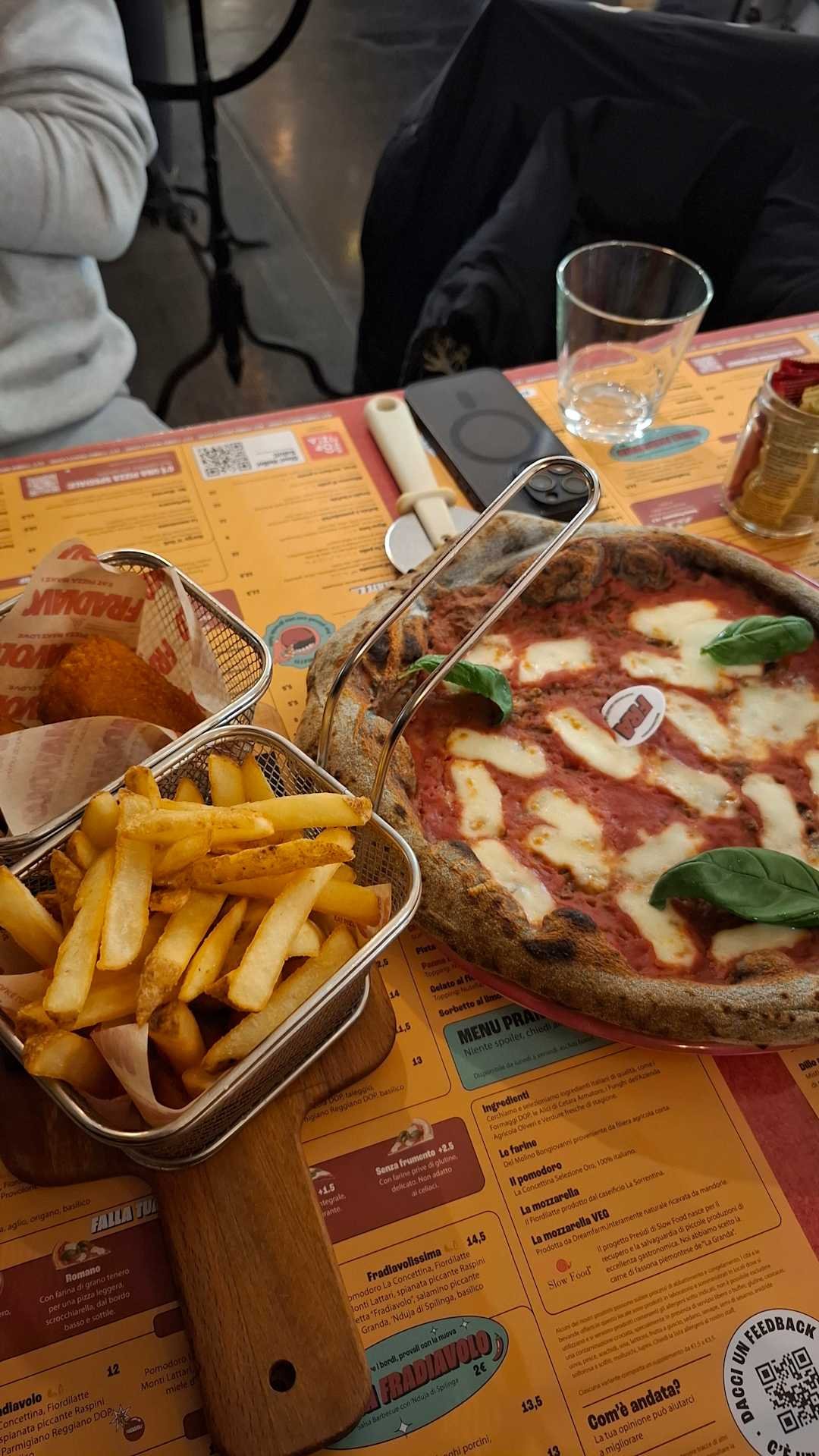
Via Po and the Parioli Approach to Dining
Rome's Parioli quarter runs north of the Villa Borghese gardens, separated from the centro storico by enough geography that tourists rarely arrive by accident. The streets here, Via Po, Via Salaria, Via Barnaba Oriani, form a residential grid lined with mid-century apartment buildings and the kind of restaurants that depend on repeat custom rather than passing trade. That context matters when reading any address in this neighbourhood. Dining in Parioli has historically operated on a different rhythm from the high-concept tasting menus of central Rome: the meals are longer in pace, the room tends toward regulars, and the assumption is that you know why you came.
Fradiavolo Roma Parioli is a contemporary Italian pizzeria at V. Po, 29a, 00198 Roma RM, Italy. The address is not a destination in the way that, say, La Pergola functions as a destination, a place you travel to Rome partly to visit. It operates instead as a neighbourhood anchor, the kind of restaurant that defines a local dining habit rather than a city-wide reputation. That distinction shapes everything about what to expect from the experience.
The Dining Ritual in a Neighbourhood Room
Italian neighbourhood restaurants, particularly in a bourgeois district like Parioli, follow a set of unwritten conventions that are worth understanding before you sit down. The pace is unhurried by design, not by oversight. A table at a place like this is held, not cycled. Courses arrive with gaps between them that encourage conversation rather than consumption, and the meal is understood to occupy an evening rather than fill an hour. This is the dominant ritual of upper-middle-class Roman dining in residential quartieri, and Parioli has preserved it more faithfully than most parts of the city, which have bent increasingly toward the international visitor's preference for faster service and earlier closing.
The Italian dining tradition that Fradiavolo Roma Parioli participates in is broadly distinct from the tasting-menu format that drives recognition at venues like Acquolina, Enoteca La Torre, or Il Pagliaccio. Those restaurants, each operating at the creative end of Rome's dining spectrum, are built around structured menus, prix-fixe sequences, and a degree of ceremony that announces itself from the moment you enter. The neighbourhood trattoria model, by contrast, is built around a card that allows for self-direction: you choose your own sequence, you move at your own pace, and the waiter's role is facilitation rather than choreography.
This is not a hierarchy, it is a different form of dining entirely. The leading versions of the neighbourhood format across Italy, from Dal Pescatore in Runate to Quattro Passi in Marina del Cantone, demonstrate that the à la carte tradition carries its own discipline and depth. The difference is in what is being optimised: not surprise or intellectual engagement, but pleasure, familiarity, and the satisfaction of a well-executed standard.
Rome's Neighbourhood Restaurant Scene in Broader Context
Rome's dining scene divides, roughly, between creative restaurants in the centre and a much larger population of neighbourhood addresses spread across its residential quartieri. The creative tier, which includes Achilli al Parlamento alongside the venues mentioned above, attracts the critical attention and the international traveller. The neighbourhood tier, less documented and less discussed in English-language food media, is where most Romans actually eat on a regular basis.
Parioli's version of this neighbourhood tier skews toward a specific income bracket. The district has historically housed diplomats, media professionals, and Rome's older professional class, and the restaurants reflect that clientele: generally more comfortable than rustic, attentive to the wine list, and capable of handling a long Friday dinner without obvious stress. The name Fradiavolo, a reference to the spicy seafood preparation that is a recurring presence in Roman coastal cooking, suggests a menu anchored in Roman and central Italian tradition, the kind of cooking that does not position itself against its culinary heritage but within it.
For comparison, Italy's more formally ambitious restaurants, Reale in Castel di Sangro, Uliassi in Senigallia, Piazza Duomo in Alba, and Le Calandre in Rubano, operate in a register that requires advance booking, substantial budget, and a certain willingness to be guided through the meal. Fradiavolo Roma Parioli, by neighbourhood context and address, belongs to a different register: one where the meal belongs to the diner rather than the kitchen.
Internationally, this positioning aligns it with a category that places high value on the guest's autonomy. The contrast with a structured creative format, say, Osteria Francescana in Modena, Enoteca Pinchiorri in Florence, or Enrico Bartolini in Milan, makes the register clearer: this is neighbourhood dining, and the neighbourhood dining model at its finest is one of the most durable forms the restaurant has produced. You can find analogous models globally, Le Bernardin in New York City and Lazy Bear in San Francisco each occupy the opposite pole, where the kitchen's structure governs the guest experience entirely. Atelier Moessmer Norbert Niederkofler in Brunico represents yet another variant, where regionalism and mission drive the format. Fradiavolo Roma Parioli's Parioli address signals none of those ambitions, and that is precisely its position.
Know Before You Go
| Detail | Information |
|---|---|
| Address | Via Po 29a, 00198 Roma RM, Italy (Parioli district) |
| Neighbourhood | Parioli, north of Villa Borghese |
| Price range | About $19 per person |
Standing Among Peers
Comparable venues nearby, for context on price, style, and recognition.
| Venue | Cuisine | Price | Awards |
|---|---|---|---|
| Fradiavolo Roma ParioliThis venue — the venue you are viewing | |||
| Enoteca La Torre | Creative | €€€€ | Michelin 2 Star |
| Il Pagliaccio | Contemporary Italian, Creative | €€€€ | Michelin 2 Star |
| Aroma | Modern Cuisine | €€€€ | Michelin 1 Star |
| Idylio by Apreda | Modern Italian, Italian Contemporary | €€€€ | Michelin 1 Star |
| La Palta | Country cooking | €€€ | Michelin 1 Star |
Continue exploring
More in Rome
Restaurants in Rome
Browse all →
Bars in Rome
Browse all →
Hotels in Rome
Browse all →
Wineries in Rome
Browse all →
At a Glance
- Modern
- Lively
- Trendy
- Casual Hangout
- Date Night
- Open Kitchen
Welcoming atmosphere blending modern and vintage elements with original decor.