
Kamata’s Spanish dining scene sits outside the usual central Tokyo orbit, and Flowers&Spanish Sonrisa gives that geography a sharper point of view: Spanish, wine bar and baru formats filtered through Japanese sourcing discipline. Its Tabelog 100 Spanish cuisine selections in 2024 and 2026 place it in a narrower peer group than the neighbourhood’s everyday lunch counters and izakaya staples.
Pearl is the En Primeur Club membership app — saves, bookings, and concierge access live there. Same editors, same standards.
- Address
- Japan, 〒144-0052 Tokyo, Ota City, Kamata, 3 Chome−17−12 束田ビル 1F
- Phone
- +81 3-6715-7097
- Website
- instagram.com
- Directions
- Get directions
 Saves & bookings on Pearl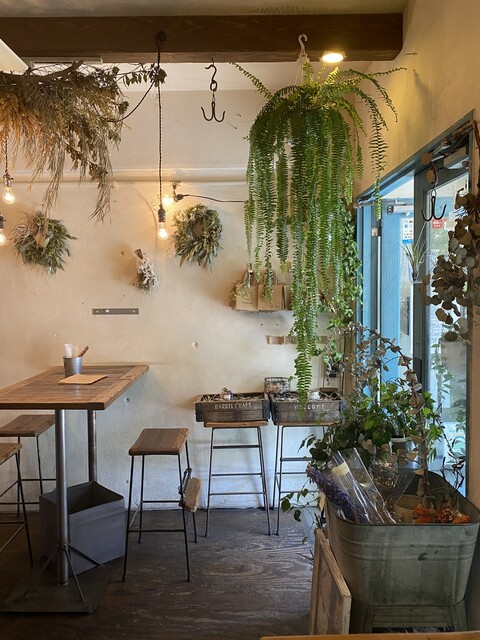
Kamata does not announce itself with the polish of Ginza or the late-night density of Shinjuku. The area works on a smaller frequency: station-side drinking, compact counters, practical neighbourhood dining, and restaurants that rely on repeat local confidence rather than spectacle. Within that frame, Flowers&Spanish Sonrisa reads as a Spanish room built for close-range service, with plants, wine, counter seating and a baru sensibility doing the atmospheric work before the first order is placed.
Tokyo’s Spanish category has become broader than paella houses and Iberian ham bars. The stronger rooms now borrow from three traditions at once: Spain’s bar culture, Japan’s ingredient precision, and the wine-bar habit of letting the bottle list steer the pace of dinner. This is where the Kamata address matters. In a district where nearby comparisons such as Tonjiru to Genmai no Mise Aoki Shokudo and Grill Suzukou sit in a lower daily-dining price band, a Spanish wine-bar format at this level signals a different kind of evening: longer, more ingredient-led, and less dependent on central-city ceremony.
Spanish baru structure, Japanese producer logic
The restaurant’s public identity is Spanish, wine bar and baru, but the more revealing detail is sourcing. Organic vegetables come from contracted farmers, with pesticide-free and chemical fertilizer-free produce used across the kitchen rather than treated as a garnish to the concept. Beef and pork are described as fully pasture-raised, and Eri-mo Short-Horned Cattle from Hokkaido appears in the producer chain. Wild fish is also received primarily from Hokkaido. That combination places the cooking closer to Tokyo’s ingredient-first Spanish movement than to a theme-restaurant reading of Spain.
For travellers, the useful comparison is not with tapas bars built around quick turnover. The format points toward a slower dinner in which the kitchen, wine service and floor need to move together. A 22-seat room, split between counter and table seating, changes the dynamic: the counter supports direct kitchen rhythm, while tables allow the wine-bar side to stretch. In Tokyo, that hybrid often works when front-of-house can translate the menu’s producer detail without turning dinner into a lecture. The category rewards teamwork more than personality cult.
Tabelog selected Flowers&Spanish Sonrisa for its Spanish cuisine Tabelog 100 list in 2024 and again in 2026, with a 2026 score of 3.80. Tabelog’s Hyakumeiten lists are not Michelin stars, and they should not be read as the same kind of international signal. They do, however, matter in Japan because they sort by category and reveal strength outside the restaurant districts foreign visitors default to. A Kamata Spanish room appearing on that list says something about Tokyo’s dining map: serious non-Japanese cooking is no longer concentrated only in the obvious premium corridors.
The wine-bar half is not decorative
The drinks side is central to the restaurant’s position. Wine, cocktails and shochu are all part of the stated program, and the listing specifically emphasizes wine and cocktails. That matters because modern Spanish dining in Tokyo often succeeds when it avoids a rigid import of Iberian form. Shochu beside wine is not a compromise; it is a local dining grammar. It lets a Spanish room speak to Japanese drinking habits without abandoning its category.
The team dynamic is the real editorial story here. A kitchen working with Hokkaido fish and producer-specific meat needs a beverage program that can shift between acidity, texture and pacing. A floor team handling celebrations, take-out, BYO and private use has to manage a broader set of expectations than a tasting-menu counter. This is not the single-chef auteur model that dominates much of Tokyo’s international fine dining. It is a collaboration model: kitchen discipline, beverage flexibility and service judgment sharing the burden of the evening.
That makes the restaurant useful for a particular reader decision. Choose it when the goal is a neighbourhood Tokyo dinner with a serious Spanish frame, not when the goal is a trophy dining room or a rapid tapas crawl. Kamata’s surrounding food culture includes lower-priced local staples, casual counters and station-area drinking, with places such as Maru Ichi, Tori Ki Kamata ten and HIIKI showing the area’s practical range. Flowers&Spanish Sonrisa occupies a higher dinner tier within that local field, and the Tabelog 100 recognition gives the choice more weight than neighbourhood curiosity alone.
How it fits into a Tokyo food itinerary
Tokyo rewards diners who plan by district rather than by cuisine alone. Kamata is useful for travellers staying near Haneda, for repeat visitors looking beyond the central luxury circuit, and for anyone mapping how serious dining disperses across the city’s rail network. A Spanish wine bar here pairs naturally with a wider itinerary that might put yakitori, curry, seafood and casual cafe culture in different neighbourhoods rather than forcing every meal into the same prestige zone.
For broader planning, compare the tone of this room with other Tokyo listings such as . 鮪と炭火焼き うお炭 秋葉原店, 12/10 Shinjuku ten, 124. KAGURAZAKA (Yakitori), 2D Cafe and 3 Chome no Curry Ya San. The contrast is instructive: Tokyo’s dining strength comes from category depth, not a single dominant style.
Readers building a fuller city file can use Our full Tokyo restaurants guide alongside Our full Tokyo hotels guide, Our full Tokyo bars guide, Our full Tokyo wineries guide and Our full Tokyo experiences guide. For perspective beyond the capital, compare how regional Japanese and overseas Japanese-adjacent formats appear at -Grilled beef Sukiyaki- KAMAKURA TANUKIAN 鎌倉 たぬき庵 in Kamakura.cafe in Osaka.know in Kumamoto, (Shoku) Vietnam in Kawasaki, [Curry Senmon Ten] Maruyama Kyoju. in Sapporo, [ki:] in Kyoto, Jōdo Saké Bar in Los Angeles and Onigiri Time in Pasadena.
The defining idea is not a named dish. It is Spanish cooking treated as a framework for Japanese produce, Hokkaido seafood, pasture-raised meat and a drinks program broad enough to support wine, cocktails and shochu. In a city crowded with imported culinary formats, that restraint is the point.
The Short List
Comparable venues at the same tier for side-by-side context.
| Venue | Cuisine | Price | Notes |
|---|---|---|---|
| Flowers&Spanish SonrisaThis venue — the venue you are viewing | Not listed | $$$ | Not listed |
| FERMINTXO | Minato, Seasonal Spanish Wine Restaurant | $$$ | Not listed |
| Spanish Ryouri Pablo | Meguro, Spanish tapas & paella bar | $$$ | Not listed |
| エスタシオン | Shinjuku, Regional Spanish Home Cooking | $$$ | Not listed |
| sardexka | Not listed | $$$ | Taitō, Basque-leaning Japanese-Spanish Fusion |
| アカ | Chūō, Modern Spanish | $$$$ | Not listed |
Recognition history
Dated appearances from independent guides and award organizations, with the underlying list record or original source where available.
Tabelog 100 #59 · No. 59
Tabelog · Tabelog 100 - Spanish cuisine - 2026








At a Glance
- Cozy
- Lively
- Romantic
- Trendy
- Date Night
- After Work
- Group Dining
- Casual Hangout
- Late Night
- Special Occasion
- Wine Cellar
- Design Destination
- Standalone
- Natural Wine
- Extensive Wine List
- Natural Wine
Current opening hours
- Monday
- 5 PM–1 AM
- Tuesday
- 5 PM–1 AM
- Wednesday
- 5 PM–1 AM
- Thursday
- 5 PM–1 AM
- Friday
- 5 PM–1 AM
- Saturday
- 5 PM–1 AM
- Sunday
- Closed
Hours can change for holidays and private events. Last verified .
A warm, relaxed local space filled with colorful plants and floral arrangements, giving it an art-space feel; lighting and music support a lively yet intimate wine-bar atmosphere rather than a formal dining room.