
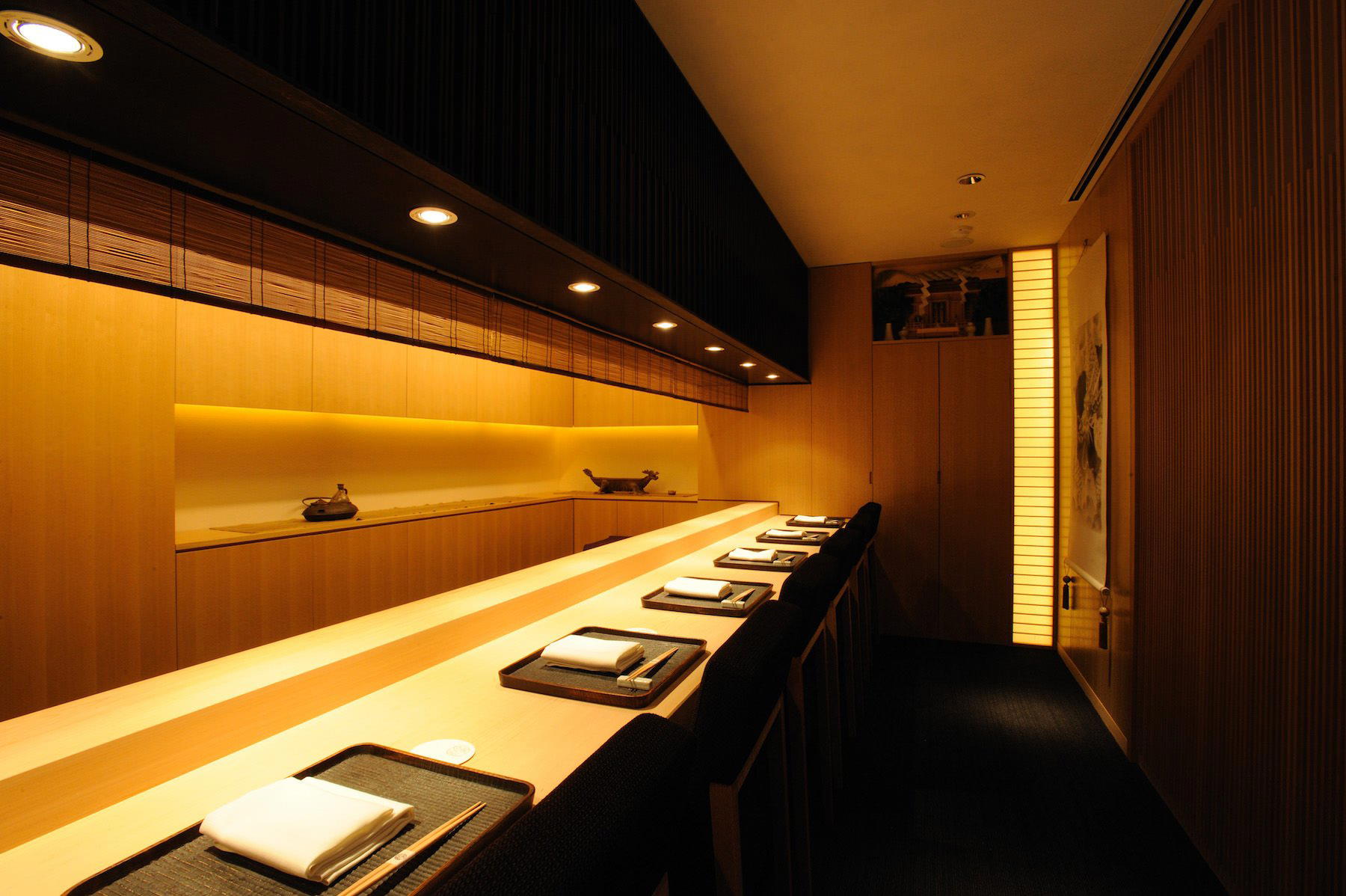
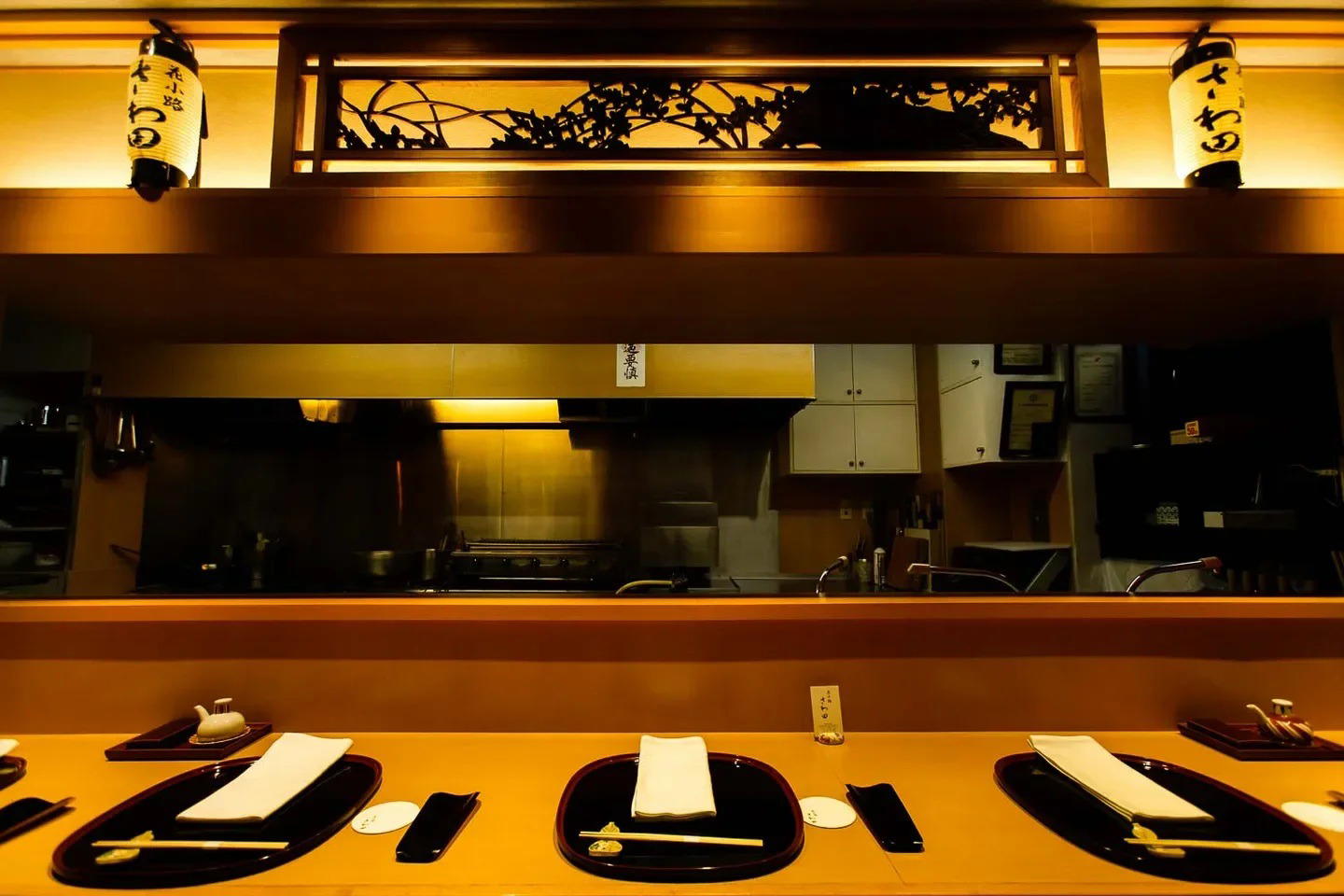
Tokyo’s Spanish dining scene has a quiet counterpoint in Shitaya, where sardexka applies an eight-seat, counter-only format to fish-focused Spanish cooking and wine. Its selection for Tabelog 100 Spanish cuisine in 2024 and 2026 places it in a narrow tier of small Tokyo rooms where Iberian technique is treated with the discipline usually associated with sushi counters.
Pearl is the En Primeur Club membership app — saves, bookings, and concierge access live there. Same editors, same standards.
- Address
- 東京都台東区下谷1-6-7 竹内マンション 1F
- Phone
- +818098842732
- Website
- sardexka.com
 Saves & bookings on Pearl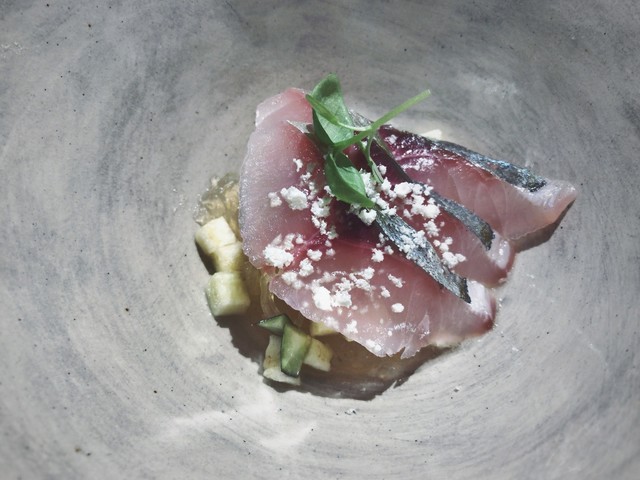
Shitaya is not the Tokyo most visitors picture for Spanish dining. Around Uguisudani and Iriya, the city moves lower than Ginza or Roppongi: older shopfronts, residential blocks, temple-side routes, and a dining culture that rewards leaving obvious circuits. Here, sardexka feels less like a theme restaurant than a compact argument for Spanish cooking in Tokyo stripped to essentials: eight counter seats, a fish-first kitchen, and a wine-led drinks program that put proximity ahead of spectacle.
Spanish food in Tokyo has split into casual tapas rooms built around volume, grill-heavy restaurants borrowing from Basque asador culture, and polished dining rooms where Iberian ideas meet Japanese seasonality. The Shitaya address belongs to the last two conversations without fully adopting either. Its Tabelog 100 Spanish cuisine selections in 2024 and 2026 matter because they place a small counter in the same recognition frame as larger, more central Spanish restaurants. The format is the point: not a parade of clichés, but a concentrated counter experience shaped by seafood, wine, and restraint.
Spanish cooking at counter scale, with fish as the hinge
Tokyo is unusually good at compressing ambitious restaurants into small rooms. Sushi made that model familiar, but the same logic now appears across French, Italian, Chinese, and Spanish categories: fewer seats, more direct kitchen contact, and a tighter relationship between product and pacing. At sardexka, the eight-seat counter-only setup puts Spanish cuisine into that Tokyo grammar. Diners are not choosing from a broad Iberian map; the experience narrows around fish and wine, anchors that fit a city with deep seafood supply chains and mature sommelier culture.
That matters because Spanish food is often flattened abroad into tapas shorthand. Spain’s coastal regions, from Galicia to Catalonia to the Basque Country and Andalusia, have long seafood traditions built on grilling, preservation, rice, stews, and controlled acidity as much as small plates. Tokyo adds another expectation: seafood handling should be precise, seasonal, and texturally alert. A fish-focused Spanish counter in Taito therefore sits at a productive intersection, translating coastal intelligence into a Japanese dining rhythm rather than importing a national cuisine whole.
The price tier reinforces that reading. Dinner sits in the JPY 10,000 to JPY 14,999 bracket, with lunch at JPY 3,000 to JPY 3,999. In Tokyo, that dinner range is serious without entering ultra-luxury tasting-menu territory, distinguishing it from nearby neighborhood casual restaurants. In the comparison set, Tonpei and HARU operate in much lower everyday price bands, while Iriya Kishimojin Monzen no Daya sits in a similar dinner bracket but belongs to a different dining tradition. The useful comparison is not cuisine-to-cuisine equivalence; it is how much structure, intimacy, and product focus a guest is buying in this part of Taito.
Why Taito changes the reading of Spanish food
Location changes how a restaurant is judged in Tokyo. A Spanish counter in Ginza would be read against expense-account polish. In Shitaya, the format feels more deliberate, partly because the neighborhood has fewer international-dining signals and partly because Uguisudani and Iriya draw diners comfortable with the city’s less theatrical food geography. The address is a short walk from both Uguisudani Station and Iriya Station, accessible without the frictionless feel of a station-building dining floor.
The room’s restrictions shape expectation. Counter-only seating means the meal is not built for sprawling groups, children moving around the table, or casual drop-ins. Reservation-only operation points to a planned evening rather than opportunistic dining. Private rooms are unavailable, while private use is listed, a detail that underlines the room’s size more than any luxury claim. Non-smoking status and card acceptance add practical comfort, but the broader editorial point is format discipline: Tokyo’s strongest small restaurants often define themselves as much by what they refuse to accommodate as by what they serve.
Wine is another clue. Spanish restaurants abroad often lean on sangria stereotypes or generic Rioja familiarity. Tokyo’s more serious Iberian rooms increasingly treat wine as a structural part of the meal, connecting seafood, acidity, and pacing. The drinks listing here specifically emphasizes wine, giving the fish-led cooking a clearer frame. It also places sardexka where pairing intelligence matters more than a long, performative cellar list. For readers building a Tokyo itinerary around food rather than landmarks, that is the distinction to notice.
For wider planning, this address belongs beside a deeper city list rather than a single-neighborhood crawl. EP Club readers comparing formats can move from Our full Tokyo restaurants guide to sharply different Tokyo entries such as 124. KAGURAZAKA (Yakitori), 12/10 Shinjuku ten, 3 Chome no Curry Ya San, 2D Cafe, and 鮪と炭火焼き うお炭 秋葉原店. The comparison is not about ranking unlike restaurants; it is about reading Tokyo through format, price, and neighborhood logic.
Who should make the detour to Shitaya
This is a strong fit for diners who know Tokyo’s serious meals are not confined to famous hotel districts. The case for sardexka rests on specificity: Spanish category recognition from Tabelog, an eight-seat counter, fish emphasis, wine focus, and a Taito location outside the city’s predictable luxury routes. It is less suited to travelers seeking a broad, social tapas night or a family-friendly table, and better read as a compact, adult dinner where value lies in concentration.
Tokyo itineraries can become overbuilt, especially when every evening is assigned to a reservation with its own ritual. This address works after a day in Ueno, Yanaka, Asakusa, or the eastern side of the Yamanote Line, rather than forced between far-flung hotel and bar plans. For surrounding travel context, use Our full Tokyo hotels guide, Our full Tokyo bars guide, Our full Tokyo wineries guide, and Our full Tokyo experiences guide. For a wider Japan-and-beyond dining lens, compare how regional formats shift at -Grilled beef Sukiyaki- KAMAKURA TANUKIAN 鎌倉 たぬき庵 in Kamakura.cafe in Osaka.know in Kumamoto, (Shoku) Vietnam in Kawasaki, [Curry Senmon Ten] Maruyama Kyoju. in Sapporo, [ki:] in Kyoto, Jōdo Saké Bar in Los Angeles, and Onigiri Time in Pasadena.
Style and Standing
Comparable venues to place this listing in its category.
| Venue | Cuisine | Price | Notes |
|---|---|---|---|
| sardexkaThis venue — the venue you are viewing | Basque-leaning Japanese-Spanish Fusion | $$$ | Not listed |
| Spanish Ryouri Pablo | Spanish tapas & paella bar | $$$ | Meguro |
| El Pescador | Traditional Spanish (Basque‑influenced) restaurant | $$$ | Meguro |
| Gracia | Modern Spanish Gastrobar | $$ | Taitō |
| Bar Porteno | Spanish & South American Wine Bar | $$$ | Sumida |
| Yakiniku Dan Asakusa | Japanese Yakiniku (BBQ) | $$$ | Taitō |
Recognition history
Dated appearances from independent guides and award organizations, with the underlying list record or original source where available.
Tabelog 100 #66 · No. 66
Tabelog · Tabelog 100 - Spanish cuisine - 2026





At a Glance
- Sophisticated
- Intimate
- Modern
- Cozy
- Date Night
- Special Occasion
- Business Dinner
- Standalone
- Open Kitchen
- Extensive Wine List
- Local Sourcing
Intimate counter-style dining with a carefully prepared, quiet, and refined atmosphere centered on seasonal food and wine.