Our verdict
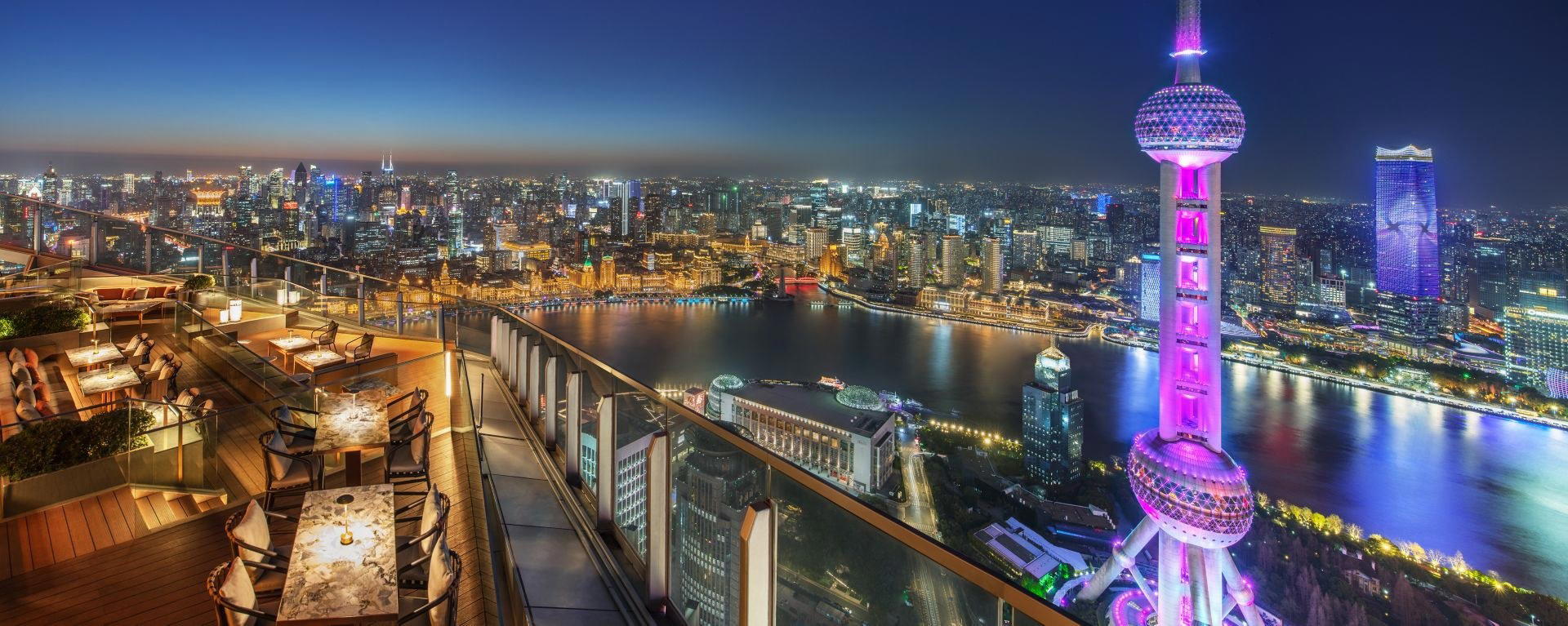
Flair sits at the top of the Ritz-Carlton Pudong in Lujiazui, offering one of Shanghai's most commanding refined bar and dining experiences above the city's financial district skyline. The format draws a mixed crowd of hotel guests and destination visitors who come as much for the view as for the drinks program. Booking ahead is advisable, particularly at peak weekend and holiday periods.

Pearl is the En Primeur Club membership app, where members save venues, book tables and use the concierge.
Lujiazui at Altitude: What the View From Flair Actually Means
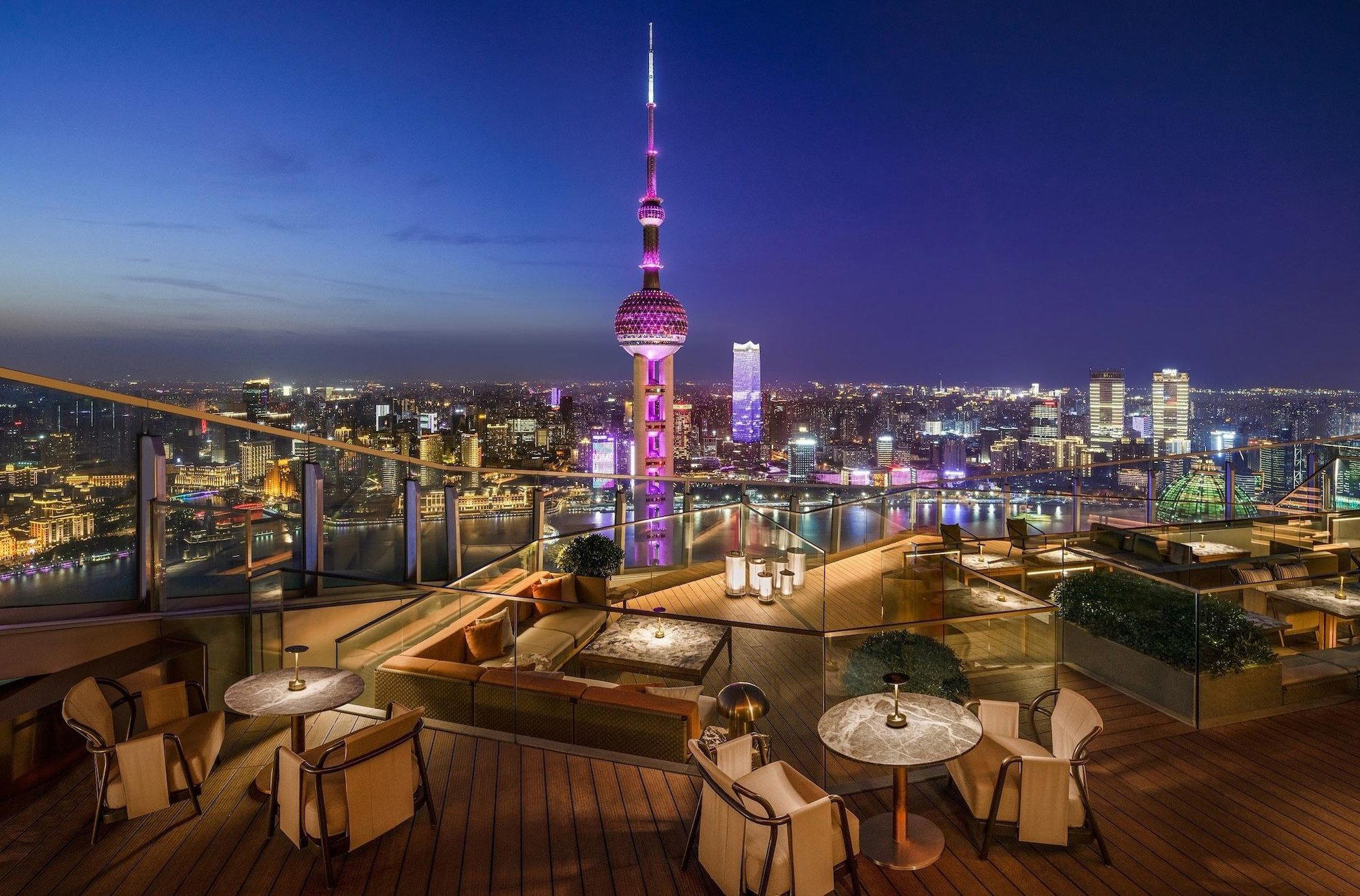
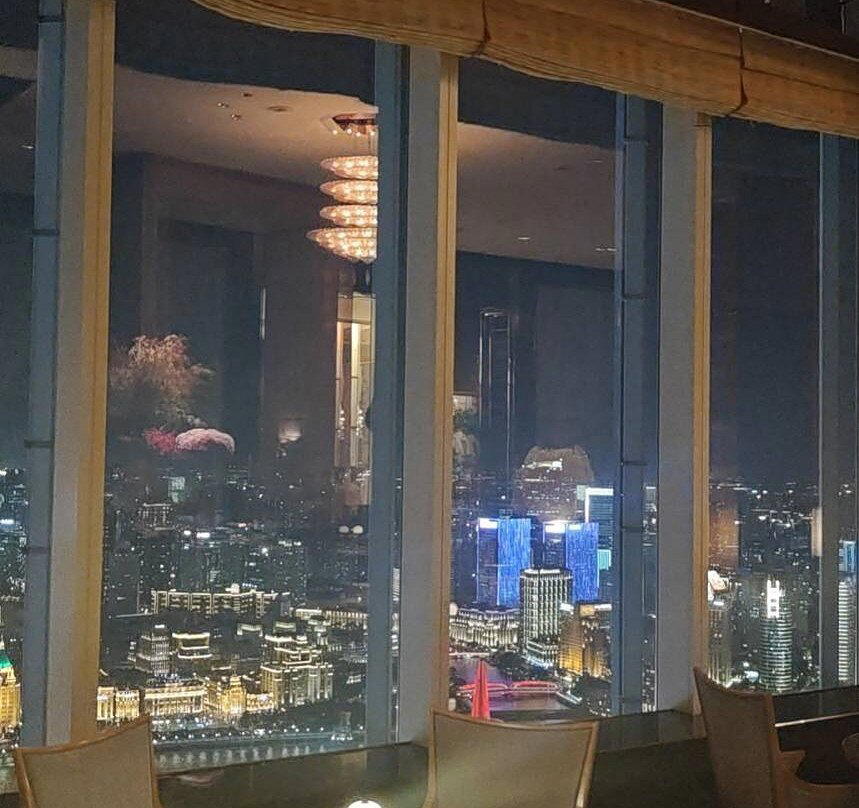
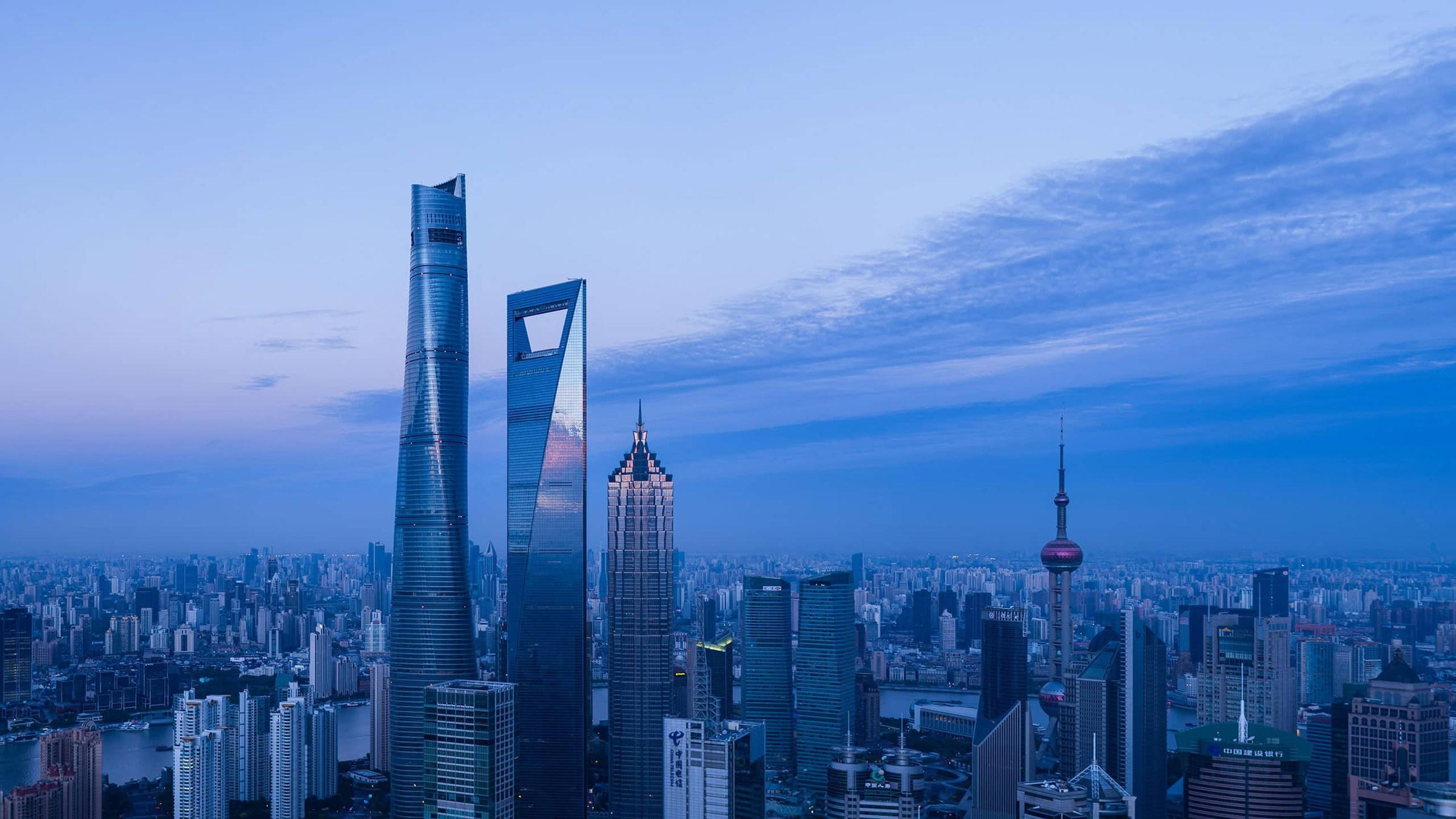
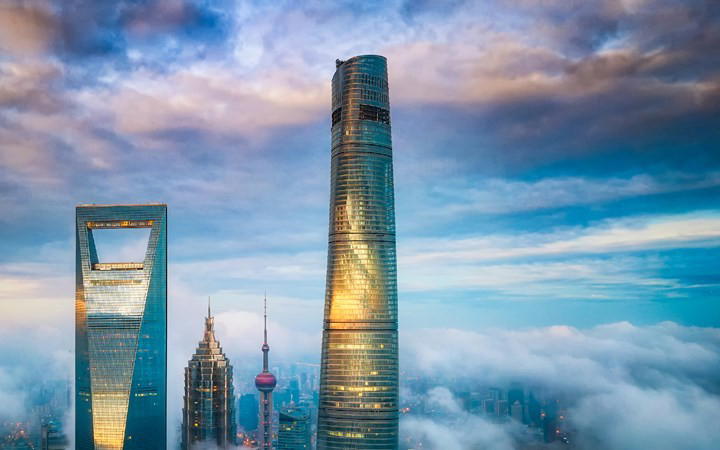
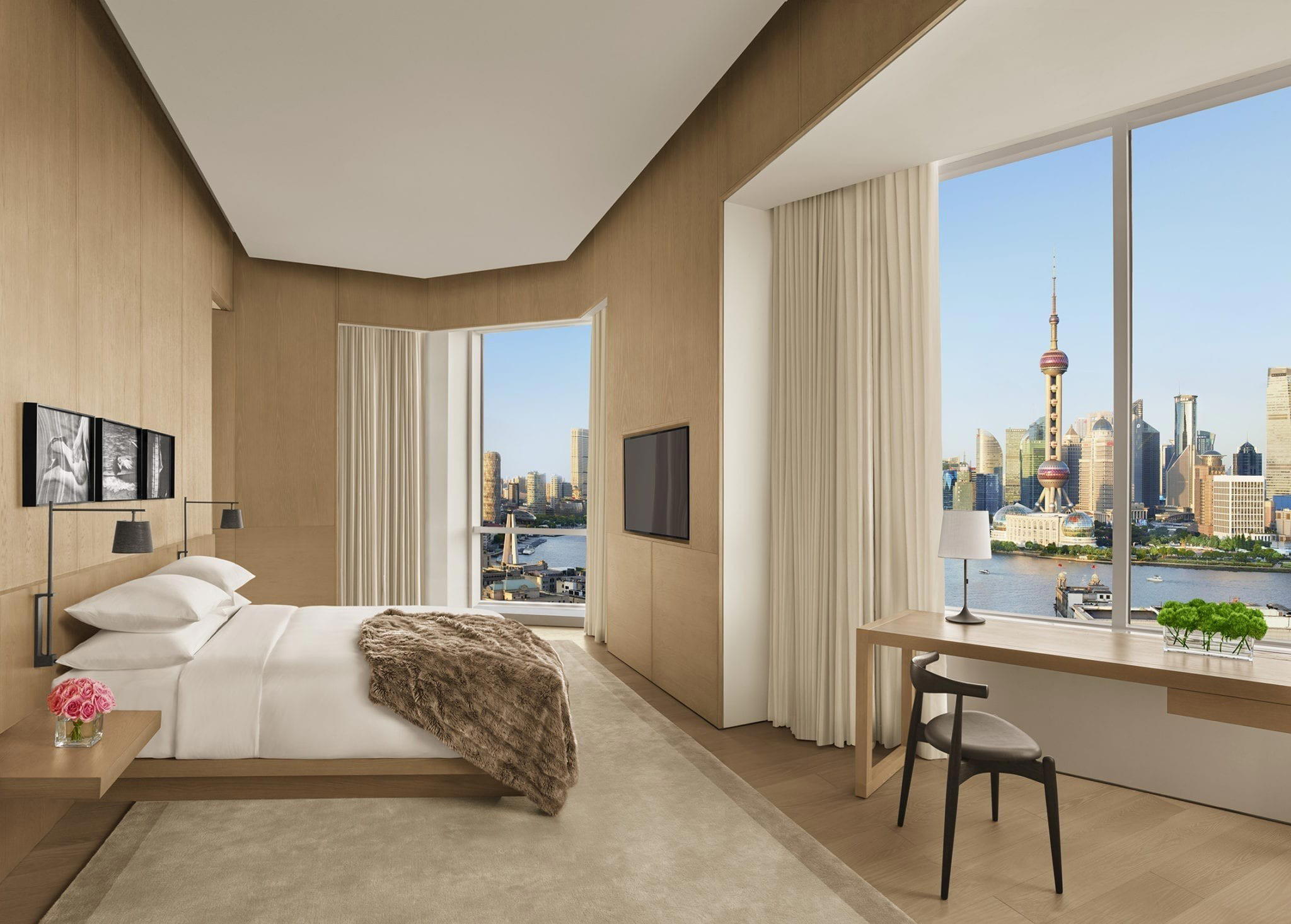
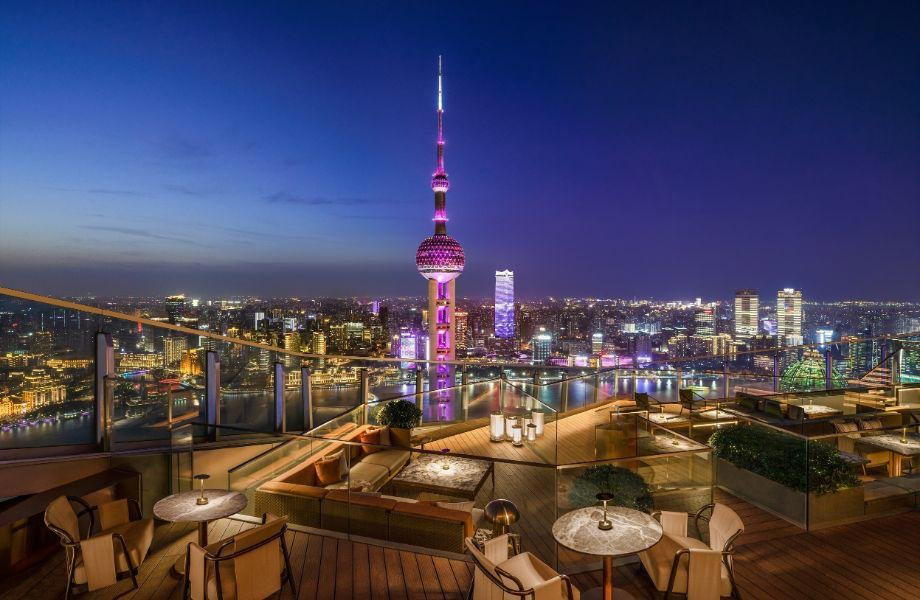
Shanghai's Pudong skyline is one of the most photographed urban panoramas in Asia, and most visitors encounter it from ground level or from the observation decks that crowd the base of the Oriental Pearl Tower district. Flair occupies a different position in that geography: a rooftop bar and dining space at the upper floors of the Ritz-Carlton Shanghai Pudong, located at 8 Shiji Boulevard in Lujiazui. From this vantage point, the skyline does not frame the room, it wraps around it. The Huangpu River cuts through the view to the west, with the Bund's colonial-era facades visible across the water in a configuration that puts the tension between old Shanghai and new Shanghai directly in front of you.
That physical context matters to understanding what Flair is and is not. This is not a destination dining room where the food program operates as the primary draw. It belongs to a category of hotel rooftop venues, common in Asia's premium hospitality market, where the setting does much of the editorial work, and where the bar and dining components exist in service of the experience rather than defining it on their own terms.
The Booking Equation: What to Know Before You Plan
Planning a visit to Flair requires understanding a few structural realities about how the venue operates within the broader Lujiazui hotel corridor. The Ritz-Carlton Pudong is a large-format luxury property, which means Flair absorbs significant demand from hotel guests as a baseline, before walk-in or reservation traffic from outside the property is factored in. Rooftop venues at this tier in Shanghai, particularly those with genuine skyline exposure rather than interior city views, operate under consistent demand pressure on Friday and Saturday evenings, and during the major holiday windows of Golden Week in October and the Lunar New Year period. Planning outside those windows, or targeting weekday evenings, substantially improves the experience on terms of atmosphere and service tempo.
For visitors building a multi-stop evening around Pudong, the concentration of dining options in Lujiazui means Flair fits naturally as either an aperitif stop before a dinner reservation elsewhere in the district, or as a later landing point. The area's restaurant density has grown considerably over the past decade, and venues like 8 1/2 Otto e Mezzo Bombana (Shanghai) in the same general zone operate at a different register, focused fine dining programs where the room and the food share billing equally. Flair and venues of that type serve different purposes in an evening's sequence, and the savvier approach is to treat them as complementary rather than interchangeable.
Visitors arriving from across the city should account for Pudong's traffic patterns. The area is well-served by Metro Line 2, which connects directly to Lujiazui station and removes the unpredictability of surface taxi or ride-hailing routes during peak hours. The hotel tower is oriented toward Century Avenue (Shiji Boulevard), and the entrance is direct from the station on foot.
Where Flair Sits in Shanghai's Premium Bar and Dining Context
Shanghai's premium bar and dining scene has fragmented significantly over the past decade. The city now supports a range of serious beverage programs, from the hyper-technical cocktail formats operating out of small-footprint venues on the French Concession's side streets, to the large hotel bar operations in Pudong that trade on volume and view. Flair sits in the latter category, which is neither a criticism nor a concession: there is a legitimate and substantial audience for a well-executed rooftop venue at a Ritz-Carlton property, and the category has its own logic and quality benchmarks.
The relevant comparison set for Flair is not the intimate craft cocktail rooms where reservation lists run weeks deep and seat counts are in the single digits. It is, instead, the cluster of hotel rooftop and refined bar venues that anchor the premium hospitality offer in Pudong and along the Bund. Within that set, position in a global luxury hotel group carries weight as a baseline quality signal, service training, spirits selection, and glassware standards are maintained to a consistent international threshold. The question for a visitor choosing between options in this tier is largely about view orientation, room atmosphere, and how the drinks program integrates with the physical experience.
For visitors whose Shanghai dining itinerary extends beyond Flair, the city's broader restaurant scene rewards some advance planning. Taian Table operates at the technically demanding end of modern European cooking in Shanghai, while Fu He Hui represents the premium vegetarian category at a level that positions it well above conventional restaurant expectations. On the Cantonese side, 102 House and Xin Rong Ji (West Nanjing Road) cover distinct ground within that tradition. Our full Shanghai restaurants guide maps the broader picture for visitors who want to sequence multiple meals across different neighborhoods and cuisines.
Seasonal Considerations: When the Outdoor Setting Changes the Calculus
Shanghai's climate runs from humid, heavy summers to cold and damp winters, with a relatively short window in spring (late March through May) and autumn (September through November) when outdoor and semi-outdoor refined venues are at their most functional. If Flair's rooftop or terrace elements are a draw for your visit, those shoulder seasons represent the periods when the ambient conditions align with what a setting of this type is designed to deliver. Summer evenings in Shanghai carry high humidity and occasional thunderstorms; winter evenings at elevation are genuinely cold. Enclosed versions of the experience work year-round, but the specific appeal of a skyline rooftop is seasonal in a way that a ground-level dining room is not.
The Wider Region: Comparable Formats in Nearby Cities
The refined hotel bar and dining format that Flair represents in Shanghai has counterparts across China's major cities and nearby destinations. Chef Tam's Seasons in Macau operates within a comparable luxury hotel context, though with a different culinary emphasis. For visitors moving between Shanghai and other eastern China cities, Pingjiangsong in Suzhou and Ru Yuan in Hangzhou represent premium dining formats in cities within easy high-speed rail distance of Shanghai. Further afield, Imperial Treasure Fine Chinese Cuisine in Guangzhou, Dai Yuet Heen in Nanjing, Fleurs Et Festin in Xiamen, Shang Palace in Yangzhou, and Wenru No.9 in Fuzhou cover the premium dining spectrum across the region. For a broader international reference point, refined dining formats within major-brand hotels, such as Le Bernardin in New York City or Lazy Bear in San Francisco, demonstrate how hotel-adjacent fine dining operates at the upper end of Western markets, though the format comparison with Flair is more atmospheric than culinary.
Frequently asked questions
What's Flair's location?
Flair is located at 8 Shiji Blvd, Lujiazui, Pudong, Shanghai, China, 200120, Shanghai.
How does Flair compare to other rooftop venues in Shanghai's Pudong district?
Flair's address on Shiji Boulevard in Lujiazui places it in the most concentrated stretch of high-rise hotel bars in Shanghai, a corridor that includes several properties competing for the same skyline-view positioning. What differentiates individual venues in this format is typically the terrace-to-interior balance and the quality of the beverage programme rather than the view alone, since the Pudong panorama is roughly shared across the cluster. Checking current press coverage or recent visitor accounts will give the most accurate read on where Flair sits in that competitive set at any given time.
What do people recommend at Flair?
Flair's primary draw is its position above the Lujiazui financial district, giving sightlines across the Pudong skyline that few other venues in Shanghai can match at bar level. Most visitors treat the outdoor terrace as the centrepiece of the visit, particularly during the spring and autumn windows when Shanghai's climate supports extended time outside. Without a confirmed menu on record, specific dish or drink recommendations are best sourced from the venue directly before visiting.
Is Flair reservation-only?
Flair operates within the Lujiazui hotel corridor, where demand for rooftop access tends to spike on weekends and during the spring and autumn seasons. Contacting the venue in advance is advisable, particularly for groups or visits timed around the outdoor terrace.
A short peer table to compare basics side-by-side.
| Venue | Cuisine | Price | Awards | Notes |
|---|---|---|---|---|
| FlairThis venue (the venue you are viewing) | Modern Pan-Asian Tapas | $50–100 | Not listed | Not listed |
| Fu He Hui | Modern Seasonal Vegetarian Fine Dining | $200–300 | 2 Michelin Stars · World's 50 Best #62 | Vegetarian |
| Ming Court | Cantonese with Shanghainese Influences | $30–50 | 1 Michelin Star · Black Pearl 1 Diamond | Cantonese |
| Polux | French Bistro | $30–50 | Michelin Bib Gourmand | French |
| Royal China Club | Cantonese Dim Sum | $100–150 | Michelin Plate · The Good Food Guide GFG Good | Chinese, Cantonese |
| Scarpetta | Refined Italian Pasta & Pizza | $50–100 | Michelin Plate · Wine Spectator Best of Award of Excellence | Italian |