Fish & Zeleniš occupies a corner address in central Novi Sad where the name itself states the kitchen's priorities: fish and greens, sourced with a specificity that separates it from the broader Serbian restaurant scene. In a city where meat-forward cooking remains the default, this kitchen makes a case for the Danube basin's aquatic larder and seasonal vegetable culture as a serious dining proposition.
 Discover on Pearl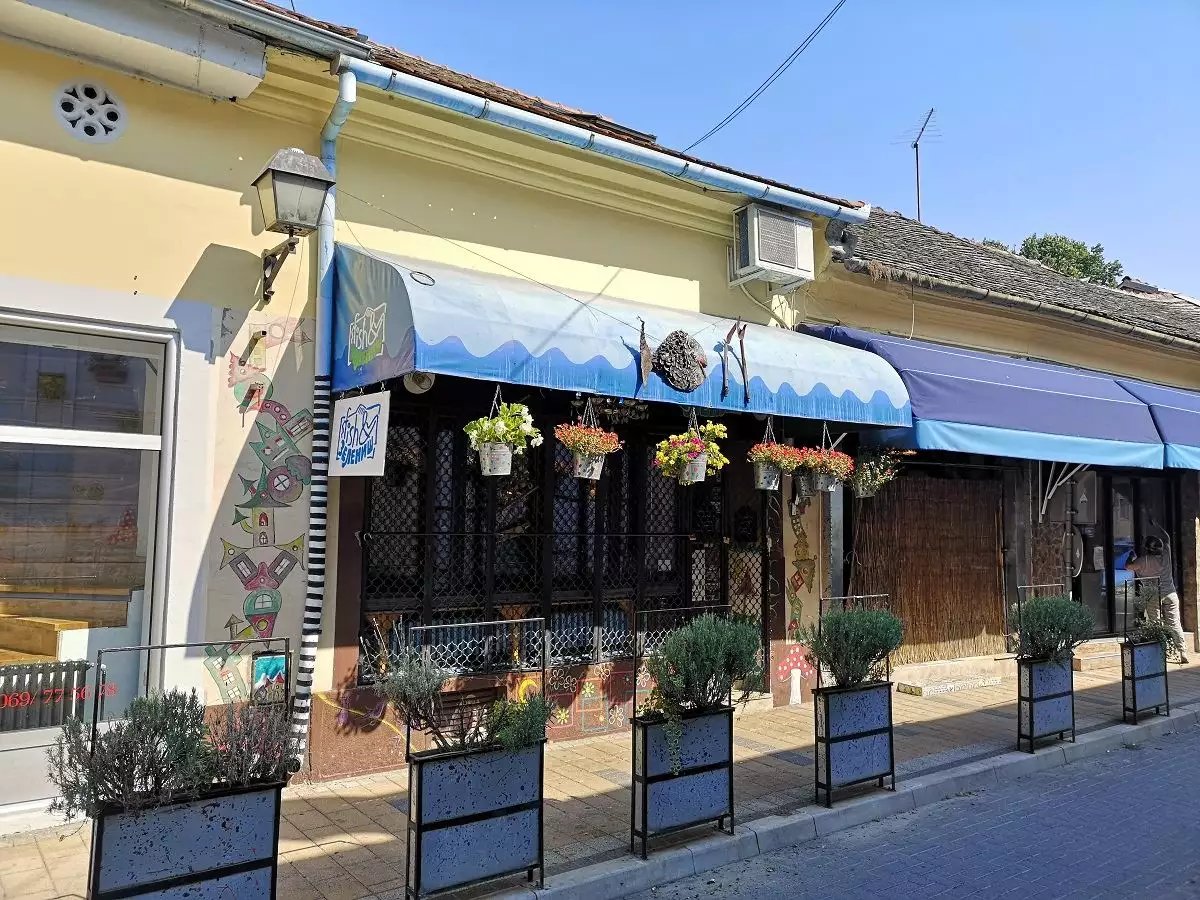
Where the Danube Larder Meets the Plate
Skerlićeva 2 sits at the edge of Novi Sad's pedestrian core, close enough to the Danube that the river's presence is more than symbolic. Restaurants that build their identity around fish in a landlocked-feeling Central European city are making an argument, not just a menu choice. Fish & Zeleniš makes that argument in its name before you walk through the door: fish, and greens. The Serbian word zeleniš carries associations with fresh herbs and leafy vegetables, the kind of produce that changes week to week across Vojvodina's flat, fertile agricultural belt. That framing matters because it tells you immediately that the kitchen intends to cook from a specific larder rather than from a generic European bistro playbook.
Novi Sad's restaurant scene has consolidated around a handful of distinct tiers in recent years. At the leading, kitchens like Langouste in Belgrade set the benchmark for modern Serbian fine dining at the €€€€ level. Below that sits a productive middle ground of contemporary restaurants working with regional ingredients at more accessible price points. Fish & Zeleniš appears to occupy this middle territory, where the sourcing story and the cooking approach carry the weight that formal tasting menus and elaborate service rituals carry elsewhere. For the city's broader dining context, see our full Нови Сад restaurants guide.
The Ingredient Case: Vojvodina's Aquatic and Agricultural Larder
The Pannonian Plain that surrounds Novi Sad is not the first landscape most visitors associate with serious fish cookery. That perception underestimates what the Danube, Tisa, and Sava river systems actually produce. Freshwater species from these rivers, including carp, catfish, pike-perch, and various smaller river fish, have fed this region for centuries. The čarda tradition, the riverside fish restaurants that line the Danube's Serbian banks from Apatin to Golubac, represents one of the oldest continuous food cultures in the country. A place like Čarda Zlatna Kruna in Apatin demonstrates how deeply rooted that riverine cooking tradition runs along the water itself.
What a city-centre kitchen like Fish & Zeleniš does differently is translate that riverine tradition into an urban dining format without stripping out its regional specificity. The zeleniš half of the equation matters equally here. Vojvodina produces a range of vegetables and herbs that rarely feature in the kind of international cuisine that tends to dominate urban restaurant menus. When a kitchen commits to seasonal greens from the surrounding agricultural region alongside fish from local river systems, it is making an ingredient provenance argument that connects the plate directly to the geography outside the window.
That sourcing orientation places Fish & Zeleniš in a small but coherent group of Serbian restaurants that treat regional ingredients as a point of distinction rather than a default. Across Serbia more broadly, a similar sensibility shows up in quite different contexts: Etno Kuća Dinar in Vrsac and Etno Restoran Fijaker in Sombor both anchor their menus in regional produce, though through a distinctly traditional ethnographic frame. Fish & Zeleniš, given its address and naming convention, appears to be working a more contemporary register within the same sourcing logic.
Atmosphere and Dining Format
The address on Skerlićeva (also referenced as Pašićeva) places the restaurant within walking distance of the city's main cultural and commercial arteries. This is not a neighbourhood outpost or a destination requiring planning; it sits where Novi Sad's daily life moves through it. In Serbian cities, restaurants at this kind of central address tend to run continuous service rather than strict meal-period sittings, making them accessible across a longer window of the day than their counterparts in Western European capitals.
The name structure, a compound of two clear ingredients rather than a chef's name or a lifestyle concept, signals a kitchen that wants to be understood in concrete terms. That directness extends to the dining format implied by a fish-and-vegetables concept in a mid-sized Serbian city: expect a menu organised around what is available and seasonal rather than around a fixed tasting architecture. Compared to a destination with a more elaborate format, such as Lazy Bear in San Francisco or Le Bernardin in New York City, where the experience is structured around a specific progression, this kind of kitchen operates with considerably more flexibility and informality in its pacing.
For visitors arriving from outside Serbia, the contrast with Novi Sad's other dining options is useful context. Ananda in Novi Sad represents a different direction entirely, while across the region, restaurants like Fleur de Sel in Novi Slankamen and Borkovac in Ruma demonstrate the range of approaches within a short drive of the city. Aleksandar Gold in Uzice, Gočko in Vrnjacka Banja, and Etno Podrum Brka in Nis each add further evidence that Serbian regional cooking is operating across a wider geographic spread than Belgrade-centric coverage tends to suggest.
Planning Your Visit
Skerlićeva 2 is walkable from the city centre and accessible without a car. As the venue has no published phone or website at the time of writing, the most reliable approach is to arrive in person, which is consistent with how many Novi Sad restaurants of this type operate. Hours, booking requirements, and pricing are not formally published, but a kitchen working with fresh river fish and seasonal greens will naturally vary its offer with the season, so visiting during the Vojvodina agricultural calendar from late spring through autumn gives access to the widest range of the vegetable side of the menu. Restaurants elsewhere in Serbia working in comparable formats, such as Gallery Caffe & Restaurant in Cacak, Etno Restoran Gaziya in Novi Pazar, Cafe Boem in Pirot, and Burrito Madre Big Pančevo in Pancevo, tend to operate with similar walk-in accessibility and seasonal flexibility. GARDEN in Kopaonik shows how a resort context changes the equation, but in a city centre like Novi Sad the informal accessibility model remains the norm.
Frequently Asked Questions
- Would Fish & Zeleniš be comfortable with kids?
- For a central Novi Sad restaurant in a mid-range price bracket, this kind of fish-and-vegetables format is generally family-accommodating rather than formally adult-oriented. Nothing in the concept signals a venue that would be unwelcoming to children.
- What is the atmosphere like at Fish & Zeleniš?
- If you are looking for the kind of formal, award-signalled atmosphere associated with a higher price tier, Fish & Zeleniš is probably not that. A kitchen named directly after its two core ingredients, at a central city address in Novi Sad, suggests a relaxed, ingredient-focused environment where the food does the work rather than the setting. Think neighbourhood-anchored rather than occasion-dressed.
- What should I eat at Fish & Zeleniš?
- The name is the answer. Freshwater fish from the Danube river system and seasonal vegetables from the Vojvodina region are the kitchen's stated focus. Without a documented chef profile or fixed published menu, the practical guidance is to follow what the kitchen is running that day, which in a sourcing-led concept of this kind reflects what arrived fresh rather than what appeared on a permanent list.
- Is Fish & Zeleniš reservation-only?
- No reservation system is published, and no phone or website is listed. Walk-in is the indicated approach, consistent with how comparable mid-range restaurants in Novi Sad operate. Arriving outside peak meal hours reduces wait risk at a venue with no formal booking infrastructure.
- How does Fish & Zeleniš fit into the broader tradition of Serbian river fish cookery?
- Serbian river fish cooking has deep roots in the čarda tradition along the Danube and Tisa, where freshwater species have been the centrepiece of regional cuisine for generations. Fish & Zeleniš translates that tradition into an urban Novi Sad format, pairing it with seasonal greens from Vojvodina's agricultural belt. It sits at the contemporary, city-centre end of a cooking lineage that runs from the riverside čardas of Apatin and Golubac all the way through to Belgrade's modern fish-focused kitchens.
At-a-Glance Comparison
These are the closest comparables we have in our database for quick context.
| Venue | Cuisine | Price | Awards | Notes |
|---|---|---|---|---|
| Fish & Zeleniš | This venue | |||
| Langouste | Modern Cuisine | €€€€ | Michelin 1 Star | Modern Cuisine, €€€€ |
| The Square | Contemporary French, Modern Cuisine | €€ | World's 50 Best | Contemporary French, Modern Cuisine, €€ |
| Salon 1905 | Modern Cuisine | €€€ | Modern Cuisine, €€€ | |
| Iva New Balkan Cuisine | Modern Cuisine | € | Modern Cuisine, € | |
| Istok | Vietnamese | € | Vietnamese, € |
Need a table?
Our members enjoy priority alerts and concierge-led booking support for the world's most difficult tables.
Get Exclusive Access