Our verdict
On a quiet stretch of Calle de Grafal in Madrid's Centro district, Ethiopian Restaurant Gonder brings the communal eating traditions of East Africa to a city better known for cocido and croquetas. Regulars return for the injera-anchored sharing format and a warmth of service that feels less transactional than most neighbourhood dining rooms in this part of the city.

Pearl is the En Primeur Club membership app — saves, bookings, and concierge access live there. Same editors, same standards.
- Address
- C. de Grafal, 8, Centro, 28005 Madrid, Spain
- Phone
- +34646456393
- Hours
- Mon ClosedTue–Sun 1:30–4 PM, 8 PM–12 AM
- Website
- restaurante-etiope.es
- Directions
- Get directions
- Booking
- Book on OpenTable
The menu
What to order
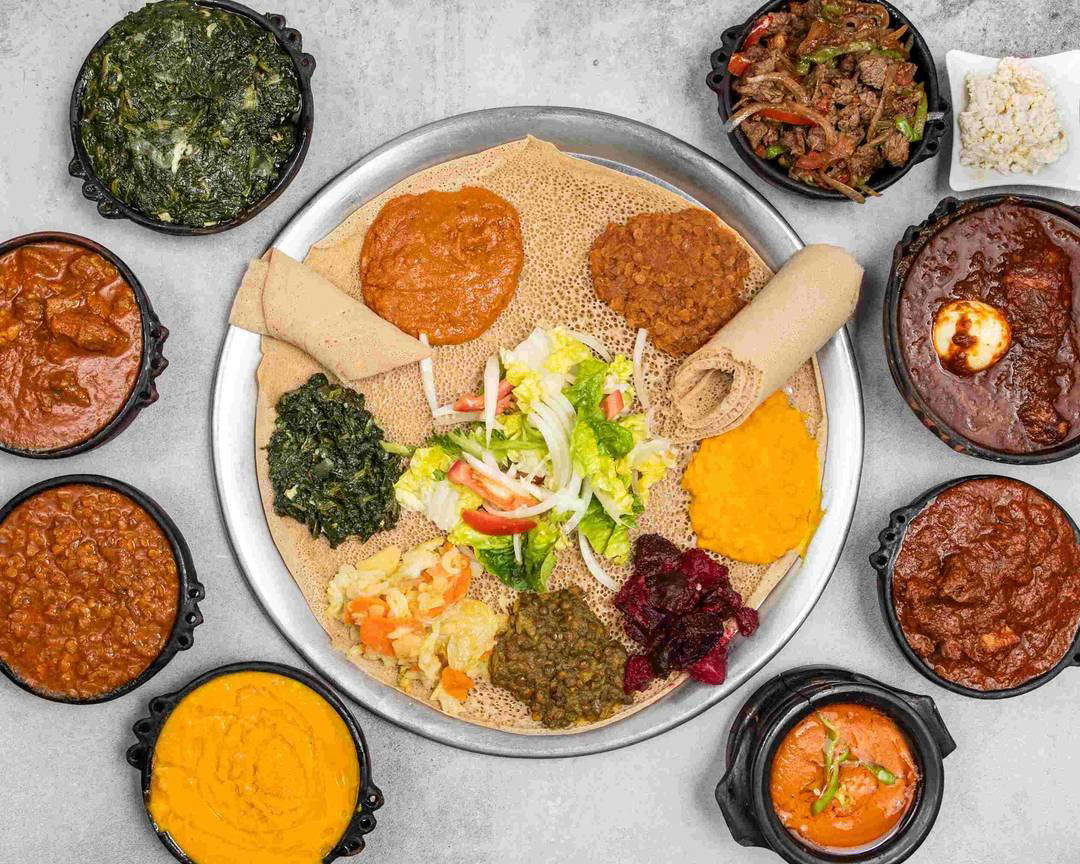
- Shiro
- Kik wat
- Misir wat
- Ataklt wot
- Shimbra asa
- Gomen
Where Madrid Eats Differently
Madrid's restaurant scene in 2024 is calibrated heavily toward tasting menus and Spanish regionalism. The city's most-discussed tables, from the progressive Asian creativity of DiverXO to the Spanish modernism of Coque and the refined precision of Deessa, tend to operate in the €€€€ bracket and prioritise individual progression through a sequence of courses. Ethiopian dining works from an entirely different premise: food arrives together, on a single communal platter, and the act of eating is inherently collective. That structural difference matters when you're deciding what kind of evening you're after.
Calle de Grafal in the Centro district sits at the rougher, more residential edge of a neighbourhood that also contains some of Madrid's most historically dense blocks. Ethiopian Restaurant Gonder occupies this space as part of a small but growing current of East African and Horn of Africa restaurants that have taken root in Madrid over the past decade, serving communities that have been in the city far longer than the restaurants themselves. The regulars here did not find this place through a food magazine.
The Logic of the Injera Table
Ethiopian cuisine is built around injera, the large sourdough flatbread made from teff flour that functions simultaneously as plate, utensil, and starch component. Understanding this is the starting point for any first-timer at a restaurant in this tradition. The slightly sour, spongy texture of injera is not incidental to the meal, it is the meal's architecture. Stews, known as wats, are spooned across its surface; diners tear pieces and use them to scoop, wrapping protein and sauce together in a single mouthful.
The regulars at Gonder have long moved past this introductory register. What brings them back is not novelty but familiarity: the specific flavour of berbere spice in a slow-cooked beef stew, the contrast between a fiery misir wat made with split red lentils and the cooling effect of ayib, the fresh Ethiopian cheese that often appears alongside. These are not dishes that reward impatience. The complexity in Ethiopian cooking comes from long cooking times and layered spicing rather than from technical flourish, and the regulars understand that distinction implicitly.
For the uninitiated, Ethiopian restaurants in this tradition typically structure their sharing platters around a balance of meat-based and vegetarian preparations. The vegetarian options are not afterthoughts: dishes like gomen (collard greens cooked with garlic and ginger) and tikel gomen (cabbage with carrots and turmeric) carry as much weight as the meat stews on a well-composed platter. This parity is partly cultural and partly religious, reflecting the Ethiopian Orthodox fasting tradition that requires abstention from animal products on certain days. Across the diaspora, Ethiopian restaurants have maintained this balance regardless of where they operate.
What the Regulars Know
The marker of a neighbourhood Ethiopian restaurant that has earned its loyal clientele is the consistency of the spice blend. Berbere and mitmita, the two primary spice mixes that underpin much of the cooking, vary from kitchen to kitchen and represent the fingerprint of each cook's approach. Regulars at a place like Gonder are not returning for a version of Ethiopian food in the abstract; they are returning for a specific tuning of those blends, a particular heat level, a specific texture in the injera.
This dynamic, the regulars anchoring a room and calibrating expectations for newcomers, is one of the reasons Ethiopian restaurants in diaspora cities can be difficult to assess through the usual critical frameworks. There are no tasting menus, no wine pairings composed to match individual courses, no chef's table. The format resists the apparatus that writers use to evaluate places like DSTAgE or Paco Roncero. The measure instead is whether the kitchen is cooking for its community or performing a diluted version of that cooking for tourists. Gonder's location on Calle de Grafal, away from the tourist corridors, suggests the former.
Madrid's dining conversation tends to look outward to Spanish regions, from Quique Dacosta in Dénia and Arzak in San Sebastián to El Celler de Can Roca in Girona and Mugaritz in Errenteria, or internationally to tables like Le Bernardin in New York City and Lazy Bear in San Francisco. The city's Ethiopian tables exist in a different conversation entirely, one about migration, community, and the persistence of food traditions across borders. Both conversations are worth having, and they rarely happen in the same room.
Seasonal and Fasting Calendar Considerations
If you are planning a visit timed around the Ethiopian Orthodox fasting calendar, it is worth knowing that many Ethiopian restaurants, particularly those with a community-facing clientele, adjust their menus during fasting periods like Tsome Filseta in August or the Great Lent before Easter. During these windows, the vegetarian and vegan preparations that already form a strong part of the menu come to the foreground, and meat options may be reduced or absent. This is not a limitation; it is an opportunity to eat the vegetarian half of the cuisine with the full attention of the kitchen behind it. The rest of the year, the mix of meat and plant-based dishes reflects the full range of the tradition.
How Gonder Sits in the Broader Madrid Picture
Madrid's fine dining circuit, from Azurmendi to Martin Berasategui and beyond to Cocina Hermanos Torres in Barcelona, Ricard Camarena in València, Aponiente in El Puerto de Santa María, and Atrio in Cáceres, represents one layer of the country's eating culture. It is a layer EP Club covers in depth in our full Madrid restaurants guide. But the city's neighbourhood restaurants, particularly those serving migrant communities in areas like Centro and Lavapiés, represent a different and equally valid layer. Ethiopian Restaurant Gonder belongs to that second register: a place where the measure of success is not a Michelin star but whether the people who depend on this food can find it cooked correctly, priced accessibly, and served without ceremony.
Planning Your Visit
Address: C. de Grafal, 8, Centro, 28005 Madrid. Reservations: Booking information is not currently available via a confirmed online channel; arriving on the earlier side of the evening sitting is advisable, particularly at weekends when the dining room fills with regulars. Budget: Ethiopian restaurants in Madrid's neighbourhood tier typically operate at a price point considerably below the city's tasting-menu circuit; expect a communal platter for two to fall within an accessible mid-range. Dress: Casual; the format is relaxed and communal. Dietary: The cuisine offers strong vegetarian and vegan options by default, reflecting the fasting traditions of Ethiopian Orthodox practice; those with gluten sensitivities should note that injera is made from teff flour, which is naturally gluten-free, though cross-contamination protocols should be confirmed directly with the kitchen.
Frequently asked questions
What part of town is Ethiopian Restaurant Gonder in?
Ethiopian Restaurant Gonder is located at C. de Grafal, 8, Centro, 28005 Madrid, Spain, Madrid.
Is Ethiopian Restaurant Gonder suitable for vegetarian and vegan diners in Madrid?
Ethiopian cuisine has one of the most developed vegetarian traditions in African cooking, rooted in the Orthodox fasting calendar, which prohibits meat and dairy on designated days. That means most Ethiopian restaurants, including those in Madrid's small Ethiopian dining scene, carry a substantial roster of plant-based wats as a structural part of the menu rather than an afterthought. Gonder is located at C. de Grafal, 8 in Centro, a central neighbourhood with relatively limited African dining options, making it a practical reference point for vegetarian diners seeking something outside the standard Spanish menu.
What's the signature dish at Ethiopian Restaurant Gonder?
Ethiopian restaurants in this tradition centre their menus on the sharing platter: multiple wats, both meat and vegetarian, arranged on a single large injera. The injera itself, made from fermented teff flour, functions as plate and utensil simultaneously. At Gonder on C. de Grafal, that communal format is the whole logic of the meal.
Do I need a reservation for Ethiopian Restaurant Gonder?
No confirmed online booking channel is available for this address. In Madrid's neighbourhood Ethiopian dining tier, arriving in person is the standard approach, and tables turn without the timed-slot pressure of the city's tasting-menu circuit. Evenings and weekends are the safer off-peak test if you want to avoid a wait.
What do critics highlight about Ethiopian Restaurant Gonder?
What context supports is that Ethiopian restaurants in Madrid occupy a distinct lane from the city's Spanish-regionalist tasting-menu tables, drawing regulars on the strength of spice consistency and the communal format rather than press coverage.
How does Ethiopian Restaurant Gonder handle allergies?
No verified allergen documentation is available for this restaurant. Teff-based injera is naturally gluten-free, which makes Ethiopian cuisine accessible to a segment of diners who struggle at most Madrid restaurants. For specific dietary requirements, confirming directly with the restaurant at the C. de Grafal, 8 address before visiting is advisable.
Does Ethiopian Restaurant Gonder justify its prices?
Neighbourhood Ethiopian restaurants in Madrid price communal platters well below the city's tasting-menu bracket, where covers at Disfrutar or Cocina Hermanos Torres run into triple figures. The sharing format means two or three guests typically eat a full meal from a single platter order, which shifts the per-head cost further. No specific pricing data is confirmed for Gonder, but the category consistently sits at the affordable end of central Madrid dining.
Nearby-ish Comparables
Comparable venues nearby, for context on price, style, and recognition.
| Venue | Cuisine | Price | Awards | Notes |
|---|---|---|---|---|
| Ethiopian Restaurant GonderThis venue — the venue you are viewing | Authentic Ethiopian | $20–30 | Not listed | Not listed |
| Infame Restaurant | Modern Basque Fusion | $30–50 | Macarfi 7.4 Food Rating | La Latina |
| Tatemado | Grilled Mexican Tacos & Margaritas | $30–50 | Not listed | La Latina |
| PORNEAT La Latina | Gourmet American Burgers | $20–30 | Not listed | Embajadores |
| Café de la Galería | Traditional Spanish with Creative Touches | $30–50 | Not listed | Palacio |
| Casa Varona | Traditional Spanish Tapas & Wine Bar | $50–100 | Falstaff Restaurant - 92 Falstaff Points | Barrio de las Letras |
Continue exploring
More in Madrid
Restaurants in Madrid
Browse all →
Bars in Madrid
Browse all →
Hotels in Madrid
Browse all →


Details
- Rustic
- Cozy
- Group Dining
- Casual Hangout
- Open Kitchen
- A La Carte
- Small Plates
- Ethiopian Coffee
- Vegetarian Friendly
- Vegan Options
- Gluten Free Options
Current opening hours
- Monday
- Closed
- Tuesday
- 1:30–4 PM, 8 PM–12 AM
- Wednesday
- 1:30–4 PM, 8 PM–12 AM
- Thursday
- 1:30–4 PM, 8 PM–12 AM
- Friday
- 1:30–4 PM, 8 PM–12 AM
- Saturday
- 1:30–4 PM, 8 PM–12 AM
- Sunday
- 1:30–4 PM, 8 PM–12 AM
Hours can change for holidays and private events. Last verified .
Rustic and cozy atmosphere with friendly service, ideal for social gatherings and trying new flavors.