


1 Michelin Star · La Liste Top Restaurants · Macarfi 8.7 Food Rating
Our verdict
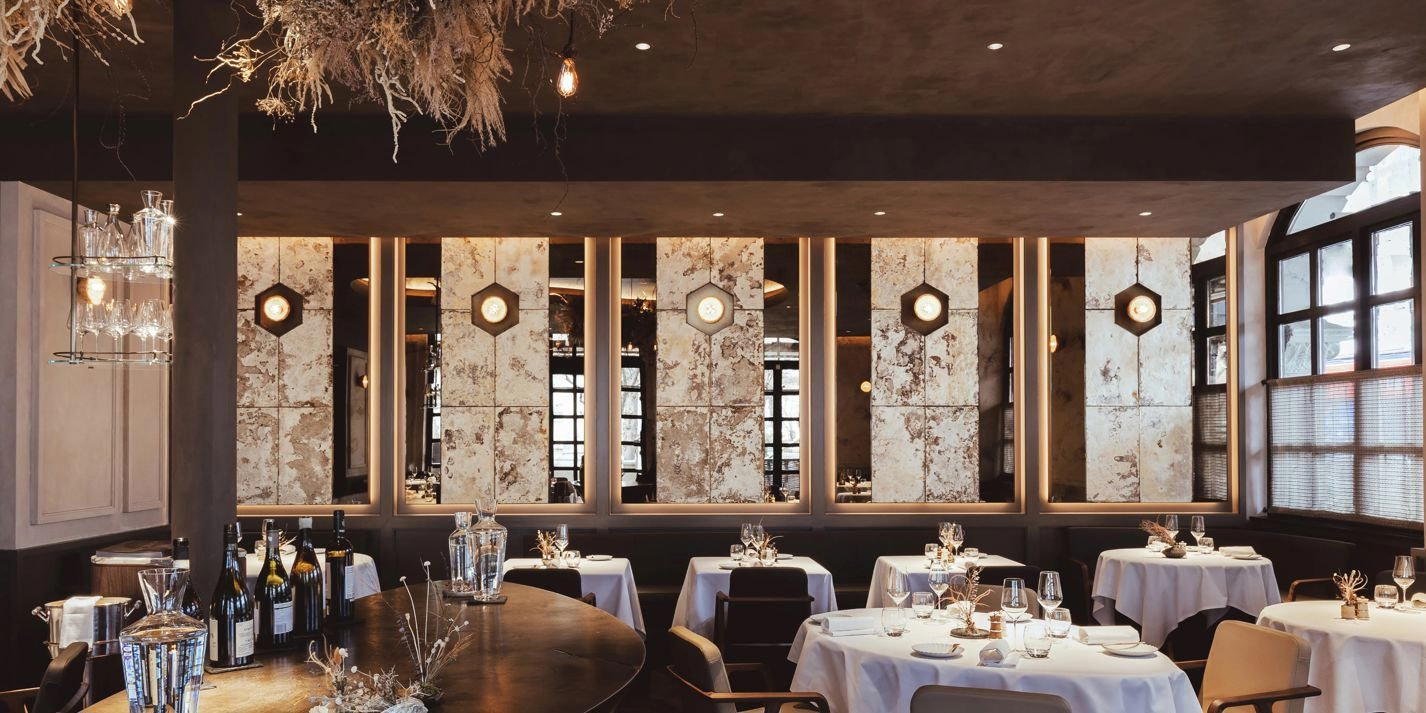
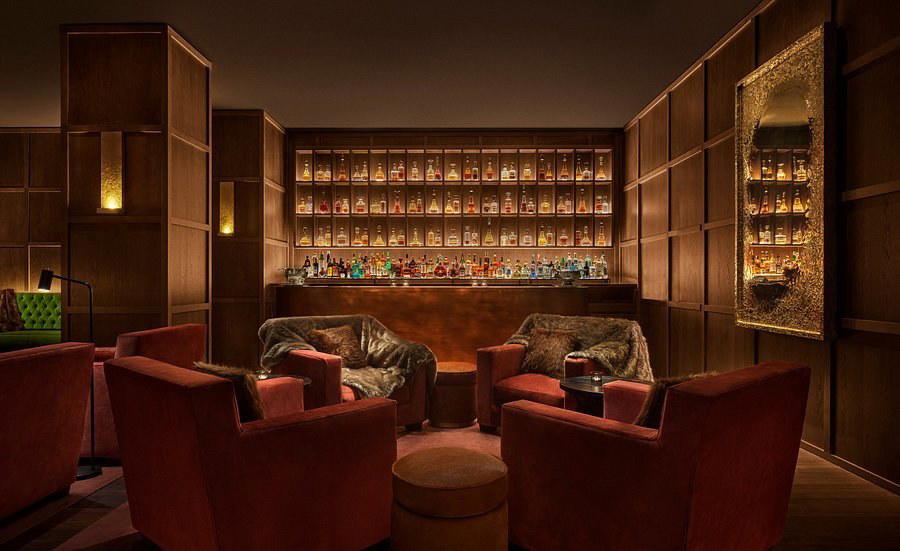
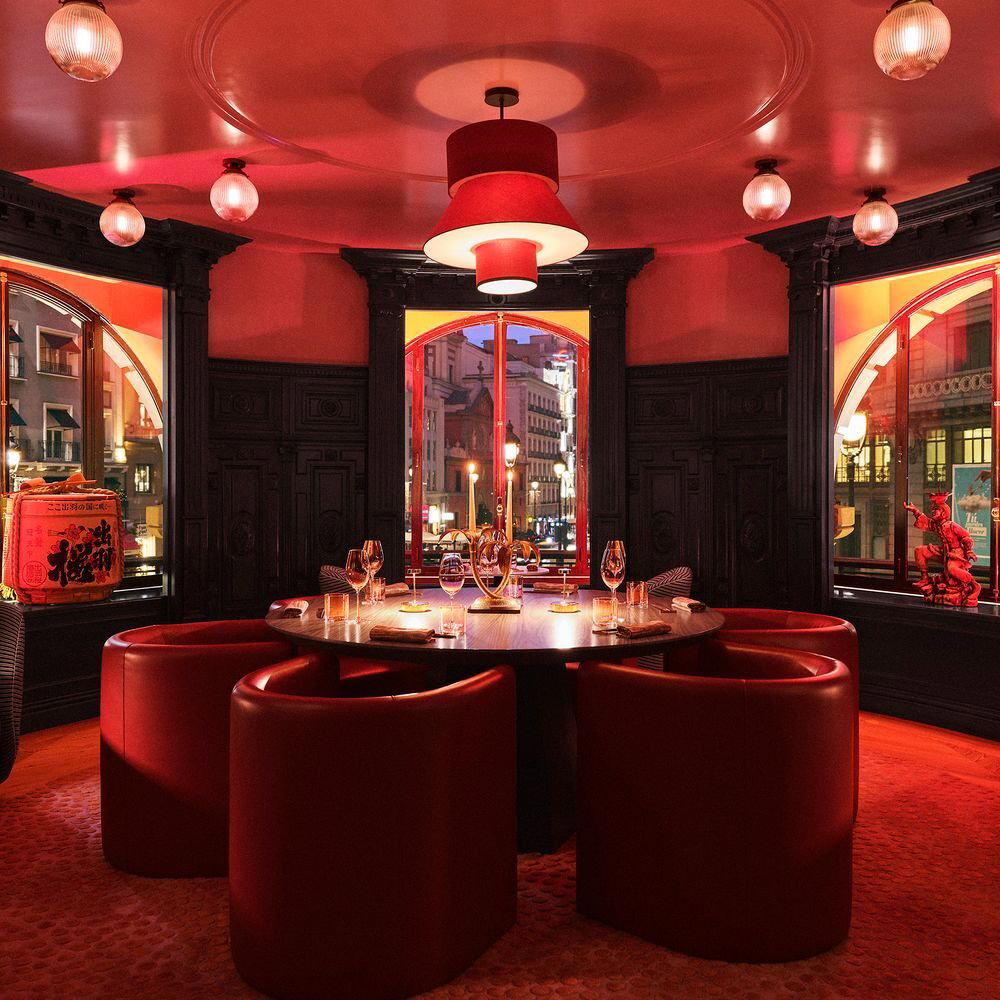
Corral de la Morería splits into two entirely different propositions: a tablao restaurant where flamenco happens around you, and a separate eight-seat gastronomic space running a single Basque-inflected tasting menu under Michelin-starred chef David García. La Liste has scored it 90 points (2025), and the wine cellar holds rare Marco de Jerez labels unavailable elsewhere in Spain.

Pearl is the En Primeur Club membership app — saves, bookings, and concierge access live there. Same editors, same standards.
- Address
- Calle de la Morería, 17, Centro, 28005 Madrid, Spain
- Phone
- +34 913 65 11 37
- Website
- corraldelamoreria.com
- Directions
- Get directions
- Booking
- Book on the venue's website
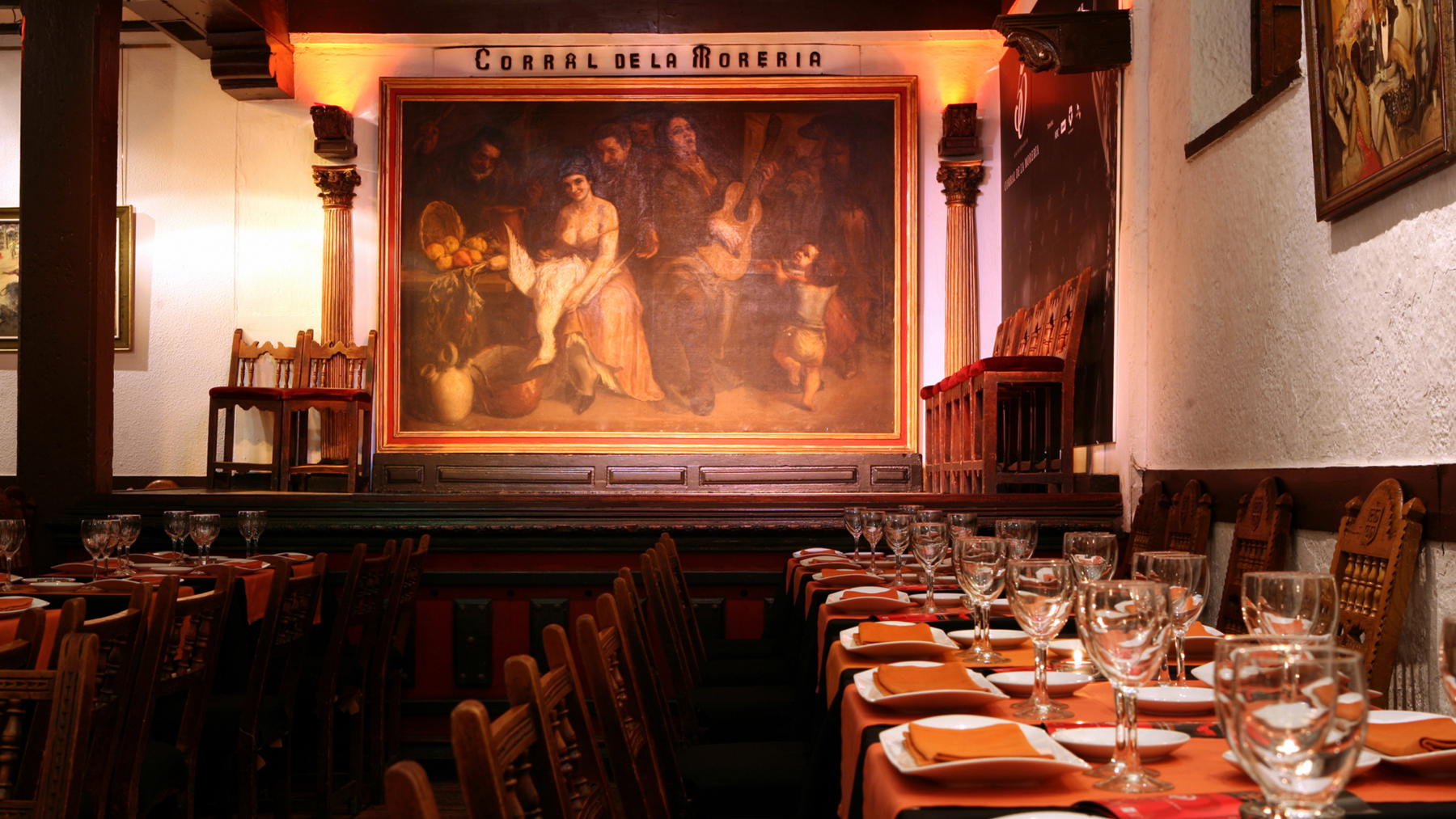
Two Rooms, Two Contracts With the Guest
On Calle de la Morería, in the oldest quarter of central Madrid, the street itself does some of the work before you reach the door. La Latina's narrow lanes run through ground that was once the heart of Moorish Madrid, and the building that houses Corral de la Morería carries that accumulation of time in its stonework and low ceilings. What happens inside, however, has split into two experiences so different in register that first-time visitors sometimes arrive uncertain which one they have booked.
The tablao floor — the original operation, and the one that drew the venue's international reputation — seats diners against a backdrop of live flamenco. Spain's premium tablao circuit positions itself partly on performance pedigree, partly on the quality of the food served alongside it, and Corral de la Morería has sustained its standing in that format for decades. The second space, accessed separately, operates on a different logic entirely: eight seats, no performance, a single tasting menu called Soniquete, and a Michelin star awarded in 2024. These are not variants of the same offer, they serve different needs and attract different regulars.
The Gastronomic Room and What It Signals About Madrid's Tasting Menu Market
Madrid's Michelin-starred tasting menu tier has grown significantly over the past decade. At the upper end, DiverXO holds three stars and occupies a price bracket that places it in a different competitive set from most of the city. Below that, venues like Coque and Deessa hold two stars at €€€€ price points. Corral de la Morería's gastronomic room enters this conversation at €€€, which for an eight-seat counter with a starred chef and a cellar of the depth described below, represents a distinct position in the market.
Eight seats is a format that Madrid has seen gain traction, following the logic of Tokyo's counter omakase culture applied to European fine dining: the kitchen has complete control over service rhythm, the staff-to-guest ratio is high, and the experience is structurally closer to a private dinner than a restaurant service. At that scale, regulars who return multiple times a year tend to find the experience shifts meaningfully between visits, not because the menu changes dramatically, but because the room's intimacy means the relationship with the team evolves. That dynamic is part of what keeps a certain kind of diner returning.
Chef David García brings Basque training to the menu, and the tasting menu Soniquete reflects that lineage. The Basque Country remains Spain's most referenced culinary region for technical precision and ingredient obsession, and its influence runs through venues from Arzak in San Sebastián to Azurmendi in Larrabetzu and, internationally, to projects like Basque Kitchen by Aitor in Singapore. Within Madrid, García's Basque credentials place Soniquete in a conversation with the city's other north-Spain-inflected fine dining: compare the positioning with A'Barra Restaurante y Barra Gastronómica, which works a different format but shares the same emphasis on northern Spanish produce and technical seriousness.
The Wine Cellar as a Reason to Return
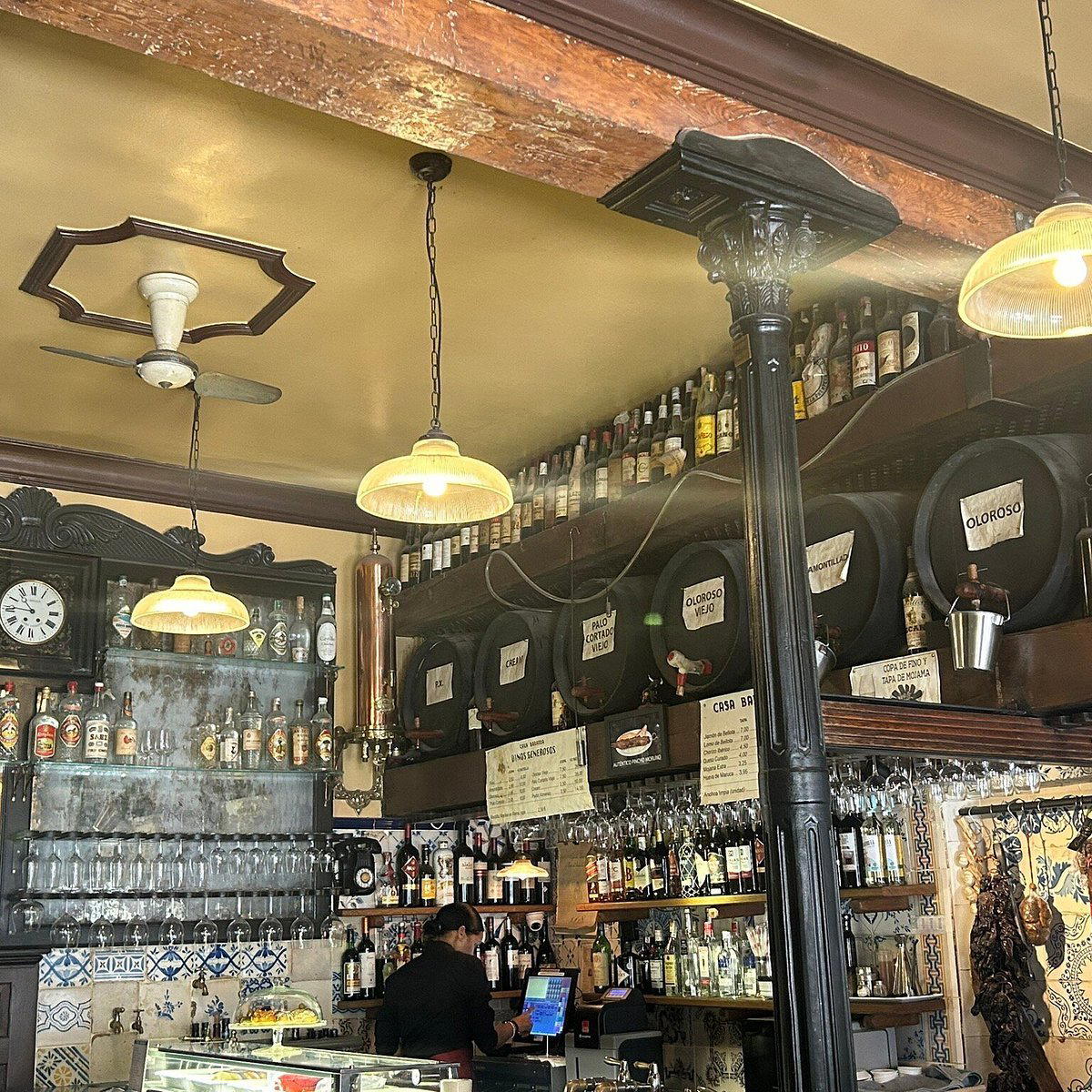
Among the details that recur in how regulars describe their reasons for booking the gastronomic room again, the wine cellar features prominently. Corral de la Morería has assembled what La Liste and Opinionated About Dining both note as a significant collection of Marco de Jerez denomination wines, including labels that are no longer commercially available. The Marco de Jerez, encompassing Jerez-Xérès-Sherry, Manzanilla-Sanlúcar de Barrameda, and Montilla-Moriles, is one of Spain's most complex appellation systems, producing wines that range from bone-dry Fino and Manzanilla to oxidatively aged Amontillado, Oloroso, and the rare Palo Cortado. A cellar deep enough to hold long-lost labels from this denomination is not assembled quickly or cheaply.
For diners who follow Sherry and Jerez wines with any seriousness, this cellar is itself a destination argument. Spain's broader wine culture has tended to spotlight Rioja and Ribera del Duero at the prestige end, but the Jerez denominations have a dedicated collector base, and bottles from discontinued producers or pre-phylloxera-era bottlings of Palomino and Pedro Ximénez are the kind of material that wine-focused regulars build trips around. Aponiente in El Puerto de Santa María has built a similar cellar depth in its own region; Corral de la Morería does it in Madrid, making that material accessible to diners who may not travel to Andalusia specifically for the purpose.
How the Recognition Has Shifted
The venue's award trajectory over the 2023-2026 period is worth reading carefully. Opinionated About Dining recommended the gastronomic room among Europe's leading new restaurants in 2023, the year it opened or was first seriously reviewed at that level. By 2024, it had a Michelin star and ranked 368th on OAD's Europe list. In 2025 it moved to 574th on OAD, a ranking shift that reflects both the growth of the list and the competitive density of European fine dining at this level, while La Liste scored it 90 points, placing it in the publication's recognised upper tier. The 2026 La Liste score comes in at 89 points, a one-point movement that falls within normal scoring variation rather than signalling a trend.
For context, La Liste's 90-point band sits comfortably within its top-tier recognition globally. Madrid's representation at that level also includes the venues above the starred tier: compare the gastronomic room's position against Martin Berasategui in Lasarte-Oria, which operates at three-star level and a different price point, or El Celler de Can Roca in Girona and Cocina Hermanos Torres in Barcelona for Catalonia's equivalent tier. Within Madrid itself, the gastronomic room's single star at €€€ pricing occupies a specific gap in the market.
What Regulars Are Actually Booking
The tablao and the gastronomic room attract different return visitors with different motivations. Regulars of the tablao tend to be returning for the performance, flamenco at this level is not a static experience, and a show that changes cast or programme offers a reason to come back regardless of whether the menu has evolved. Regulars of the eight-seat room, by contrast, are typically return visitors to Madrid's fine dining circuit who want to spend an evening focused on the Soniquete menu and the wine cellar without the ambient noise of a performance space. Google's average across 3,925 reviews covers both rooms, which means the aggregate rating reflects the full spectrum of visitor types.
The visitors who cycle back to the gastronomic room specifically are most commonly described as doing so for two things: the pacing and attention that an eight-cover room enables, and the opportunity to work through the Jerez cellar with guidance. Wine pairings at this scale can be calibrated in a way that larger rooms cannot manage, the sommelier's capacity to discuss bottles from an archive collection, adjust pours, and respond to individual preferences is structurally different at eight covers versus eighty. That's less a marketing point than a logistical reality of the format.
For Madrid visitors building a multi-night itinerary around the city's fine dining, the gastronomic room slots into a different part of the schedule than the tablao. The tablao has an inherent energy that suits an earlier evening; the eight-seat counter works better as a longer, later commitment. Both El Lince and Haroma offer alternative formats worth considering in the same neighbourhood bracket, while Restaurante Montia operates at a different end of the contemporary Spanish spectrum for a contrast in approach.
Planning a Visit
Corral de la Morería sits at Calle de la Morería 17, in the Centro district at the edge of La Latina, walkable from Ópera metro and within the same pedestrian zone as the city's historic tapas circuit. The gastronomic room's eight-seat format means availability is limited and advance booking is advisable, particularly for visitors with fixed travel dates. The tablao operates on a different booking flow, with more covers and more services. For those combining the gastronomic room with a broader Madrid programme, see [our full Madrid restaurants guide](), [our full Madrid bars guide](), [our full Madrid hotels guide](), [our full Madrid wineries guide](), and our full Madrid experiences guide for the surrounding context. Those interested in the Basque culinary lineage that runs through the Soniquete menu might also find value in 55 Pasos in A Coruña as a point of comparison on a broader Iberian itinerary.
Frequently asked questions
Who runs the kitchen at Corral de la Morería?
The chef associated with Corral de la Morería is David Garcia.
Is Corral de la Morería focused on a specific cuisine style?
What do regulars order at Corral de la Morería?
The gastronomic room operates on a single format: the Soniquete tasting menu, designed by chef David García with a clear Basque influence. There is no à la carte choice to make. What returning guests do select deliberately is from the wine cellar, which holds an extensive collection of Marco de Jerez denomination bottles, including labels documented nowhere else. The tablao dining room, by contrast, pairs a separate menu with the live flamenco performance.
How much does it cost to eat at Corral de la Morería?
Pricing at Corral de la Morería is listed as €€€.
What part of town is Corral de la Morería in?
Corral de la Morería is located at Calle de la Morería, 17, Centro, 28005 Madrid, Spain, Madrid.
The Quick Read
| Venue | Cuisine | Price | Awards | Notes |
|---|---|---|---|---|
| Corral de la MoreríaThis venue — the venue you are viewing | Modern Spanish Fine Dining with Flamenco | $100–150 | 1 Michelin Star · La Liste Top Restaurants | Not listed |
| DiverXO | Avant-Garde Spanish Tasting Menu | $300–500 | 3 Michelin Stars · World's 50 Best #4 | Progressive - Asian, Creative |
| Deessa | Modern Valencian Fine Dining | $150–200 | 2 Michelin Stars · La Liste Top Restaurants | Modern Spanish, Creative |
| Smoked Room | Modern Japanese Fire Omakase | $200–300 | 2 Michelin Stars · La Liste Top Restaurants | Progressive Asador, Contemporary |
| Coque | Modern Spanish Fine Dining | $300–500 | 2 Michelin Stars · La Liste Top Restaurants | Spanish, Creative |
| Paco Roncero | Avant-Garde Spanish Fine Dining | $150–200 | 2 Michelin Stars · La Liste Top Restaurants | Creative |
Recognition history
Dated appearances from independent guides and award organizations, with the underlying list record or original source where available.
Michelin 1 Star
Michelin
La Liste Top Restaurants
La Liste
Guía Repsol 3 Soles
Guía Repsol
Macarfi 8.7 Food Rating
Macarfi
Opinionated About Dining Top Restaurants in Europe Recommended
Opinionated About Dining
Full recognition history (11 entries)
La Liste Top Restaurants
La Liste
Michelin 1 Star
Michelin
Opinionated About Dining Top Restaurants in Europe Ranked #574
Opinionated About Dining
Michelin 1 Star
Michelin
Opinionated About Dining Top Restaurants in Europe Ranked #368
Opinionated About Dining
Opinionated About Dining Top New Restaurants in Europe Recommended
Opinionated About Dining