Our verdict
Tatemado sits on Plaza de la Cebada in Madrid's La Latina district, a neighbourhood where traditional market culture and a new generation of conscience-driven cooking increasingly overlap. The name — Spanish for 'scorched' or 'fire-roasted' — signals a kitchen built around live fire and ember techniques, placing it within a Madrid dining scene that has grown more serious about sourcing ethics and whole-animal discipline over the past decade.

Pearl is the En Primeur Club membership app — saves, bookings, and concierge access live there. Same editors, same standards.
- Address
- Pl. de la Cebada, 9, Centro, 28005 Madrid, Spain
- Phone
- +34672530611
- Hours
- Mon 1–5 PM, 8 PM–12 AMTue ClosedWed–Thu 1–5 PM, 8 PM–12 AMFri–Sat 1 PM–2 AMSun 12–11:30 PM
- Website
- tatemado.es
- Directions
- Get directions
- Booking
- Book on the venue's website
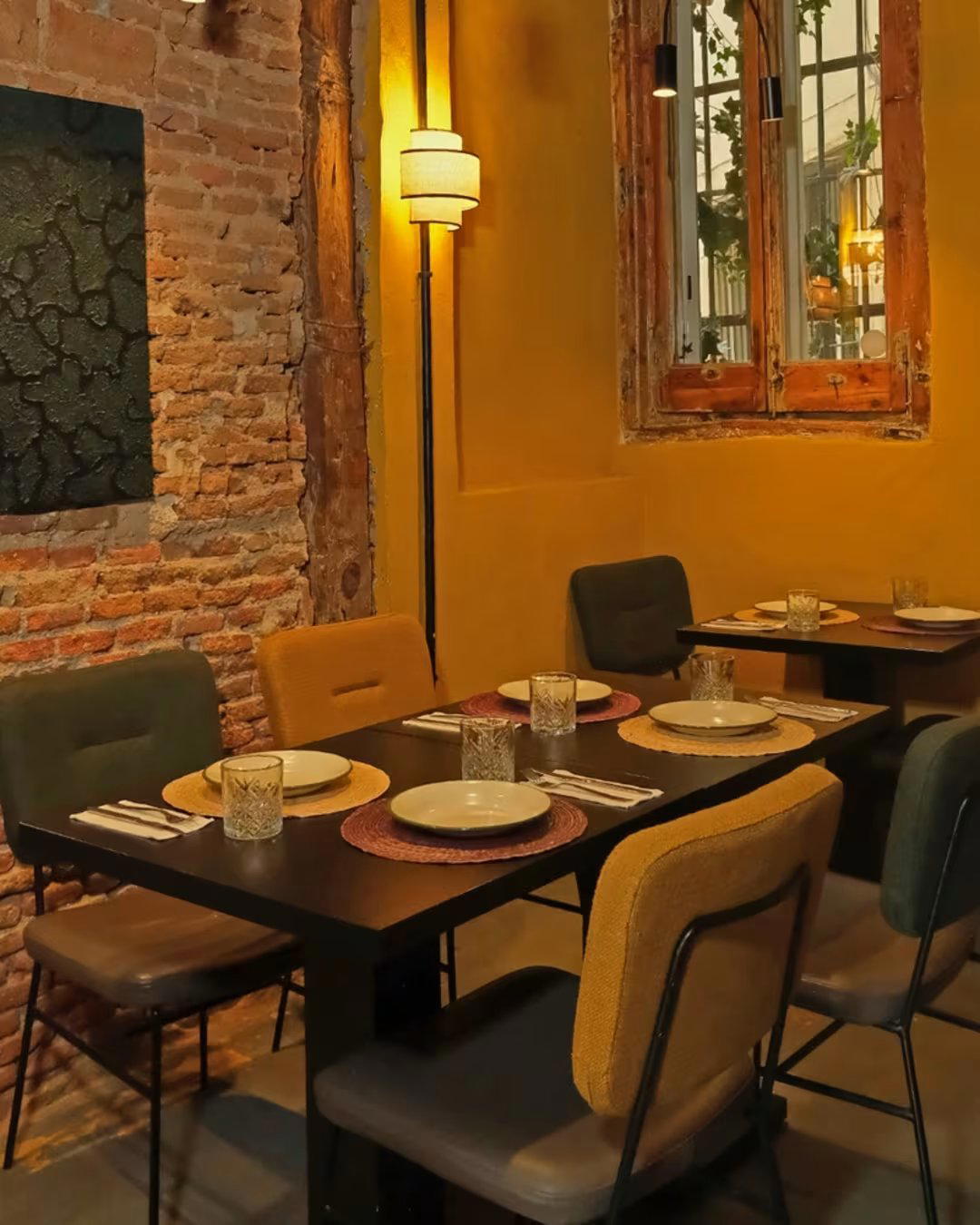
The menu
What to order
- Tacos al Pastor
- Enchiladas Verdes
- Aguachile
- Carrillera de Cerdo en Mole Negro
- Guacamole
Plaza de la Cebada and the Ethics of Fire
La Latina is one of Madrid's oldest working-class barrios, and Plaza de la Cebada has long been its commercial anchor. The square's mercado has traded since the nineteenth century, and the produce culture that surrounds it has shaped how this corner of the city thinks about food at a foundational level. That context matters when assessing Tatemado, which occupies a spot at number nine on the plaza. A restaurant built around fire-roasting in a neighbourhood with a centuries-old market at its doorstep is not a coincidence of address — it is a statement about provenance, proximity, and the discipline of cooking with less to waste.
Madrid's serious dining scene has traditionally been concentrated in Salamanca and the financial corridors further north, where venues like DiverXO and Coque command their respective audiences at the top of the city's price tiers. La Latina has operated differently: lower rents, higher neighbourhood identity, and a clientele that rewards authenticity over spectacle. Tatemado's location is a deliberate alignment with that ethos rather than a concession to it.
Fire as a Sustainability Framework
Across Spain's most recognised kitchens, the shift toward ethical sourcing and reduced-waste cooking has accelerated considerably in the past decade. Aponiente in El Puerto de Santa María has built an internationally discussed model around plankton and marine by-products. Azurmendi in Larrabetzu has embedded on-site agriculture and energy recovery into its operation since well before sustainability became a default talking point in restaurant marketing. These are high-visibility examples, but the same logic is spreading through mid-tier and neighbourhood formats across the country.
Fire cooking, when practised with discipline rather than theatre, is one of the cleaner methodologies available to a kitchen committed to minimising its footprint. Ember and live-flame techniques reduce dependence on processed cooking equipment, allow whole-animal and whole-vegetable preparation without the waste typical of classical brigade kitchens, and create a direct relationship between raw material quality and finished result. There is nowhere to hide a substandard ingredient behind a rich sauce or a sous-vide finish. Tatemado's name — derived from the Spanish verb for scorching or fire-roasting, positions the kitchen within this framework from the outset.
This approach also aligns Tatemado with a broader Spanish culinary tradition that has gained renewed critical attention. Wood-fire and ember cooking are not imported concepts here; they are the ancestral grammar of Iberian cooking, from the asadors of Castile to the brasas of Catalonia and the País Vasco. What has changed is the degree of intention behind sourcing decisions. The question now being asked in kitchens across Spain, and increasingly by the critics who cover them, is whether the fire is cooking what was grown well, raised humanely, and purchased with the producer's margin in mind.
Where Tatemado Sits in Madrid's Dining Map
Madrid's restaurant scene has expanded its range of serious formats significantly since 2015. The city now supports multiple tiers of creative Spanish cooking: the avant-garde end represented by venues like DSTAgE and Deessa; the technically ambitious middle ground occupied by Paco Roncero; and an expanding cohort of neighbourhood-anchored places that prioritise product and technique over conceptual ambition. Tatemado operates closer to that third category, a format where the dining proposition is built on the integrity of the ingredient and the honesty of the cooking method rather than on tasting-menu architecture or theatrical service.
The Smoked Room, also operating in Madrid at the €€€€ tier with a progressive asador model, represents a more formal and higher-priced interpretation of live-fire dining. Tatemado and that venue are addressing similar culinary traditions from different commercial angles: one within a luxury hotel context, the other embedded in a neighbourhood market square. Neither is a replica of the other, and comparing them illuminates how much range the ember-cooking format now spans in a single city.
For readers assessing Spain's wider roster of fire-led and sustainability-conscious kitchens, the reference points extend well beyond Madrid. Mugaritz in Errenteria has pursued ingredient philosophy over classical comfort for two decades. Ricard Camarena in València has built one of Spain's most discussed sourcing programmes around direct producer relationships. El Celler de Can Roca in Girona has incorporated environmental accountability into its operational model at scale. Tatemado does not claim the same tier of institutional recognition as those venues, but it is participating in the same broader cultural conversation about what responsible cooking in Spain looks like at the neighbourhood level.
The Neighbourhood as Context
La Latina draws a mix of residents, tourists, and Madrid's professional class on weekend mornings when the Rastro flea market fills the surrounding streets. On weekday evenings, the barrio is quieter and more local in character. A restaurant on Plaza de la Cebada inhabits both versions of the neighbourhood and needs to function credibly within each. The market square setting also provides a practical argument for provenance: shorter supply chains from producer to kitchen are more achievable when the address itself is a trading point.
For international visitors approaching Madrid's dining options with a sustainability lens, La Latina offers a different register than the upscale districts further north. Martín Berasategui, Arzak, and Cocina Hermanos Torres represent Spain's formal culinary establishment. Tatemado represents something more embedded in daily neighbourhood life, which, for a kitchen arguing that good cooking begins with ethical procurement, is a more coherent position than operating in a district defined by wealth signalling.
Readers who want a fuller picture of where Tatemado sits relative to Madrid's wider dining offer should consult our full Madrid restaurants guide, which maps the city's serious options by neighbourhood, price tier, and format.
Planning Your Visit
Tatemado is located at Plaza de la Cebada, 9, in the Centro district of Madrid, within the La Latina neighbourhood. The square is walkable from the La Latina metro station on Line 5. Given the venue's neighbourhood positioning and market-square address, booking ahead is advisable, particularly for weekend evenings when La Latina operates at its highest foot traffic. Readers with dietary requirements should contact Tatemado in advance, as the kitchen's fire-cooking methodology may affect how certain restrictions are accommodated in practice.
Address: Pl. de la Cebada, 9, Centro, 28005 Madrid, Spain.
Frequently asked questions
What should I order at Tatemado?
Tatemado's kitchen is built around fire-roasting and ember techniques, so dishes cooked directly over live flame will reflect the kitchen's core discipline most accurately. The name itself, derived from the Spanish for 'scorched', signals that the cooking method is the central proposition. Order whatever the kitchen is treating with fire on the current menu, and prioritise cuts or vegetables that benefit from direct heat rather than processed preparation.
Do I need a reservation for Tatemado?
La Latina's dining options have grown in reputation, and Plaza de la Cebada draws consistent foot traffic, particularly on weekends when the Rastro market is active nearby. For a venue in this location with a focused cooking methodology, demand typically outpaces walk-in availability on Friday and Saturday evenings. Booking ahead is the more reliable approach, and in a city where DSTAgE and DiverXO operate on multi-month booking windows, neighbourhood restaurants at a more accessible price point can fill quickly once word spreads.
What do critics highlight about Tatemado?
What the kitchen's fire-roasting approach shares with Spain's more formally recognised ember-led restaurants, including venues in the asador tradition across Castile and the Basque Country, is a commitment to letting the quality of the raw ingredient carry the result. That discipline, when executed with sourcing rigour, tends to attract attention from critics covering the ethical-cooking shift in Spanish restaurants.
Can Tatemado accommodate dietary restrictions?
Live-fire and ember-cooking menus often involve whole-animal and whole-vegetable preparation, which can create flexibility for certain dietary needs but also constraints for others. Contact Tatemado directly before your visit, as specific menu composition and kitchen capacity to adapt dishes are details leading confirmed with the venue. Madrid's broader dining scene, from Deessa to neighbourhood formats, has become more responsive to dietary communication when contacted in advance.
Is Tatemado a good choice for a sustainability-conscious dining experience in Madrid?
For diners who want the ethical sourcing and reduced-waste cooking conversation to be built into the kitchen's methodology rather than tagged on as a marketing claim, Tatemado's fire-roasting orientation places it in an interesting position within Madrid's neighbourhood dining tier. The live-flame approach requires ingredient quality to carry the dish, which in turn creates pressure toward shorter supply chains and more considered procurement. It is not operating at the institutional scale of Azurmendi or Aponiente, but its Plaza de la Cebada address places it within a market-culture neighbourhood that supports that kind of cooking logic at a more accessible entry point.
Price and Positioning
Comparable venues nearby, for context on price, style, and recognition.
| Venue | Cuisine | Price | Notes |
|---|---|---|---|
| TatemadoThis venue — the venue you are viewing | Grilled Mexican Tacos & Margaritas | $30–50 | Not listed |
| Taquería del Alamillo | Palacio, Authentic Mexican Taqueria | Not listed | Not listed |
| Maizal Madrid | Mexican with Spanish influences | Not listed | El Viso, Mexican with Spanish influences |
| Gave Mx | Mexican Taqueria | $20–30 | Valdebebas, Mexican Taqueria |
| Los Aguachiles Jorge Juan | Northern Mexican Seafood | $30–50 | Recoletos, Northern Mexican Seafood |
| Restaurante El Ducado | Traditional Spanish Tapas | $10–20 | Palacio, Traditional Spanish Tapas |
Continue exploring
More in Madrid
Restaurants in Madrid
Browse all →

Bars in Madrid
Browse all →
Hotels in Madrid
Browse all →



Details
- Lively
- Energetic
- Casual
- Casual Hangout
- Group Dining
- Date Night
- After Work
- Late Night
- Live Music
- Open Kitchen
- Standalone
- Craft Cocktails
- Beer Program
- A La Carte
- Small Plates
- Margaritas
- Craft Cocktails
- Vegetarian Friendly
- Gluten Free Options
Current opening hours
- Monday
- 1–5 PM, 8 PM–12 AM
- Tuesday
- Closed
- Wednesday
- 1–5 PM, 8 PM–12 AM
- Thursday
- 1–5 PM, 8 PM–12 AM
- Friday
- 1 PM–2 AM
- Saturday
- 1 PM–2 AM
- Sunday
- 12–11:30 PM
Hours can change for holidays and private events. Last verified .
Lively and informal atmosphere with basement dining in a historic bodega space; energetic vibe enhanced by DJ performances and comedy events on select nights.