




1 Michelin Key · La Liste Top Hotels · Virtuoso Luxury Hotel Partner
In Madrid's Habsburg quarter, Gran Meliá Palacio de los Duques occupies a 19th-century aristocratic palace built on the foundations of a 13th-century convent. Recognised with a Michelin 1 Key (2024) and a La Liste Top Hotels score of 96.5 points (2026), the 180-room property sits within walking distance of the Royal Palace, Teatro Real, and Almudena Cathedral, with Dos Cielos — the Torres brothers' Michelin-starred restaurant — on site.

Pearl is the En Primeur Club membership app — saves, bookings, and concierge access live there. Same editors, same standards.
- Address
- Cuesta de Sto. Domingo, 5, Centro, 28013 Madrid
- Phone
- +34 915 41 67 00
- Website
- melia.com
- Directions
- Get directions
Where the Habsburg Quarter Sets the Stakes
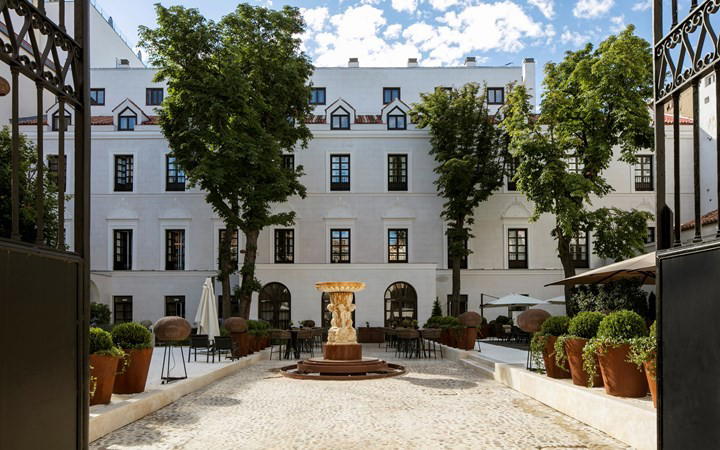
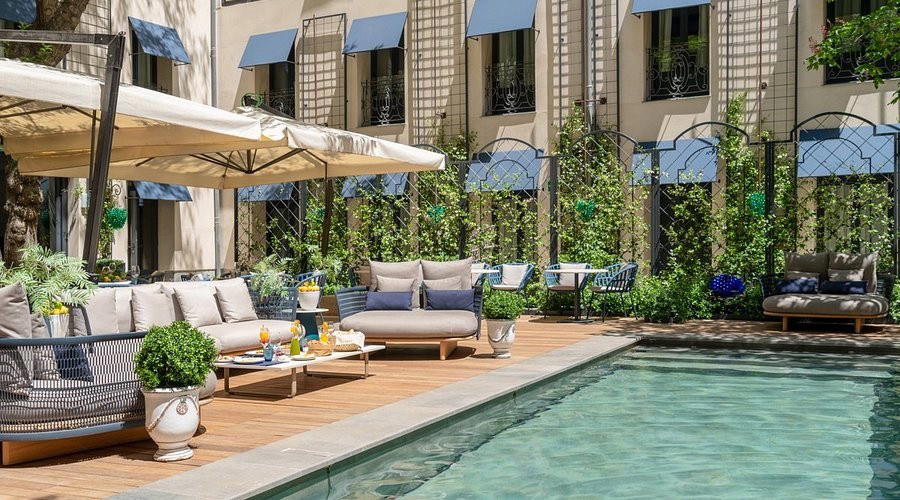
Madrid's historic core operates at a different register than its uptown hotel corridor. The streets around Cuesta de Santo Domingo carry the weight of centuries in their stonework: the Royal Palace sits to the west, the Teatro Real faces you across the plaza, and the Almudena Cathedral anchors the skyline to the south. Hotels in this district do not compete primarily on amenity spreadsheets. They compete on architectural provenance and on whether they can hold their own against surroundings that are, by definition, monumental. Gran Meliá Palacio de los Duques enters that competition with a clear hand: the site was occupied by the Convent of Santo Domingo, described in 13th-century records as the most significant convent in Europe, and the building that eventually replaced it served as the city residence of the Dukes of Granada de Ega in the 19th century. That dual history is not decorative backstory — it shapes the bones of the property itself, from the preserved garden to the proportions of its public spaces.
For comparison, Madrid's other upper-tier central hotels — the Mandarin Oriental Ritz, Madrid and the Four Seasons Hotel Madrid, carry significant institutional weight, but neither places a guest this close to the Habsburg nucleus, nor pairs that proximity with a building that predates the city's modern street plan. The Palacio de los Duques occupies a niche that mixes architectural rarity with the kind of central access that most luxury travelers in Madrid spend the entire trip trying to arrange.
What the Building Actually Delivers
Luxury hotel conversions of historic palaces in Spain are numerous enough to form their own category, the CoolRooms Palacio de Atocha and the Gran Hotel Inglés operate in related territory, as do properties further afield like Atrio Restaurante Hotel in Cáceres and Abadía Retuerta LeDomaine. What separates the Palacio de los Duques within this cohort is the interior design framework: the rooms across all 180 keys draw their color palette directly from Velázquez, the 17th-century painter whose most celebrated work, Las Meninas, hangs in the Prado roughly twenty minutes on foot from the hotel. That is not a decorative conceit, it ties the accommodation to the city's defining cultural institution in a way that rewards guests who actually engage with Madrid's museums rather than simply pass through them.
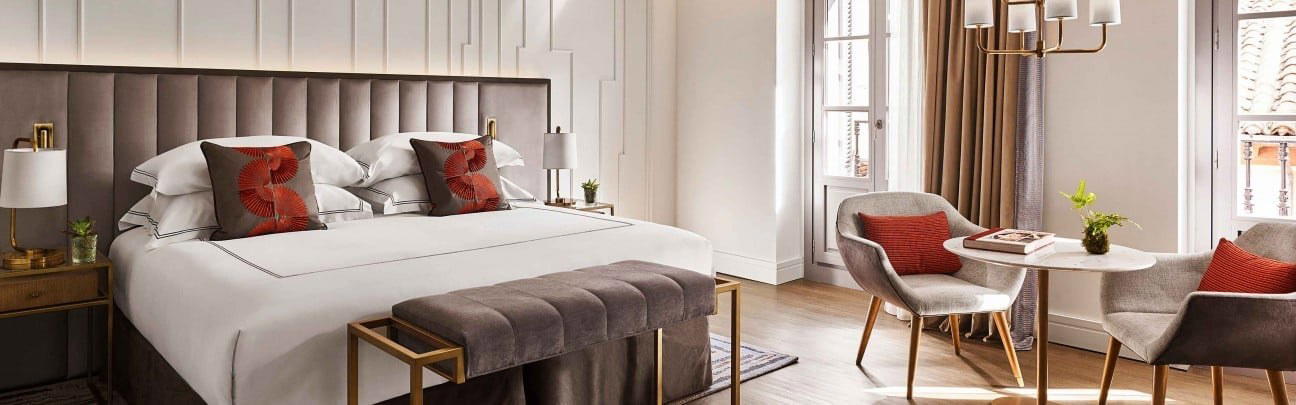
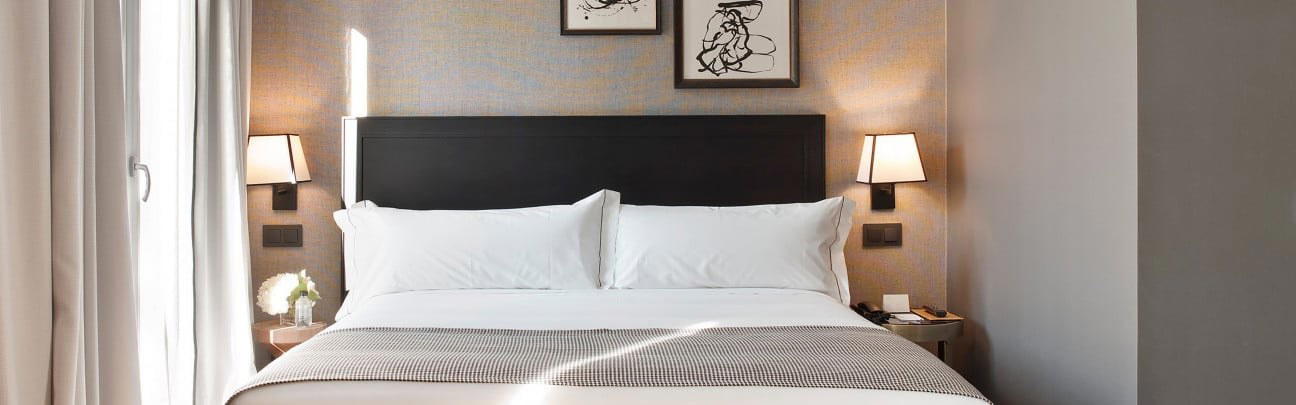
The practical execution follows through. Rooms are fitted with soundproofing and blackout measures calibrated to Madrid's climate, where summer light arrives before 6 a.m. and heat lingers long past sundown. The bathrooms and bedding are reported at a level consistent with the property's Leading Hotels of the World membership, maintained through 2025. Room categories scale from Classic rooms to Penthouse and Royal Suites, giving the property a range that accommodates both the single-night opera-goer and the extended-stay traveler using the hotel as a base for the Prado triangle.
Dos Cielos and the On-Site Restaurant Question
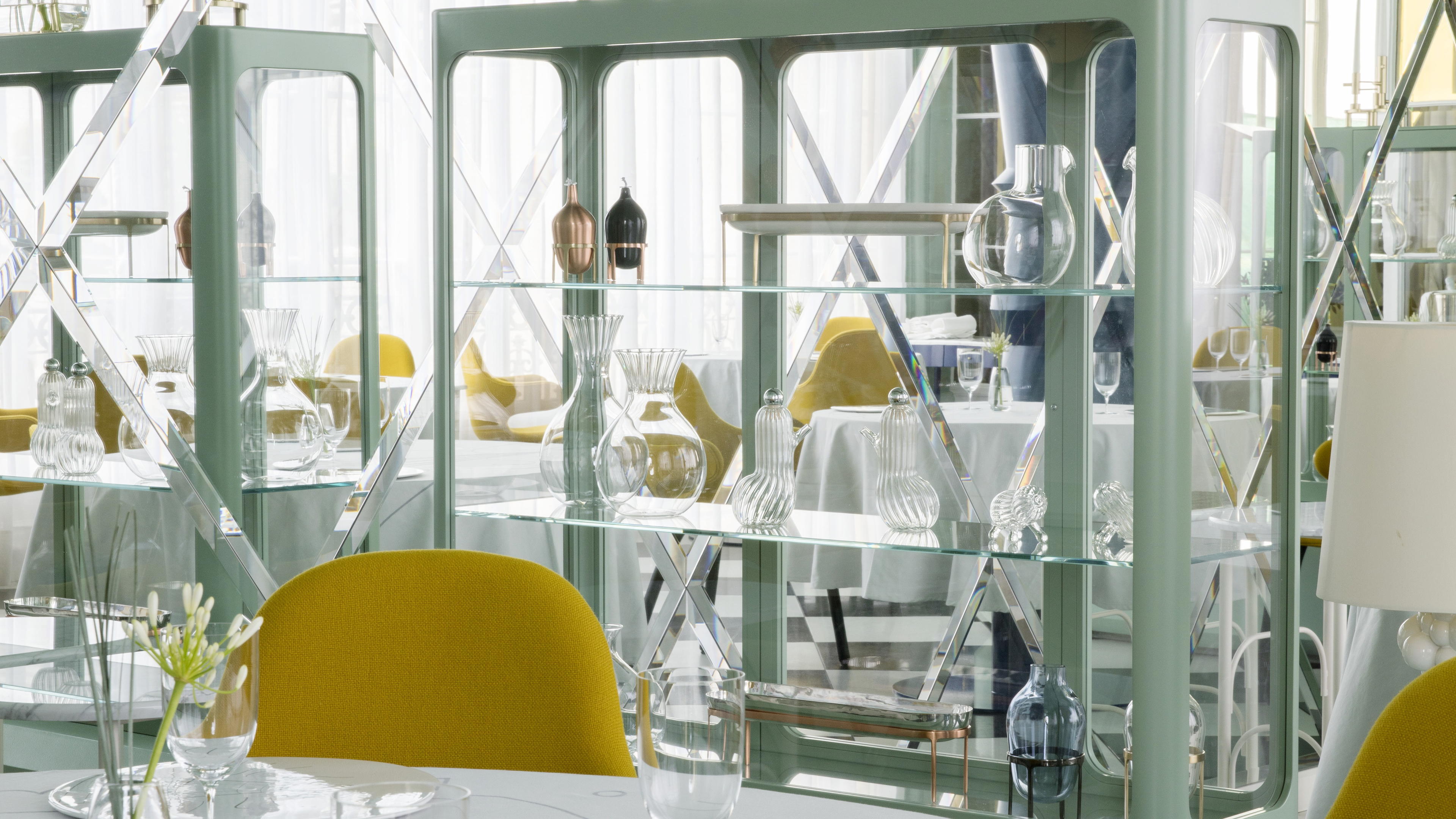
Madrid's luxury hotel market has become increasingly competitive on the dining front, and the Palacio de los Duques holds a meaningful position in that contest. The Torres brothers, Sergio and Javier, operate Dos Cielos within the hotel, and their Michelin-starred credentials give the property an on-site dining offer that few competitor addresses in the central city can match. Three restaurants in total operate within the property, though Dos Cielos sits at the top of that stack and is the one that places the hotel in direct conversation with Madrid's broader fine dining circuit.
For travelers who use hotel restaurants selectively, this matters less. For those who prefer to eat well without the logistical overhead of booking across multiple venues in an unfamiliar city, having a Michelin-starred kitchen under the same roof as your room is a genuine differentiator. Madrid has 73 museums, per the hotel's own count, and a city dense enough with evening options that the ability to retreat to reliable quality on-site has real value. See our full Madrid restaurants guide for the broader dining picture.
The Palacio in Its Competitive Set
The property's recognition points are worth reading in context. A Michelin 1 Key rating, awarded in 2024, places it within the inaugural cohort of hotels recognized under Michelin's accommodation program, a framework that evaluates the overall hospitality experience rather than food alone. A La Liste Leading Hotels score of 96.5 points in 2026, combined with Leading Hotels of the World membership, positions the Palacio de los Duques alongside properties that compete at the upper end of the European luxury hotel market rather than simply within the Madrid-specific tier.
The Palacio de los Duques differentiates within that group primarily through location and architectural provenance. Where Villa Magna operates in Madrid's luxury retail and embassy corridor to the north, and where Only YOU Boutique Hotel Madrid and Hotel Rector serve different market segments entirely, the Palacio de los Duques is the address for travelers who want the old city with full five-star infrastructure. That is a specific brief, and it fills it with more architectural credibility than any comparable property in the same postcode.
For travelers exploring Spain beyond Madrid, the country's top-tier hotel properties span considerably different terrains, from Akelarre in San Sebastián to Cap Rocat in Cala Blava, Hotel Can Cera in Palma, La Residencia, A Belmond Hotel, Mallorca, and the Marbella Club Hotel on the Costa del Sol. In Catalonia, Mandarin Oriental Barcelona and Mas de Torrent Hotel & Spa serve the upper tier. For those drawn to historically anchored rural properties similar in spirit to the Palacio de los Duques, Terra Dominicata in Escaladei and Torre del Marqués Hotel Spa & Winery occupy comparable territory in their respective regions. Galicia's Pepe Vieira Restaurant & Hotel and Casa Beatnik Hotel in A Coruña represent the country's northwest offer for those continuing beyond the capital.
Planning Your Stay
The hotel's address at Cuesta de Santo Domingo, 5 places it within the Centro district, walkable to the Teatro Real and the Royal Palace and a fifteen-to-twenty-minute walk from the Prado. Nightly rates open around $592, which positions the property within the upper bracket of Madrid's central luxury tier. At 180 rooms, the Palacio de los Duques is large enough to carry conference and event business alongside leisure travelers, which can affect atmosphere during peak convention periods. The autumn and spring shoulder seasons, October through November and March through May, typically offer the leading combination of pricing and climate for guests planning museum-heavy itineraries. Summer availability tends to be tightest in July, when the city's international visitor numbers peak alongside the season's heat. Booking through Leading Hotels of the World channels or the Gran Meliá platform directly is advisable for guests who require suite categories, as Penthouse and Royal Suite inventory moves early around Madrid's major cultural calendar events, including the opera season at the Teatro Real, which runs from September through July. For travelers making Madrid a stop on a broader European circuit, properties like Aman Venice, Aman New York, and The Fifth Avenue Hotel in New York City occupy similar territory in their respective cities, architecturally anchored, historically credentialed, and positioned against peers on provenance as much as amenity count.
Peers You’d Cross-Shop
Comparable venues nearby, for context on price, style, and recognition.
| Venue | Cuisine | Price | Awards | Notes |
|---|---|---|---|---|
| Gran Meliá Palacio de los DuquesThis venue — the venue you are viewing | Historic palace blending classic grandeur with modern luxury | Not listed | 1 Michelin Key · La Liste Top Hotels | Not listed |
| The Westin Palace Madrid | Historic luxury palace hotel blending heritage with modern elegance | $300–500 | 1 Michelin Key · Conde Nast Hot List Hotels | Barrio de las Letras |
| CoolRooms Palacio de Atocha | Restored 19th-century palace with modern luxury amenities | Not listed | 1 Michelin Key | Embajadores |
| Hotel Unico Madrid | 19th-century palace with contemporary interiors and Art Deco details | $500–750 | 1 Michelin Key · Mr & Mrs Smith Seal of Approval | Recoletos |
| URSO Hotel & Spa Madrid | Restored 20th-century palace with modernist contemporary interiors | $200–300 | 1 Michelin Key · Mr & Mrs Smith Seal of Approval | Chueca |
| Gran Hotel Inglés | Heritage luxury boutique hotel with contemporary restoration, blending 19th-century architecture with modern Art Deco design elements. | $300–500 | 1 Michelin Key · La Liste Top Hotels | Barrio de las Letras |
Recognition history
Dated appearances from independent guides and award organizations, with the underlying list record or original source where available.
Michelin 1 Key
Michelin
La Liste Top Hotels
La Liste
Forbes 4-Star
Forbes
Virtuoso Luxury Hotel Partner
Virtuoso
Leading Hotels of World Member
Leading Hotels of World
Full recognition history (7 entries)
Michelin 1 Key
Michelin
Michelin 1 Key
Michelin
Continue exploring
More in Madrid
Hotels in Madrid
Browse all →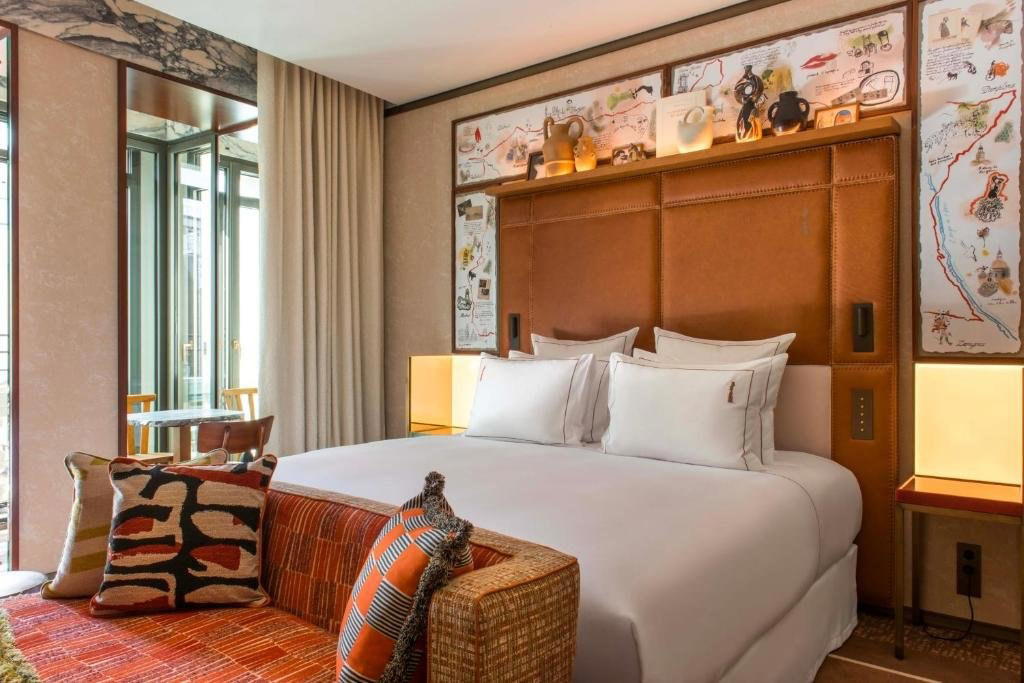
Bars in Madrid
Browse all →
Restaurants in Madrid
Browse all →

Details
- Elegant
- Sophisticated
- Ornate
- Romantic Getaway
- Business Trip
- Anniversary
- Rooftop Pool
- Historic Building
- Panoramic View
- Terrace
- Garden
- Wi Fi
- Pool
- Spa
- Fitness Center
- Room Service
- Concierge
- Restaurant
- Valet Parking
- EV Charging
- Skyline
- Garden
- Wheelchair Accessible
- Elevator
Elegant and inviting with sophisticated decor, tranquil spaces, ornate interiors, and serene lighting in the historical garden and rooftop terrace.