
EMILIA gives Tokyo’s Italian scene a regional counterpoint: Emilia-Romagna cooking in Jingumae, with à la carte flexibility rather than a ceremony-heavy tasting-menu frame. Tabelog selected it for Italian TOKYO Tabelog 100 in 2021, 2023, and 2025, making it a useful address for diners weighing substance, comfort, and recognition against Tokyo’s pricier Italian rooms.
Pearl is the En Primeur Club membership app — saves, bookings, and concierge access live there. Same editors, same standards.
- Address
- 2 Chome-25-4 Jingumae, Shibuya, Tokyo 150-0005, Japan
- Phone
- +81 3-3402-5517
- Website
- tabelog.com
 Saves & bookings on Pearl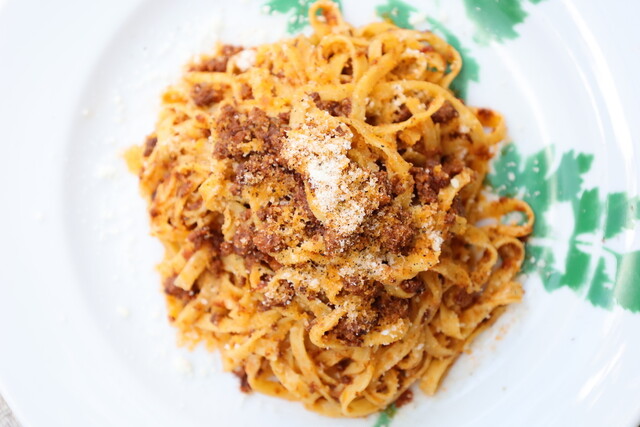
Jingumae’s quieter lanes change Tokyo dining’s rhythm. Between fashion traffic, residential calm, and Omotesando’s polished restaurant economy, meals often work best when they resist spectacle. EMILIA fits: a house-restaurant setting with terrace space, counter seats, sofa seating, and a dining room built for conversation, not performance.
Tokyo has absorbed Italian food in waves: trattoria comfort, polished hotel dining, ingredient-led chef counters, and regional specialists. The last are the more interesting value play because the diner is not paying only for imported luxury cues. Emilia-Romagna gives structure: pasta, wine, pork traditions, dairy richness, and generosity without a parade of courses. In Tokyo, where many Italian meals now compete with French dégustation pricing and sushi-counter scarcity, an à la carte Italian room with credible regional focus gives the bill a different logic.
Regional Italian cooking without the tasting-menu tax
The key is format. Lunch and dinner are both à la carte, letting the table build around appetite rather than surrender to a fixed sequence. In Tokyo, where serious dining often uses set menus to control pacing, margin, and procurement, that matters. À la carte service shifts value back toward choice: a lighter lunch can stay restrained, while dinner can expand through pasta, fish-oriented cooking, and wine without forcing every diner into the same spend.
The restaurant’s Tabelog Italian TOKYO Tabelog 100 selections in 2021, 2023, and 2025 place it inside a recognized Tokyo Italian bracket, though not the formal, trophy-chasing end. Its 3.67 score signals a following among Japanese diners who use Tabelog with unusual intensity, especially for restaurants delivering consistency over novelty. More than vague popularity, that recognition shows the room has held attention across multiple cycles of the city’s Italian list.
Emilia-Romagna also gives the kitchen a clearer identity than generic “Italian.” In Tokyo, where Italian restaurants often slide into pan-regional vocabulary to please broad audiences, a named regional center narrows expectations. Handmade pasta anchors the meal, wine is part of the meal rather than decorative upsell, and fish is a stated focus. None requires reading the restaurant as rustic or precious; it simply moves the meal closer to regional Italian grammar than international fine-dining mimicry.
Jingumae value, measured against the neighbourhood
Jingumae is not cheap, but it rewards diners who understand the micro-geography. Omotesando and Harajuku bring foot traffic and fashion spending; Kita-Sando and the National Stadium side are calmer, with more room for restaurants built on regulars, reservations, and neighbourhood familiarity. EMILIA occupies a practical middle: more substantial than a casual pasta stop, less financially severe than Tokyo’s high-gloss Italian tasting rooms.
Comparison helps. Nearby YOGORO and MOKUBAZA compete in a lower-spend casual lane, while Jingumae Higuchi sits in a different Japanese dining register. Handmade buckwheat Matsunaga belongs to another tradition, built around soba’s precision and restraint. Against that mix, this address is not trying to be the cheapest meal in the area; it is trying to make a regional Italian dinner feel proportionate. The value proposition is recognizable cooking, wine seriousness, and enough comfort to make the meal social rather than ceremonial.
The 40-seat room, including five counter seats, also shapes the experience. This is not the tiny counter economy that defines much of Tokyo’s premium dining, where scarcity can become the concept. A broader room changes the tone: better for friends, workable for families at the right time, and capable of private use for groups. There are no private rooms, so the experience stays public, but the house-restaurant format softens it.
For a broader Tokyo itinerary, this is the kind of restaurant that pairs with a day around Harajuku, Sendagaya, or Omotesando rather than a cross-city pilgrimage built around one reservation. Keep Our full Tokyo restaurants guide close for the wider dining map, especially if the trip needs sharper contrast: charcoal and tuna at . 鮪と炭火焼き うお炭 秋葉原店, Shinjuku dining at 12/10 Shinjuku ten, yakitori at 124. KAGURAZAKA (Yakitori), graphic café culture at 2D Cafe, or old-school curry at 3 Chome no Curry Ya San.
How to read the room before you choose it
This suits diners wanting a relaxed Italian meal with enough editorial credibility to justify planning, not chef-counter theatre. The non-smoking policy, terrace option, take-out availability, and pet access limited to the terrace point to a neighbourhood restaurant with rules rather than a rigid temple of gastronomy. Dinner has a one-drink requirement and small seating charge, so the economics make more sense if wine is part of the plan.
Children are welcome in general, but dinner excludes children under 10, making evening service more adult without restricting lunch. That split is common in Tokyo restaurants preserving dinner pacing while keeping daytime dining accessible. For families, lunch is cleaner; for friends or a small celebration, dinner is the stronger use of the room.
The broader travel plan matters too. Tokyo rewards category switching, and Italian dining should not consume every prime meal slot. Use Our full Tokyo hotels guide to place the stay, Our full Tokyo bars guide for after-dinner drinking, Our full Tokyo wineries guide for wine-focused detours, and Our full Tokyo experiences guide for cultural planning around the meal. If the trip extends beyond the city, compare the dining register with -Grilled beef Sukiyaki- KAMAKURA TANUKIAN 鎌倉 たぬき庵 in Kamakura.cafe in Osaka.know in Kumamoto, (Shoku) Vietnam in Kawasaki, [Curry Senmon Ten] Maruyama Kyoju. in Sapporo, and [ki:] in Kyoto. For a trans-Pacific sake-and-Japanese-comfort comparison, Jōdo Saké Bar in Los Angeles and Onigiri Time in Pasadena sit in a different diaspora context.
The case for EMILIA is not novelty. It is control: regional focus, à la carte flexibility, a room that handles more than couples at a counter, and Tabelog recognition across three selection years. In a city where Italian dining can become casual fuel or expensive theatre, this is the middle lane worth taking seriously.
At-a-Glance Comparison
Comparable venues for context, by category and price tier.
| Venue | Cuisine | Price | Notes |
|---|---|---|---|
| EMILIAThis venue — the venue you are viewing | Emilia-Romagna regional Italian with handmade pasta | $$$ | Not listed |
| Partenope (パルテノペ) | Authentic Neapolitan Pizza | $$$ | Ebisu |
| Napule | Authentic Neapolitan Pizza & Southern Italian Trattoria | $$$ | Minato |
| K+ | Modern Italian Fine Dining | $$$ | Minato |
| Kurodino | Italian-Japanese Fusion Fine Dining | $$$ | Chūō |
| Osteria Tramandare | Regional Italian Osteria with Rotating Tasting Courses | $$$ | Chūō |
Recognition history
Dated appearances from independent guides and award organizations, with the underlying list record or original source where available.
Tabelog 100 #58 · No. 58
Tabelog · Tabelog 100 - Italian - TOKYO - 2025











At a Glance
- Cozy
- Rustic
- Lively
- Trendy
- Date Night
- Casual Hangout
- Group Dining
- Family
- Celebration
- After Work
- Terrace
- Standalone
- Design Destination
- Extensive Wine List
- Street Scene
Current opening hours
- Monday
- 11:30 AM–3 PM, 5:30–10 PM
- Tuesday
- Closed
- Wednesday
- Closed
- Thursday
- 11:30 AM–3 PM, 5:30–10 PM
- Friday
- 11:30 AM–3 PM, 5:30–10 PM
- Saturday
- 11:30 AM–3 PM, 5:30–10 PM
- Sunday
- 11:30 AM–3 PM, 5:30–10 PM
Hours can change for holidays and private events. Last verified .
Relaxed and cozy neighborhood spot with warm, casual interiors, a small counter and terrace seating that give it a hidden-house-restaurant feel rather than a formal trattoria.