Our verdict
Located in Kagurazaka, one of Tokyo's most quietly serious dining neighbourhoods, レベル (Level) sits in a district where French-Japanese crossover restaurants and intimate counter formats have defined the scene for decades. Precise data on cuisine style, pricing, and reservations is limited in public channels, which itself signals something about how the venue positions itself relative to Tokyo's more aggressively promoted fine-dining tier.

Pearl is the En Primeur Club membership app, where members save venues, book tables and use the concierge.
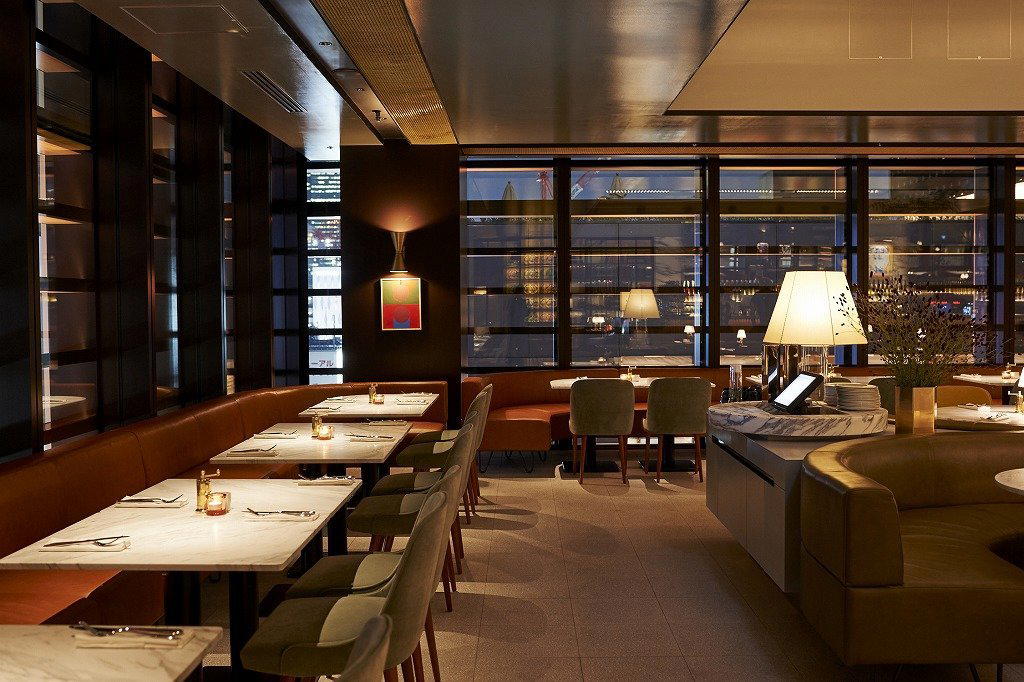
Kagurazaka and the Restaurants That Don't Advertise Themselves
Tokyo's premium dining scene has, over the past decade, fractured into two distinct camps: venues that court international ranking systems and press cycles aggressively, and those that operate on local reputation alone, booking through word-of-mouth and neighbourhood loyalty rather than through any outward signal. Kagurazaka, the sloping Franco-Japanese quarter of Shinjuku City, has long been home to the second type. The area's stone-paved alleys and former geisha district character have made it a natural home for restaurants that treat discretion as a feature rather than an oversight. レベル, located at 4 Chome-3 in the Kagurazaka TK Building, sits inside that tradition.
Understanding レベル requires understanding the neighbourhood first. Kagurazaka's dining character was shaped by its historical French community, which settled around the area's language schools and cultural institutions from the mid-twentieth century onward. That presence produced a genuine French-Japanese culinary conversation, not the surface-level borrowing found in Tokyo's tourist-facing districts. The restaurants that survive in Kagurazaka long-term tend to be precise, intimate, and oriented toward a returning local clientele rather than a seasonal flood of visitors. The address on Kagurazaka's main commercial stretch places レベル inside a building format that Tokyo habitually uses for small, focused counter or table restaurants, the kind that occupy a single floor and rarely exceed twenty covers.
What the Booking Process Tells You
For venues in Tokyo's more visible tier, the booking infrastructure is itself a form of branding. Counter omakase restaurants at the level of Harutaka or kaiseki institutions like RyuGin operate through formal reservation systems, often with English-language interfaces and months-long wait lists that function as public proof of demand. French-leaning peers such as L'Effervescence and Sézanne have similarly visible booking channels, often requiring advance planning of eight to twelve weeks from outside Japan.
This is not unusual for Kagurazaka. Several of the area's most-regarded small restaurants operate through reservation systems that are entirely local: direct telephone in Japanese, introductions through regular guests, or informal arrangements with neighbouring businesses. For international visitors, this creates a real friction point that is worth naming plainly: booking レベル without a Japanese-speaking contact, a concierge service with Kagurazaka relationships, or a prior connection to the restaurant is genuinely difficult. A Tokyo hotel concierge with serious dining knowledge is the most reliable intermediary, particularly for restaurants in the Kagurazaka and Yotsuya Sanchome corridor that do not maintain English-language presences.
The editorial angle here matters: in Tokyo's premium dining market, limited public booking infrastructure is typically a signal of one of two things. Either a restaurant is too early in its development to have systematized reservations, or it is sufficiently established within its local network that external marketing pressure is unnecessary. Kagurazaka's historical pattern strongly favours the second reading for venues that have survived on that street over multiple years.
Cuisine Context and What the Neighbourhood Implies
Kagurazaka's restaurant population skews heavily toward French technique, French-Japanese fusion, and precision-driven Japanese formats. The district produced the conditions that allowed restaurants like Crony, which deploys French technique with an innovative edge, to develop a following without the scaffolding of major award recognition. The shared characteristic of Kagurazaka's better-regarded venues is technical seriousness applied to relatively contained formats: small seat counts, focused menus, and an assumption that the guest will follow the kitchen rather than the reverse.
For visitors who have spent time at Tokyo's more internationally prominent addresses, Kagurazaka operates as a different kind of argument. The restaurants here do not typically compete with Sézanne's architectural dining room or the ceremonial weight of a three-star kaiseki progression. They compete on the terms of the neighbourhood itself: intimacy, consistency, and the sense that the people around you are regulars rather than tourists crossing an item off a list.
Across Japan, this pattern repeats in different registers. Gion Sasaki in Kyoto operates with similar neighbourhood embeddedness. HAJIME in Osaka occupies the award-facing end of the spectrum, while smaller Osaka addresses have built reputations entirely within the local dining community. Goh in Fukuoka illustrates how regional Japanese cities have developed their own insular prestige circuits that rarely surface in international guides. The geography of serious Japanese dining extends well beyond the obvious cities, from akordu in Nara to venues in smaller prefectural cities like 一本杉川嶋 in Nanao, 古今山乃 in Sapporo, 湖畔荘 in Takashima, and 鳥羽屋 in Nishikawa Machi. Kagurazaka functions as the Tokyo instance of this same pattern: proximity to the city's central prestige circuit, but operating on different terms.
Planning a Visit: What to Know Before You Go
For visitors building a Tokyo itinerary, レベル belongs in the research phase rather than the drop-in category. The 1F location in the Kagurazaka TK Building on the 4 Chome section of Kagurazaka means the venue is physically accessible, with Kagurazaka Station on the Tokyo Metro Tozai Line a short walk away. The neighbourhood itself rewards a full evening: the streets between Kagurazaka Station and Ushigome-Kagurazaka Station contain several serious wine bars and small restaurants that function well as either pre- or post-dinner anchors.
Price range and format are not confirmed, which means visitors should approach inquiry with flexibility. In Kagurazaka, counter restaurants at the serious end of the market typically run from ¥15,000 to ¥30,000 per person for a full progression with drinks, positioning them above casual dining but below the ¥¥¥¥ tier occupied by venues like L'Effervescence or Harutaka. Whether レベル sits in that mid-tier or above it is a question for the reservation process itself.
For international visitors accustomed to the booking logic of restaurants like Le Bernardin in New York City or Atomix, where online reservation platforms handle most of the logistics in English, Kagurazaka requires a different approach. Japanese-speaking assistance, either through a hotel concierge or a specialist dining concierge service focused on Tokyo, is the most direct path. Attempting to walk in without a reservation is not a practical strategy for any serious restaurant in this district.
Those building a broader Japanese itinerary that extends beyond Tokyo might also consider venues like Bistro Ange in Toyohashi or Birdland in Sakai as reference points for how regional Japanese restaurants at a serious level operate outside the major city circuits. Our full Tokyo restaurants guide covers the broader scene for visitors working through the city's dining options.
Quick reference: レベル, 4 Chome-3 Kagurazaka, Shinjuku City, Tokyo (Kagurazaka TK Building 1F). Nearest station: Kagurazaka (Tokyo Metro Tozai Line). Reservation via Japanese-language contact or hotel concierge recommended. Cuisine format and pricing to be confirmed at point of inquiry.
Frequently asked questions
Where do I go for レベル?
レベル is located at Japan, 〒162-0825 Tokyo, Shinjuku City, Kagurazaka, 4 Chome−3 神楽坂TKビル 1F, Tokyo.
Where exactly is レベル located in Kagurazaka, and is the venue easy to find?
レベル is on the ground floor (1F) of the Kagurazaka TK Building at 4 Chome-3, Kagurazaka, Shinjuku City, Tokyo. The Kagurazaka area is accessible from Kagurazaka Station on the Tōzai Line or Iidabashi Station across multiple lines. Ground-floor locations in this part of Shinjuku City tend toward compact footprints, and signage at venues in this tier is frequently minimal, having the address in Japanese script when arriving is practical.
What should I order at レベル?
Confirmed menu details are not available through any public channel for レベル. The Kagurazaka address is meaningful context: this neighbourhood is historically oriented toward French-Japanese cooking with fixed-format menus rather than à la carte ordering, so arriving with an open approach rather than dish expectations is advisable.
How hard is it to get a table at レベル?
No public website, phone number, or reservation platform is confirmed for レベル, which in Tokyo typically signals a restaurant that books through personal referral or direct contact. Kagurazaka's serious dining tier generally requires advance planning of several weeks minimum. Building in lead time before your trip is the practical approach.
What makes レベル worth seeking out?
レベル occupies a 1F address in the Kagurazaka TK Building in Shinjuku City, a neighbourhood with a documented restaurant culture oriented toward returning local clientele rather than tourist visibility. Kagurazaka's culinary reputation, built largely on French-influenced precision, gives context to why venues here tend to operate without public-facing marketing infrastructure.
Is レベル good for vegetarians?
In Kagurazaka restaurants operating on a fixed tasting format, dietary requirements are typically communicated at the time of reservation. Contacting the venue directly ahead of any visit is the only reliable route to confirming options.
Is レベル worth it?
Kagurazaka restaurants at the serious end of the neighbourhood spectrum tend to sit in the mid-to-upper range of Tokyo dining, reflecting the area's long-established reputation for craft-focused, low-volume cooking rather than volume-driven covers.
The Short List
Comparable venues nearby, for context on price, style, and recognition.
| Venue | Cuisine | Price | Awards | Notes |
|---|---|---|---|---|
| レベルThis venue (the venue you are viewing) | Modern Japanese Fine Dining | Not listed | Not listed | Not listed |
| Tokyo Rakkyo Brothers | Hokkaido-style soup curry & Japanese curry | $10–20 | Tabelog 100 #36 | Shinjuku, Hokkaido-style soup curry & Japanese curry |
| Chuka Soba Nishino | Tokyo ramen (chuka soba) counter | $10–20 | Tabelog 100 #23 | Bunkyō, Tokyo ramen (chuka soba) counter |
| Takeya | Udon & Izakaya | $10–20 | Tabelog 100 #100 | Bunkyō, Udon & Izakaya |
| Pneuma Curry | Japanese Curry | $1–10 | Tabelog 100 #84 | Shinjuku, Japanese Curry |
| Inaniwa Udon to Meshi Kaneko Hannosuke Koredo chuuou nihonbashimuro ten | Inaniwa udon and tempura rice bowls | $10–20 | Tabelog 100 #84 | Chūō, Inaniwa udon and tempura rice bowls |
Continue exploring
More in Tokyo
Restaurants in Tokyo
All restaurants in Tokyo →

Bars in Tokyo
All bars in Tokyo →


Details
- Business Dinner
- Special Occasion
- Set Menu
Current opening hours
- Monday
- Closed
- Tuesday
- 5:30–11 PM
- Wednesday
- 5:30–11 PM
- Thursday
- 5:30–11 PM
- Friday
- 5:30–11 PM
- Saturday
- 5:30–11 PM
- Sunday
- 5:30–10 PM
Hours can change for holidays and private events. Hours as of .
Modern and elegant with attentive service and impressive food presentation.