DIM SUM NOW
On Ferdinand Bolstraat in Amsterdam's De Pijp neighbourhood, Dim Sum Now sits inside the city's broader conversation about accessible Chinese dining done with precision. The format centres on the kind of repetitive, cart-less ordering rhythm that defines good dim sum: small, specific, meant to be shared across a table at pace. A reliable address for the neighbourhood.
- Address
- Ferdinand Bolstraat 36, 1072 LK Amsterdam, Netherlands
- Phone
- +31 20 820 0808
- Directions
- Get directions
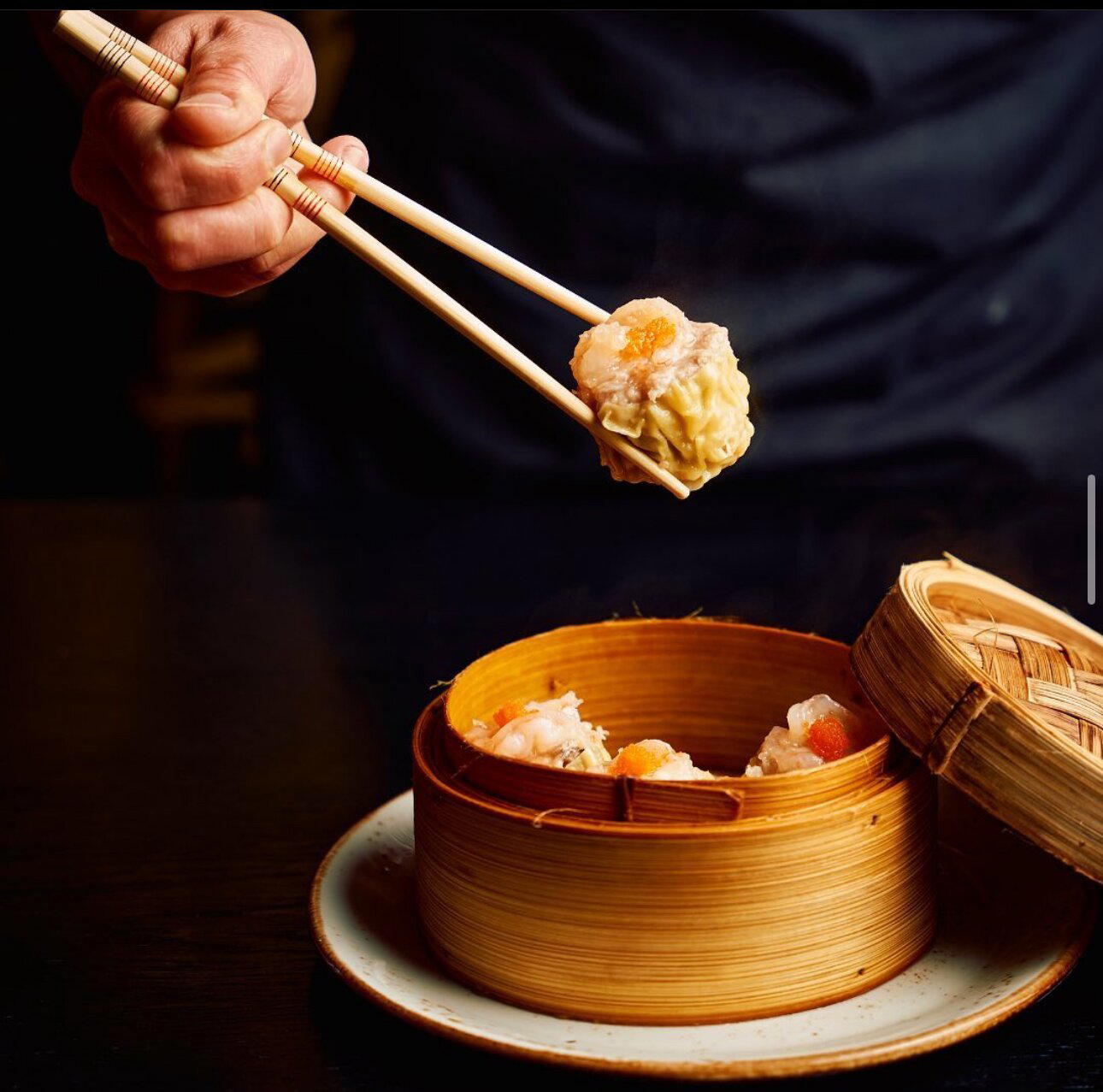
Ferdinand Bolstraat and What It Signals
De Pijp is Amsterdam's food-dense neighbourhood, a place where the Albert Cuyp market anchors one rhythm and the side streets branch into dozens of independent restaurants covering ground from Indonesian rijsttafel to contemporary Dutch. Ferdinand Bolstraat sits at the quieter end of that concentration, a street that tilts residential without losing its commercial energy. Dim Sum Now occupies number 36, and its address alone places it in a part of the city where locals eat regularly rather than occasionally, which tends to produce a different kind of restaurant than the tourist-facing canal belt.
Amsterdam has not historically been a strong dim sum city. Its Chinese restaurant tradition leans older, oriented toward broad Cantonese and Dutch-Chinese hybrid menus that prioritised volume over precision. The city's more recent dining conversation has been dominated by the kind of tasting-menu ambition represented by Ciel Bleu, Flore, Spectrum, and Vinkeles, all operating in the €€€€ bracket and all drawing from the same European fine-dining grammar. Dim sum addresses occupy a different tier entirely, one defined by repetition, shareability, and the logic of ordering three dishes and then three more.
The Atmosphere of a Good Dim Sum Room
The sensory experience of dim sum eating is specific in ways that set it apart from most European dining formats. At its leading, a dim sum room carries a low-level acoustic density: the sound of bamboo steamers lifted and set back down, short exchanges between tables and staff, the clatter of serving spoons against ceramic. It is never quiet, and it is not supposed to be. The format is social by design, and a room that feels half-empty tends to undercut the experience regardless of what arrives at the table.
What you approach on Ferdinand Bolstraat is a neighbourhood-scale address rather than a large-format hall. This matters because the dim sum experience in Amsterdam sits at a different scale than the sprawling yum cha operations of London's Gerrard Street or Rotterdam's Chinese community centres. The city's version tends toward the compact and the accessible, which has trade-offs: less spectacle, but also less anonymity. You are closer to the kitchen and to the adjacent tables, which changes how the meal feels. Light in De Pijp's ground-floor spaces tends toward the indirect and ambient rather than the fluorescent-white of traditional dim sum halls, another local adaptation that softens the format without fundamentally changing its logic.
For contrast with how Amsterdam's restaurant community handles precision at the high end, addresses like Bistro de la Mer show how the city applies technical discipline to classic European frameworks. Dim sum operates on an entirely different production model, where speed of execution across a wide menu of small formats matters more than plate composition.
What the Dim Sum Format Requires
Ordering well at a dim sum address requires some orientation if you are not familiar with the format. The menu typically divides between steamed dumplings (har gow, siu mai, cheung fun), baked and fried items (turnip cake, taro dumplings, spring rolls), and congee or rice-based plates that function as ballast. The conventional approach is to order in waves rather than all at once, bringing hot items to the table as they finish rather than staging a single arrival. A table of two ordering four items simultaneously will have a different experience than one ordering two, eating, and ordering again.
The Netherlands has a strong tradition of precise, technically demanding restaurant work outside Amsterdam as well. Addresses like De Librije in Zwolle, Inter Scaldes in Kruiningen, De Nieuwe Winkel in Nijmegen, and De Lindenhof in Giethoorn all operate at the country's recognised upper tier. Dim sum sits in a different register, where the discipline is in the wrapper thickness, the filling ratio, and the steam timing rather than in plating architecture or sauce construction. Both require precision; they just express it through entirely different vocabularies.
Planning a Visit
Ferdinand Bolstraat 36 is reachable from central Amsterdam by tram, with the neighbourhood's connections making it a short trip from the museum quarter or the canal belt. De Pijp is walkable and dense enough that combining a visit with the Albert Cuyp market or a stop at one of the neighbourhood's wine bars is direct. Because dim sum service typically runs through lunch and into early afternoon, arriving before midday tends to produce the variety and kitchen pace. Later arrivals at any dim sum address risk finding certain steamed items sold out as the kitchen winds down production.
Across the Netherlands, the restaurant community that operates at decorated levels includes addresses from Tribeca in Heeze to De Groene Lantaarn in Staphorst, Brut172 in Reijmerstok, De Lindehof in Nuenen, De Bokkedoorns in Overveen, and De Treeswijkhoeve in Waalre. Dim Sum Now competes in none of those tiers. Its comparable set is neighbourhood Chinese, and in that context, the Ferdinand Bolstraat address functions as a reliable option in a city where the format is underrepresented relative to its demand.
For a broader view of where this address sits in Amsterdam's dining map, our full Amsterdam restaurants guide covers the city's categories in detail. Internationally, the dim sum format sits in a global conversation that extends well beyond Amsterdam, and the contrast between this neighbourhood-scale operation and, say, the technical precision of Le Bernardin in New York City or the communal format of Lazy Bear in San Francisco illustrates how differently cities calibrate shared-table dining experiences.
Peers Worth Knowing
Comparable venues nearby, for context on price, style, and recognition.
| Venue | Cuisine | Price | Notes |
|---|---|---|---|
| DIM SUM NOWThis venue — the venue you are viewing | Dim Sum | $$ | Not listed |
| 湖南常德牛肉粉 | Hunan Changde Beef Noodle Soup | $$ | 市中心/达姆广场 |
| Nam Kee | Classic Cantonese | $$ | Burgwallen Oost |
| Greetje | Traditional Dutch Cuisine | $$ | Rapenburg |
| Mount Everest Tandoori | Indian & Nepalese Tandoori | $$ | Vogelbuurt |
| Omelegg | Omelette Specialists | $$ | Lizzy Ansinghbuurt |
Continue exploring
More in Amsterdam
Restaurants in Amsterdam
Browse all →
Bars in Amsterdam
Browse all →
Hotels in Amsterdam
Browse all →

Wineries in Amsterdam
Browse all →
At a Glance
- Modern
- Trendy
- Casual Hangout
Nice sitting area with decent atmosphere.