Our verdict
Daocheng Impressions of Old Casseroles sits within Chengdu's tradition of slow-fire clay pot cooking, where ingredients sourced from the surrounding Sichuan basin take precedence over technique showmanship. The format draws on a lineage of casserole-centred dining that predates the city's current restaurant boom, placing it in a distinct tier from Chengdu's high-gloss tasting-menu scene.

Pearl is the En Primeur Club membership app, where members save venues, book tables and use the concierge.
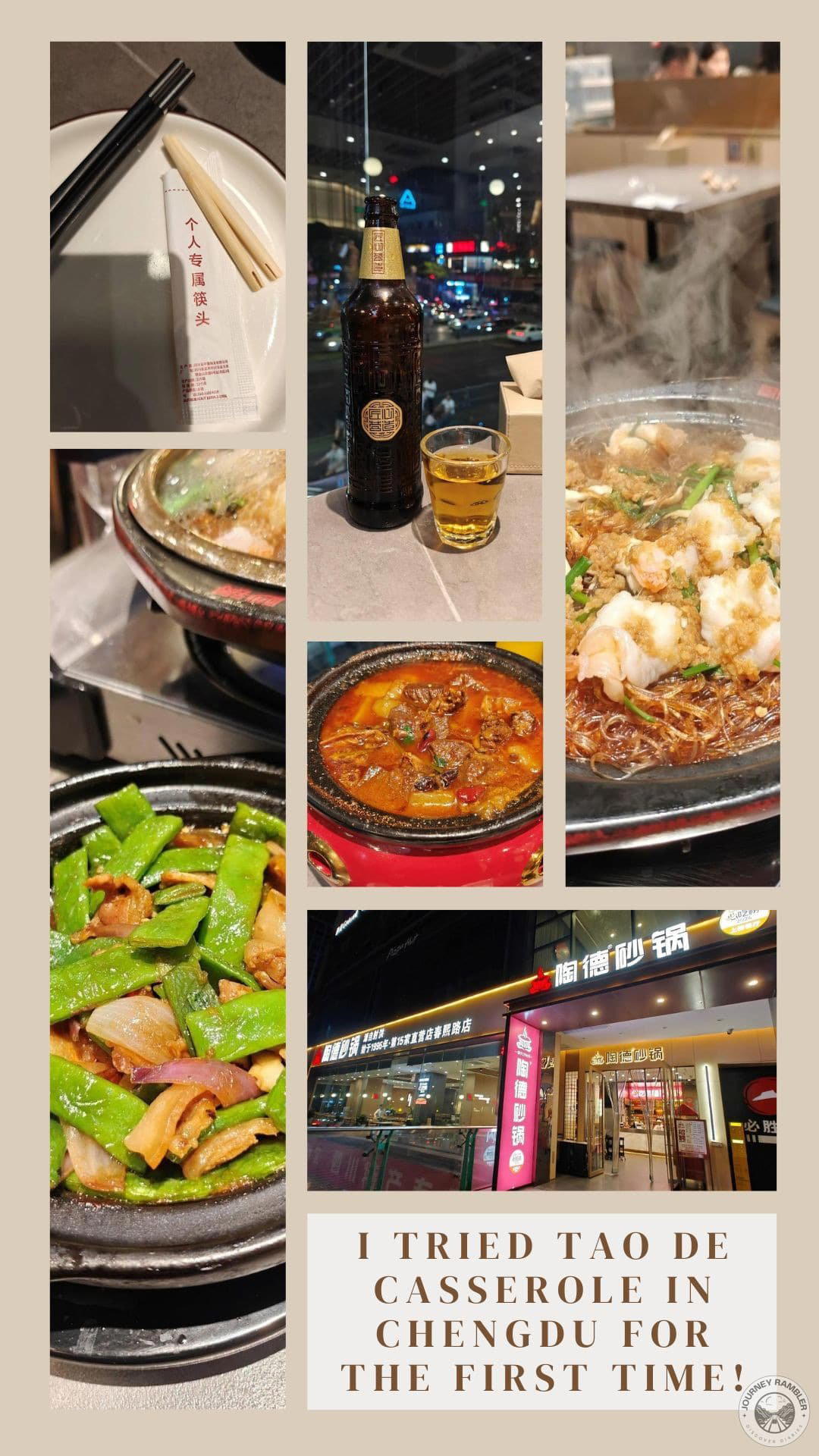
Clay, Fire, and the Sichuan Basin: Casserole Cooking in Context
Chengdu's restaurant identity is most often defined by the peppercorn-driven heat of mala hotpot and the precision tasting menus at addresses like Yu Zhi Lan and Xin Rong Ji. But beneath that well-documented tier, there is a quieter tradition: the clay casserole, slow-simmered over low heat, drawing flavour from the specific mineral content of local water and the particular character of produce grown within the broader Chengdu Plain. Daocheng Impressions of Old Casseroles occupies this less-photographed register of the city's food culture. Where the city's ¥¥¥¥ restaurants compete on sourcing credentials and chef lineage, the casserole format operates on a different logic entirely, one in which the vessel itself, and the patient accumulation of heat it enables, determines what the food becomes.
That distinction matters more than it might first appear. Clay pot cooking across Sichuan has historically been a domestic form, associated with farmhouse kitchens and the kind of cooking that prioritises depth over drama. The casserole produces a fundamentally different result from the wok: lower temperature, longer contact between liquid and ingredient, and a gradual exchange of flavour that cannot be accelerated without consequence. Restaurants that carry this tradition into a commercial context are making an implicit argument about where Sichuan cooking's real complexity lives, not in the fast, fierce heat of the wok station but in the sustained, low-intervention patience of the clay pot.
Where Ingredients Become the Argument
The sourcing logic behind casserole cooking in the Sichuan basin is less about exotic provenance and more about specificity of place. The plateau geography of Daocheng, from which this restaurant draws its name, sits at roughly 3,700 metres in the Garzê Tibetan Autonomous Prefecture, a region whose altitude, ultraviolet intensity, and temperature swings produce agricultural goods with measurably different characteristics than lowland equivalents. Yak meat, highland mushrooms, and cold-climate root vegetables from this zone carry a concentrated quality that lower-altitude analogues rarely match.
In the context of casserole cooking, this matters because the slow-simmer format amplifies rather than masks ingredient character. A casserole built on generic protein and standard aromatics will taste like warmth and salt. One built on highland-sourced ingredients, where the raw materials already carry density and depth, will taste like somewhere specific. This is the ingredient-sourcing argument that distinguishes the category from broader Sichuan comfort cooking, and it places Daocheng Impressions of Old Casseroles in a conceptually different position from, say, the single-dish Sichuan specialists at the city's cheaper price points.
Across China's restaurant scene, the sourcing-from-origin model has gained significant traction at the upper end. Restaurants like Ru Yuan in Hangzhou and Dingshan·Jiangyan in Suzhou have built their editorial identity around regional provenance, and that framing has moved down-market as diners have become more attentive to where ingredients originate. The casserole format, which foregrounds the ingredient rather than the technique, is well-suited to this broader shift in how Chinese restaurant value is communicated.
The Physical Encounter: What Casserole Service Looks Like
The format of casserole service is itself a kind of theatre, though less constructed than the plating choreography of a tasting menu. A clay pot arrives at the table still producing heat, its contents in gradual motion, the lid lifted tableside to release a column of steam that carries the accumulated aromatic character of however long the dish has been cooking. This is a fundamentally different dining rhythm from the rapid succession of courses at addresses like Fang Xiang Jing or Fu Rong Huang. The casserole demands that the diner slow down to match its pace.
In a city where the restaurant pace is often dictated by the hotpot format, with its constant additions and adjustments, the casserole meal operates almost as a counterargument. You wait, the pot works, and the result arrives complete rather than constructed at the table. For travellers moving through Chengdu's broader dining scene, which can trend toward sensory intensity and social noise, the casserole format offers a different register of engagement with Sichuan food.
Placing Daocheng Impressions in Chengdu's Dining Map
Chengdu's restaurant market has stratified considerably in the past decade. At the leading, internationally recognised addresses compete for Michelin attention and drive destination travel. Below that, a mid-market layer of concept-driven restaurants has expanded to meet growing domestic appetite for food that carries a story without the full tasting-menu price commitment. The casserole segment occupies a position in this middle tier, where the pitch is authenticity of form and ingredient rather than either luxury or mass-market accessibility.
This places Daocheng Impressions alongside a cohort of Chengdu restaurants making a similar argument through different regional lenses, from the Fujian-influenced cooking at Hokkien Cuisine to the different register of refined Sichuan at Xin Rong Ji. The thread connecting them is a preference for specific regional identity over broad Sichuan generalisation, a tendency that has strengthened as Chengdu diners have become more sophisticated and as the city has attracted more internationally travelled visitors.
For context across China's broader fine and mid-market dining scene, the sourcing-from-origin model is well-established at restaurants ranging from Imperial Treasure Fine Chinese Cuisine in Guangzhou to Dai Yuet Heen in Nanjing, though the casserole format as a vehicle for that argument remains distinctively Sichuan in its logic. Even internationally recognised restaurants working in adjacent traditions, from Chef Tam's Seasons in Macau to 102 House in Shanghai, tend to foreground technique as the primary credential. The casserole tradition inverts this, making the vessel and the ingredient the argument, with technique receding into the background as a condition rather than a performance.
Planning a Visit
Travellers planning to include Daocheng Impressions of Old Casseroles in a Chengdu itinerary should treat it as a contrast point within a broader dining programme rather than a standalone destination. Pairing it against one of the city's higher-tier addresses gives the clearest sense of where casserole cooking sits in Chengdu's full register. Our full Chengdu restaurants guide maps the city's dining options across price points and styles, which helps in building an itinerary that uses each meal to reveal something different about how Sichuan cuisine actually functions across its various registers. Given the nature of the format, casserole meals tend to run longer than wok-focused meals, so allocate time accordingly rather than booking this as a quick stop between other activities.
For travellers building a longer China itinerary, the casserole tradition in Chengdu can usefully be read alongside coastal Chinese cooking traditions at venues like Fleurs Et Festin in Xiamen or Jiangnan Wok·Rong in Fuzhou, where the relationship between ingredient provenance and cooking method is similarly foregrounded, though the methods themselves differ substantially. The broader argument, that where food comes from shapes what it becomes more than any intervention in the kitchen, travels across these regional traditions in ways that make comparative dining genuinely instructive.
Frequently asked questions
How does Daocheng Impressions of Old Casseroles differ from Chengdu's hotpot restaurants?
Where Chengdu's hotpot scene is built around communal boiling and the numbing heat of mala broth, casserole cooking at this address centres on slow, enclosed clay-pot preparation, a tradition with distinct regional roots in the Sichuan basin. The result is a quieter, more ingredient-focused meal rather than the high-heat, participatory format that defines most of the city's well-known dining exports. For travellers working through Chengdu's full range of cooking styles, it represents a different register of Sichuan cuisine entirely.
What's the must-try dish at Daocheng Impressions of Old Casseroles?
The restaurant's focus is clay-pot casserole cooking, a format where the vessel and slow heat do the work rather than complex plating. In Chengdu's casserole tradition, slow-braised preparations using locally sourced Sichuan basin produce are the structural centrepiece. Specific dishes are best confirmed directly with the venue, as the menu follows seasonal and regional availability.
Is Daocheng Impressions of Old Casseroles reservation-only?
Given that clay-pot restaurants in this category often attract steady local patronage rather than heavy tourist traffic, walk-ins may be possible at off-peak hours, but contacting the venue directly before visiting is advisable.
What's the signature at Daocheng Impressions of Old Casseroles?
The defining format is the clay pot itself: a vessel that retains heat through service, bringing the cooking process to the table in a way that tasting menus and hotpot both forgo. In Chengdu's broader dining context, this positions Daocheng Impressions as a counterpoint to the city's mala hotpot culture, emphasising slow-cooked depth over tableside theatre.
In Context: Similar Options
| Venue | Cuisine | Price | Awards | Notes |
|---|---|---|---|---|
| Daocheng Impressions of Old CasserolesThis venue (the venue you are viewing) | Sichuan Old Casseroles | Not listed | Not listed | Not listed |
| Xin Rong Ji | Chinese | Not listed | 2 Michelin Stars · World's 50 Best #56 | Taizhou |
| Yu Zhi Lan | Modern Sichuan Fine Dining | $200–300 | 2 Michelin Stars · La Liste Top Restaurants | Sichuan |
| Mi Xun Teahouse | Modern Vegetarian Sichuan Chinese | $30–50 | 1 Michelin Star | Vegetarian |
| Chen Mapo Tofu (Qinghua Road) | Authentic Sichuan Mapo Tofu | $10–20 | Michelin Bib Gourmand | Not listed |
| Gan Ji Fei Chang Fen (Jinniu) | Sichuan Pork Intestines Glass Noodles | $1–10 | Michelin Bib Gourmand | Not listed |
Continue exploring
More in Chengdu
Restaurants in Chengdu
All restaurants in Chengdu →
Bars in Chengdu
All bars in Chengdu →




Details
- Casual Hangout
- A La Carte