
The Hall occupies a circa 1730s heritage building inside Chengdu's Taikoo Li complex, making it the first Louis Vuitton restaurant in China. Chef Leonardo Zambrino, with formative stints across Asia and Europe, runs a seasonal European tasting menu cross-wired with Sichuanese flavour logic.
Pearl is the En Primeur Club membership app — saves, bookings, and concierge access live there. Same editors, same standards.
- Address
- China, Chengdu, CN 四川省 成都市 锦江区 中纱帽街 8 8远洋太古里M层M053 邮政编码: 610016
- Phone
- +86 28 8611 6567
- Website
- thehallcp.com
- Directions
- Get directions
 Saves & bookings on Pearl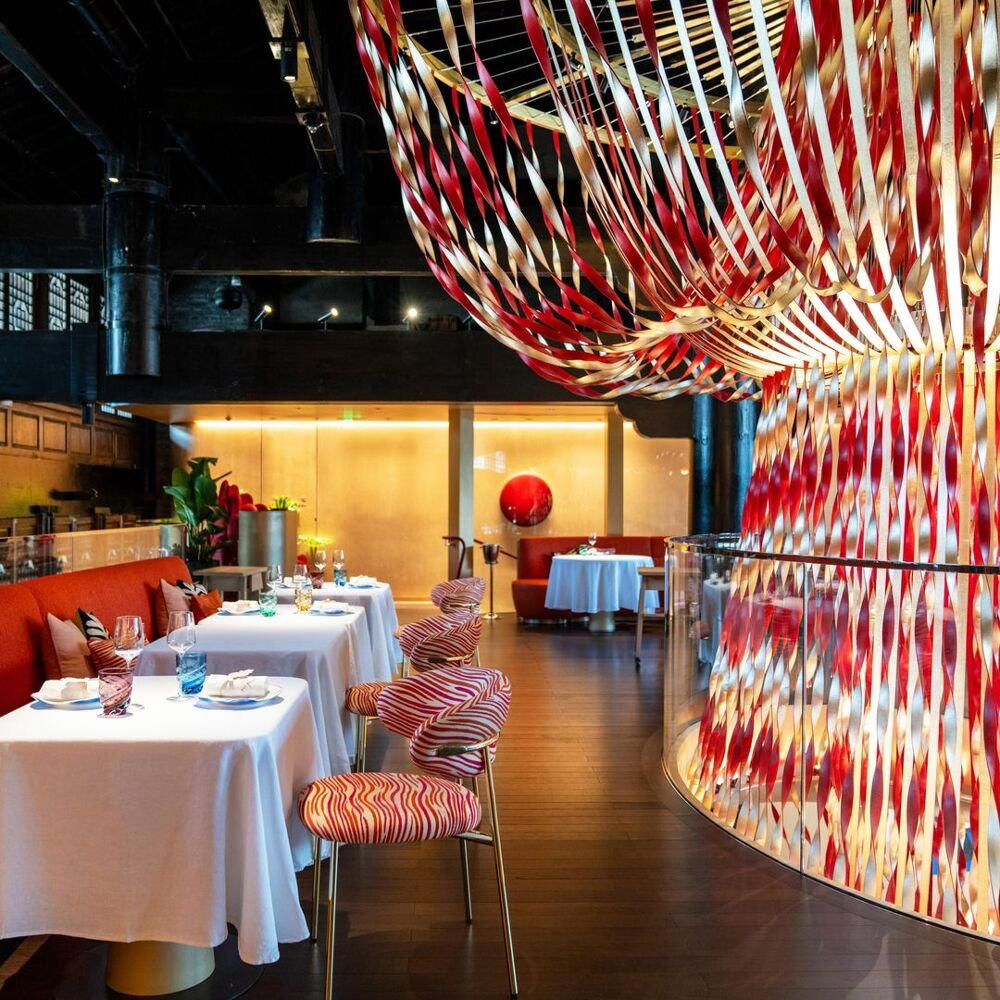
A Heritage Shell, Refilled
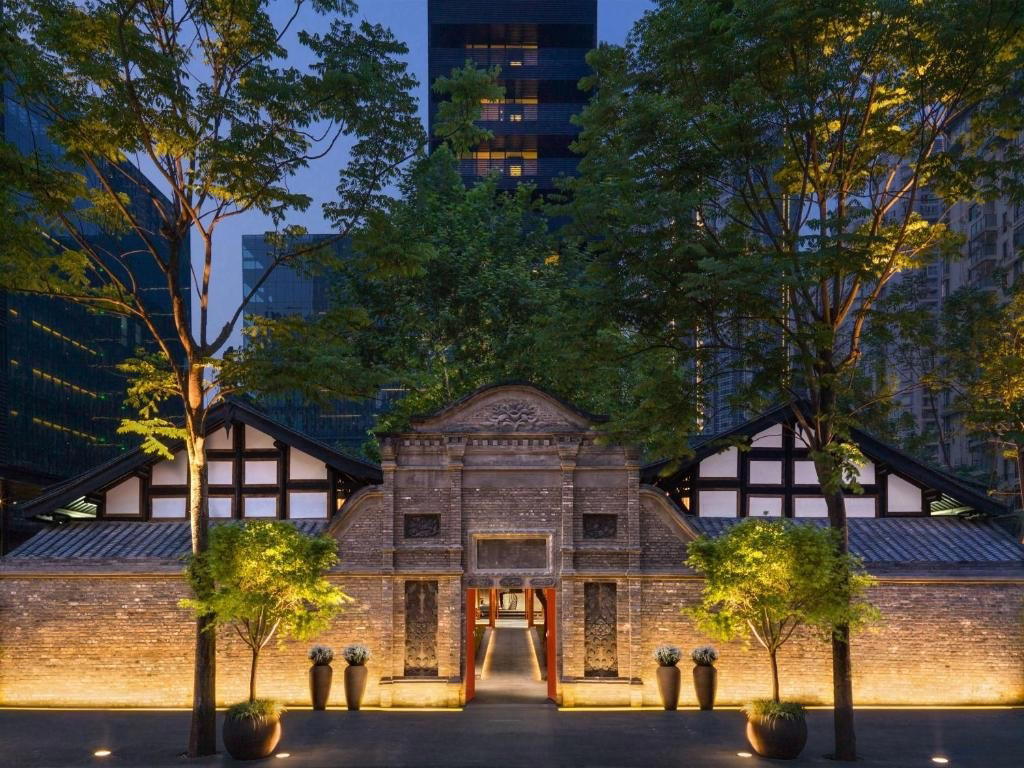
Chengdu has spent the past decade rewriting what premium dining means in a city historically defined by the intensity of its own culinary tradition. The arrival of international fine-dining formats, first as novelties and then as genuine competitors for the city's leading tables, marks a significant shift. Few addresses illustrate that evolution more precisely than The Hall, which occupies a structure built around the 1730s inside the Taikoo Li compound on Zhongsha Mao Street in Jinjiang District. The building's original brick walls and perforated wood windows were not stripped away to accommodate a modern dining room; they remained the room. That decision to retain the bones of a heritage structure rather than renovate past recognition is itself a statement about how Chengdu's premium hospitality has learned to position history as a feature rather than an obstacle.
The Hall also carries a designation that sits outside the culinary world entirely: it is the first Louis Vuitton restaurant in China. That framing matters less for what the brand implies about price or spectacle and more for what it signals about format ambition. The Louis Vuitton Maison dining concept, which operates selectively across global cities, is designed to function as an autonomous cultural programme inside a retail and cultural complex, not as a brand extension dressed up in tablecloths. In Chengdu, the execution of that model involves a tasting menu structured around European contemporary cuisine and a courtyard that the heritage building wraps around. The physical environment does significant work before a dish arrives.
European Structure, Sichuanese Logic
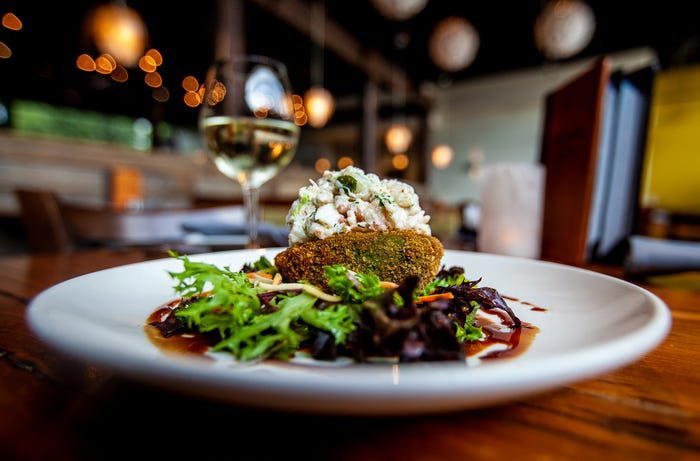
The European contemporary category in Asia's major cities has evolved considerably since the early 2010s, when the dominant model was essentially a straight transplant of French or Italian tasting-menu formats into high-end hotel rooms. The more interesting addresses that have emerged since then, and The Hall belongs to this cohort, use European structural logic as a framework while allowing local ingredient vocabularies and flavour intensities to operate inside it. Chef Leonardo Zambrino, whose formative experience spans kitchens in both Europe and Asia, runs a seasonal tasting menu where Sichuanese flavour profiles enter European preparations rather than appearing as garnish or novelty. The Italian lineage is present in the kitchen's approach, but the result is not a Sichuan-Italian fusion exercise in the conventional sense. The pairing of European technique with the particular heat, numbness, and aromatic complexity of Sichuan cuisine requires a precise calibration that collapses easily if either element dominates.
Seasonality drives the menu structure, supplemented by a short à la carte selection. That dual format, standard in European fine dining, is less common at Chengdu's upper-end Chinese tables, where the tasting format tends to be the only available route. For diners who prefer to self-select across a shorter visit, the à la carte option provides an entry point without requiring a full tasting commitment. The 2024 Michelin one-star recognition positions The Hall within a specific competitive tier in Chengdu, a city where the Guide's presence has sharpened distinctions between aspirational and substantively accomplished kitchens. Among the city's Michelin-recognised addresses, comparison with Yu Zhi Lan (Sichuan) and Xin Rong Ji (Taizhou) highlights how different the approaches to premium dining can be within the same guide and price tier: the former operates in classical Sichuan territory, the latter in refined Chinese coastal cuisine, while the restaurant represents the only address in the group proposing a European-led dialogue with local flavour.
In the broader Chinese market, European contemporary formats with Asian inflection have gained traction at several addresses. 102 House in Shanghai and Ru Yuan in Hangzhou operate in adjacent creative territory, while Zén in Singapore represents one of the region's most scrutinised examples of the genre. What distinguishes the restaurant's position within this set is its geographic placement: Chengdu is not a city with a deep infrastructure of Western fine dining, which means the audience engaging with this format here is both adventurous and acutely aware of the contrast with what surrounds it.
The Room as Context
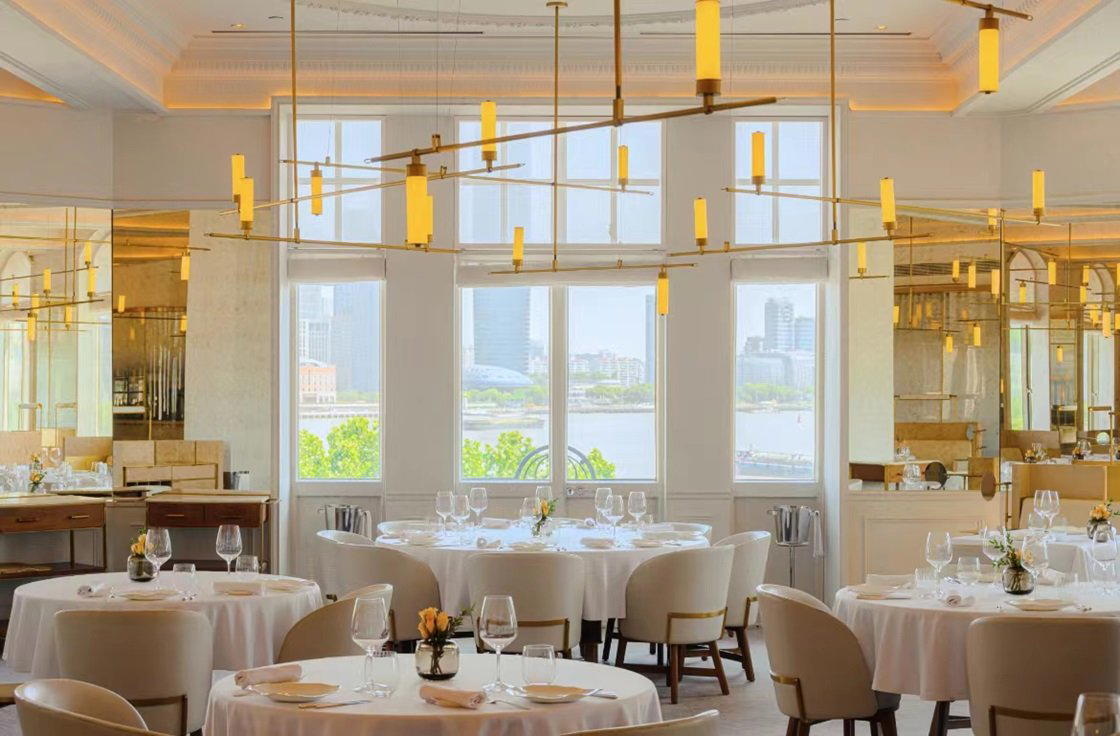
The physical environment at the restaurant is not incidental background. A circa 1730s building in a commercial district that now houses one of China's most prominent luxury retail developments creates a specific kind of friction that the design of the space has to resolve. Retaining original brick walls and perforated wood windows inside a contemporary fine-dining operation is architecturally coherent only if the food and service register at the same level of seriousness. Otherwise the heritage shell reads as decoration. The courtyard, which the building surrounds, introduces an element of outdoor spatial rhythm rare in Chengdu's fine-dining inventory, most of which operates in hotel environments or purpose-built interiors without access to open sky.
The Taikoo Li location on Zhongsha Mao Street places the restaurant within walking distance of some of Chengdu's most active commercial and cultural movement, which affects the arrival experience and the pace of the neighbourhood around the restaurant before and after a meal. For a venue operating at the ¥¥¥¥ price tier, that accessibility within a broader destination complex is notable: it allows the address to function as a dinner anchor for evenings that begin elsewhere in the development rather than requiring a dedicated cross-city journey.
Where It Sits in the City's Premium Tier
Chengdu's upper-end dining has expanded beyond Sichuan cuisine without abandoning it, and the city now sustains a group of ¥¥¥¥ addresses that approach the meal from genuinely different angles. Fang Xiang Jing (Sichuan), Fu Rong Huang (Sichuan), and Pairedd each occupy distinct positions within that tier, and a visitor with time for only one or two meals at this level should understand that the choice is not between better and worse addresses but between fundamentally different propositions. The restaurant is the argument for European structure applied to Sichuanese flavour in a space that functions as a physical document of the city's layered history. It is not competing directly with the city's classical Sichuan fine-dining rooms, even when those rooms hold equivalent Michelin recognition.
Planning a Visit
The restaurant sits on the M level of the Taikoo Li complex at 8 Zhongsha Mao Street, Jinjiang District, Chengdu. The tasting menu format, combined with the courtyard room's limited footprint relative to a standard restaurant, means that walk-in availability at peak dining hours is unlikely for the tasting-menu seats.
Cuisine and Recognition
Comparable venues nearby, for context on price, style, and recognition.
| Venue | Cuisine | Price | Awards | Notes |
|---|---|---|---|---|
| The HallThis venue — the venue you are viewing | Contemporary European with Sichuanese Influences | $$$$ | Michelin 1 Star | Not listed |
| Mi Xun Teahouse | Modern Vegetarian Sichuan Chinese | $$$ | Michelin 1 Star | Chengdushi |
| S Kitchen | Sichuan | $$$ | Michelin 1 Star | Chengdushi |
| Fang Xiang Jing | Traditional Sichuan Cuisine | $$$$ | Michelin 1 Star | Chengdushi |
| Xu's Cuisine | Sichuan Cuisine | $$$ | Michelin 1 Star | Chengdushi |
| Fu Rong Huang | Traditional Sichuan | $$ | Michelin 1 Star | Chengdushi |
Recognition history
Dated appearances from independent guides and award organizations, with the underlying list record or original source where available.
Michelin 1 Star
Michelin
Michelin 1 Star
Michelin
At a Glance
- Elegant
- Well Known
- Sophisticated
- Intimate
- Date Night
- Special Occasion
- Historic Building
- Private Dining
- Courtyard
- Local Sourcing
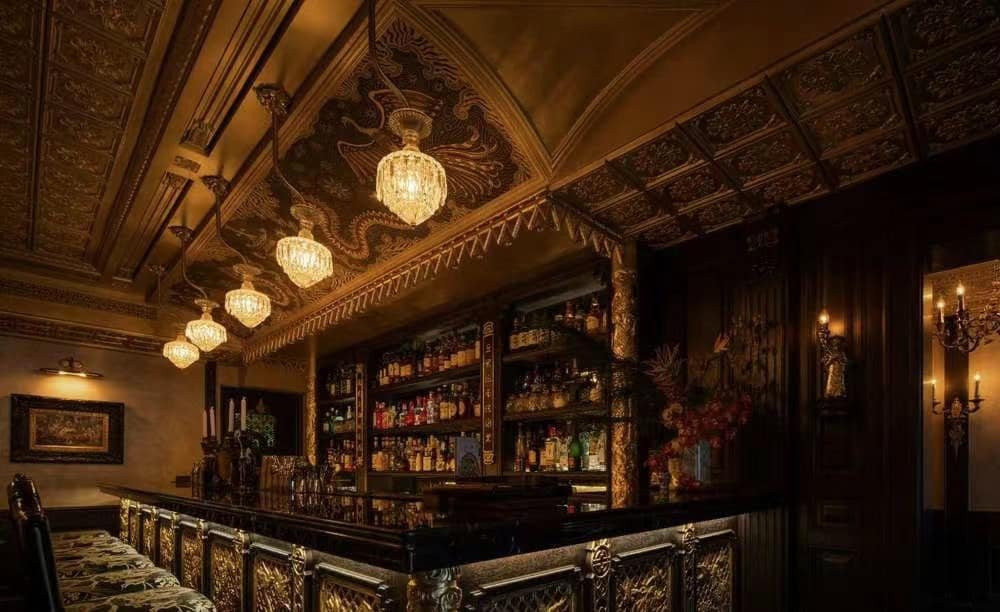
Intimate and refined, set within a historic building featuring original brick walls, perforated wood windows, and a courtyard; dimly lit with understated elegance.