On Chausseestraße in Berlin's Mitte district, CRUST Pizza occupies a city where casual dining and serious craft regularly share the same block. The address places it within reach of both neighbourhood regulars and visitors working through Berlin's broader dining scene, which ranges from Michelin-decorated tasting menus to sharp, ingredient-led casual formats.
Pearl is the En Primeur Club membership app — saves, bookings, and concierge access live there. Same editors, same standards.
- Address
- Chausseestraße 56, 10115 Berlin, Germany
- Website
- crustpizza.de
- Directions
- Get directions
 Saves & bookings on Pearl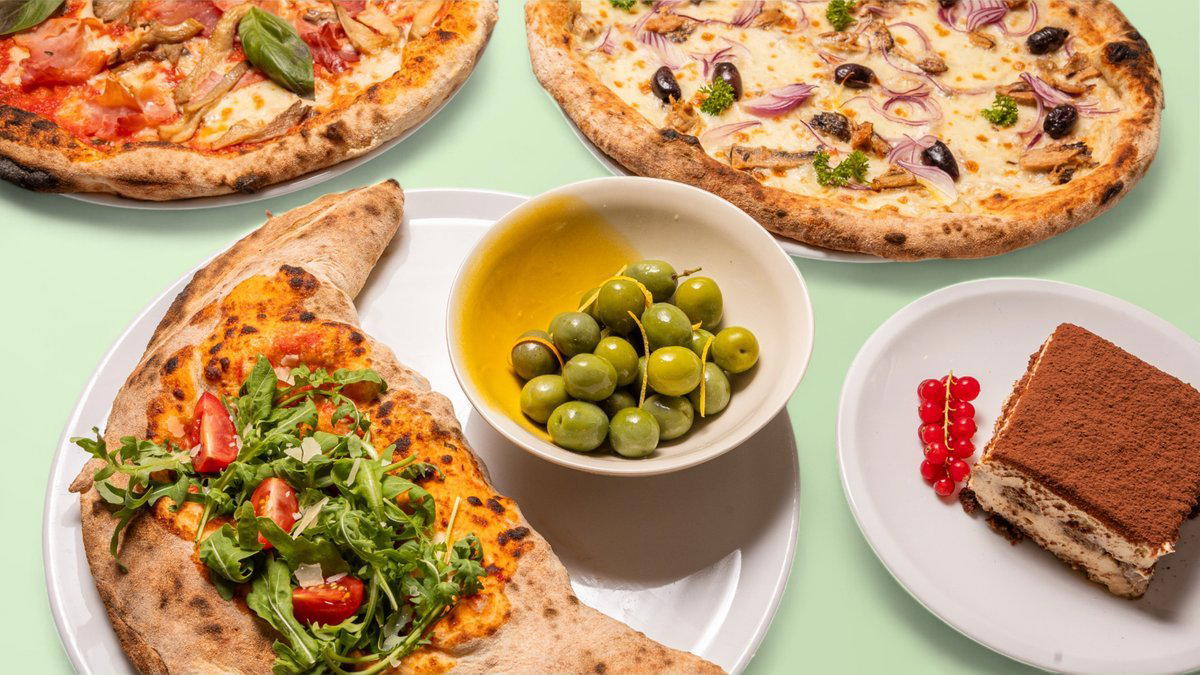
Where Berlin's Casual Dining Ambition Shows Up
Berlin has never organised itself around a single dining register. The city that houses two-Michelin-star counters like Rutz and the dessert-led precision of CODA Dessert Dining also sustains a parallel track of neighbourhood-rooted, craft-focused casual spots where the ambition is quieter but no less considered. Pizza, in this context, is not a concession to simplicity. Across European cities, the serious pizza conversation has shifted substantially over the past decade, moving from a fast-food default toward a category where fermentation times, flour provenance, and oven temperature are discussed with the same seriousness applied to bread or charcuterie. CRUST Pizza is a Neapolitan pizza restaurant at Chausseestraße 56, 10115 Berlin, Germany, with a casual dress code, reservations recommended, and an average price of about $20 per person. It sits within that broader shift.
Mitte is one of Berlin's most layered neighbourhoods. It contains government buildings, gallery clusters, and a dining corridor that runs from tourist-oriented brasseries to the kind of tightly edited rooms that require advance planning. Chausseestraße itself threads through the northern edge of Mitte toward Wedding, carrying a mix of residential and commercial addresses that keeps the street grounded even as surrounding blocks have grown more polished. A pizza operation on this stretch positions itself for both passing trade and the kind of deliberate local patronage that sustains neighbourhood dining in a city where residents move between districts with relatively little friction.
The Progression of a Pizza Meal, Taken Seriously
The tasting-progression framework that applies to a multi-course tasting menu translates usefully to the pizza format when the kitchen approaches it as a sequenced experience rather than an assembly exercise. The opening pass tends to establish the dough's character: crust texture, char distribution, and the structural integrity of the base under topping weight. These are the signals that separate a kitchen working with long fermentation and controlled hydration from one prioritising throughput. In Berlin's more focused pizza rooms, a correctly handled Neapolitan or Roman-style base will hold its structure through the final third of a slice without becoming either rigid or sodden, a technical outcome that depends on timing across the full production process, not just oven management.
The mid-meal progression typically moves through topping combinations that test the kitchen's sourcing and restraint. Restraint here is a specific technical term: the tendency in less disciplined pizza kitchens to overload toppings as a value signal works against the structural logic of the base and compresses the flavour contrast between crust, sauce, and the individual components above. Kitchens that understand this, and Berlin's better casual operations generally do, tend toward fewer, better-sourced ingredients with cleaner flavour separation. The finish of a well-constructed pizza meal often circles back to the crust itself, eaten plain or with oil, as an honest read of the dough's quality independent of its toppings.
This sequencing logic is not distinctive to fine dining formats. It applies anywhere the kitchen has thought carefully about what it is producing and why. Germany's most decorated kitchens, from Schwarzwaldstube in Baiersbronn to Aqua in Wolfsburg, operate on the same principle of intentional progression. The format differs; the underlying discipline does not.
Berlin's Casual Tier in Context
Berlin's restaurant scene distributes across price points in a way that is less stratified than Paris or London but more intentional than its reputation for cheapness suggests. The Michelin-decorated tier, which includes Nobelhart & Schmutzig, FACIL, and Restaurant Tim Raue, operates in the €€€€ bracket and requires advance booking. Below that tier, a dense layer of casual and mid-market operations competes on quality, value, and specificity of offer. Pizza occupies an interesting position within this layer: the category carries enough global familiarity that guests arrive with reference points, which means a kitchen's deviations from expectation, positive or negative, register immediately.
The strongest casual pizza operations in major European cities have converged on a few shared characteristics: sourced flour (often Italian, sometimes local heritage grain), natural or semi-natural fermentation, wood or gas deck ovens calibrated for specific crust types, and topping schemes that reference a regional tradition without being slavishly literal about it. The address in Mitte and the naming convention both signal an operator aware of how the category is being repositioned. Across Germany, the pizza conversation has developed more slowly than in the UK or Scandinavia but is catching up; cities like Munich, with venues such as JAN demonstrating the depth of the broader dining scene, provide a useful national reference point.
What to Order and How to Read the Menu
In any serious pizza room, the Margherita or its closest equivalent is the diagnostic order. It removes the variable of unusual toppings and reads directly against the kitchen's core competencies, dough quality, sauce balance, cheese selection and application temperature, and oven management. If that benchmark holds, the rest of the menu follows logically. More complex builds with cured meats, vegetables, or non-standard cheese applications only justify the additional ingredients if the base is already working.
Secondary orders worth attention in this category include any fried or baked starter that uses the same dough as the pizza base, a useful cross-reference for fermentation character, and the simplest dessert on the menu, which tends to reveal how seriously the kitchen approaches the full experience rather than concentrating effort solely on the headline product. For a deeper read on how Berlin's most considered kitchens handle the full meal arc, the programmes at CODA Dessert Dining provide useful comparison points.
Germany's Dining Scene: The Broader Map
Situating CRUST Pizza within Germany's wider restaurant geography requires acknowledging how concentrated serious dining remains outside Berlin. The country's Michelin three-star contingent, including Vendôme in Bergisch Gladbach, Victor's Fine Dining by Christian Bau in Perl, ES:SENZ in Grassau, Schanz in Piesport, Waldhotel Sonnora in Dreis, and Restaurant Haerlin in Hamburg, sits largely outside the capital. Berlin's dining identity is consequently less dependent on fine-dining credentials and more shaped by the density and quality of its casual and mid-market tier. A well-executed neighbourhood pizza room contributes to that identity in a way that would read differently in a city where the casual sector is more homogenous. For international reference points in the pizza-adjacent craft-casual category, operations like Lazy Bear in San Francisco and the broader precision of Le Bernardin in New York City illustrate how seriously the American market takes the full craft-dining spectrum, from casual to formal. Similarly, Bagatelle in Trier offers a useful domestic comparison for operators working at the intersection of regional identity and broader culinary ambition.
Know Before You Go
- Address: Chausseestraße 56, 10115 Berlin, Germany
- Neighbourhood: Mitte, northern edge toward Wedding
- Phone: Not currently listed, check directly on arrival
- Website: Not confirmed, verify current hours and booking options before visiting
- Booking: Walk-in availability not confirmed; arriving early in service is advisable for casual pizza rooms in busy Mitte locations
- Pricing: Expect casual-tier Berlin pricing, typically around $20 per person.
Peers in This Market
Comparable venues nearby, for context on price, style, and recognition.
| Venue | Cuisine | Price | Notes |
|---|---|---|---|
| CRUST PizzaThis venue — the venue you are viewing | Neapolitan Pizza | $$ | Not listed |
| Osteria Centrale | Classic Tuscan Italian | $$ | Charlottenburg |
| Sotto | Vegetarian Italian Pizzeria | $$ | Gesundbrunnen |
| Coccodrillo | Authentic Italian Trattoria with Neapolitan Pizza | $$ | Scheunenviertel |
| Pizza Nostra | Authentic Neapolitan Pizza | $$ | Prenzlauer Berg |
| Zia Maria | Roman-Style Pizza al Taglio | $$ | Prenzlauer Berg |
Continue exploring
More in Berlin
Restaurants in Berlin
Browse all →
Bars in Berlin
Browse all →
Hotels in Berlin
Browse all →

At a Glance
- Casual
- Cozy
- Casual Hangout
- Open Kitchen
Current opening hours
- Monday
- 4–10 PM
- Tuesday
- 4–10 PM
- Wednesday
- 4–10 PM
- Thursday
- 4–10 PM
- Friday
- 4–10 PM
- Saturday
- 12–10 PM
- Sunday
- 12–10 PM
Hours can change for holidays and private events. Last verified .
Casual dining spot with serious pizza focus in a quiet Northern Mitte location.