Pizza Nostra occupies a corner address on Lychener Strasse in Prenzlauer Berg, one of Berlin's most settled neighbourhood dining corridors. The address places it squarely in a district where residents eat out with regularity and where casual quality tends to outperform occasion-driven spectacle. For visitors tracking Berlin's mid-register pizza scene, Lychener Strasse 2 is the postcode to know.
Pearl is the En Primeur Club membership app — saves, bookings, and concierge access live there. Same editors, same standards.
- Address
- Lychener Str. 2, 10437 Berlin, Germany
- Phone
- +493041717000
- Website
- pizzanostra.de
- Directions
- Get directions
 Saves & bookings on Pearl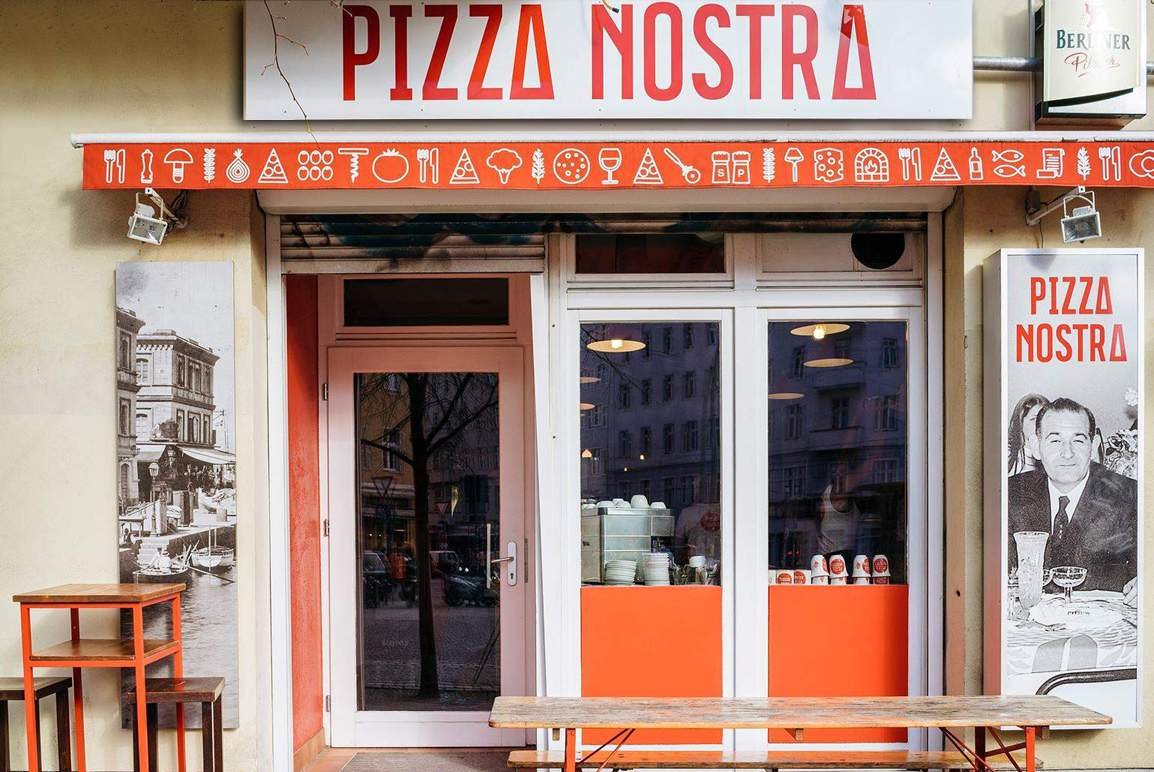
Prenzlauer Berg and the Neighbourhood Pizza Ritual
There is a particular kind of restaurant that only makes sense in a neighbourhood that has fully grown up. Not the experimental outpost testing a concept, not the destination address drawing crowds from across the city, but the place that a street genuinely depends on. Prenzlauer Berg, the residential district in Berlin's northeast, has been producing this category of restaurant for two decades. Lychener Strasse, running through the heart of the Helmholtzplatz quarter, is one of the avenues where that pattern is most legible. Pizza Nostra sits at number 2, at the corner where the street begins.
Rutz, Nobelhart & Schmutzig, or FACIL, the neighbourhood pizza counter operates on entirely different logic. The meal is not structured around progression, ceremony, or the signal value of a reservation. It is structured around repetition: the same table, the same order, the same rhythm of a Tuesday evening. That ritual is what Pizza Nostra is designed to sustain. Berlin's broader restaurant scene runs from tasting-menu formalism to this kind of settled neighbourhood utility, and both ends of that spectrum matter.
The Corner Address and What It Implies
Lychener Strasse 2 is a corner position, which in Prenzlauer Berg carries specific meaning. Corner restaurants in this district tend to anchor blocks, becoming reference points rather than destinations to seek out. Foot traffic arrives as much by habit as by intention. Parents walking back from Helmholtzplatz, residents finishing a long workday on the U2 line, small groups looking for somewhere that does not require a decision: a corner address absorbs all of that without effort.
This geography shapes the dining ritual at Pizza Nostra before anyone has sat down. There is no approach that signals occasion. The street is residential, lined with pre-war apartment buildings in various states of careful renovation, the kind of block where the ground floor is always commercial and the upper floors are always someone's home. The restaurant exists in that fabric rather than apart from it.
For context on how neighbourhood addresses in Berlin compare to those in other German cities, properties like Restaurant Haerlin in Hamburg or JAN in Munich anchor different kinds of streets, where occasion and formality do most of the organisational work. The Prenzlauer Berg model is more European in the everyday sense: a restaurant that earns its keep by being reliable at a granular, local level.
Pizza as a Dining Format in Berlin
Berlin arrived at serious pizza relatively late compared to cities with larger Italian immigrant communities. The category grew meaningfully in the 2010s, when Neapolitan technique began travelling beyond Naples and Rome with some consistency, and a generation of Berlin restaurateurs who had spent time in Italy returned with working knowledge of fermentation schedules, oven temperatures, and flour grades. The result is a city where good pizza now exists across several districts, though the quality is uneven and the price-to-quality ratio varies considerably by neighbourhood.
Prenzlauer Berg has always skewed toward the mid-register of this category: not the stripped-back, standing-room-only format of particularly austere Neapolitan purists, and not the occasion-dining context of addresses that treat pizza as a fine-dining reference. The neighbourhood sits in between, and that position suits its demographics. Families, young professionals, and long-term residents share the same blocks and often the same restaurants, which means a pizza venue needs to work across a wide range of expectations without overcorrecting toward any single one.
Germany's more formal dining addresses, from Waldhotel Sonnora in Dreis to Victor's Fine Dining by Christian Bau in Perl, operate under entirely different service and pacing conventions. The neighbourhood pizza restaurant answers to none of those conventions. Its discipline is consistency across a hundred covers on a Friday, not refinement across twelve courses.
How the Meal Tends to Work Here
At a Prenzlauer Berg pizza address, the ritual has its own internal logic. Groups arrive without much preamble. The order is placed early, often before drinks have been decided. The pizza arrives whole rather than pre-sliced in many cases, and the table negotiates the cutting. Conversation overlaps with eating in a way that would be unusual in a tasting-menu format. The tempo is set by appetite rather than by a kitchen's pacing decisions.
This informality is a feature rather than a gap in service. It is the specific quality that neighbourhood restaurants in this district have maintained even as the area has become wealthier and more international. Prenzlauer Berg is not a cheap neighbourhood by Berlin standards, but its restaurants have largely resisted the shift toward theatricality that has affected parts of Mitte and Kreuzberg. The pizza ritual here remains close to what it was when the quarter was first being settled by the creative class in the early 2000s: direct, unglamorous, and reliable.
For readers whose Berlin visit includes both the neighbourhood register and the serious tasting-menu tier, the contrast is instructive. CODA Dessert Dining and Restaurant Tim Raue represent the city's formal ambition. Pizza Nostra represents something the city is equally good at: the kind of place that works without requiring much from you except arriving.
Placing Pizza Nostra in the Broader German Pizza Conversation
Germany's pizza scene beyond Berlin has its own geography. Cities like Munich and Hamburg have developed strong neighbourhood pizza cultures of their own, and the quality threshold has risen considerably across the country over the past decade. Addresses like Bagatelle in Trier and Schanz in Piesport represent the formal dining end of German hospitality in smaller cities, a different competitive set from a Berlin neighbourhood pizza address. International references, from Le Bernardin in New York City to Atomix, establish just how wide the spectrum of what constitutes a restaurant has become. The restaurant occupies its position without apology and without ambition to be elsewhere in that spectrum.
Other German fine-dining benchmarks including Aqua in Wolfsburg, Schwarzwaldstube in Baiersbronn, ES:SENZ in Grassau, and Vendôme in Bergisch Gladbach all operate in a register where every element of the meal is orchestrated in advance. That is not the model here, and the distinction matters for how a visitor should calibrate expectations before arriving on Lychener Strasse.
The restaurant is located at Lychener Str. 2, 10437 Berlin, in the Helmholtzplatz area of Prenzlauer Berg.
Similar Picks
Comparable venues nearby, for context on price, style, and recognition.
| Venue | Cuisine | Price | Notes |
|---|---|---|---|
| Pizza NostraThis venue — the venue you are viewing | Authentic Neapolitan Pizza | $$ | Not listed |
| Zia Maria | Roman-Style Pizza al Taglio | $$ | Prenzlauer Berg |
| Mamida | Modern Sourdough Pizza | $$ | Prenzlauer Berg |
| Prometeo | Authentic Neapolitan Pizza | $$ | Schoneberg |
| Gazzo | Neapolitan Sourdough Pizza | $$ | Neukolln |
| Pasta & Vino | Authentic Italian Pasta & Antipasti | $$ | Prenzlauer Berg |
Continue exploring
More in Berlin
Restaurants in Berlin
Browse all →
Bars in Berlin
Browse all →
Hotels in Berlin
Browse all →
Wineries in Berlin
Browse all →
At a Glance
- Cozy
- Rustic
- Classic
- Casual Hangout
- Family
- Open Kitchen
Current opening hours
- Monday
- 12–11 PM
- Tuesday
- 12–11 PM
- Wednesday
- 12–11 PM
- Thursday
- 12–11 PM
- Friday
- 12–11 PM
- Saturday
- 12–11 PM
- Sunday
- 12–11 PM
Hours can change for holidays and private events. Last verified .
Cozy southern Italian interior with warm welcoming atmosphere, well-suited for escaping the cold in winter.