Our verdict
Criss Studio Polish-Jamaican occupies a specific and rarely attempted culinary position in Hamburg's Schanzenviertel: the collision of Central European technique and Caribbean flavour logic. Housed at Moorkamp 6 in the city's most restless creative district, it represents the kind of cross-cultural kitchen experiment that Hamburg's internationalist dining scene has quietly been building toward for years.

Pearl is the En Primeur Club membership app — saves, bookings, and concierge access live there. Same editors, same standards.
- Address
- Moorkamp 6, 20357 Hamburg, Germany
- Phone
- +494036886014
- Hours
- Mon–Wed ClosedThu–Sat 6:30–11 PMSun Closed
- Website
- criss.studio
- Directions
- Get directions
- Booking
- Book on the venue's website
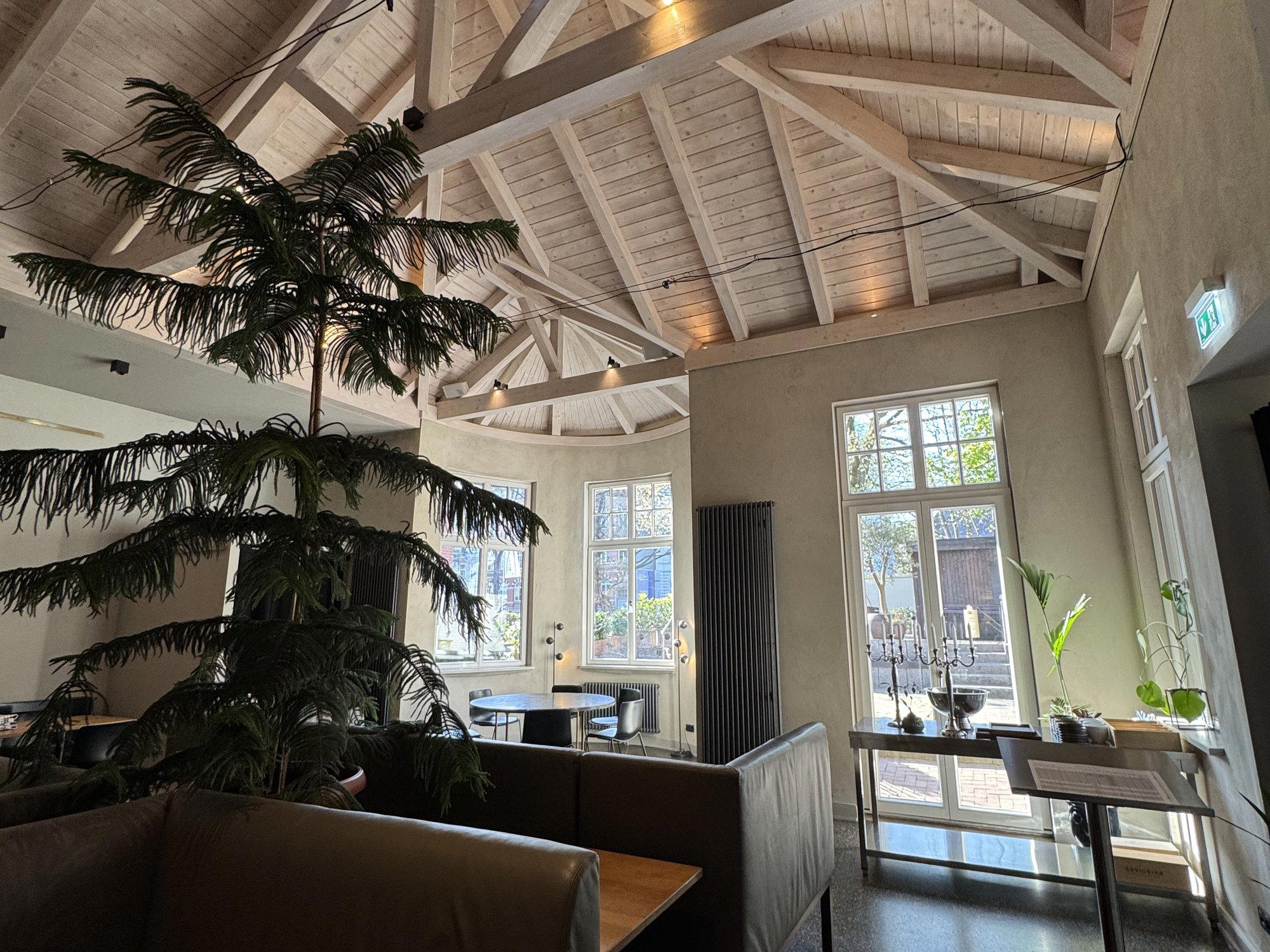
Where Central European Precision Meets Caribbean Heat
Hamburg's Schanzenviertel has long operated as the city's testing ground for culinary ideas that don't fit neatly into established categories. The neighbourhood around Moorkamp runs independent, unconventional, and resistant to the kind of formula dining that dominates the waterfront. It is in this context that a Polish-Jamaican kitchen makes a certain sense: the district has the appetite for it, and the city's port heritage gives its residents a baseline familiarity with cuisines arriving from far outside German borders.
Criss Studio Polish-Jamaican, at Moorkamp 6 in the 20357 postcode, sits inside that tradition of Schanzenviertel experimentation. The address alone signals something about the intended audience: this is not a restaurant positioning itself against Hamburg's formal fine-dining tier, where venues like Restaurant Haerlin (Creative French) or The Table Kevin Fehling operate at €€€€ price points with Michelin recognition. The Studio model, by name and by location, implies something closer to a workshop than a theatre.
The Logic of a Polish-Jamaican Kitchen
Cross-cultural cooking at the serious end of the market has moved well beyond surface-level fusion. The restaurants that have made this approach stick — globally and within Germany — tend to do so through genuine technical discipline applied to ingredients and flavour structures from two distinct traditions, rather than through decorative borrowing. Poland and Jamaica represent an unusually challenging pairing in this respect, because their culinary DNA diverges on nearly every axis: fermentation and earthiness on one side, allspice heat and tropical acidity on the other; rye and root vegetables against plantain and scotch bonnet; a cuisine shaped by cold-climate preservation against one formed around abundance and spice.
That tension is precisely what makes the concept worth paying attention to. Germany has produced some of the most technically rigorous cross-cultural kitchens in Europe. CODA Dessert Dining in Berlin has demonstrated that radical format experimentation can earn Michelin recognition when the underlying technique is coherent. Across the country, venues from JAN in Munich to Schwarzwaldstube in Baiersbronn show that German fine dining has the structural confidence to absorb external influence without losing rigour. The question at a studio-scale Polish-Jamaican operation is whether that same discipline applies at a more informal register.
Imported Methods, Indigenous Flavours
The editorial angle that matters most for understanding what a Polish-Jamaican kitchen can achieve is the intersection of technique and ingredient origin. Polish cooking brings a tradition of pickling, smoking, and slow braising that has direct analogues in Jamaican jerk preparation and the long cook traditions of Caribbean one-pot dishes. Sauerkraut and fermented pepper sauces share an underlying logic. Smoked pork runs through both culinary histories. Dumplings, pierogi on one side, festival and dumpling-style breads on the other, represent parallel carbohydrate traditions developed independently across different climates.
Where the kitchens diverge most sharply is in spice architecture and acidity. Jamaican cooking deploys allspice, scotch bonnet, and thyme in combinations that have no equivalent in Central European tradition. Applying those spice structures to ingredients more commonly found in a Polish larder, preserved cabbage, buckwheat, beets, or cured fish, creates a genuinely novel flavour logic rather than a simple swap of garnishes. The leading cross-cultural kitchens at this scale tend to work this seam carefully, using imported technique to unlock indigenous ingredients in ways that neither tradition would have reached alone. This is the model that places like Lazy Bear in San Francisco have applied to American ingredients with structured, tasting-format results.
Hamburg's Position in Germany's Creative Dining Scene
Hamburg does not sit at the top of Germany's Michelin geography, that distinction belongs to clusters in the Black Forest, Rhineland-Palatinate, and Bavaria, where venues like Waldhotel Sonnora in Dreis, Vendôme in Bergisch Gladbach, and Victor's Fine Dining by christian bau in Perl represent the country's most formally recognised cooking. Hamburg's strength lies elsewhere: in its tolerance for format risk and its genuinely international resident base, which creates demand for cuisines and combinations that more homogenous German cities tend not to support.
Within Hamburg itself, the creative dining tier is anchored by Michelin-recognised addresses. 100/200 Kitchen and bianc both operate in the modern Mediterranean and creative registers at €€€€. Lakeside anchors the German lakeside tradition at the same price tier. Criss Studio operates at a different register altogether, the studio format implies lower price points, shorter menus, and an appetite for iteration that more formal addresses cannot afford. This is not a criticism. Some of the most generative cooking in any city happens at mid-format scale, where the kitchen has room to test ideas without the weight of a full tasting-menu apparatus.
For readers who want to cross-reference what serious creative cooking looks like at the higher end of the Hamburg market before visiting a studio-scale operation, the full Hamburg restaurants guide maps the complete range. Further afield, Aqua in Wolfsburg, Schanz in Piesport, Bagatelle in Trier, and ES:SENZ in Grassau illustrate how Germany's regional creative dining is distributed well outside major cities. At the global scale, the cross-cultural technique tradition Criss Studio is working within has international precedent at addresses like Le Bernardin in New York City, where imported French technique applied to a single product category has defined an entire restaurant's identity for decades.
Know Before You Go
Is a Polish-Jamaican restaurant a common concept in Germany, and what makes Hamburg a logical home for it?
Polish-Jamaican kitchens are rare at any scale in Germany and effectively absent as a named category in the country's restaurant listings. Hamburg makes a more logical home for the concept than most German cities because its port history has produced both a large Polish community in the wider metropolitan area and sustained Caribbean cultural presence, giving the kitchen a resident audience with some baseline familiarity with both traditions. The Schanzenviertel specifically has supported unconventional culinary formats for decades, and its dining public has a higher tolerance for genre-crossing menus than the more formal quarters of the city.
Frequently asked questions
Where is Criss Studio Polish-Jamaican in Hamburg?
Criss Studio Polish-Jamaican is located at Moorkamp 6, 20357 Hamburg, Germany, Hamburg.
Is a Polish-Jamaican restaurant a rare concept, and why does Hamburg specifically make sense as its location?
Polish-Jamaican kitchens are effectively absent as a named category across Germany's restaurant listings, making Criss Studio an unusual proposition in the country's dining scene. Hamburg's case for hosting it is grounded in geography and demographics: the city holds one of Germany's largest Polish-origin communities and has historical port connections to the Caribbean that have shaped its food supply chains for generations. The Schanzenviertel neighbourhood, where Criss Studio operates on Moorkamp 6, has consistently been the district where Hamburg absorbs and tests culinary ideas that fall outside established categories.
What's the best thing to order at Criss Studio Polish-Jamaican?
Without a confirmed fixed menu on record, the practical move is to ask the kitchen directly what is running that session. At a studio-format restaurant in Hamburg's Schanzenviertel, the menu tends to shift with availability and creative direction. The concept's logic points toward dishes where Polish structural technique and Jamaican seasoning tradition are working in the same direction, rather than sitting side by side on the plate.
Do they take walk-ins at Criss Studio Polish-Jamaican?
Studio-format restaurants in Hamburg's Schanzenviertel typically run limited covers and session-based seatings, which makes advance contact the safer approach.
What's Criss Studio Polish-Jamaican best at?
The concept's clearest editorial strength is the coherence of the premise: Polish and Jamaican culinary traditions share more structural common ground than the pairing initially suggests, with fermentation, smoke, and root-vegetable density running through both. In Hamburg, a city with a substantial Polish community and a long port history connecting it to Caribbean trade routes, this particular cross-cultural kitchen has more local logic than it would in most German cities.
Can Criss Studio Polish-Jamaican adjust for dietary needs?
The most direct route is to arrive at Moorkamp 6 and raise requirements with the kitchen before the session begins. Studio-format restaurants with small cover counts are generally better positioned to adapt than larger operations, though this cannot be guaranteed here.
Style and Standing
Comparable venues nearby, for context on price, style, and recognition.
| Venue | Cuisine | Price | Awards | Notes |
|---|---|---|---|---|
| Criss Studio Polish-JamaicanThis venue — the venue you are viewing | Polish-Jamaican Fusion | $150–200 | Not listed | Not listed |
| Der erdbeerfressende Drache | Modern Fusion Small Plates Omakase | Not listed | Not listed | Rotherbaum |
| TamTam | Italo-American Food Court | $20–30 | Not listed | Neustadt |
| MASH Hamburg | Modern Latin American | $30–50 | Michelin Plate | Altona-Altstadt |
| east | Modern Pan-Asian Fusion | $50–100 | Michelin Plate | St. Pauli |
| LIMON | Modern Seafood Restaurant | $50–100 | Not listed | Barmbek |
Continue exploring
More in Hamburg
Restaurants in Hamburg
Browse all →
Bars in Hamburg
Browse all →

Hotels in Hamburg
Browse all →
Wineries in Hamburg
Browse all →
Details
- Modern
- Trendy
- Sophisticated
- Intimate
- Special Occasion
- Date Night
- Open Kitchen
- Local Sourcing
- Tasting Menu
Current opening hours
- Monday
- Closed
- Tuesday
- Closed
- Wednesday
- Closed
- Thursday
- 6:30–11 PM
- Friday
- 6:30–11 PM
- Saturday
- 6:30–11 PM
- Sunday
- Closed
Hours can change for holidays and private events. Last verified .
Intimate villa-like setting with sophisticated, modern atmosphere focused on culinary storytelling.