Our verdict
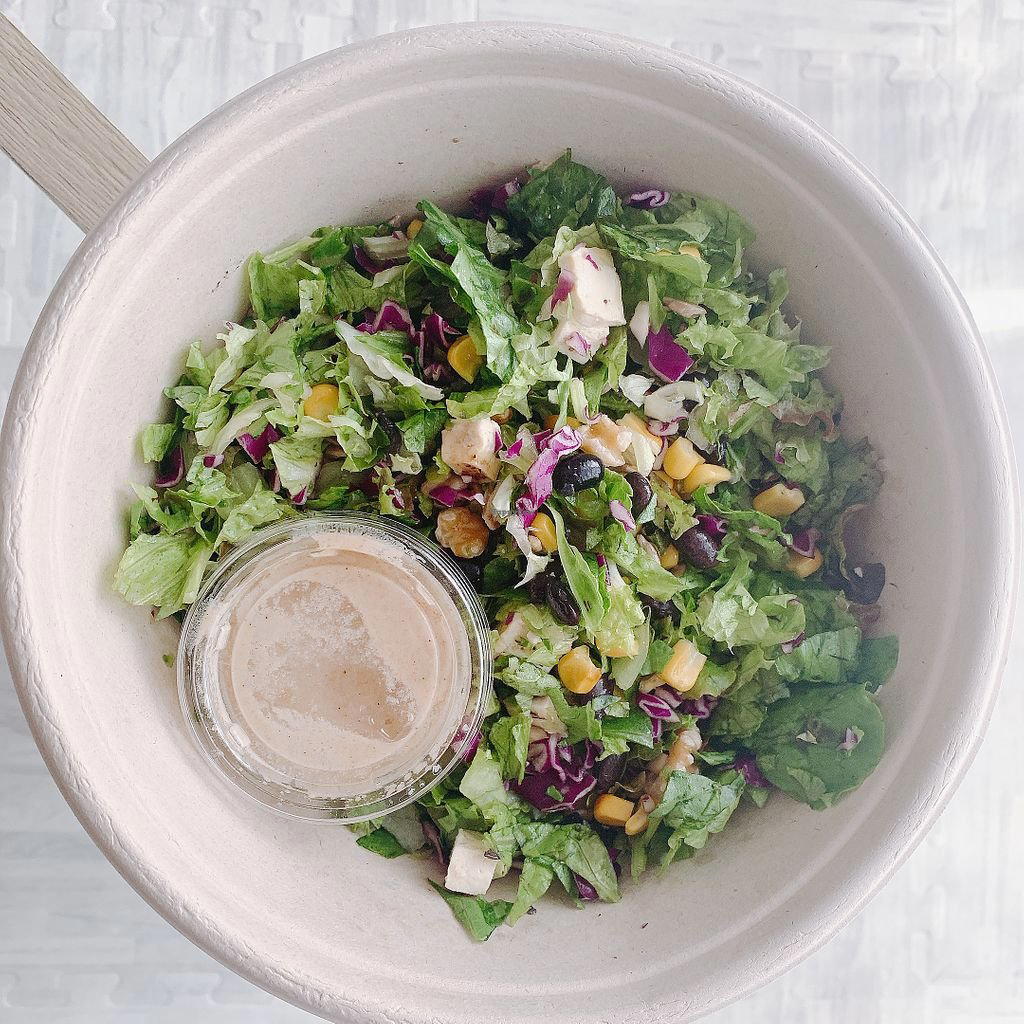
In Azabu-Juban, one of Tokyo's more residential pockets south of Roppongi, Crisp Salad Works occupies a ground-floor address on a neighbourhood that has long supported a mix of everyday dining and international residents. The concept sits within Tokyo's growing fast-casual health segment, where build-your-own salad formats have carved a steady niche between convenience-store bento culture and the city's formal restaurant tiers.

Pearl is the En Primeur Club membership app, where members save venues, book tables and use the concierge.
Azabu-Juban and the Slow Rise of Tokyo's Health-Casual Dining Scene
Tokyo's dining culture is frequently discussed at its extremes: the omakase counters of Ginza, the kaiseki rooms of Akasaka, the French kitchens operating at a level that competes with Paris rather than just Japan. But the city's mid-register has shifted considerably over the past decade, and nowhere is that shift more visible than in neighbourhoods like Azabu-Juban, where a long-settled international community has sustained demand for formats that prioritise lightness, speed, and dietary transparency over ceremony. Crisp Salad Works, operating from a ground-floor address at 4 Chome-1-1 in Azabu-Juban, Minato City, sits within that evolution.
The build-your-own salad format that Crisp Salad Works operates within is not a Tokyo invention, but its adoption here reflects something specific about how Tokyo's fast-casual tier has matured. Where the early 2010s saw the city's health-leaning restaurants largely confined to upscale wellness concepts or department-store basement offerings, the mid-decade period brought a wave of counter-service formats that translated the American salad-bar model into a more curated, ingredient-led proposition. That wave has since consolidated. Operators who survived did so by refining their sourcing logic, tightening their format, and locating themselves in neighbourhoods where the customer base could sustain the price point above a convenience-store lunch but below a sit-down bistro.
How the Category Has Changed Around It
The evolution of fast-casual health dining in Tokyo tracks closely with broader changes in how the city's younger professional class eats during the working week. Convenience-store salads improved dramatically through the 2010s, compressing the lower end of the market. Simultaneously, the appetite for ingredient transparency and dietary control expanded upward, creating room for operators willing to let customers assemble their own plates from a base selection. Crisp Salad Works entered and developed within that opening.
What distinguishes the surviving operators in this segment from those that retreated is a willingness to treat the salad not as a side category but as a primary format deserving the same sourcing rigour applied to ramen broth or sushi rice. Tokyo's food culture, even at the casual end, does not forgive indifference to ingredient quality for long. The neighbourhoods that sustain these concepts, Azabu-Juban among them, contain a customer base with access to comparison points across multiple cuisines and formats, including international ones. That context raises the implicit standard.
For reference on how Tokyo's formal dining tier is structured at the other end of the spectrum, the EP Club guide covers restaurants including Harutaka, L'Effervescence, RyuGin, Sézanne, and Crony, all operating at the ¥¥¥¥ tier where tasting menus and multi-hour formats define the experience. Crisp Salad Works occupies a different layer of the city's eating life entirely, one that speaks to daily habit rather than occasion dining.
Azabu-Juban as a Neighbourhood Context
Azabu-Juban deserves attention as a location in its own right. The district sits roughly between the embassies and luxury residential towers of Minato and the denser commercial activity of Roppongi, with its own covered shopping street, a cluster of long-standing small restaurants, and a summer festival that draws from across the city. The neighbourhood's character is shaped by decades of foreign diplomatic and business residency, which has created a local dining economy that runs parallel to Tokyo's tourist circuits. Operators here are not primarily selling to visitors; they are selling to people who eat in the neighbourhood regularly.
That regularity matters for a concept like Crisp Salad Works. A build-your-own format sustains itself through repeat visits more naturally than through one-off discovery. The Azabu-Juban address positions the concept for exactly that pattern: accessible from the Azabu-Juban subway station on the Namboku and Oedo lines, embedded in a neighbourhood where working professionals, international residents, and returning locals form the core customer base rather than the incidental one.
Where It Sits Against Japan's Broader Restaurant Conversation
Japan's restaurant culture extends well beyond Tokyo, and the city's fast-casual health segment should be understood against that wider backdrop. The country supports deeply regional food traditions, from the kaiseki refinement of Gion Sasaki in Kyoto to the ingredient-driven intensity of HAJIME in Osaka, from the localist precision of akordu in Nara to the regional confidence of Goh in Fukuoka. Further from the major cities, restaurants like Abon in Ashiya, affetto akita in Akita, Aji Arai in Oita, Ajidocoro in Yubari District, Akakichi in Imabari, and aki nagao in Sapporo demonstrate how Japanese dining culture values specificity at every register, not only at the prestige end. The fast-casual health format, when done with similar commitment to sourcing and format discipline, operates within that same cultural logic.
Internationally, the build-your-own health format has been tested at scale in cities like New York, where formal dining institutions such as Le Bernardin and more format-experimental operations like Lazy Bear in San Francisco represent the high end of the market. The fast-casual tier in those cities has informed the Tokyo conversation without directly shaping it. Tokyo operators have adapted the format to local eating rhythms, which favour speed without sacrificing quality signals.
For a fuller picture of how Tokyo's restaurant scene is structured across tiers and cuisines, the EP Club Tokyo restaurants guide covers the range from omakase and kaiseki to the neighbourhood formats that define everyday eating in districts like Azabu-Juban.
Know Before You Go
Address: 4 Chome-1-1 Azabujuban, Minato City, Tokyo, Japan (ground floor, 1F)
Nearest Station: Azabu-Juban Station (Namboku Line / Oedo Line)
Format: Counter-service, build-your-own salad
Reservations: Not applicable for counter-service format
Price tier: Mid-range fast casual; above convenience-store, below sit-down bistro
Ideal time to visit: Midday on weekdays sees the highest footfall from local workers; arriving slightly before or after the noon hour typically means shorter queue times
Phone / Website:
Frequently asked questions
What is the vibe at Crisp Salad Works?
The atmosphere follows the conventions of Tokyo's evolved fast-casual health segment: counter-service efficiency, a format designed for solo and small-group diners eating quickly, and a neighbourhood setting in Azabu-Juban that draws working professionals and local residents rather than tourists. It sits at a different register from the city's formal dining rooms, including the ¥¥¥¥ omakase and kaiseki operations reviewed elsewhere in the EP Club Tokyo guide.
What is the signature dish at Crisp Salad Works?
Crisp Salad Works operates within the build-your-own salad format, where the customer assembles their plate from a selection of bases, proteins, toppings, and dressings rather than ordering a fixed signature item. The format places emphasis on ingredient selection and daily freshness over any single dish.
Do I need a reservation at Crisp Salad Works?
Counter-service fast-casual operations of this type do not operate a reservation system. If price and award tier are your primary decision criteria, note that Crisp Salad Works sits below the formal dining layer reviewed on EP Club, where multi-week booking windows are standard at Michelin-recognised counters. For this format in Azabu-Juban, walk-in at off-peak hours is the practical approach.
Is Crisp Salad Works suitable for visitors with dietary restrictions?
The build-your-own format that defines this category of Tokyo fast-casual is, by design, more accommodating of dietary customisation than fixed-menu restaurants. In Tokyo's health-casual segment, operators typically allow customers to control protein, dressing, and topping choices to match dietary needs.
Similar Picks
Comparable venues nearby, for context on price, style, and recognition.
| Venue | Cuisine | Price | Awards | Notes |
|---|---|---|---|---|
| CRISP SALAD WORKSThis venue (the venue you are viewing) | New York-Style Chopped Salads | $10–20 | Not listed | Not listed |
| crisscross | American-leaning All-Day Cafe | $20–30 | Tabelog 100 #77 | Minato |
| OVERWHELM HAMBURGER & BAR STAND | Gourmet Hamburger & Bar | $10–20 | Tabelog 100 #28 | Meguro |
| Majo no Chiisana Mori no Hamburger | Organic Hamburger & Cafe | $20–30 | Tabelog 100 #73 | Meguro |
| BOSSA BURGER | Classic American-style Burgers & Bar | $20–30 | Tabelog 100 #67 | Adachi |
| ババ・ガンプ・シュリンプ 東京店 | American Seafood - Shrimp Specialists | $30–50 | Not listed | Bunkyō |