Tabelog 100 #67
Our verdict
Tokyo’s burger scene has moved well beyond imported Americana, with small rooms treating the format as a compact dining ritual rather than fast food. BOSSA BURGER, selected for Tabelog Hamburger 100 in 2026, belongs to that tighter specialist bracket in Kita-Senju: a 10-seat hamburger, dining bar, and bar hybrid where the meal reads as deliberate, modestly priced, and highly local.

Pearl is the En Primeur Club membership app, where members save venues, book tables and use the concierge.
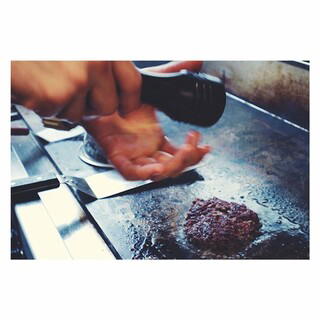
A serious Tokyo burger shop is rarely theatrical. The signal is scale: a compact room, short grill-to-table rhythm, and diners treating a hamburger as a composed plate, not convenience. In Kita-Senju, where station traffic, old shopping streets, casual bars, and destination eating overlap without Ginza polish or Shinjuku density, the burger becomes a meal with etiquette: order, wait, eat while structure holds, and do not mistake informality for lack of craft.
BOSSA BURGER fits that Tokyo category: specialist, small-format, and more disciplined than “burger” suggests to visitors expecting chains. Its 2026 Tabelog Hamburger 100 selection places it among Japan’s recognized hamburger specialists, a useful signal in a city where casual categories can be as competitive as sushi or ramen. Its listed formats, hamburger, dining bar, and bar, make the room closer to a neighbourhood counter ritual than a grab-and-go stop.
A Tokyo burger ritual built around timing, structure, and a small room
Tokyo’s strongest casual formats reward focus. Ramen shops turn over bowls with choreography; yakitori counters pace skewers across charcoal; curry houses define themselves through sauce, rice, and repetition. The serious hamburger shop works similarly. Patty, bun, vegetables, sauce, and eating window must align quickly, because a burger that sits too long loses the argument.
That is why the small-room signal matters. With 10 seats, including counter and table seating, BOSSA BURGER belongs more to Tokyo’s specialist-counter culture than to a Western-style burger hall. Guests buy control, not abundance or spectacle: fewer seats, a tighter production loop, and a room where the burger stays central. In Tokyo, such restraint is often where casual food becomes serious.
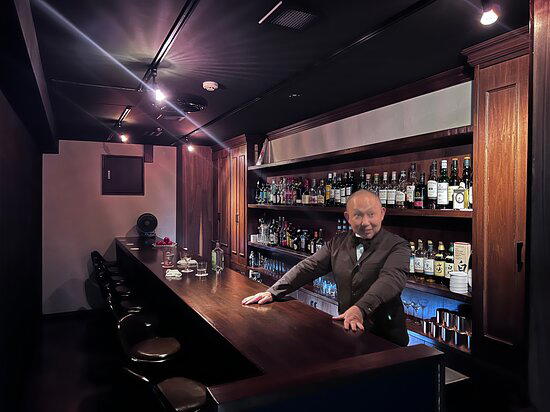
The menu identity leans old-style, not maximalist. Public descriptions note 100% beef patties, soft slightly sweet buns, fresh vegetables, and a classic interior with music from vacuum tube amplifiers. These details define the genre. Tokyo absorbed the hamburger through kissaten culture, American postwar influence, and contemporary craft dining, yet the local version often prizes balance over bulk. Sweet bun, beef-forward patty, and clean vegetable crunch are the grammar of the Japanese hamburger treated as a composed object rather than a pile-up.
The drink list affects pacing. Shochu and cocktails move the shop into evening dining-bar territory, especially beside lunch-only burger counters. The result is a Tokyo small-restaurant split identity: quick enough for a focused meal, slow enough for a drink. The one-drink evening policy reinforces that rhythm without turning the place into a full bar.
Kita-Senju gives the burger a different Tokyo context
Kita-Senju is instructive here. International attention clusters around central wards, but Tokyo’s everyday food intelligence often appears around major interchange stations where rent, foot traffic, and local loyalty create another calculus. Kita-Senju connects JR, Tokyo Metro, Tobu, and Tsukuba Express lines, so its dining culture serves commuters, residents, students, and destination diners at once. A 10-seat burger shop gaining national category recognition here shows how far Tokyo’s specialist casual dining extends beyond obvious districts.
That context explains the practical middle tier of price and format. Compared with nearby casual peers such as Saiko Gyoza Bo and Tachiataru, the appeal is not a broader izakaya spread but concentration. Compared with a formal destination such as Sushi Tanaka, the meal asks for less ceremony. Compared with Senju Takeyabu, it occupies another lane of neighbourhood seriousness: not soba tradition, not sushi formality, but a Western-derived dish tightened by Tokyo precision.
For readers mapping by category rather than ward, BOSSA BURGER belongs beside Tokyo’s tightly defined casual specialists, not hotel restaurants or luxury counters. The same logic explains why a curry room such as 3 Chome no Curry Ya San, a yakitori address such as 124. KAGURAZAKA (Yakitori), or a compact concept such as 2D Cafe can matter editorially without resembling each other. Tokyo rewards narrow competence. Its casual dining map is built from such rooms, not only tasting menus.
The recognition matters because hamburger rankings in Japan sit outside Michelin-driven prestige. Tabelog’s Hyakumeiten lists are category-specific, and the 2026 Hamburger 100 selection places this shop within a national group judged by its own format. That lens is better than asking whether a burger shop behaves like fine dining. It need not. The question is whether it performs the hamburger ritual clearly enough to justify a detour in a city dense with specialist food.
How to read the experience against the wider Tokyo dining map
Expect a compact specialist meal, not a long-form restaurant evening. The room is non-smoking, private rooms are not part of the format, and take-out and delivery sit alongside dine-in service. An English multilingual menu lowers friction for visitors without changing the local character. Payment breadth, from major cards to transport IC and QR systems, reflects Tokyo’s gradual move away from cash-only casual dining.
Planning should account for size more than ceremony. Ten seats make timing relevant, and the station-area setting suits a focused stop before or after a wider Tokyo itinerary. Those building a food day around the northeast side can pair it with other category-led addresses; travellers staying elsewhere should treat it as a Kita-Senju-specific detour, not a central Tokyo default. For broader planning, Our full Tokyo restaurants guide is the useful hub; hotel, bar, winery, and experience planning sit separately in Our full Tokyo hotels guide, Our full Tokyo bars guide, Our full Tokyo wineries guide, and Our full Tokyo experiences guide.
Against the wider EP Club map, this is not the same decision as choosing 鮪と炭火焼き うお炭 秋葉原店, 12/10 Shinjuku ten, or a destination outside Tokyo such as -Grilled beef Sukiyaki- KAMAKURA TANUKIAN 鎌倉 たぬき庵 in Kamakura. It is narrower: a small Tokyo burger room with category recognition and a clear old-style identity. The same comparative discipline applies to casual specialists elsewhere, from.cafe in Osaka and.know in Kumamoto to (Shoku) Vietnam in Kawasaki, [Curry Senmon Ten] Maruyama Kyoju. in Sapporo, and [ki:] in Kyoto. Across the Pacific, Jōdo Saké Bar in Los Angeles and Onigiri Time in Pasadena show how Japanese casual formats travel and change. In Kita-Senju, the point is local precision: a familiar dish compressed into a Tokyo-sized ritual, with enough recognition to separate it from ordinary burger noise.
Frequently asked questions
What does dinner at BOSSA BURGER typically cost?
Pricing at BOSSA BURGER is listed as JPY 2,000 - JPY 2,999 JPY 1,000 - JPY 1,999.
What are the opening hours for BOSSA BURGER?
Hours at BOSSA BURGER: Mon: 11:30 AM–9 PM; Tue: 11:30 AM–9 PM; Wed: 11:30 AM–9 PM; Thu: 11:30 AM–9 PM; Fri: 11:30 AM–9 PM; Sat: 11:30 AM–9 PM; Sun: 11:30 AM–9 PM.
How do I find BOSSA BURGER?
BOSSA BURGER is located in Tokyo.
What is BOSSA BURGER known for?
BOSSA BURGER is listed in Tabelog’s Hamburger "Tabelog 100" for 2026, which is the clearest marker of its standing. The room is small, with 10 seats, and the format covers hamburger, dining bar, and bar in Tokyo’s Kita-Senju area.
Do they accommodate allergies at BOSSA BURGER?
The venue offers a multilingual menu in English, which makes ingredient checks easier before ordering. For allergy questions, the listed number is 03-6806-1732, and the restaurant is open daily at 11:30 AM.
The Quick Read
Comparable venues by cuisine and price in the same metro.
| Venue | Cuisine | Price | Awards | Notes |
|---|---|---|---|---|
| BOSSA BURGERThis venue (the venue you are viewing) | Classic American-style Burgers & Bar | $20–30 | Tabelog 100 #67 | Not listed |
| Burger Mania Shirokane ten | American-style Burger Cafe | $20–30 | Tabelog 100 #25 | Minato, American-style Burger Cafe |
| OLD NEW DINER | Gourmet American-style Burger Diner | $20–30 | Tabelog 100 #29 | Tachikawa, Gourmet American-style Burger Diner |
| ババ・ガンプ・シュリンプ 東京店 | American Seafood - Shrimp Specialists | $30–50 | Not listed | Bunkyō, American Seafood - Shrimp Specialists |
| Reg-On Diner Shibuya hon ten | Gourmet American Burger Diner | $20–30 | Tabelog 100 #21 | Shibuya, Gourmet American Burger Diner |
| IVY PLACE | Western Comfort Food | $20–30 | Tabelog 100 #88 | Shibuya, Western Comfort Food |
Recognition history
Dated appearances from independent guides and award organizations, with the underlying list record or original source where available.
Tabelog 100 #67 · No. 67
Tabelog · Tabelog 100 - Hamburger - 2026