


1 Michelin Star · Guía Repsol 1 Sol
Our verdict
A'Barra holds a Michelin star and an OAD Top 600 Europe ranking (2025) for its product-driven Modern Spanish cooking in Chamartín. The kitchen frames premium ingredients — Joselito Iberian pork, La Catedral de Navarra vegetables, Caspian Pearl caviar — through contemporary technique, with both à la carte and tasting menus available. Sommelier Valerio Carrera oversees the wine pairing programme from an extensive cellar.

Pearl is the En Primeur Club membership app — saves, bookings, and concierge access live there. Same editors, same standards.
- Address
- C. del Pinar, 15, Chamartín, 28006 Madrid, Spain
- Phone
- +34 638 95 09 36
- Hours
- Mon ClosedTue–Sat 1:30–11 PMSun Closed
- Website
- restauranteabarra.com
- Directions
- Get directions
- Booking
- Book on CoverManager
The menu
What to order
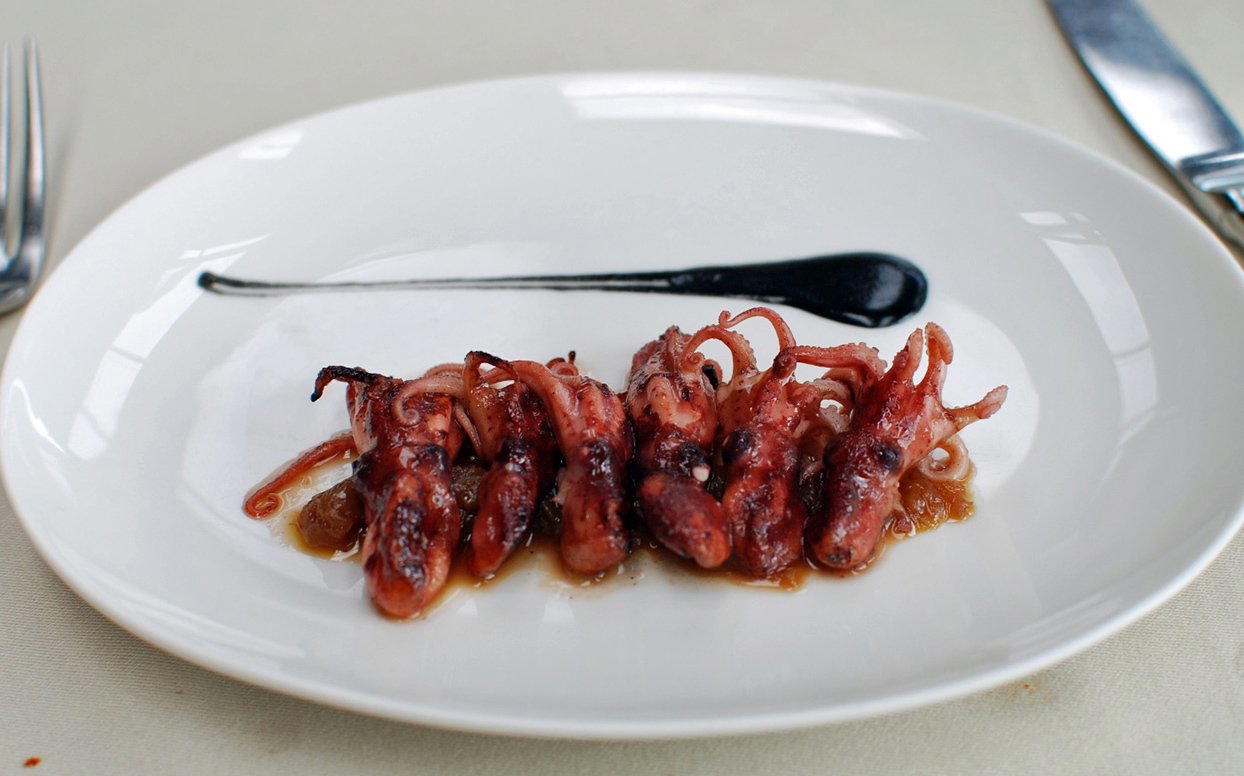
- Huevo de Mos with Joselito ham tagliatelle and smoked eel
- Steak Tartare
Fine Wood, Ibérico Ham, and the Architecture of a Product-Led Kitchen
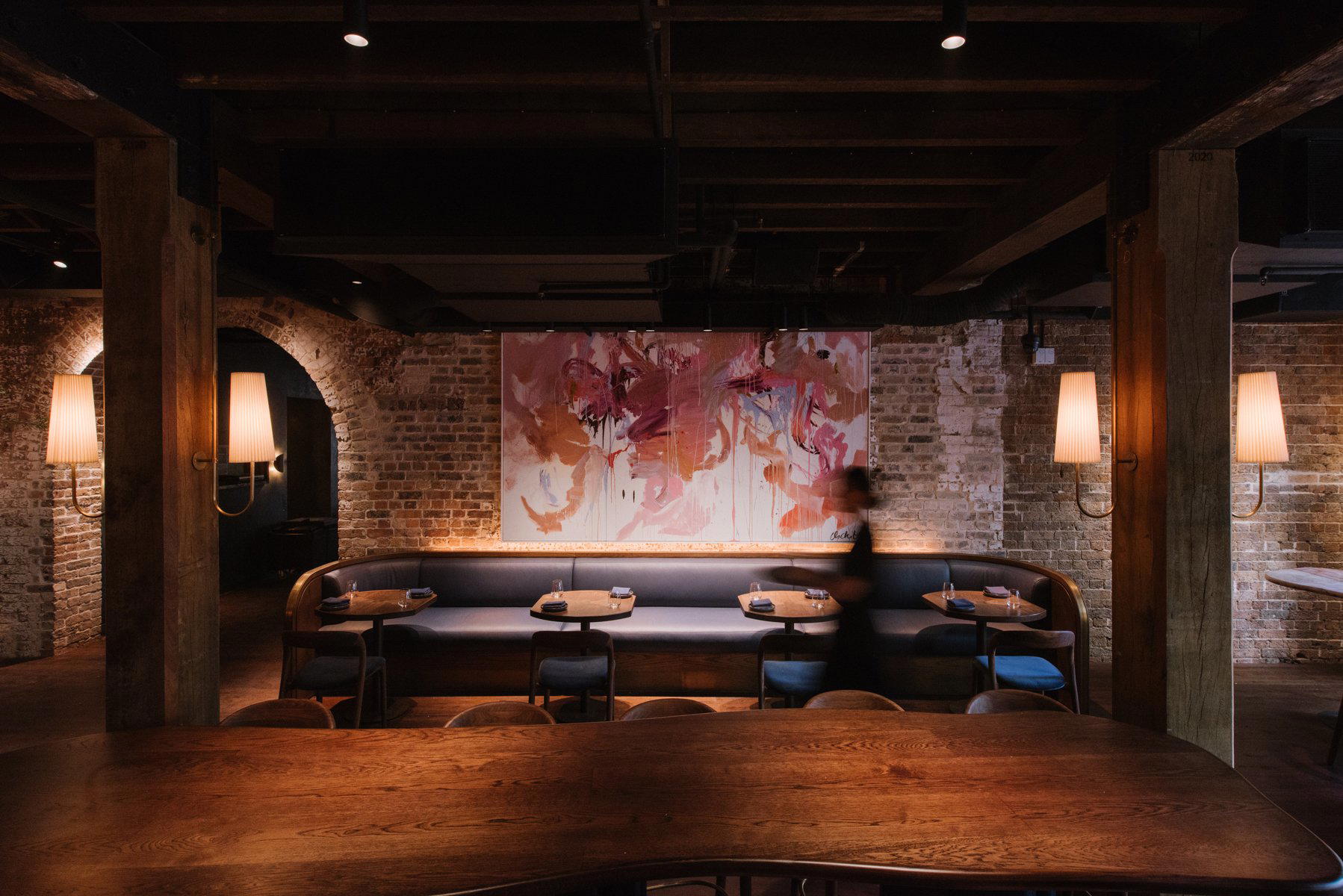
Chamartín's dining scene sits at a different register from the more tourist-facing clusters around Salamanca or the old centre. The neighbourhood draws a Madrid professional crowd, and the restaurants that have taken root here tend to reward sustained attention rather than passing traffic. C. del Pinar, 15 is that kind of address: the building presents a considered interior of fine wood panelling, spatial generosity, and a design language that signals investment without theatrical excess. Walking in, the first impression is one of calibrated calm — a deliberate contrast to the high-energy tasting-counter formats that dominate Madrid's most-discussed Michelin tier.
A'Barra Restaurante y Barra Gastronómica holds one Michelin star (2024) and appears at position 581 in Opinionated About Dining's Leading Restaurants in Europe ranking for 2025. Within Madrid's broader Michelin landscape — which now includes three-star DiverXO (Progressive - Asian, Creative) at the apex, two-star houses such as Coque, Deessa, Paco Roncero, and Smoked Room in the middle tier, A'Barra occupies the one-star bracket alongside a competitive set of kitchens where the editorial question is not whether the cooking is technically accomplished, but what organizing principle drives it. Here, that principle is ingredient provenance, structured around two named suppliers that function as the kitchen's conceptual backbone.
Joselito and the Centrality of Ibérico in the Menu's Logic
Spain's ham culture is inseparable from its fine-dining tradition, and A'Barra makes that relationship explicit. The kitchen works with Joselito, one of the most closely scrutinized Ibérico producers in the country, whose bellota-grade pork is raised on acorn-rich dehesa pasture under strict breed and feeding protocols. The fat profile of Joselito bellota, marbled, oleic-heavy, with a long finish, is not interchangeable with commodity Ibérico, and kitchens that name the producer are making a procurement statement as much as a culinary one.
That commitment shows in the Huevo de Mos, a signature dish cited across both the Michelin and OAD source records: a hen's egg paired with strips of Joselito bellota ham and smoked eel. The combination works along contrast lines, the cured, oxidative depth of the ham against the smoke and salinity of the eel, with the egg providing textural mediation. It is a dish that demonstrates why Ibérico ham functions as a seasoning agent and fat source in fine Spanish cooking, not merely as a charcuterie component. A second signature, the toasted leeks with emulsion, Caspian Pearl caviar, and textured egg yolk, extends the same logic into the vegetable programme: premium provenance (La Catedral de Navarra's tinned and preserved vegetables are a named pillar of the kitchen's sourcing) treated with technical attention rather than obscured by complexity.
The steak tartare rounds out the trio of frequently cited dishes. Its presence alongside two highly composed plates is instructive: A'Barra's kitchen is not pursuing abstraction for its own sake. The menu holds a range of register, from produce-forward precision to classical preparation, which is consistent with the à la carte format offering half-portion options alongside the tasting menu. That structural flexibility places A'Barra closer to the traditional Madrid comedor tradition, where lunch remains a serious, course-by-course affair, than to the fixed-sequence counter formats that have come to dominate premium dining in other European cities.
The Spanish tradition of Ibérico ham as a high-status dining ingredient has a long history in Madrid specifically: the city's position as a distribution and consumption hub for product from Extremadura, Salamanca, and Huelva means that the capital's fine-dining kitchens have long had access to the leading grades. What distinguishes the current generation of product-led restaurants is the willingness to name the producer in the same breath as the dish, treating brand provenance as a form of culinary argument. A'Barra's relationship with Joselito is the clearest expression of that argument in its current menu. For further reading on how Modern Spanish cooking handles ingredient sourcing across different regions and formats, the EP Club guides to Aponiente in El Puerto de Santa María, Arzak in San Sebastián, and El Celler de Can Roca in Girona offer useful comparative frames.
The Barra Format and Madrid's Evolving Aperitivo Culture
Venue's name carries a structural distinction that matters to how you use it. Madrid's aperitivo culture has been reshaping itself over the past decade, and the proliferation of high-quality standalone bar programmes within starred restaurants reflects that shift. The barra as a format allows a kitchen to communicate its product and technique philosophy at a lower commitment level than a full tasting menu, which broadens the accessible price point without diluting the proposition.
Dining room itself offers further format differentiation: private rooms for groups, and a chef's table in the kitchen for those who want proximity to the preparation. Chef's table formats at one-star level in Madrid now compete against dedicated counter experiences, and A'Barra's kitchen table sits within that broader trend of giving access to the production environment as a premium option. For a sense of how Madrid's broader dining and bar programmes are structured across neighbourhoods, our full Madrid bars guide maps the current landscape.
The Wine Programme and the Role of Sommelier-Led Pairing
OAD and Michelin records both name sommelier Valerio Carrera and the wine cellar as points of distinction, which is not a routine emphasis in Michelin write-ups. At one-star level in Madrid, the pairing programme is often a secondary consideration; when a sommelier is named explicitly, it signals that the front-of-house wine function is a deliberate part of the dining proposition rather than a support service. Spain's wine geography offers significant range for a pairing programme, from Ribera del Duero and Rioja in the north to the emerging fine-wine regions of Andalucía and the Canary Islands, and a cellar with depth has material to work with across the full menu register.
Planning Your Visit
A'Barra operates Tuesday through Saturday, with lunch service running from 1:30 PM to 3:30 PM and dinner from 8:00 PM to 11:00 PM. Monday and Sunday are closed. The Chamartín location is well-connected by Madrid Metro, and the neighbourhood's character, residential, professional, removed from the central tourist density, means that the experience is oriented toward the meal itself rather than the surrounding street energy. Both à la carte and tasting menus are available, with half-portion options on the à la carte for guests who want range without full tasting-menu commitment. The Barra operates as an entry point for a shorter visit or pre-dinner aperitif. Given the Michelin star and the OAD ranking, advance booking is advisable, particularly for weekend lunch and evening services.
For the wider Madrid dining context, including how A'Barra sits within the city's Modern Spanish tier relative to kitchens such as Haroma, El Lince, and Restaurante Montia, see our full Madrid restaurants guide. For cultural programming alongside your dining itinerary, Corral de la Morería represents the city's flamenco dining tradition at a high level. Broader city planning resources include our Madrid hotels guide, our Madrid wineries guide, and our Madrid experiences guide.
For context on how Modern Spanish cooking travels internationally, the EP Club profiles of Basque Kitchen by Aitor in Singapore and 55 Pasos in A Coruña track the same ingredient-driven tradition in different settings. The Basque Country comparison is extended further through Azurmendi in Larrabetzu, Martin Berasategui in Lasarte-Oria, and Cocina Hermanos Torres in Barcelona, each of which engages with Spanish product identity through a different regional and technical lens.
What People Recommend at A'Barra
Across both the Michelin and OAD source records, the Huevo de Mos (hen's egg with Joselito bellota ham strips and smoked eel) and the toasted leeks with Caspian Pearl caviar and textured egg yolk are the two dishes cited most consistently as representative of the kitchen's approach. The steak tartare appears as a third signature, occupying the more classically grounded end of the menu. Sommelier Valerio Carrera's wine pairing programme is highlighted independently as a reason to lean into the full tasting menu rather than à la carte only. The Barra space is noted as a viable standalone visit for those wanting to engage with the kitchen's sourcing philosophy at lower commitment. A'Barra holds one Michelin star (2024) and ranks 581st in OAD's Leading Restaurants in Europe (2025), which positions it in the upper portion of Madrid's one-star tier relative to the volume of restaurants in that bracket across the city.
Pricing, Compared
| Venue | Cuisine | Price | Awards | Notes |
|---|---|---|---|---|
| A'Barra Restaurante y Barra GastronómicaThis venue — the venue you are viewing | Modern Spanish Fine Dining | $150–200 | 1 Michelin Star · Guía Repsol 1 Sol | Not listed |
| DiverXO | Avant-Garde Spanish Tasting Menu | $300–500 | 3 Michelin Stars · World's 50 Best #4 | Progressive - Asian, Creative |
| Deessa | Modern Valencian Fine Dining | $150–200 | 2 Michelin Stars · La Liste Top Restaurants | Modern Spanish, Creative |
| Smoked Room | Modern Japanese Fire Omakase | $200–300 | 2 Michelin Stars · La Liste Top Restaurants | Progressive Asador, Contemporary |
| Coque | Modern Spanish Fine Dining | $300–500 | 2 Michelin Stars · La Liste Top Restaurants | Spanish, Creative |
| Paco Roncero | Avant-Garde Spanish Fine Dining | $150–200 | 2 Michelin Stars · La Liste Top Restaurants | Creative |
Recognition history
Dated appearances from independent guides and award organizations, with the underlying list record or original source where available.
Michelin 1 Star
Michelin
Guía Repsol 1 Sol
Guía Repsol
Opinionated About Dining Top Restaurants in Europe Recommended
Opinionated About Dining
Full recognition history (6 entries)
Michelin 1 Star
Michelin
Opinionated About Dining Top Restaurants in Europe Ranked #581
Opinionated About Dining
Michelin 1 Star
Michelin
Continue exploring
More in Madrid
Restaurants in Madrid
Browse all →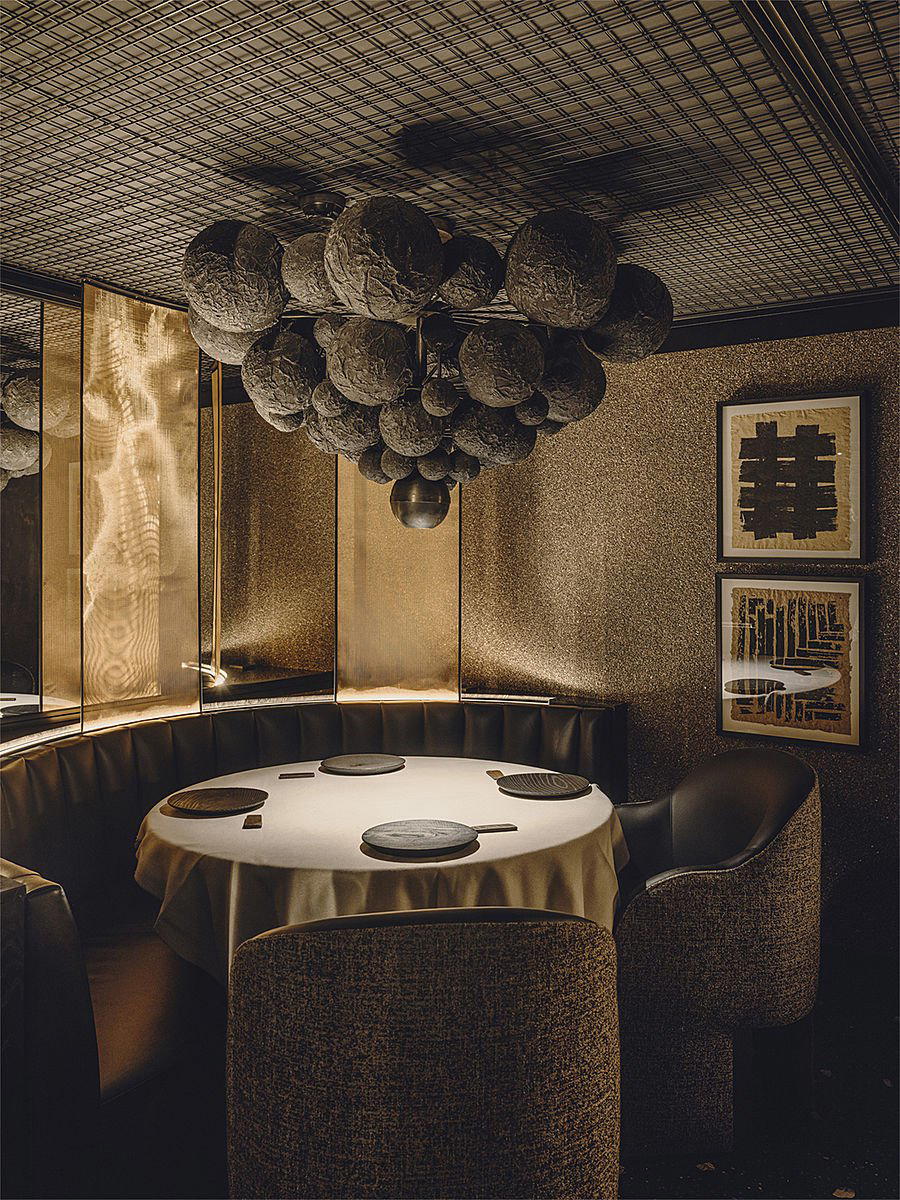
Bars in Madrid
Browse all →
Hotels in Madrid
Browse all →


Details
- Elegant
- Modern
- Sophisticated
- Date Night
- Special Occasion
- Business Dinner
- Open Kitchen
- Private Dining
- Extensive Wine List
- Sommelier Led
- Local Sourcing
- Tasting Menu
- A La Carte
- Small Plates
Current opening hours
- Monday
- Closed
- Tuesday
- 1:30–11 PM
- Wednesday
- 1:30–11 PM
- Thursday
- 1:30–11 PM
- Friday
- 1:30–11 PM
- Saturday
- 1:30–11 PM
- Sunday
- Closed
Hours can change for holidays and private events. Last verified .
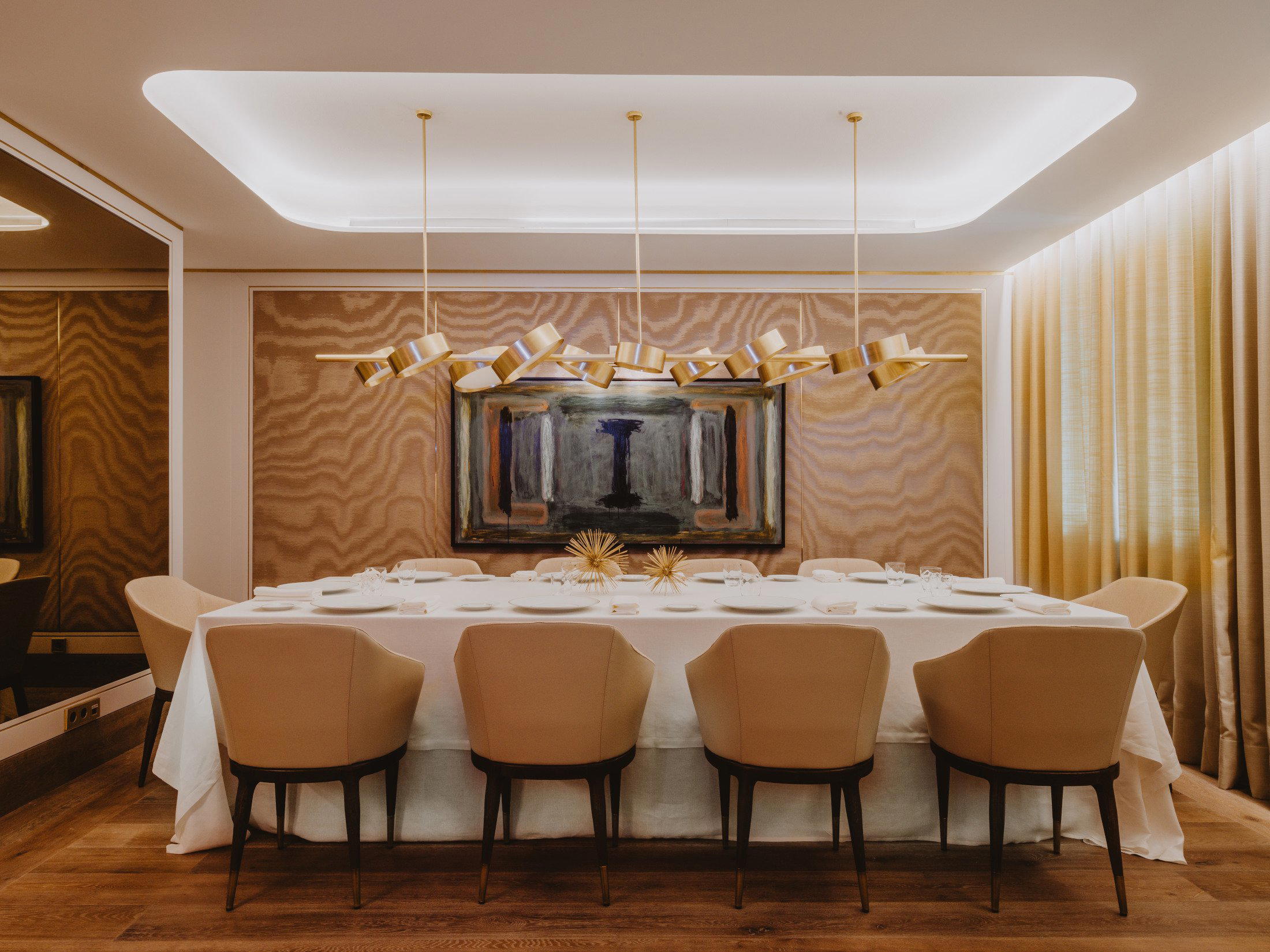
Modern and spacious dining room with fine wood details, cutting-edge design, and an inviting yet elegant atmosphere.