What the Location Tells You
Arese sits roughly 15 kilometres northwest of central Milan, reachable by car from the city in under thirty minutes depending on traffic. It is not a dining destination in the way that Alba or Modena function, towns where the restaurants have become as much the draw as the surrounding landscape. Arese is a working comune, home to the Alfa Romeo Museum and a suburban fabric that reflects the industrial and residential mix of greater Milan's hinterland. A restaurant here addresses a local constituency first. That is not a qualification; it is an orientation, and it shapes what a visit is likely to feel like.
The contrast with Milan's dining axis is instructive. Enrico Bartolini in Milan occupies a different register entirely, a multi-starred address drawing an international clientele to a designed room inside a contemporary art museum. Con Le Mani's context is more analogous to the kind of trattorias and osterie that have sustained Italian provincial cooking for generations: places where the room is secondary to the plate, and where the plate answers to the season and the supplier rather than to a tasting menu architecture. For visitors who have ticked the city's headline addresses, a meal in Arese offers a different kind of evidence about how Lombard cooking actually sustains itself outside the spotlight.
Ingredient Sourcing and the Logic of Handmade Cooking
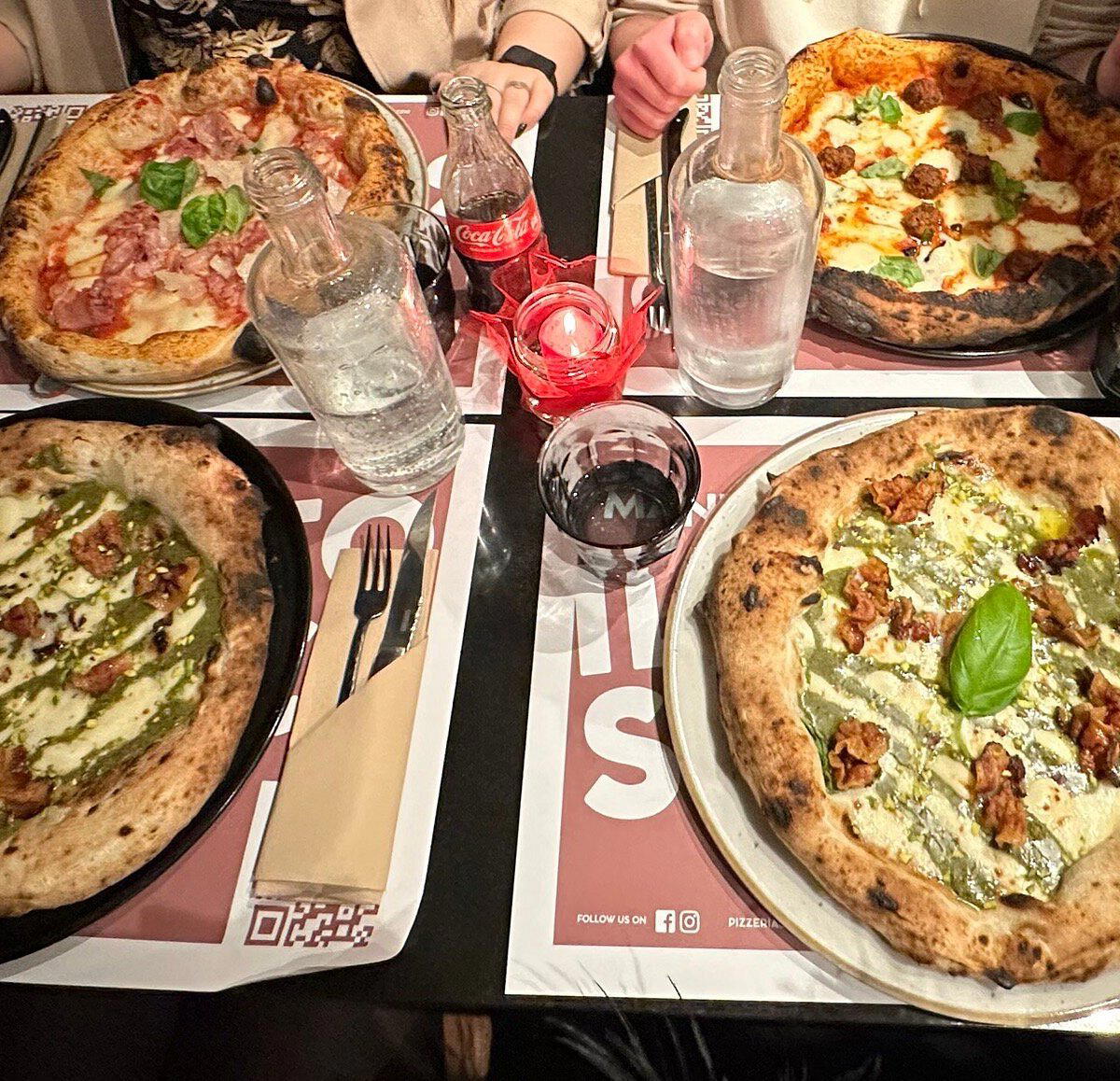
The name "Con Le Mani" points toward a philosophy of making things by hand, which in the Italian culinary context typically signals pasta made fresh on the premises, preparations that prioritise process over shortcut, and a menu that shifts according to what the market and local suppliers deliver rather than remaining fixed for seasons at a time. This is the dominant tradition in Lombardy's non-destination restaurants, and it is where the category produces its most honest cooking.
Northern Italy's ingredient sourcing culture is deeply geographic. The Po Valley supplies some of Europe's most productive agricultural land: aged Parmigiano-Reggiano from across the regional border in Emilia, rice from Vercelli and Novara for the risotti that anchor Lombard cooking, short-chain pork from producers across the plain. Restaurants operating in this tradition, even modest ones, have access to a supply chain that larger cities frequently have to import at cost. A kitchen in Arese, twenty minutes from Milan's wholesale markets and within reach of Lombardy's agricultural suppliers, can theoretically source at the same proximity as many of the region's decorated tables. The name suggests craft, hands, and directness, which is consistent with that sourcing tradition.
For comparison, the approach taken at Dal Pescatore in Runate, a multi-generation family restaurant in a Po Valley village that has held three Michelin stars for decades, shows what the handmade, locally sourced model can achieve at its apex. Dal Pescatore's pasta is made daily, its menu follows the river and the land around Canneto sull'Oglio, and it draws guests from across Europe precisely because it refuses the logic of the destination tasting menu in favour of a more rooted format. The restaurant operates at a different scale and with a different profile, but the underlying orientation shares the same Lombard logic.
Elsewhere in Italy, the sourcing-led model has produced some of the country's most significant cooking. Uliassi in Senigallia built its reputation on Adriatic catch handled with minimal intervention. Reale in Castel di Sangro draws its identity from the Apennine highlands around it. Atelier Moessmer Norbert Niederkofler in Brunico has made Alpine product provenance the explicit centre of its programme. These are all restaurants where geography does a significant portion of the editorial work on the plate. For a neighbourhood kitchen, the same principle applies at a quieter scale.
The Broader Italian Context
Italy's most celebrated restaurants, Osteria Francescana in Modena, La Pergola in Rome, Piazza Duomo in Alba, occupy a tier defined by awards infrastructure, international press, and a price point that reflects their position in a global comparable set. The country's dining culture, however, has always run wider and deeper than that tier. The trattorias, the osterie, the neighbourhood restaurants that serve the same families across years and decades: these are where Italian food culture actually reproduces itself, and where the standards of the table are most honestly negotiated.
The restaurant sits in that wider ecosystem. Arese is not the place a first-time visitor to Lombardy will prioritise, for those building an itinerary around the region's decorated tables, our full Arese restaurants guide provides the fuller picture. But for the traveller already familiar with Milan's dining axis, and curious about what the commune's cooking looks like on its own terms, a meal here represents a different kind of engagement with northern Italian food culture. The frame is local rather than international, the logic is seasonal rather than conceptual, and the standard of reference is the neighbourhood rather than the guide.
For context on how Italy's other geographically rooted restaurants have positioned themselves, Quattro Passi in Marina del Cantone, Gambero Rosso in Marina di Gioiosa Ionica, and Villa Crespi in Orta San Giulio each show how a strong regional identity, sustained over time, can define a kitchen as clearly as any award. Enoteca Pinchiorri in Florence and Casa Perbellini 12 Apostoli in Verona demonstrate the range of formats through which Italian fine dining expresses itself. For international reference points on craft-led cooking at different scales, Le Bernardin in New York City and Lazy Bear in San Francisco show how sourcing-led programmes operate in non-European contexts.
Planning a Visit
The restaurant is located at Via G. Mattei 48, Arese, in Milan's metropolitan province. The drive from central Milan takes approximately 25 to 30 minutes by car, and Arese is accessible by public transport via connections from Milan's northern suburban network. The restaurant is open Monday and Wednesday through Sunday for lunch from 12 to 2:30 PM and dinner from 7 to 11 PM; Tuesday is closed. Reservations are essential, and the dress code is casual. The restaurant's neighbourhood positioning suggests it operates primarily for local guests, which may affect availability and the degree of advance booking typically required.