City Winery Washington DC
City Winery Washington DC occupies a converted industrial space in the Ivy City neighborhood, combining a working winery, full-service restaurant, and live music venue under one roof. The format places wine production at the center of the experience, with house-made vintages poured alongside a food program built around the same audience that books floor seats for touring acts.
- Address
- 1350 Okie St NE, Washington, DC 20002
- Phone
- +1 202 250 2531
- Website
- citywinery.com
- Directions
- Get directions
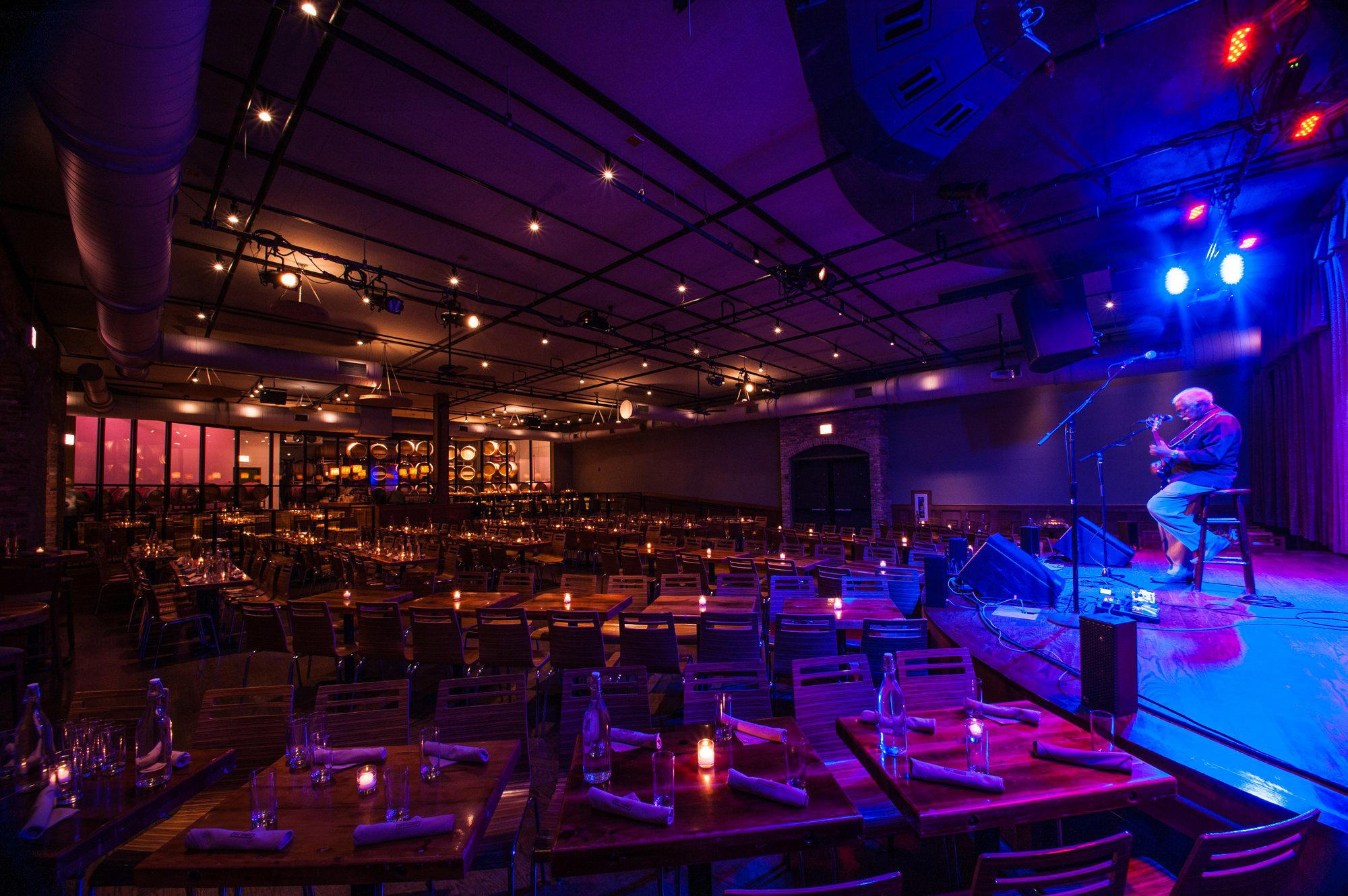
Where the Barrel Room Meets the Stage
Ivy City, the Northeast DC neighborhood that spent decades as an industrial corridor before a wave of food and beverage operators recast it through the 2010s, now holds one of the more unusual formats in the city's dining and entertainment mix. City Winery Washington DC, at 1350 Okie Street NE, occupies a building whose warehouse bones are still legible: exposed steel, high ceilings, the kind of space that resists the softening instincts of a conventional restaurant fit-out. What fills that space is harder to categorize. Part production winery, part ticketed music venue, part full-service restaurant and bar, the operation belongs to a national City Winery network that has applied the same hybrid model in New York, Chicago, Nashville, and several other cities. In DC, the format lands in a neighborhood already accustomed to destination dining, though the winery-venue combination carves out a different position than the tasting-menu counters or chef-driven independents that define much of the city's dining conversation.
The Sustainability Thread Running Through the Model
The urban winery concept carries an implicit sustainability argument that is worth examining directly. Producing wine in a city rather than shipping finished bottles from distant appellations compresses part of the distribution chain, though the grapes themselves still arrive from partner vineyards across established American wine regions. The meaningful environmental choices happen at the production and operations level: how fermentation byproducts are handled, whether spent grape skins and seeds cycle into compost or waste streams, how energy-intensive temperature control in barrel rooms is managed. City Winery as a company has positioned itself around community and local engagement rather than making detailed sustainability claims a centerpiece of its marketing, which is a more honest posture than the greenwashing that characterizes some operators in the food and beverage sector.
Washington DC's dining scene has produced a notable cohort of operators for whom sustainability is a structural commitment rather than a communications strategy. Oyster Oyster, the plant-forward New American restaurant, has built its sourcing model around regional farms and waste-reduction protocols that go further than most. Albi and Causa approach ethical sourcing through the lens of specific culinary traditions. City Winery's sustainability case rests on different foundations: the reduction of finished-goods transport for its house wines, a reusable vessel program that some City Winery locations have adopted, and the efficiencies that come from producing and serving on the same footprint.
An Urban Winery in Context
The urban winery category has grown considerably since the early 2000s, when a handful of producers began demonstrating that proximity to consumers could be a commercial asset rather than a geographical compromise. The argument has never been about terroir. Grapes grown in California's Sonoma or Oregon's Willamette Valley carry attributes that no city production facility can replicate, and no serious wine professional claims otherwise. What urban wineries offer is access: the ability to watch fermentation tanks through a glass wall while drinking the wine those tanks produced, to ask questions of production staff without booking a winery tour weeks in advance, and to understand the decisions that shape a wine's character in ways that a label rarely communicates. City Winery's model takes that access proposition and combines it with a music programming schedule that fills the room on nights when the draw is an artist rather than a glass of Cabernet.
For comparison points within the broader American dining and hospitality scene, the integration of agriculture, production, and hospitality at places like Single Thread Farm in Healdsburg or Blue Hill at Stone Barns in Tarrytown represents the high end of farm-to-table vertical integration. City Winery operates at a different price point and with a different audience in mind, but the underlying logic of collapsing distance between production and consumption has the same structural shape. Elsewhere, operations like Lazy Bear in San Francisco and Smyth in Chicago have made sourcing provenance a defining element of the dining proposition. In DC specifically, the tasting-menu tier represented by Jônt and minibar approaches sourcing as a component of technical ambition. City Winery sits in a different register entirely, where the wine production itself is the primary credential and food supports the overall experience rather than anchoring it.
The Ivy City Address and What It Signals
Location in Ivy City rather than Georgetown, Penn Quarter, or 14th Street NW places City Winery outside DC's most legible dining corridors. That positioning is consistent with the brand's pattern in other cities: large-format spaces require industrial or post-industrial buildings where square footage is available and acoustic isolation from neighboring uses is feasible. The Okie Street address sits within a cluster of food and beverage destinations that includes distilleries and other entertainment-oriented operators, which means visitors are typically arriving with an itinerary rather than stumbling in from a pedestrian retail strip. For those unfamiliar with Ivy City's geography, the neighborhood is accessible by car or rideshare from Capitol Hill and Union Station, though it does not have the walkability of DC's central dining districts.
The broader DC dining scene has expanded well beyond its traditional power-lunch and hotel-dining roots. Operations like Providence in Los Angeles, Addison in San Diego, Le Bernardin in New York City, and The Inn at Little Washington represent the kind of destination-dining gravity that defines certain American cities. DC has developed its own version of that gravity, and City Winery occupies a specific niche within it: volume-capable, entertainment-adjacent, wine-centered, and accessible at price points below the tasting-menu tier. The comparison set is not Atomix in New York City or Atelier Moessmer Norbert Niederkofler in Brunico. It is the category of large-format hospitality venues where wine education, live entertainment, and accessible dining coexist.
Planning Your Visit
City Winery Washington DC functions simultaneously as a restaurant, bar, and ticketed music venue, which means visit logistics depend heavily on what brings you there. Concert nights require advance ticket purchase and carry different seating and food service conditions than non-event evenings when the space operates more like a conventional restaurant. Visitors coming primarily for wine and food will find non-event nights a quieter context for exploring the house wine program. Given the entertainment schedule that drives much of the venue's calendar, checking the events listing before planning a visit is wise: it determines the character of the experience you will encounter. Ivy City's limited pedestrian infrastructure makes car or rideshare the practical arrival mode for most visitors. Comparable DC dining options for evenings focused on sustainability-oriented sourcing include Oyster Oyster and Emeril's in New Orleans offers a useful regional counterpoint for those tracking chef-driven large-format American dining.
The Essentials
Comparable venues nearby, for context on price, style, and recognition.
| Venue | Cuisine | Price | Notes |
|---|---|---|---|
| City Winery Washington DCThis venue — the venue you are viewing | Ivy City, American Wine Country Cuisine | $$$ | Not listed |
| SUCCOTASH | Penn Quarter, Southern-Korean Fusion | $$$ | Not listed |
| Proper 21 | East End, Modern American Sports Bar | $$$ | Not listed |
| Sixty Vines Foggy Bottom | Not listed | $$$ | West End, Contemporary Italian Farm-to-Table New American |
| Lincoln | East End, Modern American Small Plates | $$$ | Not listed |
| Chef Geoff's | Wesley Heights, Contemporary American | $$ | Not listed |
Continue exploring
More in Washington DC
Restaurants in Washington DC
Browse all →
Bars in Washington DC
Browse all →
Hotels in Washington DC
Browse all →
At a Glance
- Elegant
- Intimate
- Date Night
- Group Dining
- Special Occasion
- Live Music
- Wine Cellar
- Private Dining
- Extensive Wine List
- Local Sourcing
Cozy atmosphere with live music, designed for enjoying meals alongside wine in a winery setting.