
Tokyo ramen culture rewards discipline as much as novelty: short hours, counter seating, cash habits, and a queue that becomes part of the meal. Chuka Soba Benten sits in that ritual-heavy lane in Nerima, with ramen and tsukemen, an 11-seat counter, JPY 1,000–1,999 pricing, and repeated Tabelog Ramen TOKYO 100 selection through 2025.
Pearl is the En Primeur Club membership app — saves, bookings, and concierge access live there. Same editors, same standards.
- Address
- 東京都練馬区旭町3-25-2
- Website
- tabelog.com
 Saves & bookings on Pearl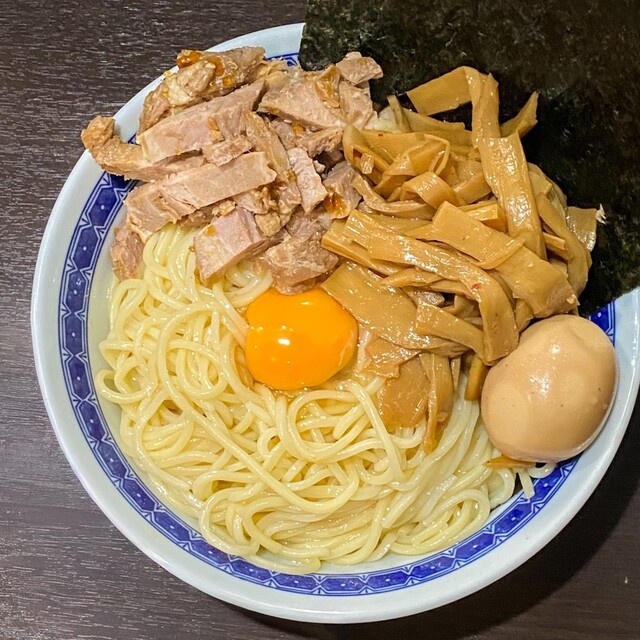
The approach to a serious Tokyo ramen counter is rarely theatrical. The cues are small: a compact frontage, a line that moves by the rhythm of finished bowls, and diners who already know that the meal begins before the noren. In Nerima’s Asahicho, the ramen ritual is stripped back to its essentials: wait, sit, order, eat with pace, leave the seat for the next person. That compact choreography explains why a counter can carry more weight than a dining room many times its size.
Tokyo’s ramen scene has split into several tribes: central-city shops built for constant turnover, destination counters where the queue is part of the contract, and neighbourhood rooms whose reputations travel farther than their signage. Chuka Soba Benten belongs to the third camp. The setting is not a luxury dining signal; the signal is endurance. Its selection for Tabelog Ramen TOKYO 100 in 2025, with prior selections listed back through 2017, places it inside the city’s long-running ramen conversation rather than the short cycle of new openings.
Ramen and tsukemen in the small-counter tradition
The category matters. Ramen and tsukemen demand different pacing from the diner: one centers the bowl as a complete temperature-managed unit, the other separates noodles and dipping broth into a more deliberate sequence. Tokyo has made both formats intensely competitive, and the better counters tend to reduce choice rather than expand it. That restraint is practical as much as aesthetic. When a room runs on 11 counter seats, consistency depends on repetition, timing, and diners who understand that lingering is not part of the exchange.
Chuka Soba Benten’s position is also a reminder that Tokyo ramen value does not map neatly onto centrality. A meal priced at JPY 1,000–1,999 can sit in the same planning conversation as far more expensive dining because the scarcity is not only monetary. The limitation is capacity, service window, and the refusal of reservations. In a city where omakase counters use scarcity to create ceremony, ramen counters often arrive at the same intensity through speed and repetition.
The shop’s history sharpens that point. Its roots go back to Takadanobaba in December 1995, while the current opening is listed as September 18, 2016. That gives the name a longer arc than many ramen addresses in Tokyo, where styles rise quickly and get copied faster. The appeal is not chef biography or branding mythology; it is the durability of a format that has kept drawing attention across changes in neighbourhood and decade.
Nerima changes the meaning of the queue
Ramen eaten outside the central hotel-and-shopping grid asks for a different kind of commitment. Nerima is not Shibuya, Ginza, or Roppongi, and that distance filters the audience. The reward is a room embedded in local daily life rather than an itinerary engineered around spectacle. That matters for travellers who already know Tokyo’s high-gloss dining circuit and want the city’s narrower, more functional food rituals: counter seats, fast turnover, low ceremony, serious repetition.
The comparison within Tokyo is useful. BOULANGERIE KEN occupies a lower everyday price bracket, while Rakusui En sits higher at JPY 3,000–3,999; those are different categories, but the contrast helps frame how Tokyo value works. Price alone does not determine commitment. A ramen counter with limited seating can demand more planning than a pricier meal with easier availability. Dotonburi and other neighbourhood names show the same broader pattern: Tokyo’s food map is not only a hierarchy of luxury, but a network of small rooms that develop credibility through repeated local use.
The etiquette is simple and worth respecting. Solo dining is a natural fit at ramen counters because the meal is individual, quick, and focused. Counter-only rooms are not built for long conversation or menu dissection. Arrive prepared to follow the flow, keep the seat moving, and treat the queue as part of the format rather than an inconvenience. That is not austerity; it is the social contract that lets small ramen shops function at a high level without losing their rhythm.
How to place it within a Tokyo food trip
For visitors building a Tokyo itinerary, this is not the all-purpose recommendation for a first night in the city. It suits a more specific reader: someone willing to leave the obvious restaurant corridors for a compact ramen counter with documented recognition and a narrow service format. The Tabelog Ramen TOKYO 100 selection gives it a public marker, but the stronger reason to go is the way the room embodies a particular Tokyo dining habit: precision without luxury cues, reputation without a large stage.
That makes it a useful counterweight to the city’s broader dining range. A Tokyo trip can run from grilled seafood at . 鮪と炭火焼き うお炭 秋葉原店 to the late-city energy around 12/10 Shinjuku ten, from yakitori at 124. KAGURAZAKA (Yakitori) to graphic café culture at 2D Cafe and curry specialists such as 3 Chome no Curry Ya San. The point is not to rank them against one another, but to read Tokyo through formats: counter, café, curry shop, grill, and ramen queue.
Planning should stay grounded. The restaurant is near Chikatetsu Narimasu, with no parking listed and cash-only payment noted; its compact counter format and no-reservation policy reward flexibility. Saturday service is listed as resuming from March 2025, and operating days can shift, so this is the kind of meal to verify close to the day rather than anchor as the sole fixed appointment of an afternoon.
For broader planning, use Our full Tokyo restaurants guide alongside Our full Tokyo hotels guide, Our full Tokyo bars guide, Our full Tokyo wineries guide, and Our full Tokyo experiences guide. Beyond the capital, Japan’s regional dining map stretches from -Grilled beef Sukiyaki- KAMAKURA TANUKIAN 鎌倉 たぬき庵 in Kamakura and.cafe in Osaka to.know in Kumamoto, (Shoku) Vietnam in Kawasaki, [Curry Senmon Ten] Maruyama Kyoju. in Sapporo, and [ki:] in Kyoto; Japanese food culture abroad takes other shapes at Jōdo Saké Bar in Los Angeles and Onigiri Time in Pasadena.
Compact Comparison
Comparable venues for orientation by cuisine and category.
| Venue | Cuisine | Price | Notes |
|---|---|---|---|
| Chuka Soba BentenThis venue — the venue you are viewing | Not listed | $$ | Not listed |
| Horumon Jinsei Taro Chan | Not listed | $$ | Nakano, Yakiniku & horumon (offal) izakaya |
| Menson Rage | Suginami, Modern Shamo Ramen | $$ | Not listed |
| Hikiniku to Kome Kichijouji | Not listed | $$ | Kichijoji, Charcoal-Grilled Japanese Hamburger Steak Set |
| Pannya CAFE CURRY | Setagaya, Japanese Curry Cafe | $$ | Not listed |
| MOKUBAZA | Not listed | $$ | Shibuya, Modern Japanese keema curry & bar |
Recognition history
Dated appearances from independent guides and award organizations, with the underlying list record or original source where available.
Tabelog 100 #61 · No. 61
Tabelog · Tabelog 100 - Ramen - TOKYO - 2025












At a Glance
- Classic
- Cozy
- Intimate
- Solo
- Casual Hangout
- Standalone
A small, no-frills counter-only ramen shop with a focused, bustling, line-worthy atmosphere rather than a leisurely dining setting.