Michelin Plate
Our verdict
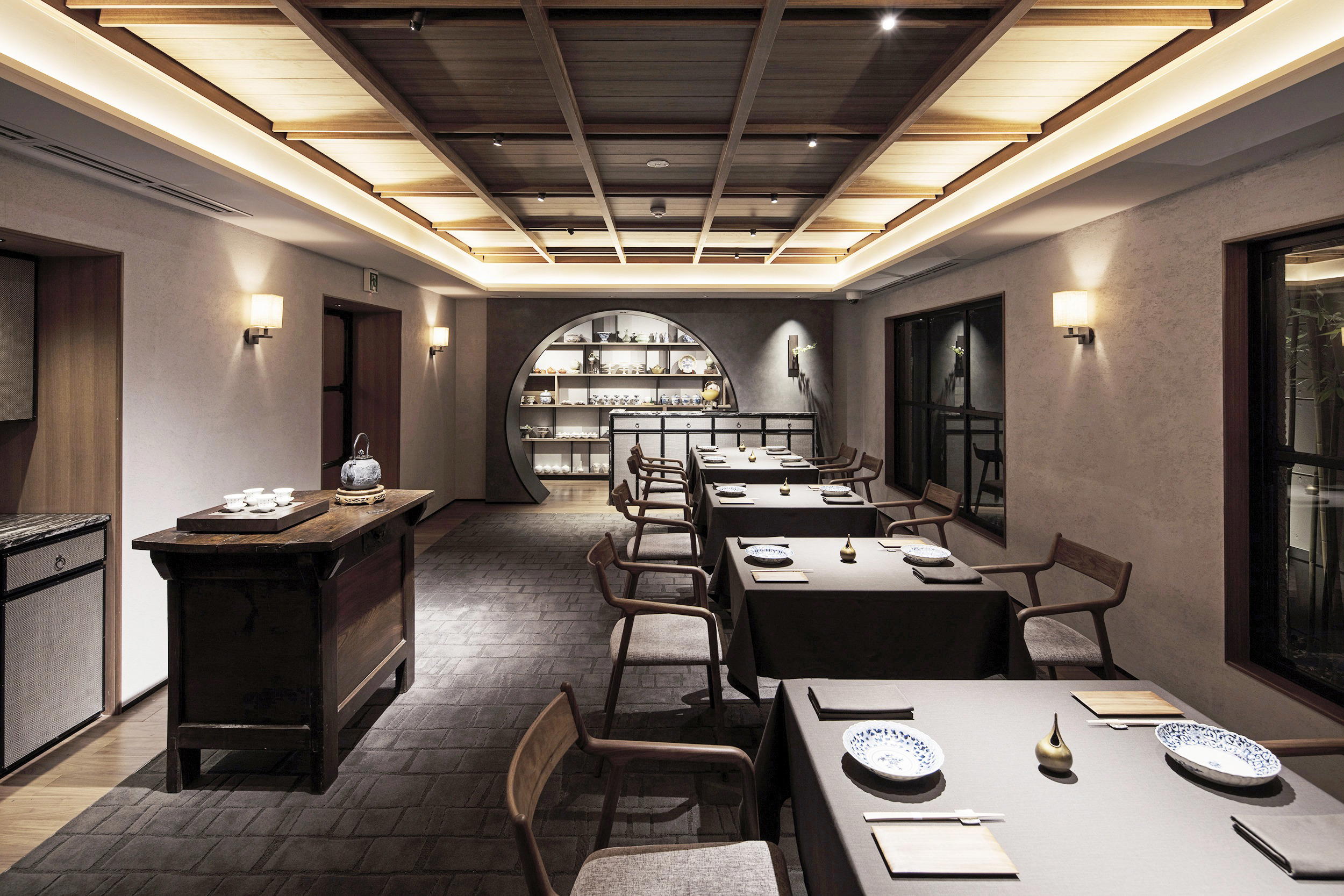
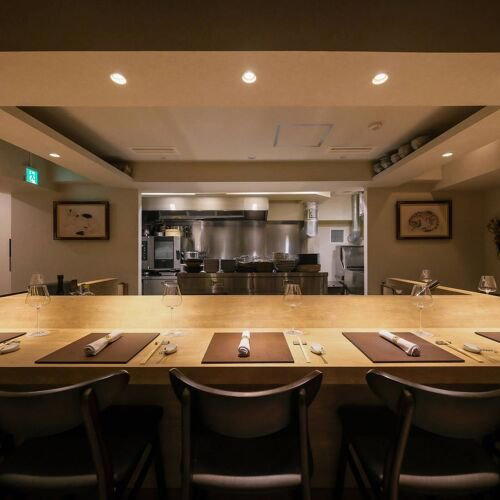
A counter-style Chinese restaurant on the third floor of a Nakameguro building, Chugokusai HINA interprets Japanese seasonal ingredients through a Chinese culinary lens, seasoned with notable restraint. The kitchen, trained across Yokohama and Shanghai, pairs dishes with well-aged Japanese sake and organic wine rather than Shaoxing wine. Rated 4.5 on Google from early reviews, it occupies a precise and deliberate niche in Tokyo's contemporary Chinese scene.

Pearl is the En Primeur Club membership app, where members save venues, book tables and use the concierge.
The menu
What to order
- Steamed Soup
- Braised Shark Fin
- Peking Duck
Counter Chinese, Nakameguro Style
Tokyo's contemporary Chinese dining scene has fractured along a clear fault line. On one side sit the grand-format restaurants, multi-room operations with Cantonese or Shanghainese foundations, long wine lists, and a formality inherited from Hong Kong's palatial dining culture. On the other, a smaller and more recent cohort of counter-format Chinese restaurants has taken shape, drawing on Japan's counter-dining tradition and applying it to a cuisine not historically associated with that intimacy.
The counter format is a deliberate structural choice that changes the terms of the meal. In the kaiseki and omakase traditions that Tokyo diners know well, the counter collapses the distance between cook and guest, making the sequence of courses feel less like service and more like conversation. Applied to Chinese cuisine, a tradition where the kitchen is typically hidden and courses arrive in rapid communal succession, the format reconfigures expectations. Here, the husband cooks and the wife serves, a two-person operation that keeps the room at a specific scale and pace. For a reference point on how Tokyo's Chinese counter format compares to its more established French or Japanese equivalents, consider that itsuka and Koshikiryori Koki operate in adjacent precision-dining spaces where kitchen-to-counter proximity is the central design principle.
The Seasonal Chinese Framework
The kitchen's stated priority, holding the inherent flavours of ingredients paramount, places HINA within a wider movement in Japanese fine dining toward restraint-led cooking. This is not accidental. The broader Japanese culinary sensibility, anchored in the concept of shun (the peak seasonal moment of an ingredient), has migrated into non-Japanese formats operating within Japan. You see this across categories: in Tokyo's French kitchens where chefs work exclusively with domestic produce, and in innovative Japanese formats like Den that layer seasonal logic onto modern idioms. HINA applies the same seasonal framework to Chinese technique, reading Japan's agricultural calendar and translating it through a different culinary grammar.
Kitchen training runs through both Yokohama and Shanghai, two cities whose Chinese food cultures diverge considerably. Yokohama's Chinatown, one of the largest in Asia, carries a distinct Cantonese-leaning identity shaped by generations of restaurant families. Shanghai's contemporary fine-dining scene, by contrast, has moved toward lighter, more technically refined expressions of regional Chinese cooking. A cook trained across both contexts arrives at the counter with a wider technical vocabulary than either city alone would supply. This dual foundation is relevant context for understanding why the seasoning approach here leans toward restraint rather than the bolder, more assertive flavour profiles that characterise many Chinese restaurant formats.
For broader reference points in contemporary Chinese cooking that prioritise technique and restraint over spectacle, Restaurant Tim Raue in Berlin and Mister Jiu's in San Francisco represent how Chinese culinary frameworks are being reinterpreted outside their origin contexts. Tokyo's version of this reinterpretation tends to be more ingredient-centric and less technique-forward than its Western equivalents, which fits HINA's positioning.
The Drink Programme: A Structural Divergence
The decision to pair courses with well-aged Japanese sake and organic wine rather than Shaoxing wine is the most operationally distinctive element of the format. Shaoxing, the amber-coloured rice wine that anchors Chinese cooking and drinking culture across multiple regional traditions, is almost entirely absent here. In its place, the programme draws on Japan's sake tradition (a domestically significant pairing partner at this price tier) and on organic wine, which has become increasingly prevalent as a pairing choice at Tokyo restaurants operating at the ¥¥¥ level.
This is not merely a stylistic preference. It signals a deliberate repositioning of the meal's cultural frame. A Chinese restaurant that pairs with Japanese sake is not trying to replicate a Shanghai or Hong Kong dining experience; it is constructing something that belongs specifically to Tokyo, where the surrounding culinary culture shapes what the meal can mean. Among Tokyo's Chinese restaurants, Chugoku Hanten Fureika and Chugoku Hanten Kohakukyu (Amber Palace) operate within a more traditional Chinese hospitality register; Ippei Hanten represents another point in the Chinese-in-Tokyo spectrum. HINA's drink programme places it in a different position relative to these peers, closer to a Japanese fine-dining experience in structure, while the kitchen remains Chinese in technique and orientation.
Where It Sits in the Tokyo Dining Picture
At ¥¥¥, HINA occupies the same price tier as Tokyo's mid-to-upper independent Japanese restaurants, not the leading bracket commanded by three-Michelin-star sushi or kaiseki operations. That bracket, where Harutaka and RyuGin operate, involves a different magnitude of cost and formality. HINA's pricing is consistent with a counter meal at an accomplished independent restaurant, which means the proposition is accessible relative to Tokyo's fine-dining ceiling but still represents a considered expenditure for most visitors.
It reflects a restaurant in a relatively early public-facing stage, not an institution with years of accumulated critical consensus. For context, Tokyo's most critically established Chinese formats carry Michelin recognition and significantly longer review histories. HINA's rating, at this sample size, is an encouraging early signal rather than a settled verdict.
Nakameguro as a neighbourhood warrants a note for visitors planning around it. The area's dining density concentrates along the Meguro River canal, where tables fill quickly on weekend evenings, particularly in the spring cherry blossom season and autumn when foot traffic through the neighbourhood peaks. HINA's address on Kamimeguro, a street back from the main canal, places it slightly outside this primary zone, a practical consideration for anyone building an evening around the neighbourhood's broader offerings. For a fuller picture of dining across the city, our full Tokyo restaurants guide maps the range from neighbourhood counters to major destination formats. Related resources include our Tokyo hotels guide, our Tokyo bars guide, our Tokyo experiences guide, and our Tokyo wineries guide.
For those building a broader Japan itinerary, comparable precision-dining experiences operating at a similar level of culinary ambition can be found at HAJIME in Osaka, Gion Sasaki in Kyoto, akordu in Nara, Goh in Fukuoka, 1000 in Yokohama, and 6 in Okinawa.
Know Before You Go
- Address: Kamimeguro 2-16-12, Friend Building 3F, Meguro City, Tokyo
- Cuisine: Counter-style Chinese with Japanese seasonal framework
- Price range: ¥¥¥
- Drink programme: Well-aged Japanese sake and organic wine; Shaoxing wine not featured
- Format: Counter dining, husband and wife operation
- Nearest area: Nakameguro, Meguro City, Tokyo
- Booking: Advance reservation strongly advised given counter-format capacity
Frequently asked questions
What awards or recognition does Chugokusai HINA have?
Chugokusai HINA has received recognition including: Counter-style Chinese committed to natural deliciousness. The husband, schooled in the kitchens of Yokohama and Shanghai, focuses on the cooking, while his wife serves guests. The inherent flavours of the ingredients are held paramount, int….
Is Chugokusai HINA more mid-range or high-end?
Pricing at Chugokusai HINA is listed as ¥¥¥.
What should I order at Chugokusai HINA?
HINA does not publish a fixed à la carte menu in the conventional sense. The kitchen interprets Japanese seasonal ingredients through a Chinese cooking lens, with dishes seasoned with deliberate restraint. The drink pairing is the structural choice to make: well-aged Japanese sake and organic wine replace the Shaoxing wine typical of Chinese restaurant programmes, and that selection shapes how the food reads across the meal.
What should I expect cuisine-wise at Chugokusai HINA?
What's Chugokusai HINA's location?
Chugokusai HINA is located at Japan, 〒153-0051 Tokyo, Meguro City, Kamimeguro, 2 Chome−16−12 フレンドビル中目黒 3F, Tokyo.
Can I walk in to Chugokusai HINA?
The counter format at HINA, a husband-and-wife operation on the third floor of a building in Kamimeguro, means seat count is limited by design. Walk-ins are a risk at any counter-style restaurant in this tier of Tokyo dining, particularly one where the wife manages service directly. Advance reservation is the practical approach, though no booking platform or phone number is listed publicly at this time.
What is Chugokusai HINA known for?
HINA is a counter-style Chinese restaurant in Nakameguro where the kitchen prioritises the inherent flavours of seasonal Japanese ingredients rather than layered seasoning. The chef trained in Yokohama and Shanghai before opening this format with his wife as the sole front-of-house presence. The decision to pair courses with aged Japanese sake and organic wine instead of Shaoxing wine is the detail that most clearly separates HINA from the broader Tokyo Chinese restaurant scene.
Nearby-ish Comparables
| Venue | Cuisine | Price | Awards | Notes |
|---|---|---|---|---|
| Chugokusai HINAThis venue (the venue you are viewing) | Seasonal Chinese Omakase | $100–150 | Michelin Plate | Not listed |
| Harutaka | Edo-Style Omakase Sushi | $200–300 | 3 Michelin Stars · World's 50 Best #76 | Sushi |
| RyuGin | Modern Kaiseki | $500+ | 3 Michelin Stars · World's 50 Best #41 | Kaiseki, Japanese |
| L'Effervescence | Modern French with Japanese Influences | $200–300 | 3 Michelin Stars · World's 50 Best #69 | French |
| HOMMAGE | Modern French with Japanese Influences | $150–200 | 2 Michelin Stars · World's 50 Best #78 | Innovtive French, French |
| MAZ | Innovative Peruvian-Japanese Fusion | $150–200 | 2 Michelin Stars · World's 50 Best #28 | Innovative |
Recognition history
Dated appearances from independent guides and award organizations, with the underlying list record or original source where available.
Michelin Plate
Michelin
Full recognition history (2 entries)
Michelin Plate
Michelin