
World's 50 Best #23
Our verdict
One of Rome's most closely watched addresses for traditional cucina romana, Checchino Dal 1887 has operated from the same Via Monte Testaccio address for over 130 years. The Mariani family kitchen holds a place in the Testaccio neighbourhood that predates modern food criticism entirely, with World's 50 Best rankings from the early 2000s and continued recognition from Opinionated About Dining placing it among the most credentialed casual tables in Europe.

Pearl is the En Primeur Club membership app — saves, bookings, and concierge access live there. Same editors, same standards.
- Address
- Via di Monte Testaccio, 30, 00153 Roma RM, Italy
- Phone
- +39 333 585 5055
- Hours
- Mon–Tue ClosedWed–Sun 12:30–3 PM, 8–11 PM
- Website
- checchinodal1887.com
- Directions
- Get directions
- Booking
- Book on the venue's website
The menu
What to order
- Rigatoni con pajata
- Coda alla vaccinara
- Saltimbocca alla romana
- Bucatini alla gricia
Testaccio Before the Table
Rome's relationship with offal cookery is older than any restaurant that claims to represent it. The tradition took shape in Testaccio, the neighbourhood built around the city's central slaughterhouse complex, where workers received payment partly in the so-called quinto quarto — the fifth quarter, meaning the entrails, tails, feet, and organs that remained after the prime cuts left for wealthier tables. What emerged was a cuisine of precise technique applied to unforgiving ingredients: coda alla vaccinara, pajata, trippa alla romana, dishes that require both knowledge and confidence to execute. The address predates the restaurant guides that would later rank it.
The Approach and What You Find
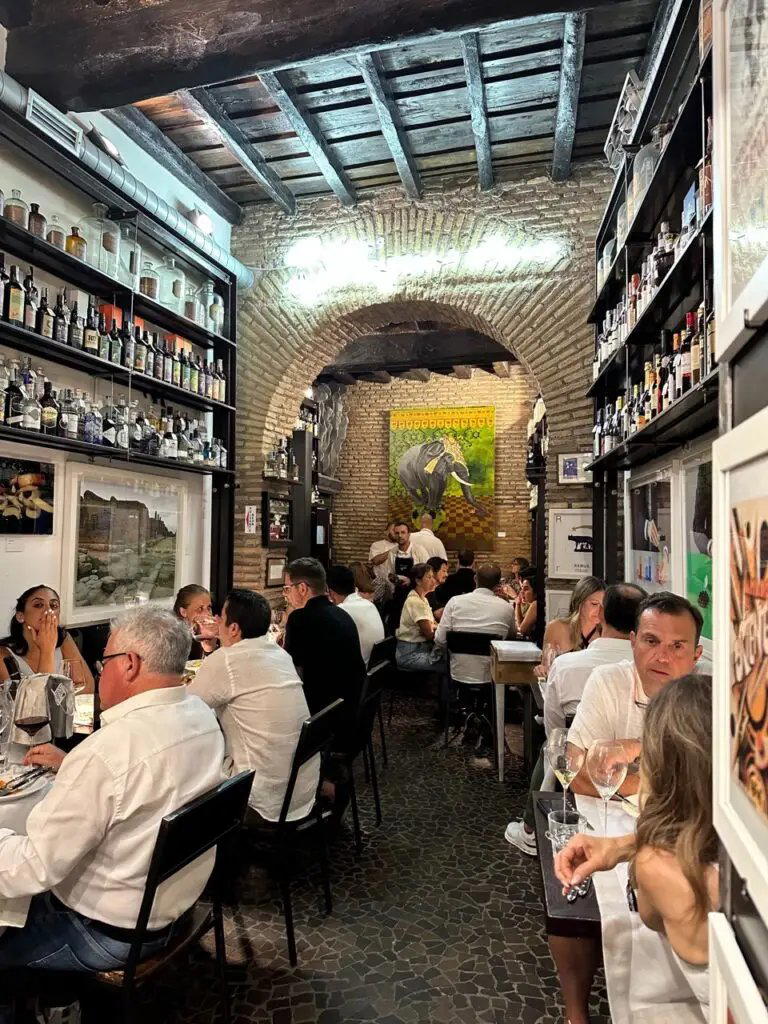
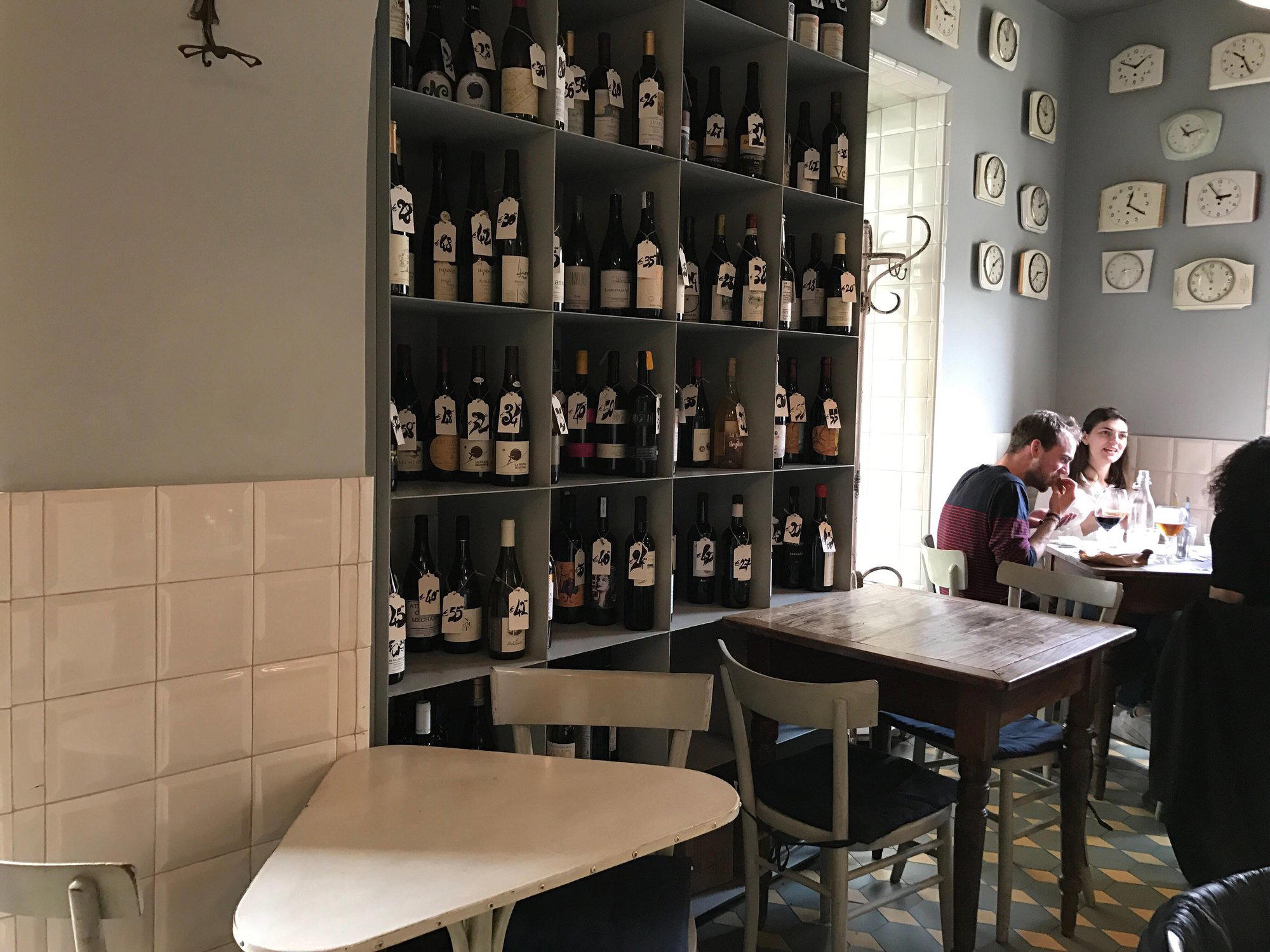
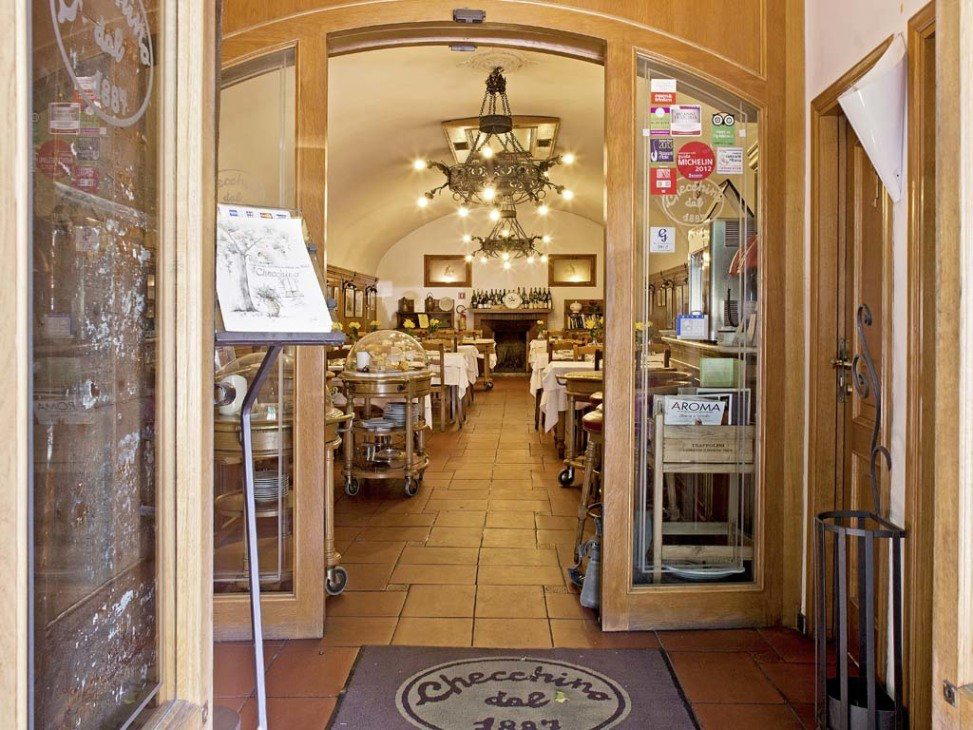
Via di Monte Testaccio runs along the base of Monte Testaccio itself, the ancient hill composed entirely of broken amphora shards, a byproduct of Rome's oil-import trade across roughly eight centuries of antiquity. The street is unhurried in a way that feels deliberate rather than undiscovered. The restaurant's entrance is low-key relative to its reputation: no theatre of arrival, no doorman positioning. What greets you instead is a dining room that reads as a working restaurant rather than a monument to one, which in Rome's most historically loaded neighbourhood is itself a form of restraint. The Mariani Brothers run the kitchen within a house that has been family-operated for multiple generations, placing it in a category of Roman institution where continuity of ownership and continuity of technique are the same argument.
Where Checchino Sits in the Rome Dining Hierarchy
Rome's upper tier of fine dining currently clusters around tasting-menu formats with significant Michelin hardware: La Pergola holds three stars, Il Pagliaccio and Enoteca La Torre operate at two. Checchino sits in a different competitive set entirely, one defined by regional authenticity and longevity rather than creative ambition. The Opinionated About Dining recognition is the more meaningful credential here: ranked 537th in Europe's casual category in 2024 and recommended in 2023, it occupies a position where serious food critics track it not as a nostalgic curiosity but as a functioning benchmark for what Roman cooking actually is. The World's 50 Best rankings from 2003 (46th) and 2005 (23rd) belong to an era when that list was measuring something closer to culinary significance than to innovation cycles, which makes them a different kind of signal than a contemporary placement would be.
Within Rome's cucina romana peer group, the comparison points are instructive. Armando al Pantheon operates a tighter, more central room with similar OAD recognition and a comparable commitment to Roman classics. Antica Pesa leans further into a polished dining-room experience while staying within the Roman tradition. Da Danilo and Da Tullio represent the more neighbourhood-facing end of that spectrum. Checchino's position is defined by its Testaccio address and its 1887 origin, which sets the frame for everything else: it is not trying to interpret the tradition, it is the tradition's primary surviving address.
For context on how Roman cooking travels, Il Marchese in Milan and Osteria Romana in Brussels both operate within the cucina romana idiom at distance from the source. A meal at Checchino makes those comparisons sharper. Enoteca Pinchiorri in Florence offers the clearest contrast within the Michelin-decorated tier. Checchino makes no argument against any of them — it simply occupies different coordinates on the same map. For a full picture of where it sits within Rome specifically, see our full Rome restaurants guide.
Also worth flagging: CiPASSO represents a newer entry in Rome's mid-range Roman dining circuit, useful for understanding how the category has expanded in recent years.
Planning the Visit: What to Know Before You Go
The editorial angle most relevant to Checchino is not what you will eat but how you secure a table and what that process implies about the restaurant's standing. For a venue with this credential density and this much critical attention, the logistics carry their own meaning.
Checchino is closed Monday and Tuesday. Wednesday through Sunday, service runs 12:30 to 3:00 pm for lunch and 8:00 to 11:00 pm for dinner. That schedule is tighter than many comparable Roman addresses, only five service days per week, with defined two-hour-and-thirty-minute windows at each end. For visitors with fixed travel dates, this creates a genuine planning constraint: a Monday or Tuesday arrival rules out Checchino entirely unless you have flexibility. Thursday and Friday lunch slots tend to be marginally more accessible than Saturday dinner, which draws both Roman regulars and visitors who have planned specifically around the address.
Venues at this history-to-fame ratio often accumulate reviews from visitors expecting something other than what they find; the score suggests Checchino's room and menu communicate clearly enough that most guests arrive calibrated.
Because no booking link appears in the public record, the most reliable approach is direct contact through the restaurant's own channels or through a Rome-based concierge who can reach the Mariani family team directly. For visitors building a Rome itinerary around multiple restaurants at this tier, the five-day operating week means sequencing matters: identify your Checchino target date first, then build the surrounding meals around it. The lunch service is a genuine option, unlike many historically significant European addresses that feel deflated at midday, Testaccio's character is daytime-first, and a long Thursday or Friday lunch here aligns with the neighbourhood's working rhythm rather than cutting against it.
Rome's accommodation options that place you within easy range of Testaccio are covered in our full Rome hotels guide. For evening context before or after dinner, the neighbourhood's bar scene is a separate subject covered in our full Rome bars guide. Wine itinerary planning around a Testaccio dinner has its own logic, detailed in our full Rome wineries guide, and cultural programming in the area is mapped in our full Rome experiences guide.
What This Kind of Restaurant Requires of the Visitor
The quinto quarto tradition is not a concession to modern tastes. Checchino's menu operates within a culinary logic that prizes the specific over the accessible: dishes like coda alla vaccinara and pajata exist because Testaccio's butcher-trade workers made them that way, not because contemporary diners ordered them into existence. A guest who arrives hoping for a broad Roman menu with offal as one option among many will find the framing inverted. This is a kitchen where the secondary cuts are the primary argument, and where over a century of continuous operation has produced a version of those dishes that is difficult to triangulate from outside the room.
That specificity is precisely what gives Checchino its position in the critical record. OAD's continued tracking of it as a recommended casual address in Europe reflects an assessment that the cooking remains a functional reference point rather than a heritage attraction. The distinction matters when choosing between it and the other credentialed Roman tables: if what you want is to understand what Roman cooking is grounded in, the Testaccio address answers that question more directly than any contemporary interpretation of it could.
Frequently asked questions
What's Checchino Dal 1887's location?
Checchino Dal 1887 is located at Via di Monte Testaccio, 30, 00153 Roma RM, Italy, Rome.
When can I go to Checchino Dal 1887?
Hours at Checchino Dal 1887: Hours: Monday Closed Tuesday Closed Wednesday 12:30–3 pm, 8–11 pm Thursday 12:30–3 pm, 8–11 pm Friday 12:30–3 pm, 8–11 pm Saturday 12:30–3 pm, 8–11 pm Sunday 12:30–3 pm, 8–11 pm.
Is Checchino Dal 1887 Michelin-listed?
Checchino Dal 1887 has received recognition including: Opinionated About Dining Casual in Europe Ranked #537 (2024); Opinionated About Dining Casual in Europe Recommended (2023); World's 50 Best Best Restaurants #23 (2005); World's 50 Best Best Restaurants #46 (2003).
What's the must-try dish at Checchino Dal 1887?
Checchino is the reference point in Rome for quinto quarto cooking, the tradition of preparing offal cuts once paid as wages to Testaccio slaughterhouse workers. Dishes rooted in that canon, such as coda alla vaccinara and rigatoni con la pajata, define the menu's logic. The Mariani Brothers have maintained this culinary framework since the restaurant's founding in 1887, and the OAD Casual Europe ranking confirms the kitchen's standing within that tradition.
What type of food is Checchino Dal 1887 known for?
Who is the chef at Checchino Dal 1887?
The chef associated with Checchino Dal 1887 is Mariani Brothers.
The Quick Read
| Venue | Cuisine | Price | Awards | Notes |
|---|---|---|---|---|
| Checchino Dal 1887This venue — the venue you are viewing | Traditional Roman Offal | $50–100 | World's 50 Best #23 | Not listed |
| La Pergola | Modern Italian Fine Dining | $500+ | 3 Michelin Stars · La Liste Top Restaurants | Italian, Mediterranean Cuisine |
| Enoteca La Torre | Modern Italian Fine Dining | $200–300 | 2 Michelin Stars · La Liste Top Restaurants | Creative |
| Il Pagliaccio | Modern Italian-Japanese Fusion Fine Dining | $150–200 | 2 Michelin Stars · La Liste Top Restaurants | Contemporary Italian, Creative |
| Aroma | Modern Roman Fine Dining | $200–300 | 1 Michelin Star · Falstaff Restaurant - 93 Falstaff Points | Modern Cuisine |
| Idylio by Apreda | Modern Mediterranean-Asian Fusion | $150–200 | 1 Michelin Star · La Liste Top Restaurants | Modern Italian, Italian Contemporary |
Recognition history
Dated appearances from independent guides and award organizations, with the underlying list record or original source where available.
World's 50 Best Restaurants #23
World's 50 Best
Opinionated About Dining Casual in Europe Recommended
Opinionated About Dining
Full recognition history (5 entries)
Opinionated About Dining Casual in Europe Ranked #537
Opinionated About Dining
Opinionated About Dining Casual in Europe Recommended
Opinionated About Dining
World's 50 Best Restaurants #46
World's 50 Best