Chaia
In Georgetown's residential fringe, Chaia occupies the narrower end of Washington's plant-forward dining conversation, where the sourcing story carries as much weight as the plate. The restaurant operates on a tacos-built-from-farmers-market-produce premise that places it in a different register from D.C.'s tasting-menu circuit, functioning more as a daily-use neighborhood counter than a destination event.
Pearl is the En Primeur Club membership app — saves, bookings, and concierge access live there. Same editors, same standards.
- Address
- 3207 Grace St NW, Washington, DC 20007
- Phone
- +12023335222
- Website
- chaiatacos.com
- Directions
- Get directions
 Saves & bookings on Pearl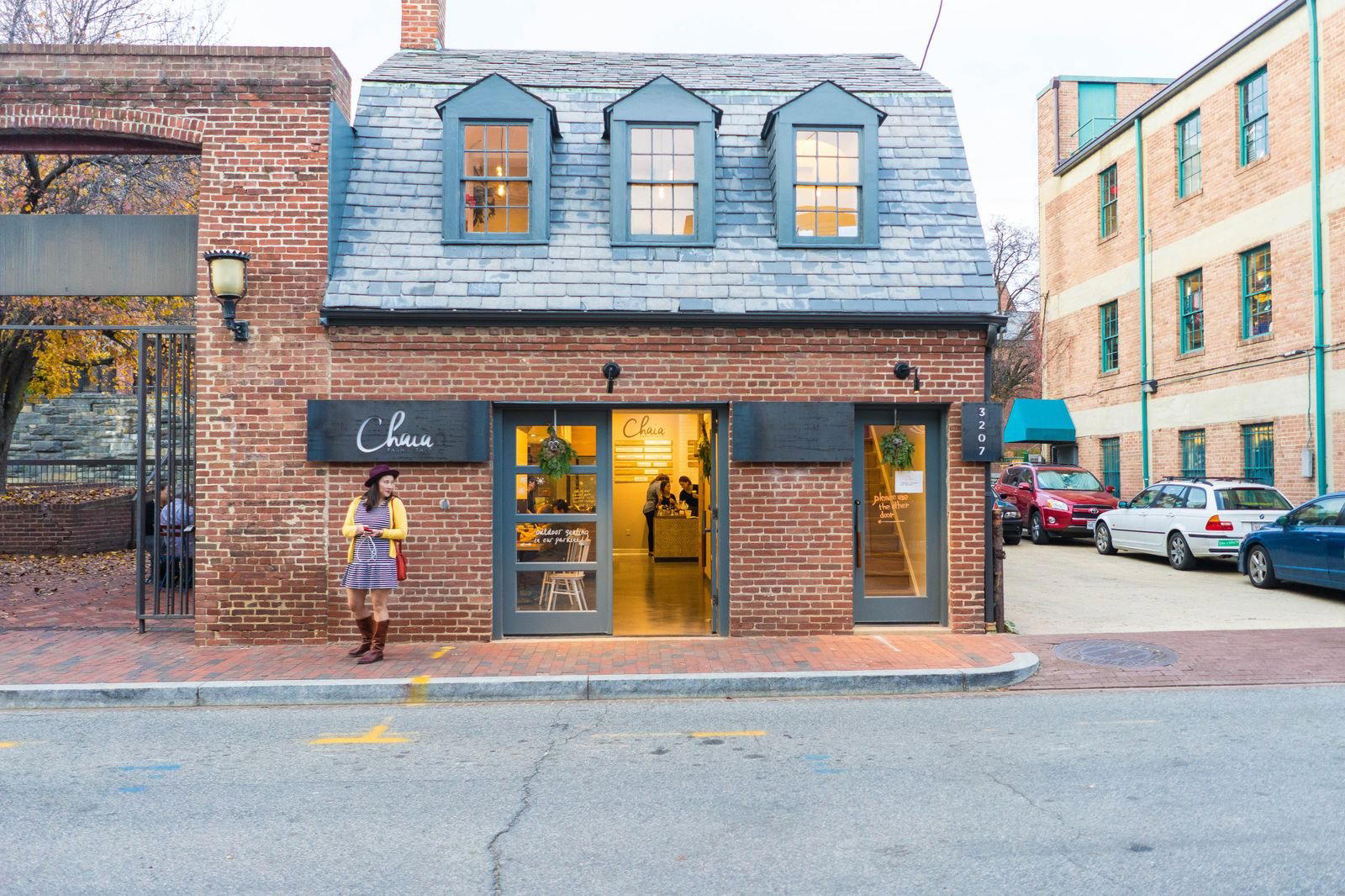
Where Georgetown's Market Haul Ends Up on a Plate
Chaia is a casual restaurant in Washington, D.C. The stretch of Grace Street NW where Chaia sits is residential enough that arriving on foot feels like cutting through someone's neighborhood rather than walking a dining corridor. That physical remove from Georgetown's main commercial drag on M Street is not incidental: it maps directly onto what Chaia does at the table. The restaurant operates in the register of the farmers market, not the fine-dining room, and the gap between those two worlds in Washington is wider than it looks from the outside.
Plant-forward dining in American cities has split into two distinct tracks over the past decade. One track runs through tasting-menu kitchens where vegetables are treated with the same technique-intensive attention formerly reserved for proteins, the kind of approach you find at Oyster Oyster in Shaw or, at a different price register, at farm-driven destination formats like Blue Hill at Stone Barns in Tarrytown or Single Thread Farm in Healdsburg. The other track stays deliberately accessible: fast-casual or semi-casual formats where the sourcing discipline is present but the price point and format keep the food in reach for a weekday lunch or a low-key dinner. Chaia belongs to the second track.
The Sourcing Argument Behind the Taco Format
The central editorial claim Chaia makes is that the taco, stripped of its meat-centric defaults, becomes a useful vehicle for whatever regional farms are producing at any given moment. This is not an unusual argument in 2024, but it was a less crowded position when Chaia first took it up in the mid-2010s in Washington. The city's plant-based dining at that point leaned either toward full-service restaurants that treated vegetables as a dietary accommodation rather than a design choice, or toward juice-and-grain cafes that sidestepped the question of flavor ambition entirely.
What the taco format permits, specifically, is a tight ingredient list that forces clarity: if the sourcing is compromised, there is nowhere to hide it. A corn tortilla, a primary vegetable filling, a fat element, and a finishing acid is a structure that rewards good produce and exposes bad. Restaurants that commit seriously to sourcing at this format level tend to maintain closer relationships with regional growers than their per-plate economics might suggest, because the format's simplicity makes ingredient quality legible to the customer in a way that a composed, multi-element dish does not.
That discipline around sourcing connects Chaia to a broader current in American dining that prioritizes regional agricultural relationships as a kitchen organizing principle rather than a marketing addendum. It is a line of thinking that runs, at much higher price points and formality levels, through places like Smyth in Chicago and Addison in San Diego. At Chaia's register, the question is whether that discipline translates into something the customer can actually taste, rather than just read about on a menu header.
Georgetown and the Wider D.C. Context
Washington's dining identity has shifted considerably since the mid-2010s. The city now sustains serious tasting-menu programs, including the technically precise work at Jônt, the modernist format of minibar, and the Middle Eastern-rooted cooking at Albi, alongside newer arrivals like the Peruvian-focused Causa. At the leading end, the region anchors around The Inn at Little Washington.
Within that context, Chaia functions in a different register entirely. Georgetown as a neighborhood carries a tourist-and-university-student clientele alongside the residents and professionals who have always lived there, and a restaurant format that is accessible on price and uncomplicated on format can sustain a broader and more frequent customer base than a destination tasting room. The comparison set for Chaia is not the D.C. fine-dining tier; it is the daily-use neighborhood counter, measured against whether it clears a bar of sourcing honesty and flavor quality that distinguishes it from generic fast-casual.
For readers tracing the wider American farm-to-table movement across different cities and price points, Chaia appears in the same conversation as approachable, sourcing-focused operations rather than alongside destination restaurants like The French Laundry in Napa, Le Bernardin in New York City, or Providence in Los Angeles.
What This Format Asks of the Diner
Eating at Chaia requires adjusting expectations in one specific direction: this is not a format built around a theatrical dining event. There is no tasting progression, no amuse-bouche sequence, no sommelier-led pairing. The experience is calibrated for speed and accessibility, which means the pleasure on offer is immediate and ingredient-led rather than technique-showcased. For a diner accustomed to the pacing of a long-form tasting room like Lazy Bear in San Francisco or Atelier Moessmer Norbert Niederkofler in Brunico, this is a deliberate gear-change. For a Georgetowner looking for a reliable dinner or a lunch after the farmers market, the format is exactly right.
The key question for any sourcing-led restaurant in the casual tier is whether the sourcing claim survives contact with the actual menu across seasons. Chaia's Georgetown address, proximity to regional mid-Atlantic growing operations, and the longevity of its position in the neighborhood suggest a sustained commitment rather than a concept-launch talking point. That is a meaningful signal in a format where it would be direct to quietly loosen sourcing standards without most customers noticing.
Know Before You Go
- Address: 3207 Grace St NW, Washington, DC 20007
- Neighborhood: Georgetown, on the residential side of the main commercial corridor
- Format: Casual counter-style; plant-based tacos as primary format
- Price tier: Accessible; lower price point than D.C.'s $$$ mid-range sit-down tier
- Reservations: Walk-in friendly
- Leading for: Weekday lunch, Saturday post-market dinner, sourcing-curious diners
Cuisine and Credentials
Comparable venues nearby, for context on price, style, and recognition.
| Venue | Cuisine | Price | Notes |
|---|---|---|---|
| ChaiaThis venue — the venue you are viewing | Vegetarian Tacos | $$ | Not listed |
| Clyde's of Georgetown | Classic American Saloon | $$ | West Village Georgetown |
| Cafe Divan | Authentic Turkish | $$ | West Village Georgetown |
| Chef Geoff's West End | Contemporary American | $$ | West End |
| Al Dente | Modern Italian with Neapolitan Pizza | $$ | Wesley Heights |
| Andrene's | Caribbean and Soul Food | $$ | Manor Park |
Continue exploring
More in Washington DC
Restaurants in Washington DC
Browse all →
Bars in Washington DC
Browse all →
Hotels in Washington DC
Browse all →


At a Glance
- Modern
- Trendy
- Casual
- Casual Hangout
- Group Dining
- Open Kitchen
- Standalone
- Beer Program
- Local Sourcing
Current opening hours
- Monday
- 11 AM–8 PM
- Tuesday
- 11 AM–8 PM
- Wednesday
- 11 AM–8 PM
- Thursday
- 11 AM–8 PM
- Friday
- 11 AM–8 PM
- Saturday
- 11 AM–8 PM
- Sunday
- 11 AM–8 PM
Hours can change for holidays and private events. Last verified .
Eco-chic, stylish fast-casual setting with a modern, plant-forward aesthetic.