Clyde's of Georgetown
A Georgetown institution on M Street NW, Clyde's has anchored the neighbourhood's casual-to-mid dining tier since the 1960s. The bar-and-dining format draws a broad mix of students, professionals, and political figures passing through one of D.C.'s most heavily trafficked corridors. It occupies a different register from the city's tasting-menu tier but plays a distinct role in the local dining fabric.
Pearl is the En Primeur Club membership app — saves, bookings, and concierge access live there. Same editors, same standards.
- Address
- 3236 M St NW, Washington, DC 20007
- Phone
- +12023339180
- Website
- clydes.com
- Directions
- Get directions
 Saves & bookings on Pearl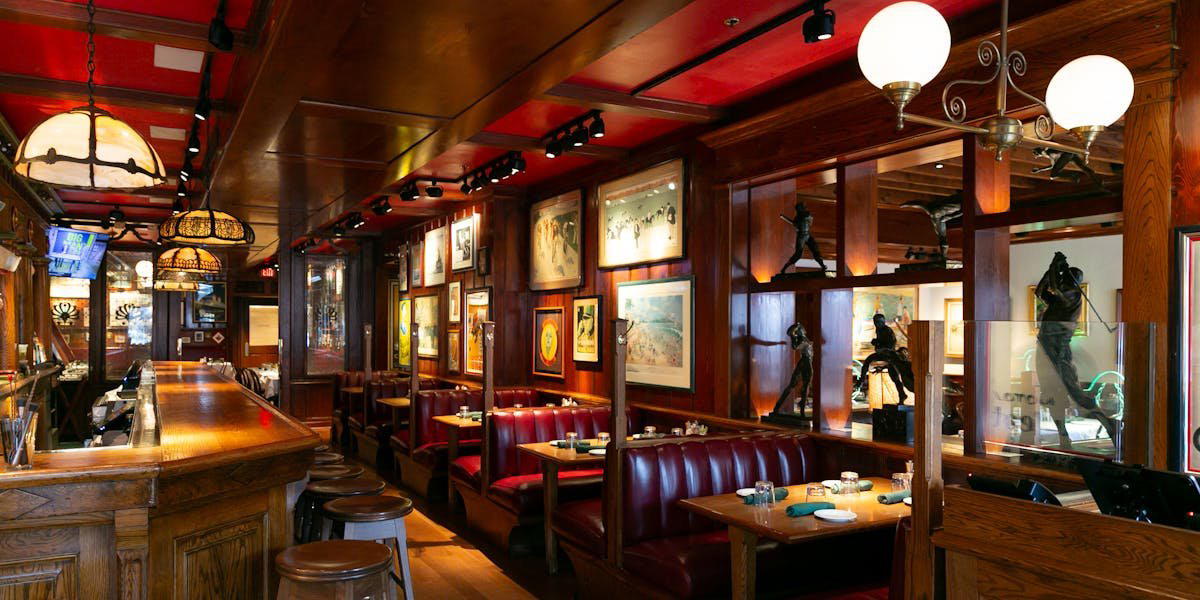
M Street at Table: What Clyde's Represents in Georgetown's Dining Order
Georgetown's dining scene divides more cleanly than most D.C. neighbourhoods. M Street NW runs through a district that has hosted embassies, universities, and political foot traffic for decades, and the restaurants that have survived here tend to do so not by chasing trends but by serving a reliable function. Clyde's of Georgetown, at 3236 M St NW, belongs to that category of American bar-and-grill that predates the current era of hyper-concept dining. It has operated in this location since 1963, which by Washington standards qualifies as institutional longevity in a city where administrations and restaurant fashions rotate on similar cycles. It is a classic American saloon in Georgetown, Washington, D.C. with a casual dress code and a recommended reservation policy, and meals average about $30 per person.
The broader American bar-and-grill format, the one Clyde's helped define in D.C. works from a set of assumptions that tasting-menu restaurants reject: generous portions, approachable pricing relative to the neighbourhood, a bar programme that anchors the room as much as the kitchen does, and a menu broad enough to serve a table of four people with completely different appetites. In a city where the premium dining tier has moved decisively toward counter formats and long tasting menus, Clyde's operates at a register that serves a different reader decision entirely.
The Local-Ingredient Frame: Chesapeake Produce in an American Kitchen
The intersection of local sourcing and approachable American technique is where Clyde's has historically made its most coherent case. The Chesapeake Bay corridor, running from the watershed south of D.C. up through Maryland's Eastern Shore, is one of the more productive seafood regions on the East Coast, with blue crab, oysters, and rockfish constituting a genuine regional pantry rather than a marketing narrative. Clyde's has long drawn on this proximity, positioning its kitchen within the Mid-Atlantic's natural supply lines. This is less a chef-driven philosophy than a geographical logic: restaurants in Georgetown that ignore the Chesapeake basin are choosing not to use what is both close and seasonally strong.
That approach places Clyde's in a loose tradition shared by American restaurants from different price points and ambition levels, from the hyper-local sourcing frameworks at Blue Hill at Stone Barns in Tarrytown to the precision seafood programmes at Providence in Los Angeles. What distinguishes the mid-tier bar-and-grill version of local sourcing is the absence of the curatorial layer: ingredients arrive through regional supply chains and land on menus without the accompanying provenance narrative. The crab cake at a Georgetown institution like Clyde's is a crab cake, not a statement. That directness has its own appeal in a city with abundant options at every register of earnestness.
Georgetown as a Dining District: Context Matters
Understanding what Clyde's does requires understanding what Georgetown is as a dining district. It is not a restaurant neighbourhood in the way that, say, Shaw or 14th Street NW have become: areas defined by independent restaurant openings, critical attention, and a younger hospitality cohort. Georgetown is older, wealthier in its retail character, and dominated by repeat-visit casual dining rather than the kind of destination restaurant that draws food media coverage. The Georgetown University student population, the neighbouring embassy district, and the waterfront foot traffic create a demand profile that rewards reliability over experimentation.
Within that framework, Clyde's occupies a central position. It is the kind of restaurant that D.C. residents take out-of-town guests who want something historically grounded and direct, not the venue they book when trying to impress a food-focused visitor. Those two functions require different restaurants, and the city has both. For the latter category, the D.C. tasting-menu circuit includes Albi (which applies American technique to Middle Eastern flavour frameworks) and
comparable set and Positioning
Clyde's is part of the Clyde's Restaurant Group, which operates multiple properties across the D.C.-Maryland-Virginia region. That group structure distinguishes it from the independent operator model that defines most of D.C.'s critically recognised restaurants. Group-operated venues of this type compete on consistency and brand recognition rather than culinary edge, which is a legitimate competitive strategy for the casual-dining tier. The comparison set is other reliable, multi-location American bar-and-grills serving a broad demographic without a strong point of view cuisine.
Nationally, restaurants in a similar register but with a stronger local-ingredient focus have gained more critical traction in recent years. Smyth in Chicago, Lazy Bear in San Francisco, and Single Thread Farm in Healdsburg all start from a regional-produce premise but operate it through high-technique fine-dining formats. Emeril's in New Orleans and Addison in San Diego represent other ways the casual-to-formal spectrum is navigated in cities with strong regional food identities. Clyde's operates closer to the accessible end of that range, which is both its limitation and its durable function.
A Pricing-First Comparison
Comparable venues nearby, for context on price, style, and recognition.
| Venue | Cuisine | Price | Notes |
|---|---|---|---|
| Clyde's of GeorgetownThis venue — the venue you are viewing | Not listed | $$ | Not listed |
| PopUp Bagels | Georgetown, Artisan Bagels & Schmears | $$ | Not listed |
| Beefsteak | Not listed | $$ | Dupont Circle, Vegetable-Centric Fast Casual |
| Clyde's of Gallery Place | Chinatown, American Steakhouse | $$ | Not listed |
| Macon Bistro | Not listed | $$ | Chevy Chase, Southern-French Bistro Fusion |
| Rewind | Not listed | $$ | Dupont Circle, American Diner with Latin Influences |
Continue exploring
More in Washington DC
Restaurants in Washington DC
Browse all →
Bars in Washington DC
Browse all →
Hotels in Washington DC
Browse all →
At a Glance
- Classic
- Lively
- Well Known
- Brunch
- Group Dining
- Casual Hangout
- Late Night
- Historic Building
- Private Dining
- Extensive Wine List
- Craft Cocktails
- Local Sourcing
Current opening hours
- Monday
- 11 AM–1 AM
- Tuesday
- 11 AM–1 AM
- Wednesday
- 11 AM–1 AM
- Thursday
- 11 AM–1 AM
- Friday
- 11 AM–2 AM
- Saturday
- 11 AM–2 AM
- Sunday
- 10 AM–1 AM
Hours can change for holidays and private events. Last verified .
Warm, timeless saloon atmosphere with wood-paneled walls, cozy nooks, vintage art, sports memorabilia, and railroad posters evoking a bygone era.