Andrene's
On Kennedy Street NW in Washington's Petworth corridor, Andrene's occupies a stretch of the city that has quietly become one of its more interesting dining destinations. The restaurant sits in a neighborhood where independent operators have built genuine community roots, drawing guests who treat the trip across town as part of the experience rather than an obstacle to it.
Pearl is the En Primeur Club membership app — saves, bookings, and concierge access live there. Same editors, same standards.
- Address
- 308 Kennedy St NW, Washington, DC 20011
- Phone
- +12022917007
- Website
- andrenescafe.com
- Directions
- Get directions
 Saves & bookings on Pearl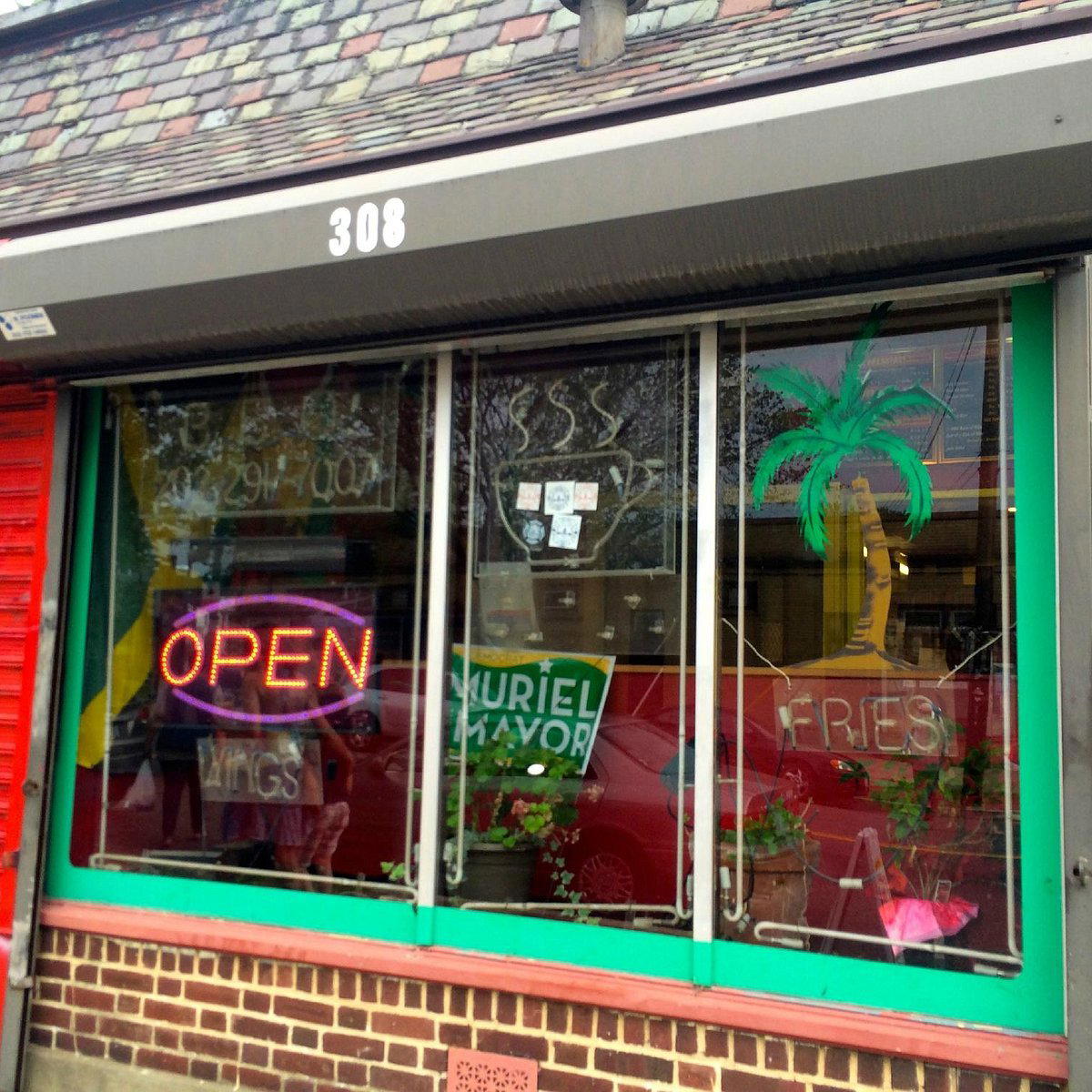
Kennedy Street and the Neighborhoods That Shape D.C. Dining
Washington's dining conversation tends to concentrate on a handful of familiar zip codes: the Penn Quarter institutions, the 14th Street corridor, the Shaw blocks where several of the city's most-discussed tables now operate. Kennedy Street NW, in the Petworth neighborhood, sits outside that circuit. Restaurants here build their reputations differently, through word-of-mouth, through repeat neighborhood guests, through the kind of loyalty that forms when a room feels genuinely connected to the people who live nearby rather than optimized for a broader audience. Andrene's, at 308 Kennedy St NW, is a casual Caribbean and Soul Food restaurant in Washington, D.C. It operates in that context.
The address itself signals something. In cities where restaurant geography has become a form of branding, choosing a corridor that is still finding its identity is a statement of intent. The restaurants that work in these neighborhoods tend to succeed because the team dynamic between kitchen, floor, and the community outside the door is coherent. There is no mismatch between the ambition inside and the street outside.
How D.C.'s Broader Restaurant Scene Sets the Frame
To understand what Andrene's represents, it helps to map where it sits relative to the wider D.C. dining spectrum. The city's most formally recognized tables operate at considerable remove from Kennedy Street, both geographically and in terms of format. Jônt runs a precision-driven modern French tasting program in Georgetown. minibar by José Andrés continues its molecular format in Penn Quarter. Albi, with its wood-fired Middle Eastern cooking, occupies the $$$$ tier in Navy Yard. These are destination-format restaurants, designed for occasions and built around a recognizable curatorial identity.
The $$$-tier operators in the city, places like Oyster Oyster with its sustainable New American program and Causa with its Peruvian framework, have built strong identities around a clear culinary position. What distinguishes the neighborhood operators on corridors like Kennedy Street is a different kind of ambition: the goal is to be the restaurant that a community returns to across seasons and years, not the restaurant a visitor plans three months ahead to secure. Both models require serious execution. They simply operate on different frequencies.
The Team Dynamic at the Core of Neighborhood Restaurants
Across American dining, the restaurants that sustain themselves in non-destination neighborhoods share a structural feature: the collaboration between kitchen and floor has to compensate for the fact that the room cannot rely on tourist traffic or proximity to other anchor attractions. At the high end, that dynamic is well-documented. Le Bernardin in New York City has maintained its three-star standing for decades in part because the front-of-house operation matches the kitchen's precision. Single Thread Farm in Healdsburg built its reputation explicitly around the co-equal contributions of the kitchen and the service program.
At the neighborhood level, the logic is the same even if the scale differs. Guests who travel to Kennedy Street specifically to eat at Andrene's are making a vote of confidence in the whole team, not just in a dish. The floor has to know the room and read its guests. The kitchen has to produce food that justifies the trip. Those are not separable functions; they reinforce each other or they don't work.
This is the pattern that defines the restaurants with staying power across U.S. cities. Lazy Bear in San Francisco built its communal-table format around a precise coordination between kitchen timing and the service team's ability to manage a shared-experience room. Smyth in Chicago operates with a kitchen-floor alignment that allows a technically ambitious tasting format to feel relaxed rather than formal. Providence in Los Angeles has maintained two Michelin stars partly through a front-of-house consistency that matches the kitchen's seafood focus. The team dynamic is not a secondary consideration; it is often the mechanism that converts a strong menu into a lasting reputation.
D.C.'s Neighborhood Dining in National Context
Washington sits in a national conversation about restaurant geography that has accelerated since 2020. Cities like Chicago, San Francisco, and New Orleans have all seen serious operators move into neighborhoods outside their traditional restaurant districts, finding that lower rents and a more loyal guest base can support a sustainable model that the high-traffic corridors no longer guarantee. Emeril's in New Orleans established an early template for how a chef's personality can anchor a neighborhood over decades. Blue Hill at Stone Barns in Tarrytown demonstrated that a deliberate remove from urban centers can become an asset rather than a liability when the food and the setting are coherent.
In D.C. the Kennedy Street corridor is part of a broader pattern in which Petworth and the adjacent neighborhoods have absorbed independent restaurant operators who find that the existing restaurant districts have become expensive and increasingly homogenous. The corridor does not yet carry the editorial weight of 14th Street or H Street, but the trajectory is consistent with how those areas developed: a few operators take the early risk, the neighborhood regulars respond, and the reputation builds incrementally rather than through a single opening event.
Addison in San Diego built its Michelin-starred reputation in a city not historically associated with fine dining ambition. The Inn at Little Washington, some 70 miles from D.C. has held its position for decades by making the distance itself part of the experience. Atomix in New York City operates on the premise that a highly specific Korean fine-dining format can support a destination-level reputation in a room that seats few. The address is rarely the constraint; the quality of the team and the clarity of the proposition are.
Visiting Andrene's
The restaurant is located at 308 Kennedy St NW, Washington, DC 20011, in the Petworth neighborhood. The restaurant sits on a stretch of Kennedy Street that is most easily reached by the Georgia Ave-Petworth Metro station on the Green and Yellow lines, a few blocks from the address. Street parking is available in the surrounding residential grid, and the walk from the Metro is manageable in most weather. The restaurant is walk-in friendly and open Monday through Saturday from 11 AM to 8 PM. The practical expectation for first-time visitors is that this is a room where showing up with some knowledge of the neighborhood, and some flexibility about format and timing, will be rewarded.
French Laundry in Napa and Atelier Moessmer Norbert Niederkofler in Brunico represent the international benchmark for what a fully integrated team-driven restaurant operation can achieve at the highest level. The restaurant operates in a different register, but the underlying principle, that the quality of collaboration between the people running the room and the people running the kitchen determines the guest experience more than any single ingredient, is the same across all tiers.
Comparable Options
Comparable venues nearby, for context on price, style, and recognition.
| Venue | Cuisine | Price | Notes |
|---|---|---|---|
| Andrene'sThis venue — the venue you are viewing | Caribbean and Soul Food | $$ | Not listed |
| Jam Doung Style | Jamaican Caribbean | $ | Bloomingdale |
| Goodlove | Caribbean-inspired Small Plates Lounge | $$$ | Downtown |
| Kith/Kin | Afro-Caribbean | $$$ | Southwest Waterfront |
| PopUp Bagels | Artisan Bagels & Schmears | $$ | Georgetown |
| Bub and Pop's | Philly-Style Deli Sandwiches | $$ | Eckington |
Continue exploring
More in Washington DC
Restaurants in Washington DC
Browse all →
Bars in Washington DC
Browse all →
Hotels in Washington DC
Browse all →

At a Glance
- Cozy
- Lively
- Family
- Casual Hangout
- Standalone
Current opening hours
- Monday
- 11 AM–8 PM
- Tuesday
- 11 AM–8 PM
- Wednesday
- 11 AM–8 PM
- Thursday
- 11 AM–8 PM
- Friday
- 11 AM–8 PM
- Saturday
- 11 AM–8 PM
- Sunday
- Closed
Hours can change for holidays and private events. Last verified .
Warm, cheery, clean, and homey with calm music and friendly service.