Cervecería Andaluza Yami&Jani sits in the Fuencarral-El Pardo district of northern Madrid, where neighbourhood cervecerías operate at a remove from the city's fine-dining circuit. The format follows the Andalusian tradition of cold beer and fried or cured tapas served without ceremony, placing it in a tier of casual, place-specific eating that Madrid's residential quarters do particularly well.
Pearl is the En Primeur Club membership app — saves, bookings, and concierge access live there. Same editors, same standards.
- Address
- C. de Ponferrada, 60, Fuencarral-El Pardo, 28029 Madrid, Spain
- Phone
- +34911432045
- Directions
- Get directions
 Saves & bookings on Pearl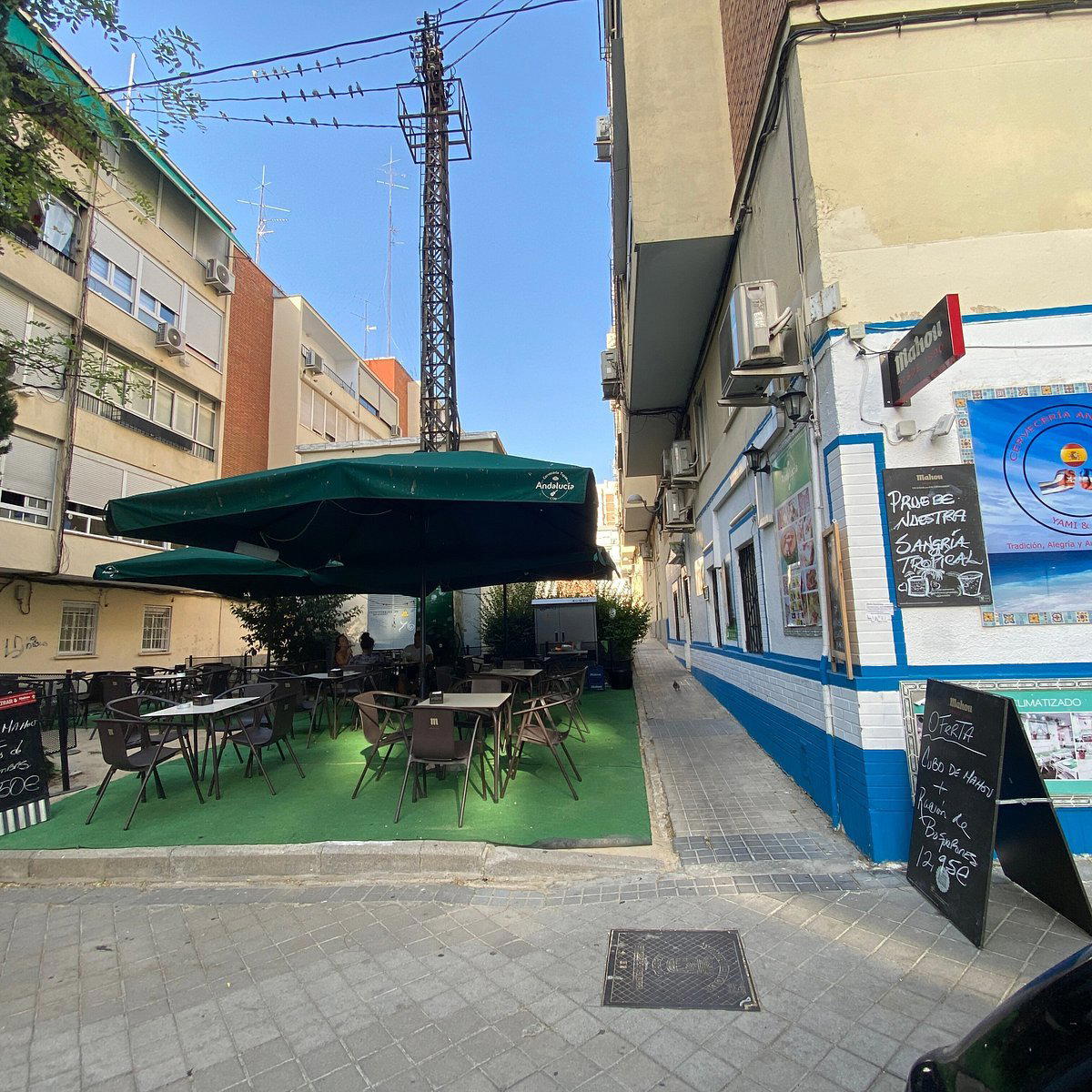
Northern Madrid and the Neighbourhood Cervecería Tradition
Madrid's dining reputation runs heaviest in its centre: the tasting-menu circuit around Chueca and Salamanca, the Michelin corridors where venues like DiverXO, Coque, Deessa, and DSTAgE compete for the same international traveller. But the city's residential districts, Fuencarral-El Pardo among them, sustain a different kind of eating: the cervecería, a format rooted less in ambition than in habit. Cold draught beer, Andalusian-style small plates, tiled interiors, and a clientele that arrives on foot from nearby streets rather than by taxi from a hotel. Cervecería Andaluza Yami&Jani is a restaurant in Madrid serving Traditional Spanish Tapas at C. de Ponferrada, 60, Fuencarral-El Pardo, 28029 Madrid, Spain. It sits on Calle de Ponferrada 60, in precisely that northern residential band, and the address itself is its first editorial statement.
Fuencarral-El Pardo is one of Madrid's larger outer districts, stretching north from the M-30 ring toward the Pardo forest. The area contains some of the city's densest residential population and proportionally fewer destination restaurants than the centre. That ratio produces a dining environment where the local cervecería functions as infrastructure: a place people return to weekly rather than annually, where the standard of the beer tap and the quality of the fritura matter more than the presence of a named chef or a press kit. For a visitor, that context changes the calculus of how to use a place like this.
What the Andalusian Cervecería Format Means in Practice
The cervecería andaluza format has a clear logic. It descends from the bar culture of Seville, Málaga, and Cádiz, where cold beer (caña or tubo) pairs with a tight repertoire of fried fish, cured meats, and a few hot tapas: croquetas, puntillitas, boquerones. The format travels well to Madrid because it fills a gap the capital's own tapas tradition leaves: Madrid's indigenous bar food leans toward bravas, callos, and bocadillos, while Andalusian imports bring a lighter, oil-forward frying style and a stronger seafood thread.
In Madrid's residential districts, cervecerías andaluzas tend to operate on volume and repetition rather than seasonal menus. The cooking is not showy. The measure of quality is consistency: whether the batter on the fish stays crisp, whether the beer is served at the right temperature, whether the crowd is local enough that prices stay honest. These are not the metrics that produce Michelin stars, but they are the metrics that produce a full dining room at 2pm on a Tuesday.
Spain's formal fine-dining circuit, represented outside Madrid by venues such as El Celler de Can Roca in Girona, Mugaritz in Errenteria, Arzak in San Sebastián, Azurmendi in Larrabetzu, Martin Berasategui in Lasarte-Oria, Aponiente in El Puerto de Santa María, Cocina Hermanos Torres in Barcelona, Ricard Camarena in València, Quique Dacosta in Dénia, and Atrio in Cáceres, operates in an entirely different register. Understanding where the neighbourhood cervecería sits relative to that spectrum is useful for planning a trip: the two formats serve different functions and should not be evaluated against the same criteria.
Reading the Location: Calle de Ponferrada and Its District
Calle de Ponferrada is a residential street in the southern end of Fuencarral, close to the border with Tetuán. The address puts Yami&Jani; within a part of northern Madrid that sees relatively little tourist traffic. Visitors who arrive here are generally doing so with a local guide, a personal recommendation, or the kind of low-key research that takes you off the main tourist axes. That is not a disadvantage; it is information about what the place is. A cervecería at this address is feeding a neighbourhood, not a tourist circuit, and that typically has downstream effects on pricing and atmosphere that favour the visitor willing to seek it out.
Madrid's outer districts have a distinct rhythm compared to the centre. Lunch runs longer, particularly on weekends. The post-lunch sobremesa culture, the practice of staying at the table after eating, is more visible here than in city-centre venues competing for table turns. For a visitor accustomed to the compressed service style of international restaurant markets, arriving at a northern Madrid cervecería at 2:30pm on a Saturday and finding no pressure to leave by 3:30pm is a genuine shift in dining tempo.
Positioning Within Madrid's Casual Dining Tier
Madrid's casual dining tier is broad. At one end sit the high-volume tabernas of La Latina and Malasaña, oriented toward tourists and operating with corresponding pricing. At the other end are neighbourhood bars that have barely adjusted their menus or prices in a decade, running on local loyalty. Cervecería Andaluza Yami&Jani; by address and format, occupies the latter territory. It is not a place positioned for the traveller on a short city break who is working through a list of central addresses; it is a place that rewards the traveller interested in how Madrid actually eats outside the tourist zones.
For context on Madrid's opposite end of the dining spectrum, the creative tasting-menu circuit represented by venues like Paco Roncero operates in a different city almost entirely. Those venues require advance booking, formal dress considerations, and significant per-head spend. The cervecería format requires none of those things. Internationally, the contrast is equally sharp: venues like Le Bernardin in New York City or Lazy Bear in San Francisco represent the structured, prix-fixe end of the spectrum. The neighbourhood cervecería is the structural opposite: walk-in, à la carte, low overhead, and built on repeat custom rather than occasion dining.
The Essentials
Comparable venues nearby, for context on price, style, and recognition.
| Venue | Cuisine | Price | Notes |
|---|---|---|---|
| Cervecería Andaluza Yami&JaniThis venue — the venue you are viewing | Pilar, Traditional Spanish Tapas | $$ | Not listed |
| Paellitas Tradición | Almagro, Traditional Spanish Paella | $$ | Not listed |
| Llauna | Not listed | $$ | Almagro, Catalan & Spanish Mediterranean with Wood-Fired Specialties |
| ORIO Fuencarral | Malasana, Basque Pintxos and Seafood | $$ | Not listed |
| Lateral Milaneses | Not listed | $$ | Palacio, Modern Spanish Tapas & European Gastrobar |
| ROSA & ESPIGAS | Goya, Modern Spanish Vanguardista | $$ | Not listed |
Continue exploring
More in Madrid
Restaurants in Madrid
Browse all →

Bars in Madrid
Browse all →
Hotels in Madrid
Browse all →




At a Glance
- Cozy
- Lively
- Casual Hangout
- Group Dining
- Terrace
- Beer Program
Current opening hours
- Monday
- 10 AM–11:30 PM
- Tuesday
- Closed
- Wednesday
- 10 AM–11:30 PM
- Thursday
- 10 AM–11:30 PM
- Friday
- 10 AM–1:30 AM
- Saturday
- 10 AM–1:30 AM
- Sunday
- 10 AM–11:30 PM
Hours can change for holidays and private events. Last verified .
Quiet, relaxing surroundings with a cozy and welcoming atmosphere.